Enhancing concentration Adding in the Forest Worksheets for Ages 5-8
4 filtered results
-
From - To
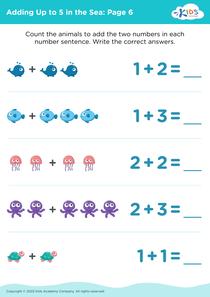
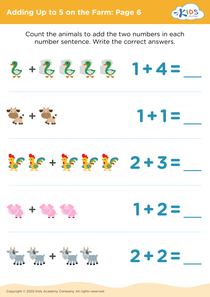
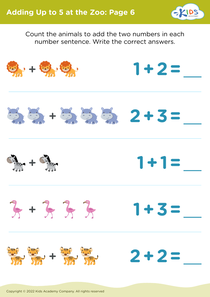
Discover the perfect blend of fun and focus with our "Adding in the Forest Worksheets for Ages 5-8". Designed to enhance concentration, these engaging math pages transport young learners into a magical forest setting, where vivid illustrations and interactive tasks transform addition practice into an adventurous journey. By solving intriguing math problems hidden in forest scenes, children not only sharpen their addition skills but also improve their attention span and critical thinking. Perfect for home or classroom use, these worksheets provide a stimulating and educational experience that keeps kids motivated and eager to learn.
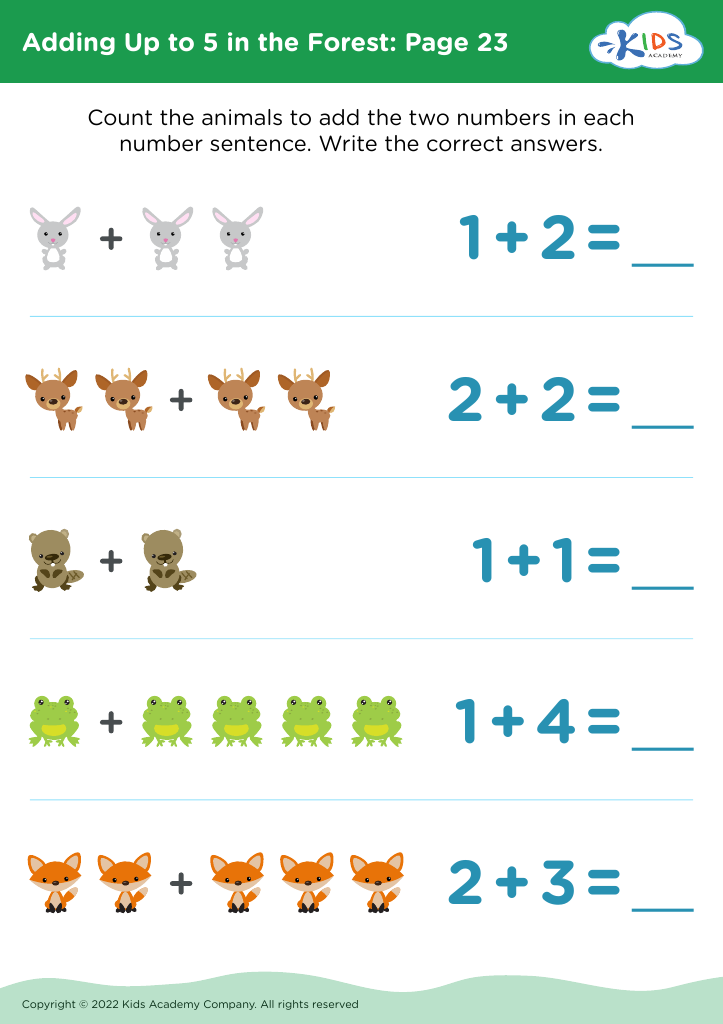
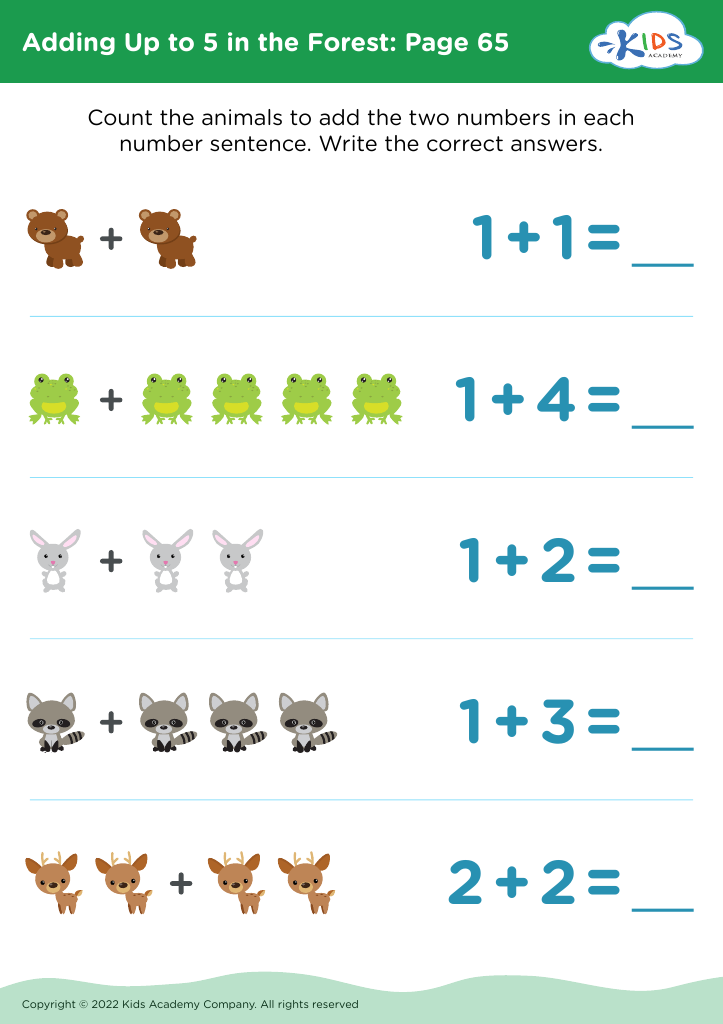
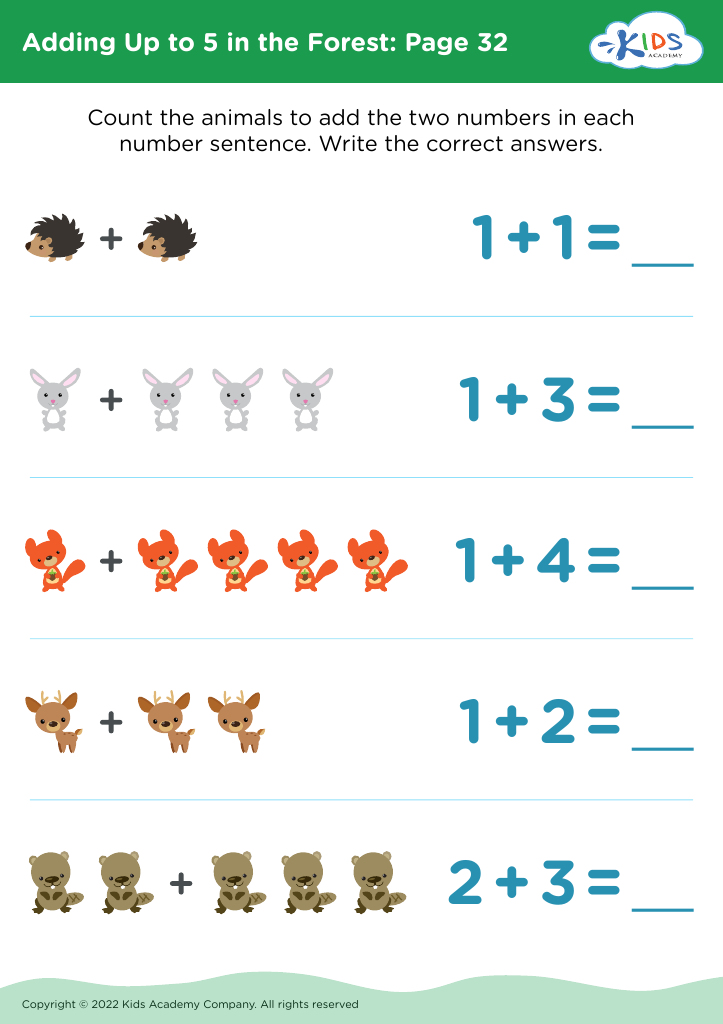
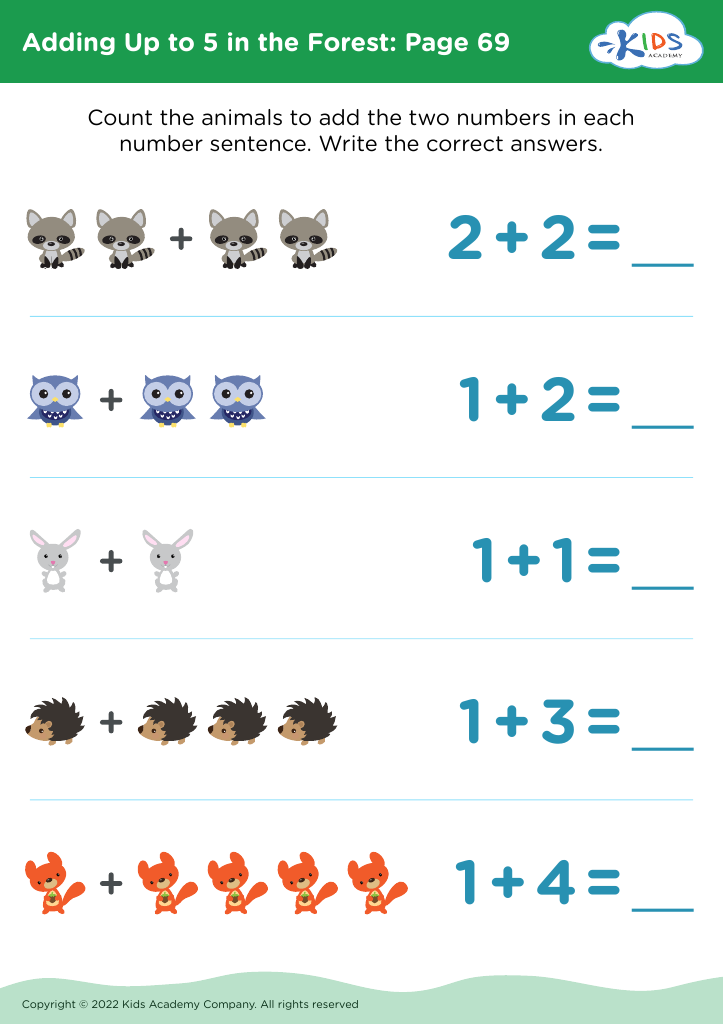



Enhancing concentration for young children through activities like Adding in the Forest can be highly beneficial for their developmental growth. Ages 5-8 are crucial years for cognitive, emotional, and social development. Activities like Adding in the Forest, which integrate nature and learning, can significantly enhance a child's ability to concentrate.
When children spend time in natural settings, they experience a reduction in stress and mental fatigue, which can dramatically improve their focus and attention spans. Nature has a calming effect and offers a sensory-rich environment that stimulates young minds.
Incorporating math skills through interactive games, such as counting flora or fauna in a forest setting, turns learning into an engaging experience. This hands-on approach encourages children to use their problem-solving skills while keeping their interest peaked through interactive play.
Moreover, learning outdoors allows children to harness the benefits of physical activity, which is tightly linked to improved concentration and a greater capacity for learning. The outdoor-based task can effectively combine physical exertion with cognitive challenges, making complex abstract concepts like addition more tangible and understandable.
Parents and teachers will find that such an immersive learning environment not only cultivates academic skills but also fosters a child's love for nature, creating well-rounded, observant, and attentive lifelong learners.