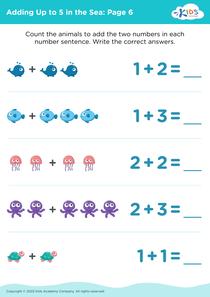
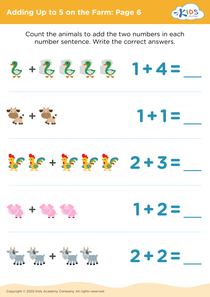
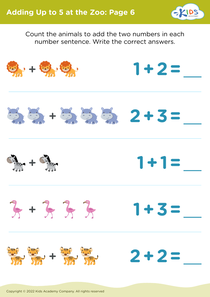
Fine motor skills (writing) Adding in the Forest Worksheets for Ages 5-8
3 filtered results
-
From - To
Introduce fine motor skill practice to your child's learning routine with our "Adding in the Forest Worksheets" for children aged 5-8. These engaging worksheets blend mathematics and nature-themed illustrations to make learning addition fun. As kids solve equations, they also practice writing numbers, refining their fine motor skills crucial for handwriting. Our carefully designed activities support both math proficiency and the development of precise, controlled hand movements. Perfect for young learners, this resource fosters a seamless blend of educational growth and fine motor skill enhancement in a playful, forest-themed environment. Download now to inspire confident writing and arithmetic skills!
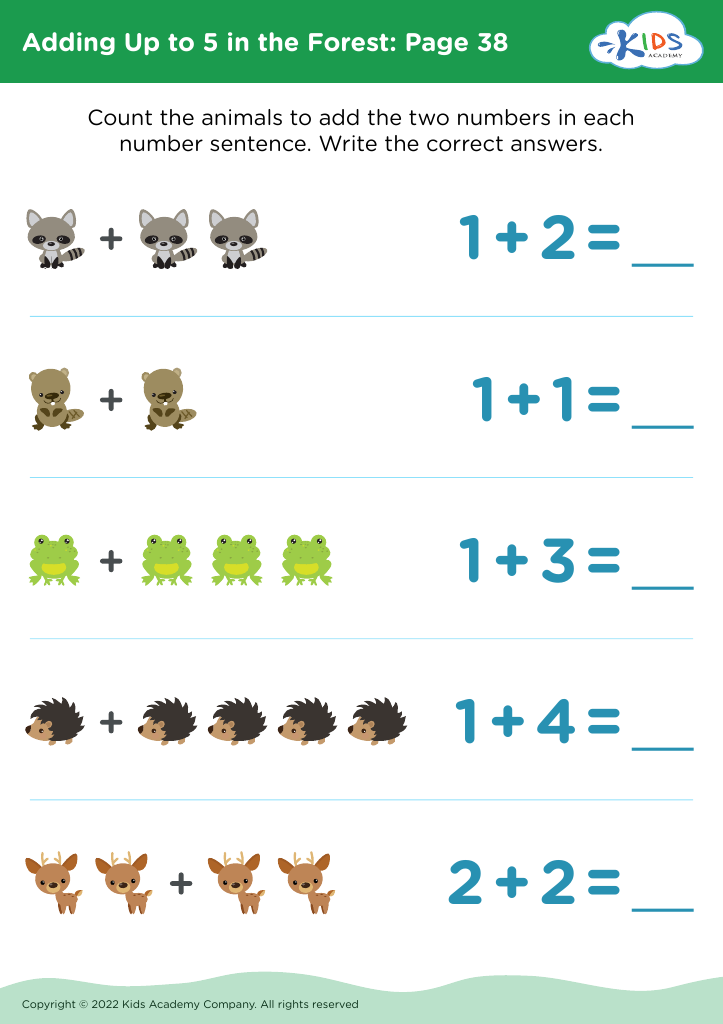
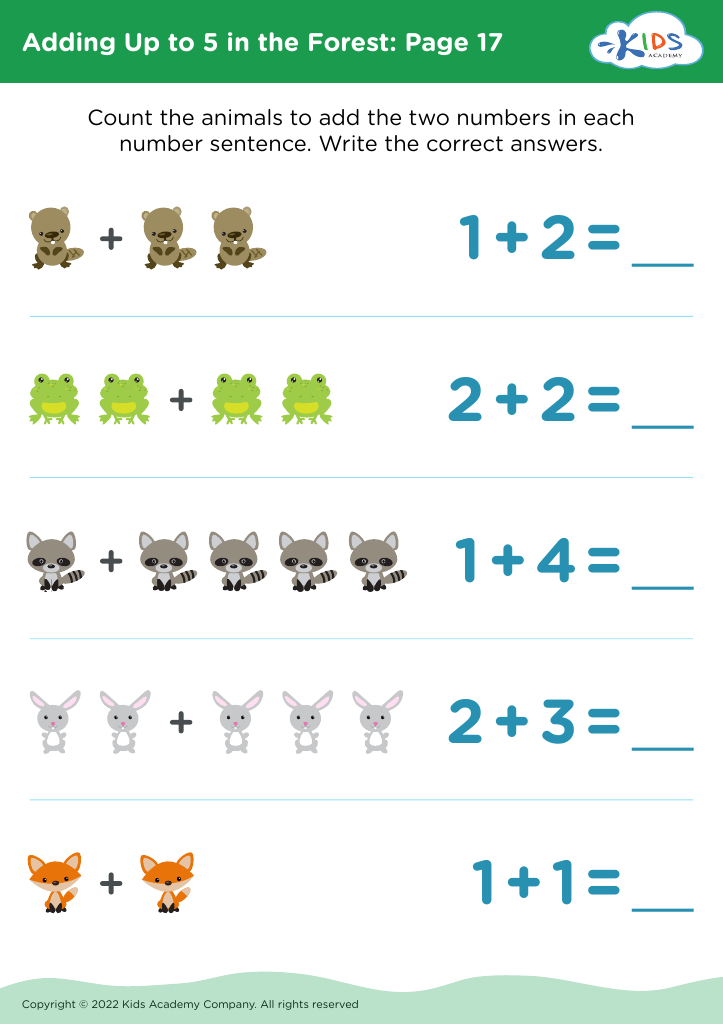
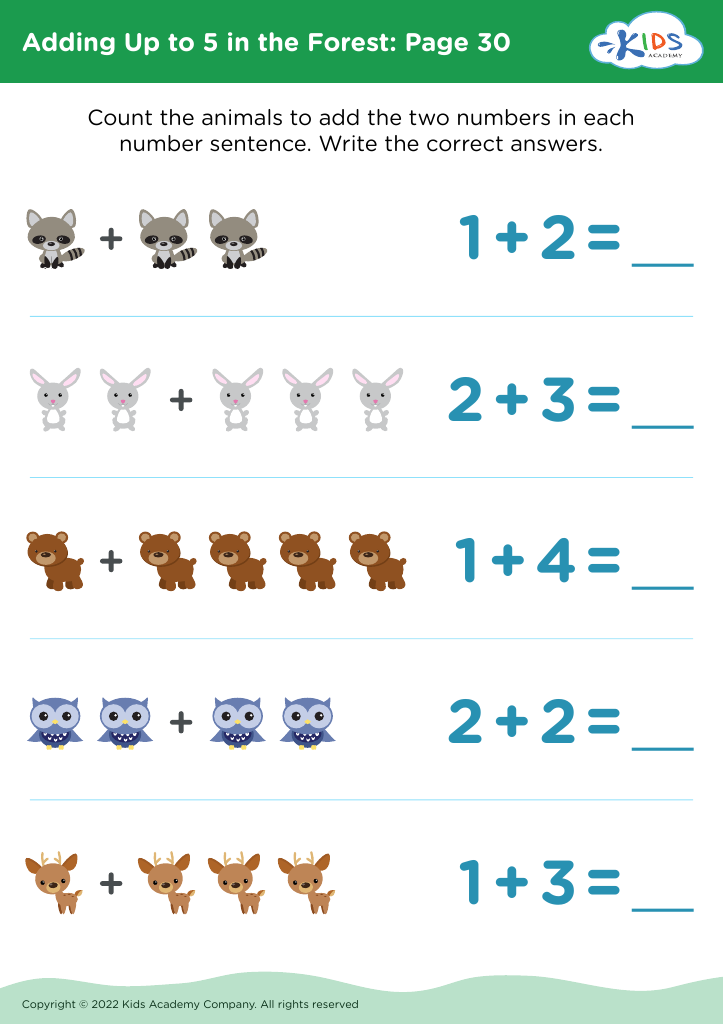



Fine motor skills are essential for young children aged 5-8 because they form the foundation for many vital life activities, among which writing is particularly significant. This developmental phase is when children refine their hand-eye coordination, finger strength, and hand dexterity, all of which are crucial for academic success and daily tasks. When incorporated with engaging, nature-based activities like "Adding in the Forest," these skills can be advanced even further.
Adding in the Forest promotes not only mathematical skills but also fine motor development through interactive, hands-on activities like collecting natural items (leaves, acorns) for math lessons. This tactile learning experience enriches their understanding of numbers while encouraging pencil holding, counting, and writing exercises. This active engagement with nature fosters a love for learning and a healthy lifestyle.
Parents and teachers should prioritize fine motor skill development because these skills are integral to children’s holistic growth — socially, cognitively, and physically. Improved fine motor skills lead to better handwriting, enabling clearer expression of thoughts and ideas, which boosts overall academic performance and self-esteem. Encouraging activities like Adding in the Forest supports overall developmental readiness and prepares children for future educational challenges, reinforcing the connection between play, motor skill development, and learning.