Nature appreciation Adding in the Forest Worksheets for Ages 5-8
5 filtered results
-
From - To
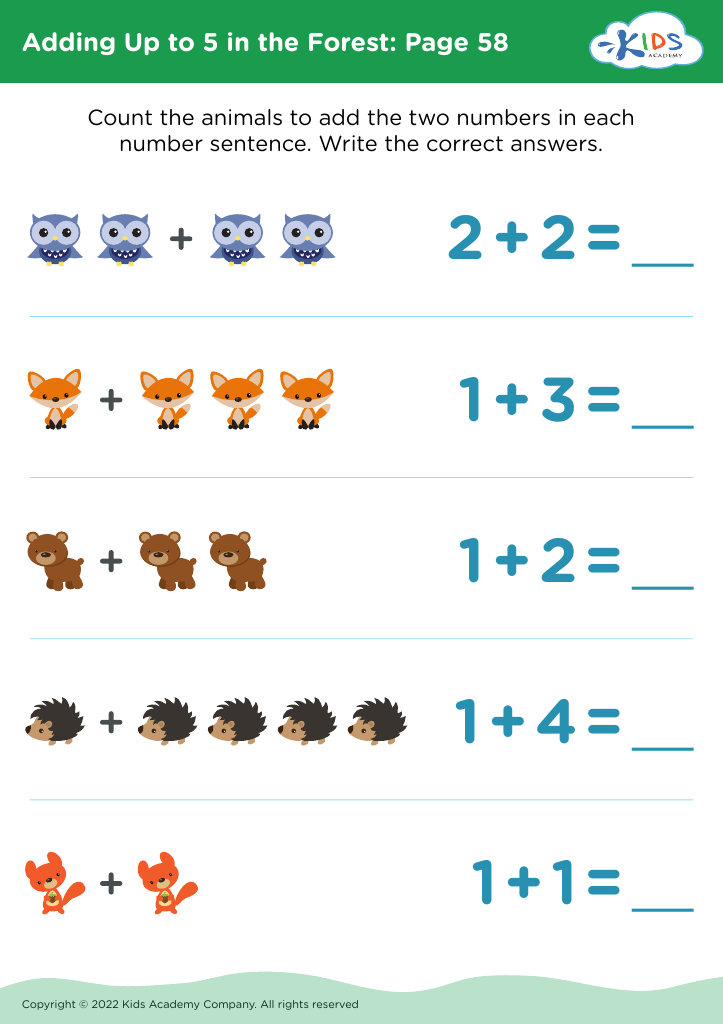
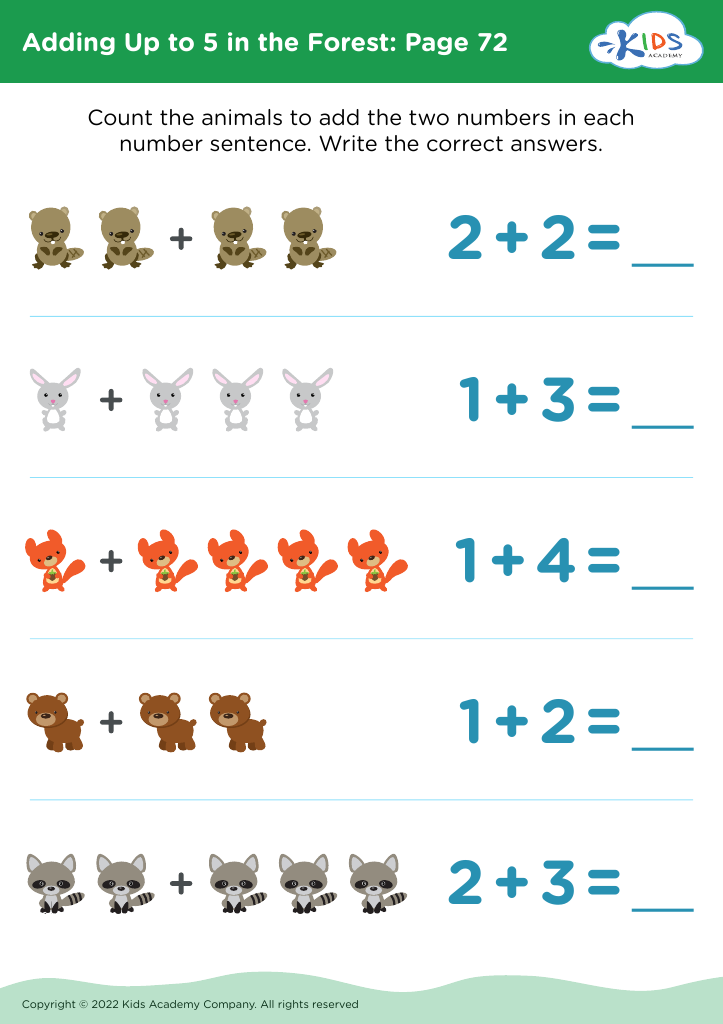
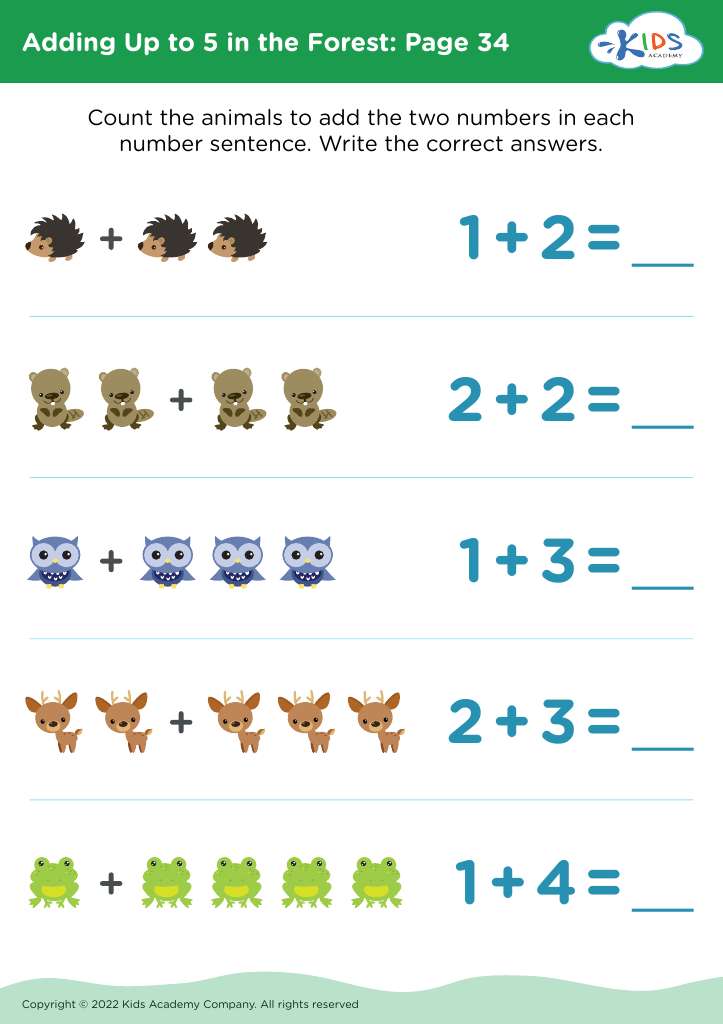
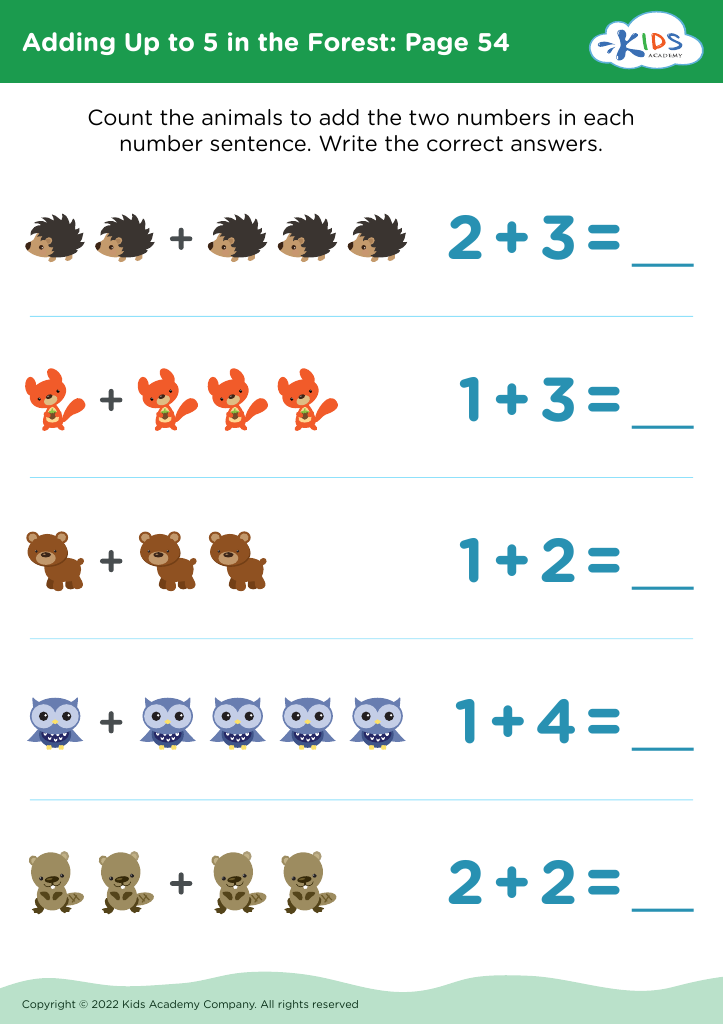
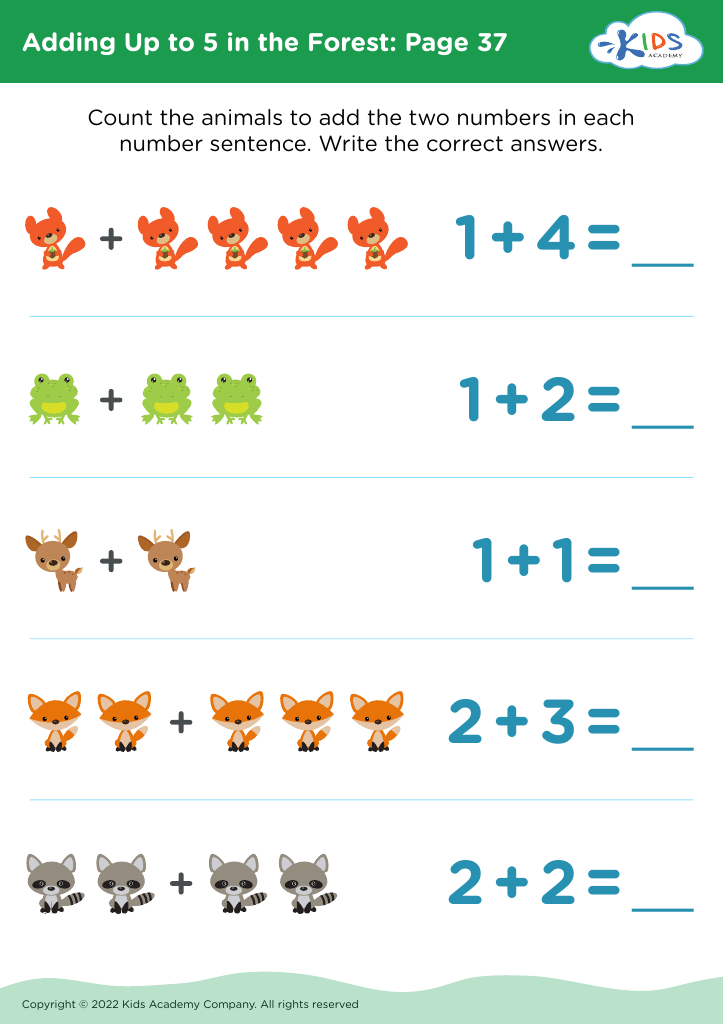
Explore the beauty of nature while enhancing math skills with our "Nature Appreciation Adding in the Forest Worksheets" for children ages 5-8. These engaging and interactive worksheets encourage young learners to discover and appreciate the wonders of the forest as they practice basic addition. By combining fun forest scenes with educational content, kids will foster a love for nature while developing essential math skills. Perfect for parents, teachers, or homeschooling, these resources not only make learning enjoyable but also instill a sense of environmental appreciation. Let your child embark on a delightful journey of numbers and nature today!



Parents and teachers should prioritize nature appreciation, particularly through experiences like forest exploration, for children aged 5-8 due to numerous developmental benefits. Nature is a powerful teacher, fostering curiosity and encouraging children to engage their senses. When children explore a forest, they encounter diverse plants, animals, and natural phenomena, prompting them to ask questions and seek answers, thus enhancing their cognitive skills.
Further, being in nature promotes physical activity, important for healthy growth, and can help combat childhood obesity. Activities like climbing, running, or climbing can improve coordination and strength.
Moreover, nature experiences play a pivotal role in emotional development. Time outdoors has been shown to reduce stress and anxiety while boosting mood, and can help children build a deeper connection to their environment.
Additionally, collaborating in nature—whether gathering leaves or identifying insects—encourages social skills such as teamwork and communication.
Lastly, instilling an appreciation for nature often leads to a lifelong sense of responsibility for the environment, which is crucial for creating future stewards of our planet. Thus, ensuring children connect with the natural world lays a foundation for both personal well-being and ecological awareness.