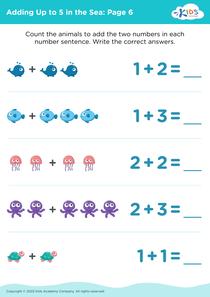
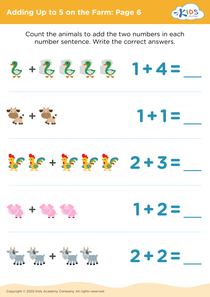
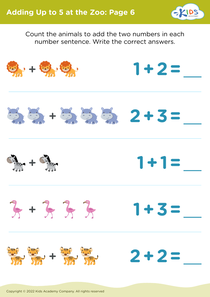
Problem-solving abilities Adding in the Forest Worksheets for Ages 5-8
7 filtered results
-
From - To
Enhance your child's problem-solving abilities with our "Adding in the Forest" worksheets designed for ages 5-8. These engaging activities combine colorful forest-themed illustrations with essential math skills, making learning both fun and interactive. As children navigate through various addition challenges, they develop critical thinking, strengthen their arithmetic skills, and improve their ability to tackle problems independently. The worksheets not only reinforce math concepts but also inspire creativity and imagination, setting a solid foundation for future learning. Perfect for both classroom and at-home education, these worksheets will ensure that your young learners are excited and eager to explore the world of numbers!
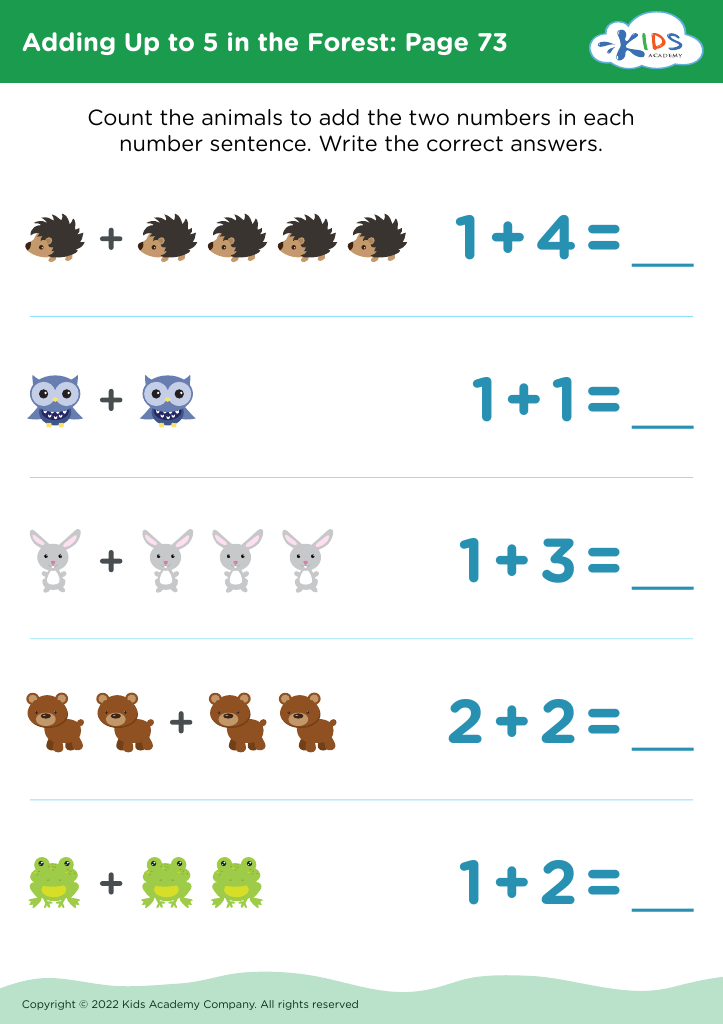
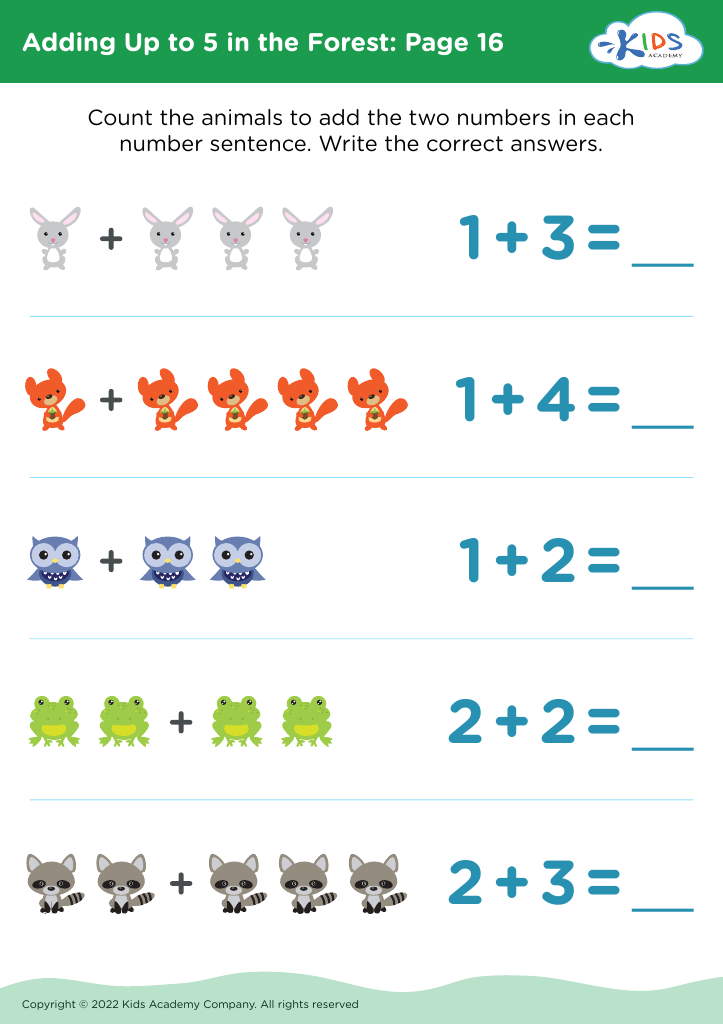
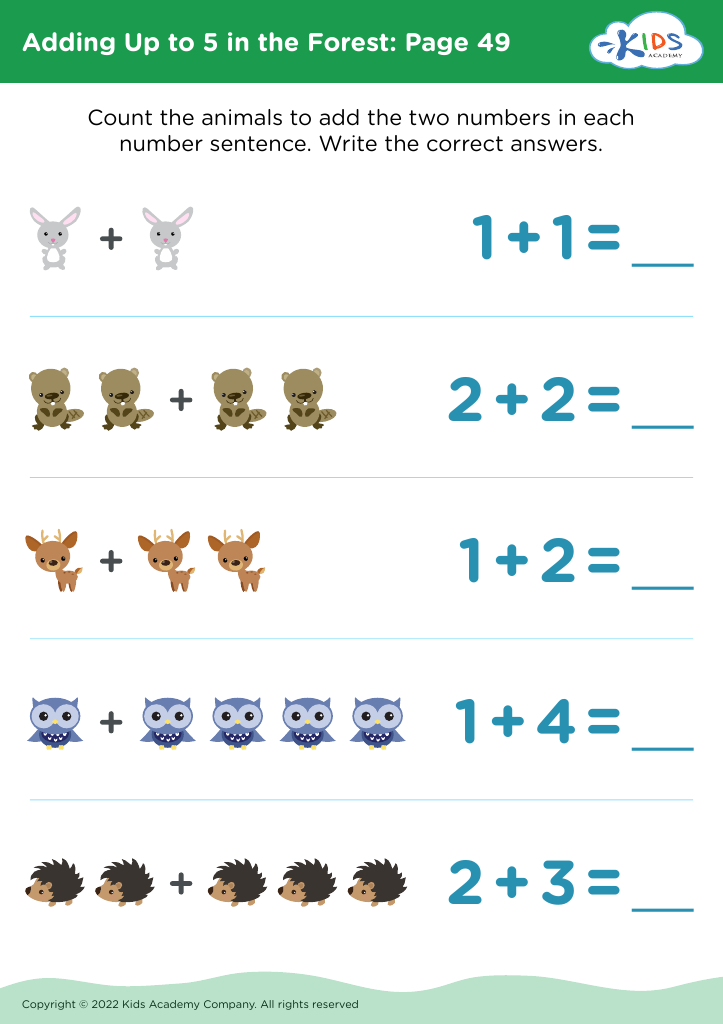
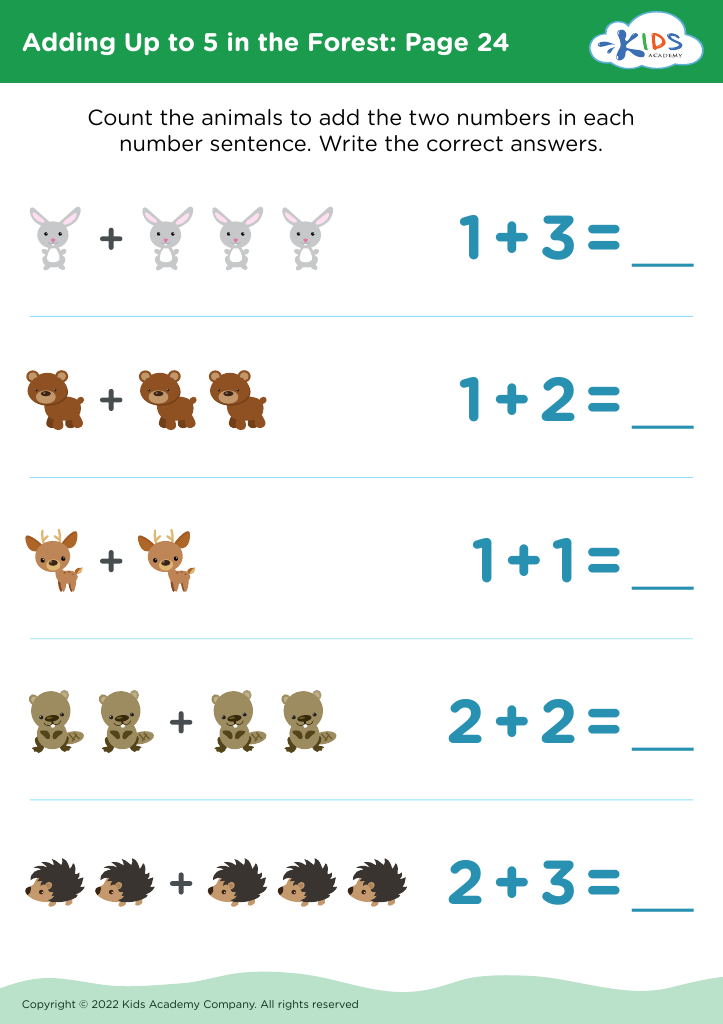
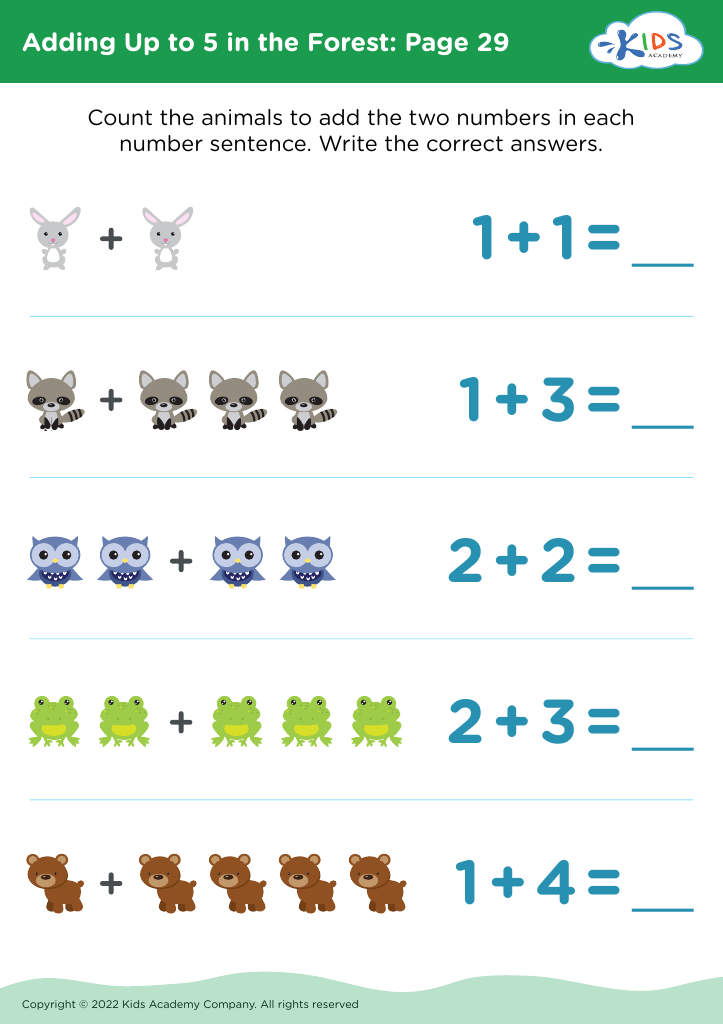
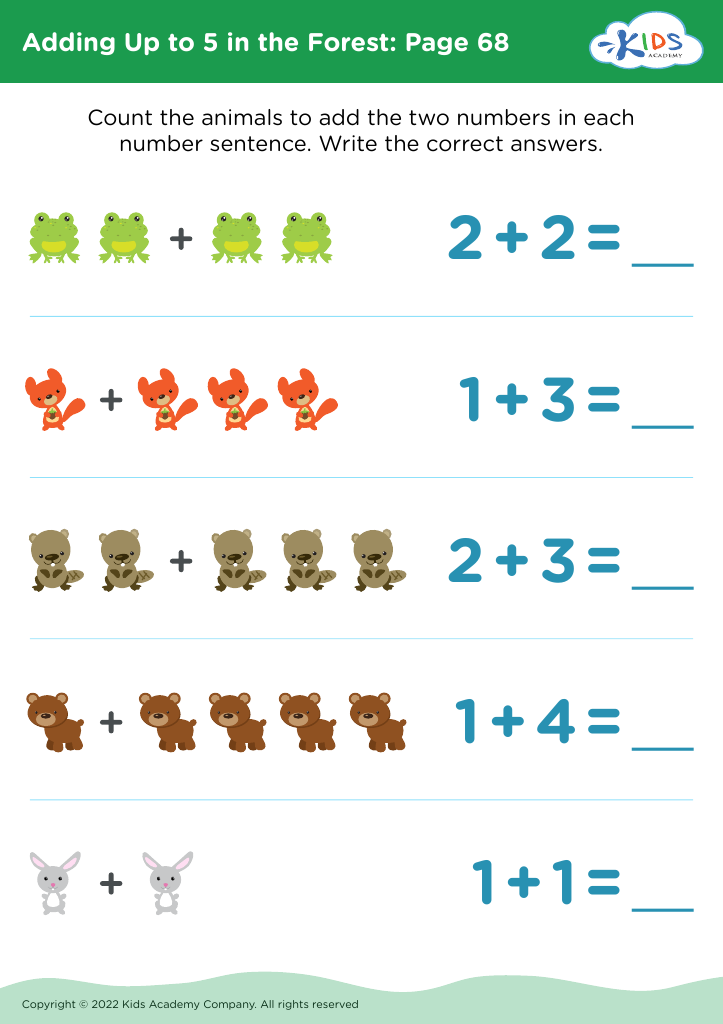
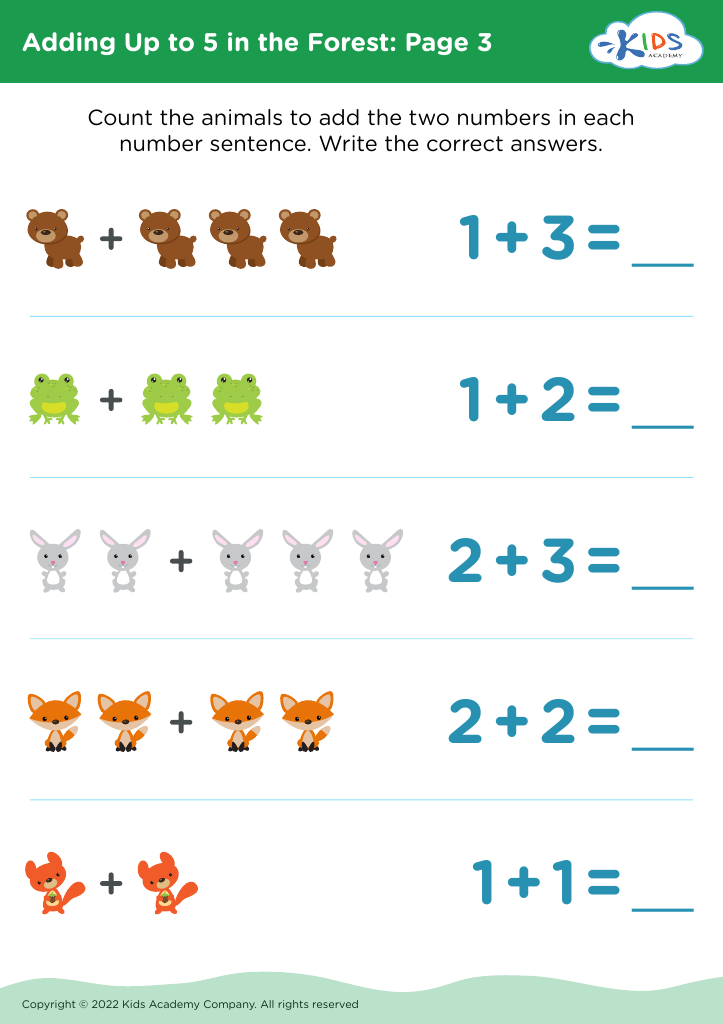



Parents and teachers should prioritize problem-solving skills in children aged 5-8 because these abilities form the foundation for lifelong learning and critical thinking. Engaging children in activities such as "Adding in the Forest," which promotes problem-solving through play and creativity, encourages them to think independently. During this age, children are naturally curious and eager to explore, making it an ideal time to cultivate their analytical skills.
Problem-solving fosters resilience, teaching children that it's okay to encounter challenges and that persistence is key. This skill not only enhances academic performance—allowing students to tackle math problems or science experiments more effectively—but also assists in social situations, helping them navigate friendships and conflicts.
Integrating problem-solving in a fun, relatable context such as nature enhances engagement and enjoyment. These experiences allow children to work in groups, fostering teamwork and communication skills. Additionally, addressing real-world problems makes learning meaningful and applicable.
Ultimately, parents and teachers who emphasize problem-solving in early childhood build confident, empathetic thinkers equipped to face an ever-changing world. Establishing these skills now paves the way for future success in school, relationships, and beyond.