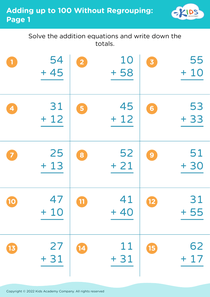
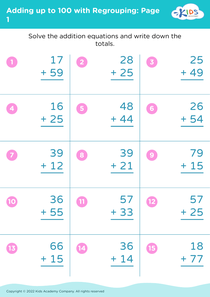
Color Identification Adding up to 100 Misc Worksheets for Ages 5-8
4 filtered results
-
From - To
Enhance your child's learning journey with our "Color Identification Adding up to 100 Misc Worksheets for Ages 5-8". These engaging worksheets combine essential math skills with color recognition to make learning fun and effective. Tailored for young learners, aged 5 to 8, each worksheet features vibrant visuals and interactive activities that help children master addition while reinforcing their understanding of colors. From simple sums to more complex problems, these worksheets are designed to keep kids stimulated and motivated. Perfect for both classroom and at-home practice, they'll develop crucial math foundations and color identification, supporting overall academic growth.
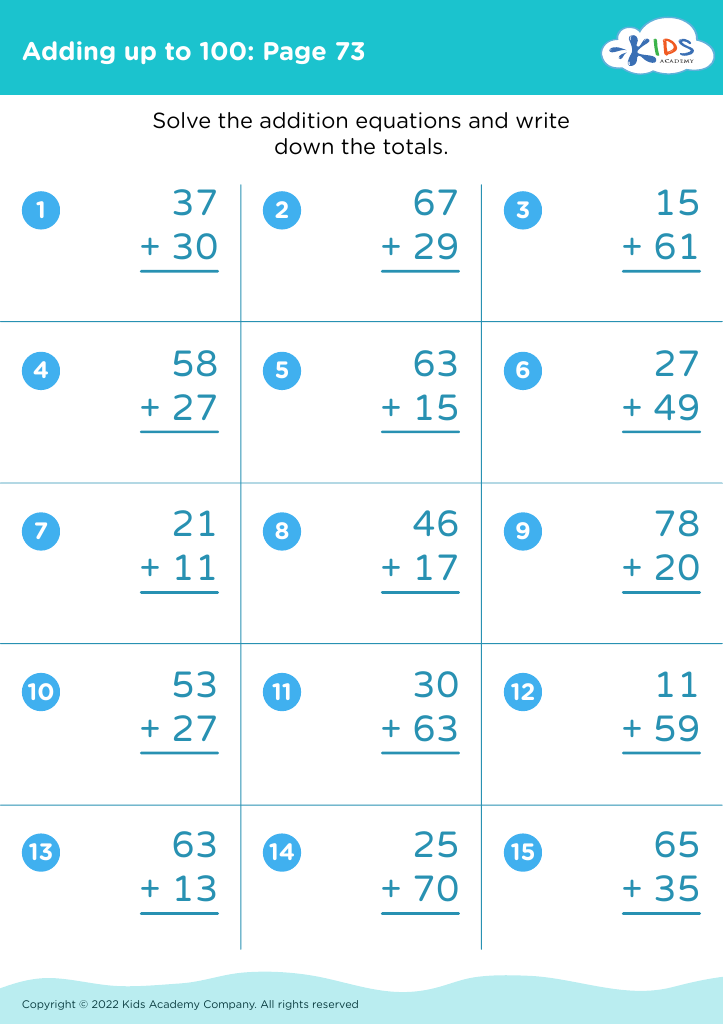
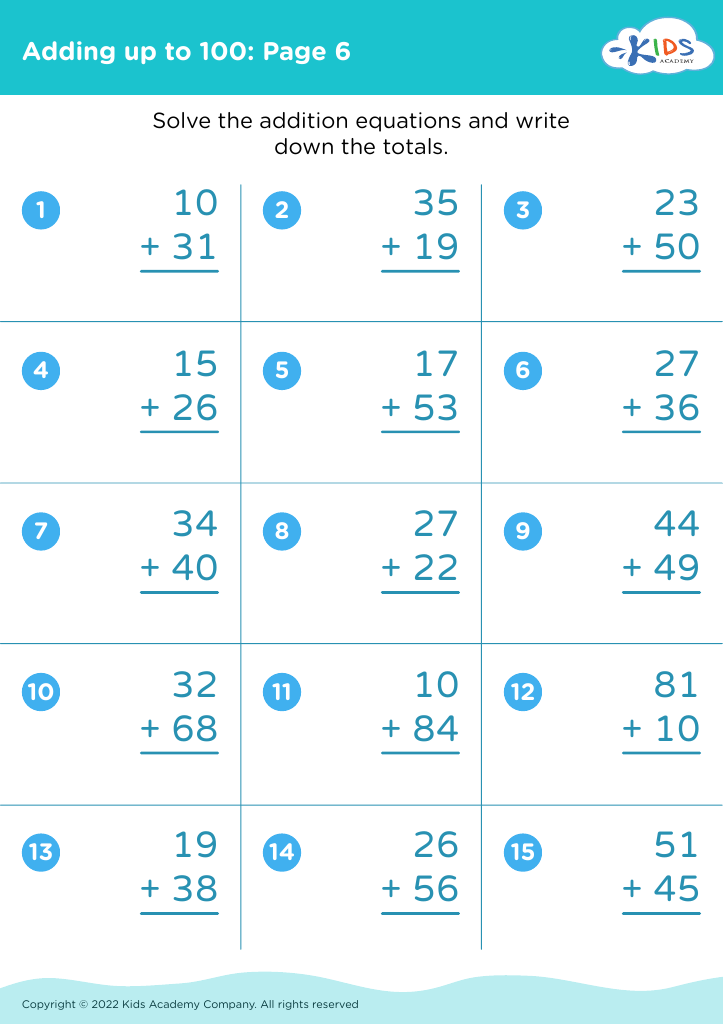
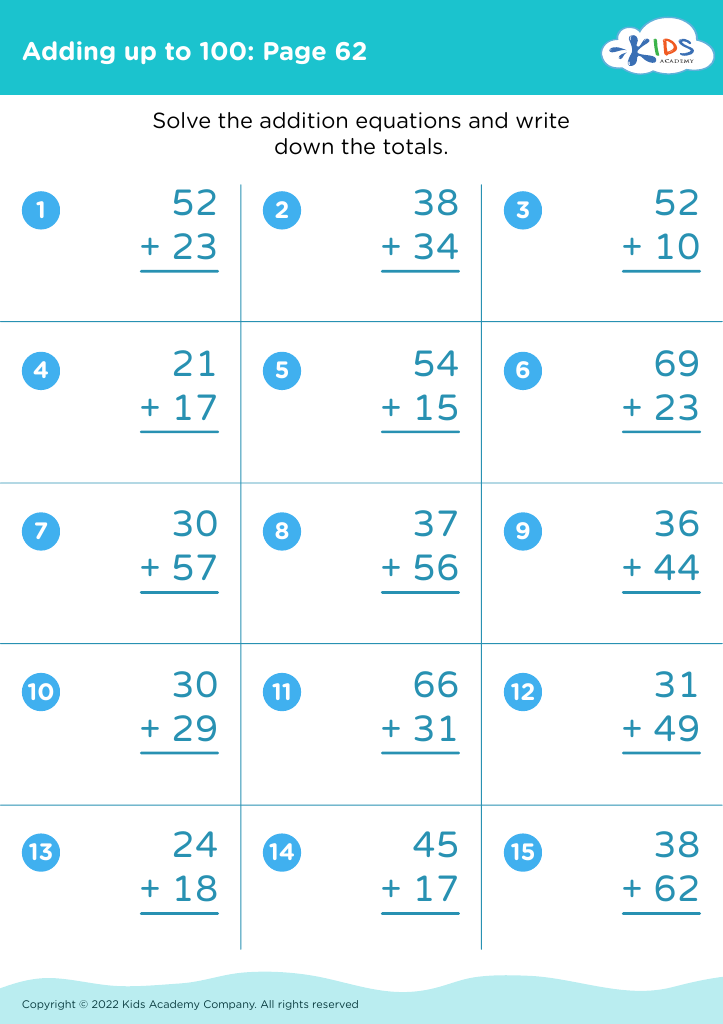
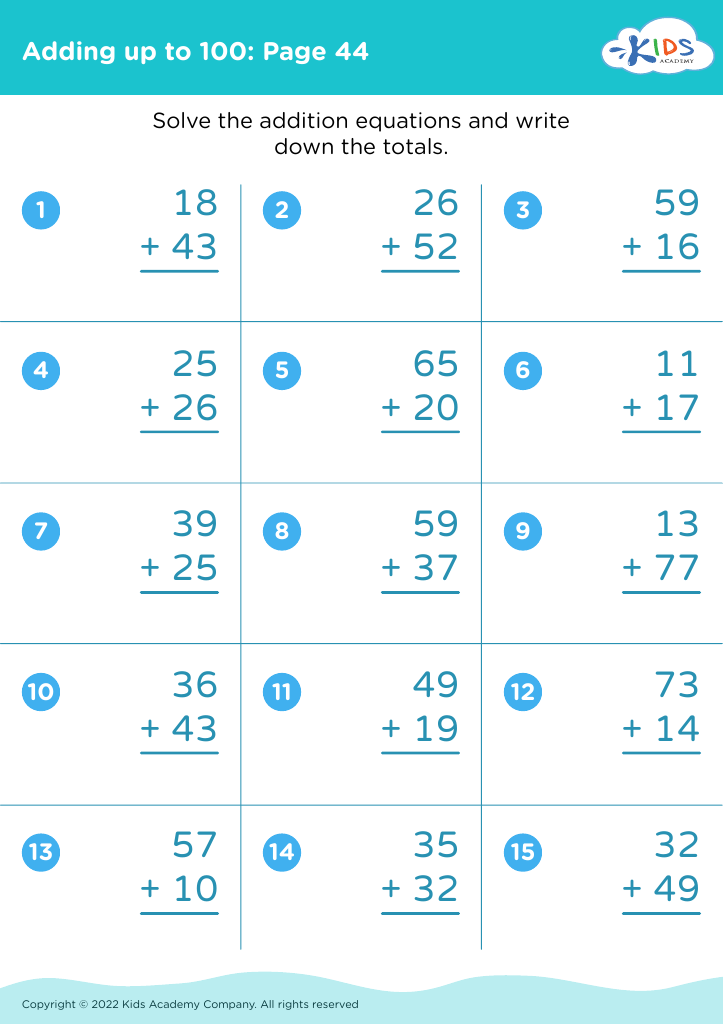


Parents and teachers have a pivotal role in fostering early cognitive development and foundational skills in children aged 5-8, and color identification through interactive activities like adding up to 100 plays a crucial part in this process. During these formative years, young minds are particularly adept at absorbing and integrating new information, making it an ideal time to introduce foundational concepts in both mathematics and visual learning.
Color identification sharpens a child's observation skills and helps them distinguish between different hues and shades, bolstering their visual discrimination abilities essential for reading and writing. Integrating math with color identification encourages children to engage multiple cognitive faculties simultaneously. For example, using colorful objects or stickers to represent numbers in addition problems makes abstract concepts more concrete and enjoyable.
Furthermore, teaching math in a vibrant and interactive manner helps children develop number sense and basic arithmetic skills within the context of their everyday experiences. This approach maintains their interest and makes learning feel like play, which can significantly enhance retention and understanding.
Ultimately, prioritizing such activities ensures a well-rounded educational experience where children don’t just learn isolated facts but understand and apply concepts contextually. This kind of creative and multisensory instruction lays a solid foundation for future academic success and lifelong learning enthusiasm.