Counting practice Adding up to 100 Misc Worksheets for Ages 5-8
4 filtered results
-
From - To
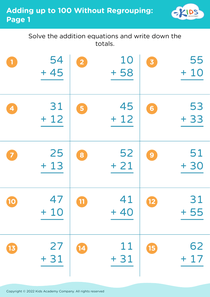
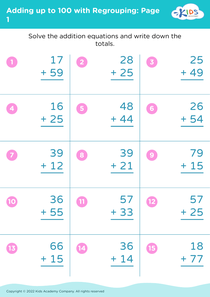
Unlock your child's potential in math with our "Counting Practice: Adding up to 100" worksheets, specially designed for ages 5-8. These printable worksheets from Kids Academy make learning fun and engaging, helping young learners build a solid foundation in addition. Each worksheet is crafted to boost arithmetic skills, foster problem-solving abilities, and enhance fluency in counting. Whether your child is just beginning or ready for a challenge, these activities cater to various skill levels, ensuring a seamless learning experience. Empower your young mathematician today with our comprehensive practice materials.
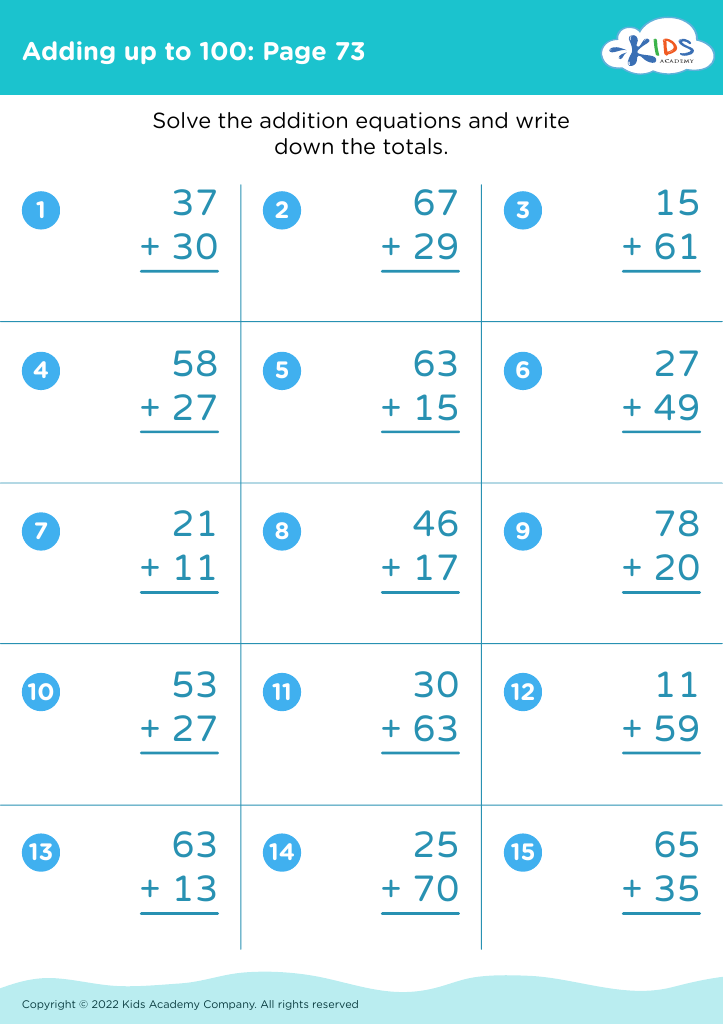
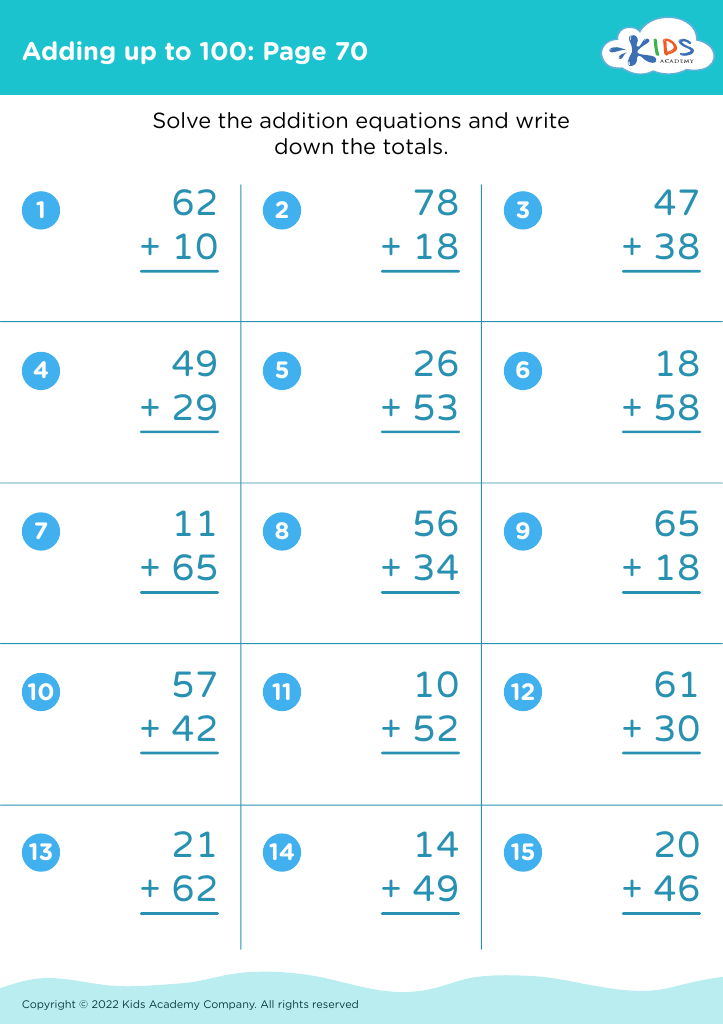
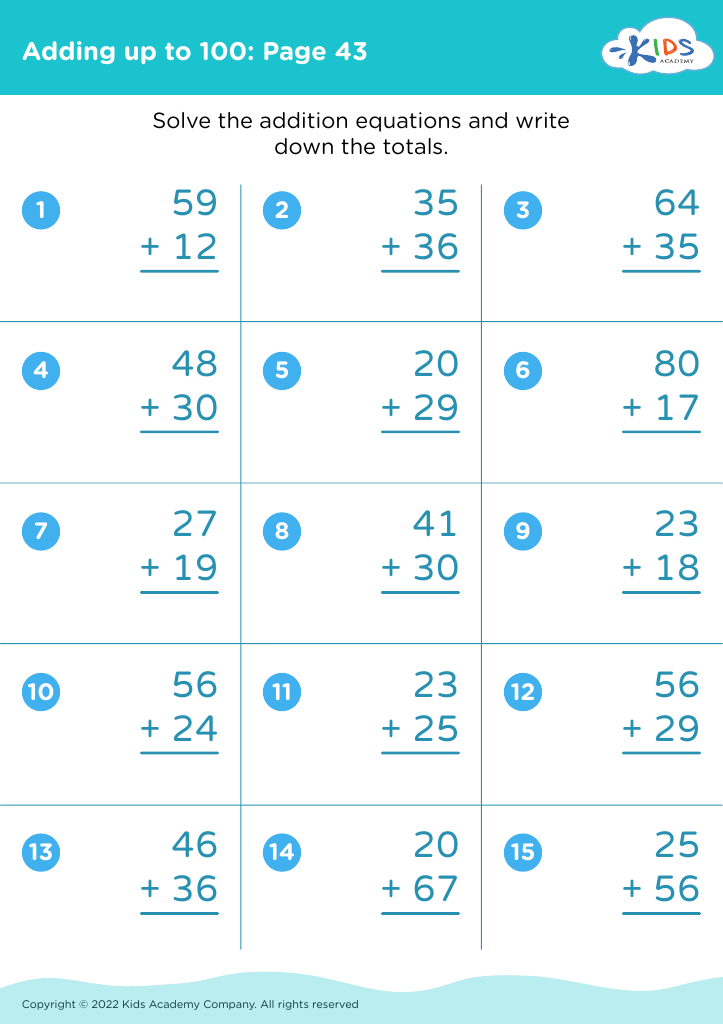
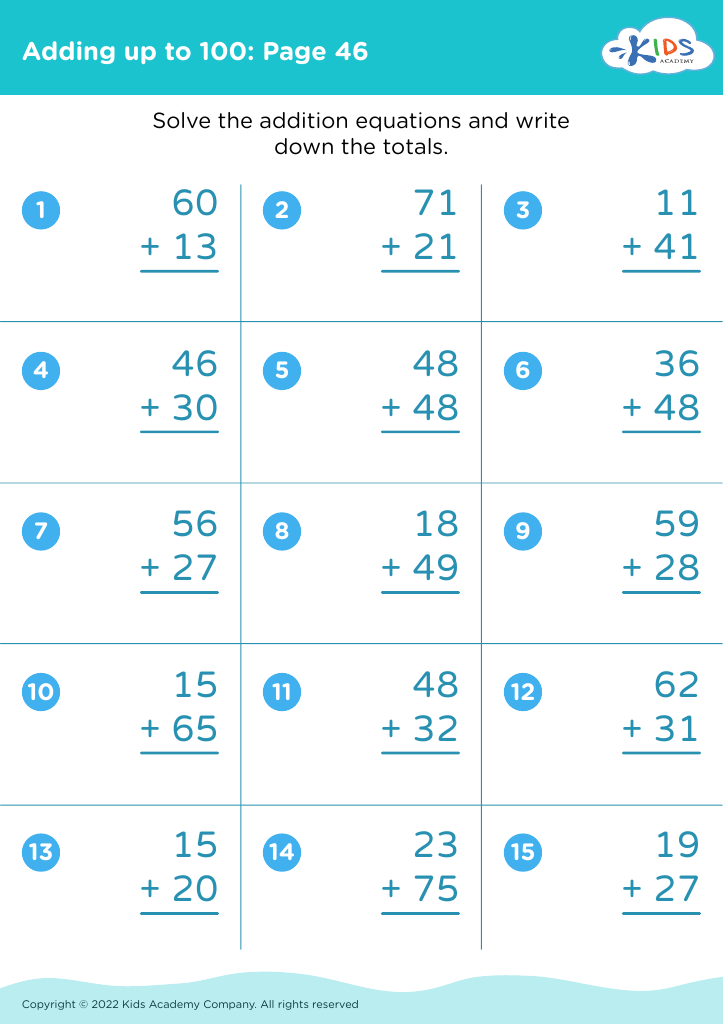


Counting practice and learning to add up to 100 are fundamental skills for children ages 5-8 and play a significant role in their cognitive development. For parents and teachers, it's crucial to understand the value of building a strong numerical foundation during early childhood. Counting helps children grasp number sequences, recognize patterns, and develop fluency in basic arithmetic. These are building blocks for more advanced mathematical concepts they will encounter later in their academic journey.
Adding up to 100 improves a child's ability to perform mental math, which enhances problem-solving skills and logical thinking. Engaging in these exercises boosts confidence, especially as children experience the satisfaction of mastering a new skill. Additionally, counting and adding exercises align with early math curricula, ensuring children are prepared for school standards and assessments.
Moreover, practicing these skills at a young age fosters a love for math, turning what might be an intimidating subject into a fun and interesting challenge. Games, interactive activities, and real-life situations (like counting apples or adding up scores in a game) make learning engaging. Therefore, prioritizing counting practice and addition for young learners not only boosts their academic performance but also builds a solid foundation for their future education.