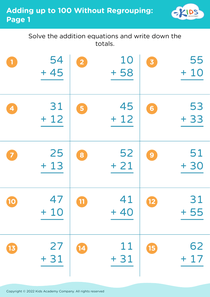
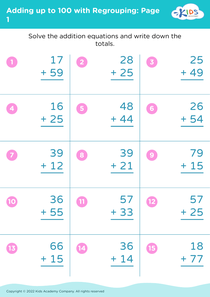
Identifying shapes Adding up to 100 Misc Worksheets for Ages 5-8
3 filtered results
-
From - To
Discover our engaging "Identifying Shapes Adding Up to 100 Misc Worksheets" designed for children aged 5-8. These interactive worksheets combine early math skills with shape recognition, providing a fun way for young learners to practice addition while identifying various shapes. Perfect for enhancing both mathematical understanding and visual literacy, these resources encourage creativity and critical thinking. Whether used in the classroom or at home, our worksheets cater to different learning styles, fostering confidence in young mathematicians. Download and explore a variety of shapes and addition problems that will captivate your child's imagination and make learning enjoyable!
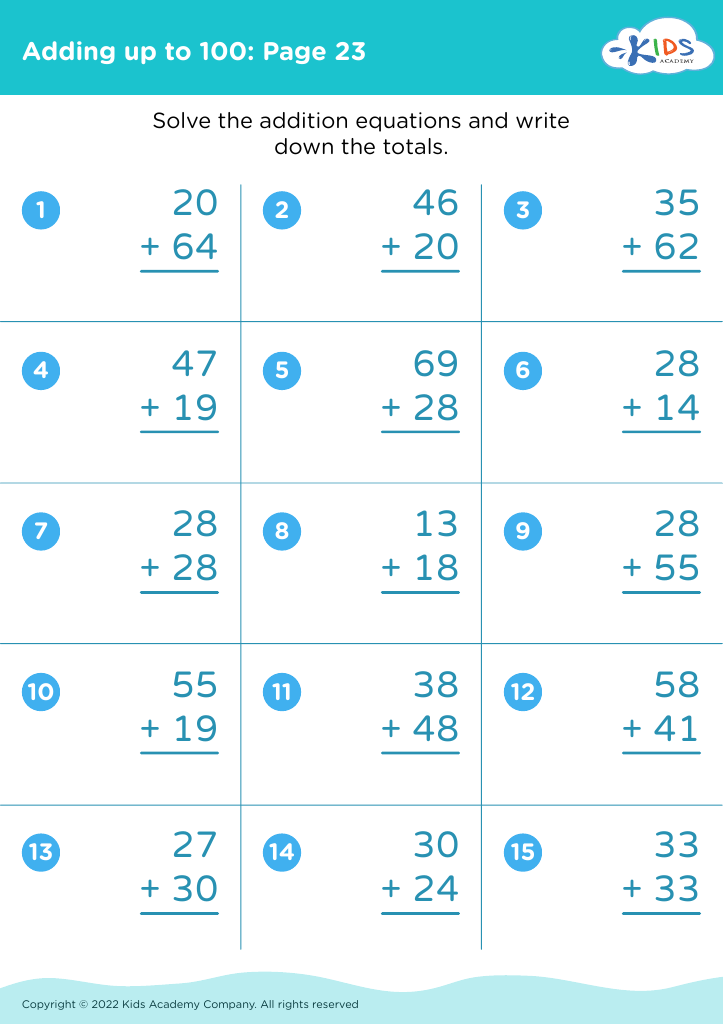
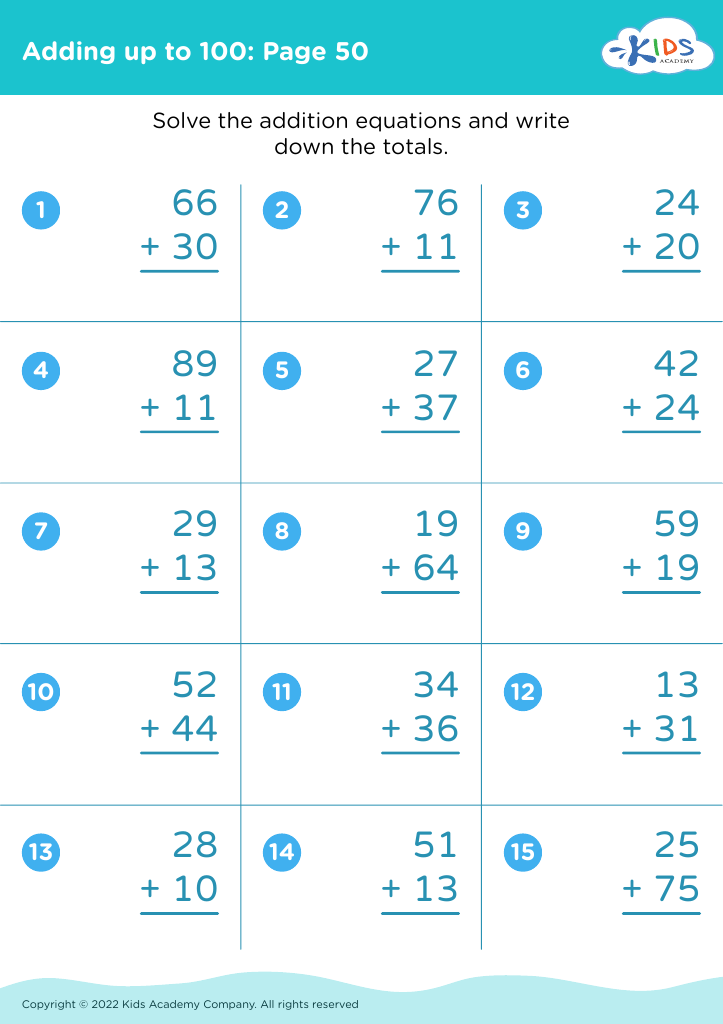
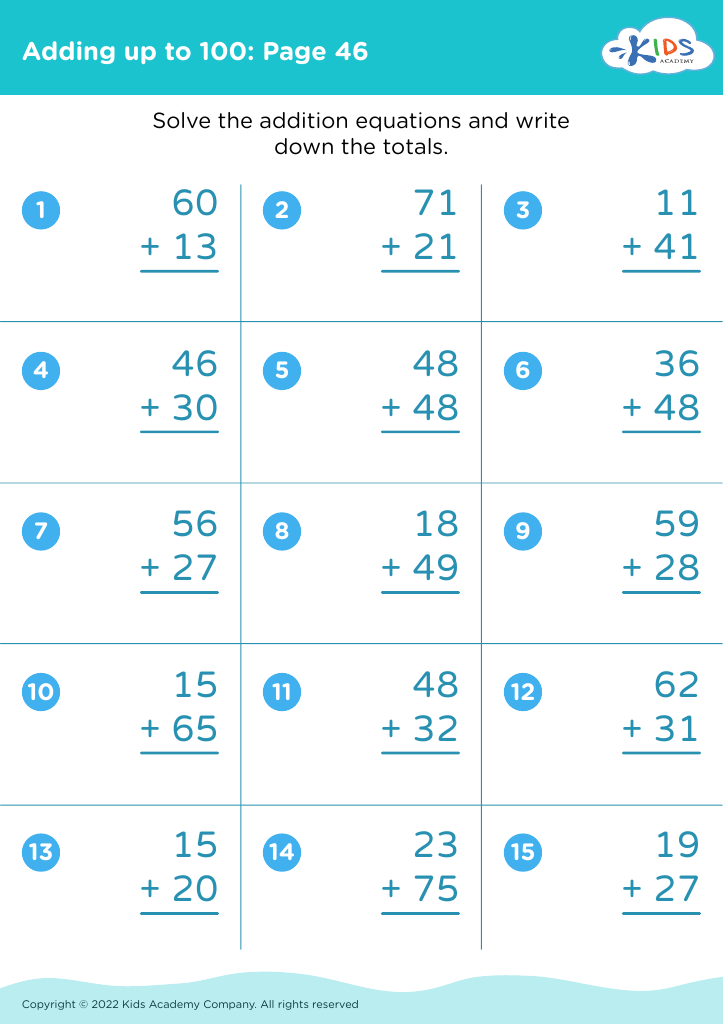


Identifying shapes and adding numbers up to 100 are foundational skills in early childhood education, critical for children's cognitive development. For children ages 5-8, recognizing shapes helps them understand geometric concepts essential in math, science, and art. It fosters spatial awareness and analytical thinking, enabling them to categorize objects in their environment and solve problems effectively. Understanding shapes also lays the groundwork for more advanced mathematical concepts such as symmetry, perimeter, and area, which children will encounter as they progress in their education.
Similarly, mastery of addition up to 100 teaches children crucial math skills, aiding them in everyday tasks such as counting, budgeting, and measuring. It empowers them with confidence and competence, fostering a positive attitude toward math. These skills contribute to overall academic success and reinforce logical reasoning.
Parents and teachers play a vital role in nurturing these abilities. By providing engaging activities and practical experiences, they can make learning enjoyable, helping kids appreciate the relevance of math and shapes in real life. Emphasizing these skills not only builds a strong academic foundation but also nurtures critical thinkers capable of tackling future challenges in a rapidly evolving world.