Problem-Solving Skills Adding up to 100 Misc Worksheets for Ages 5-8
7 filtered results
-
From - To
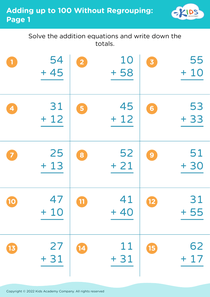
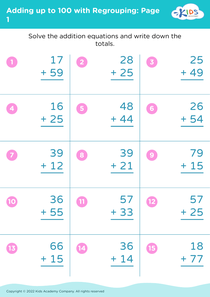
Boost your child's math confidence with our "Problem-Solving Skills Adding up to 100 Misc Worksheets for Ages 5-8". Designed to enhance critical thinking, these engaging resources help young learners practice adding numbers up to 100 creatively. Perfect for kindergarten to 2nd grade, each worksheet encourages children to tackle math problems through engaging puzzles and visual aids, making math fun and interactive. These comprehensive exercises promote cognitive development and foster a love for learning, laying a strong foundation for future math success. Ideal for classroom use or at-home practice, let's make every learning moment count!
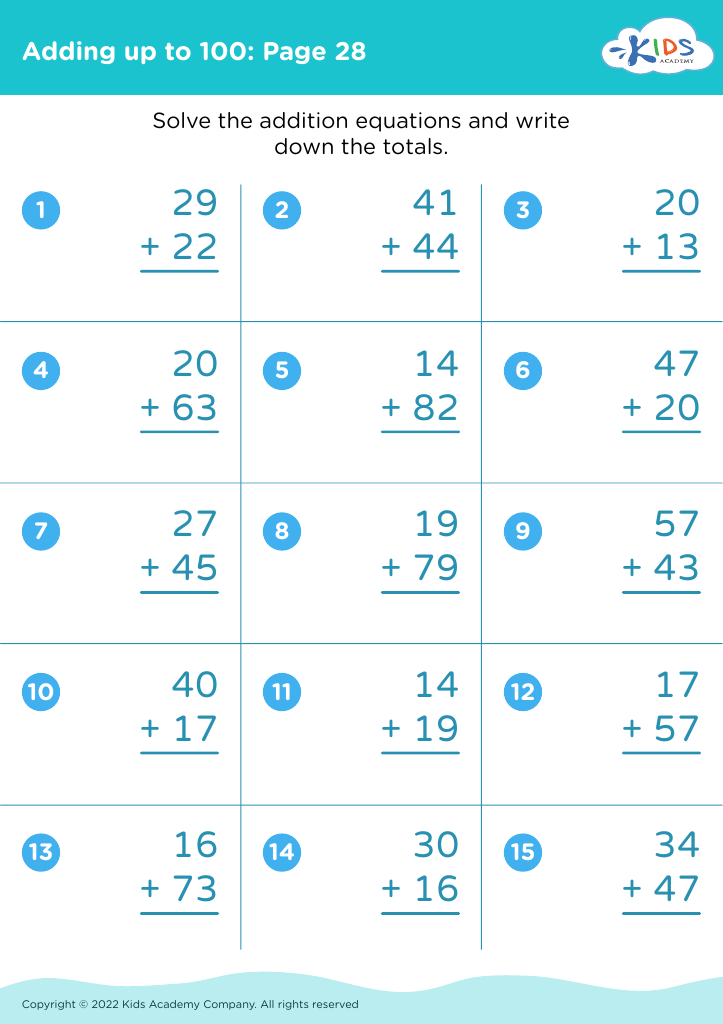
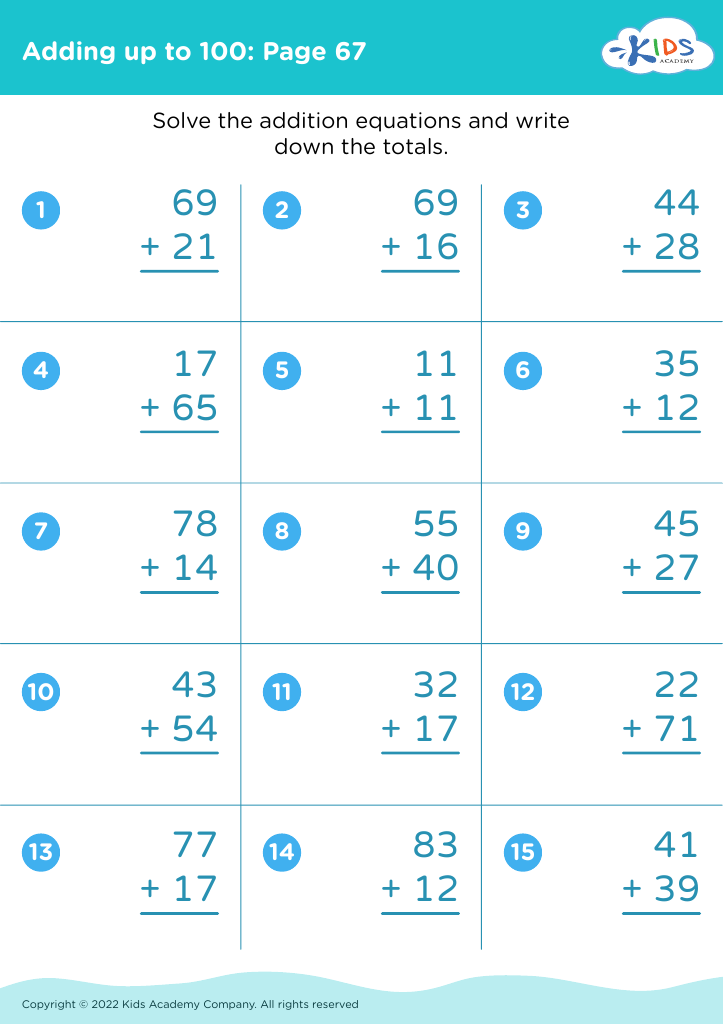
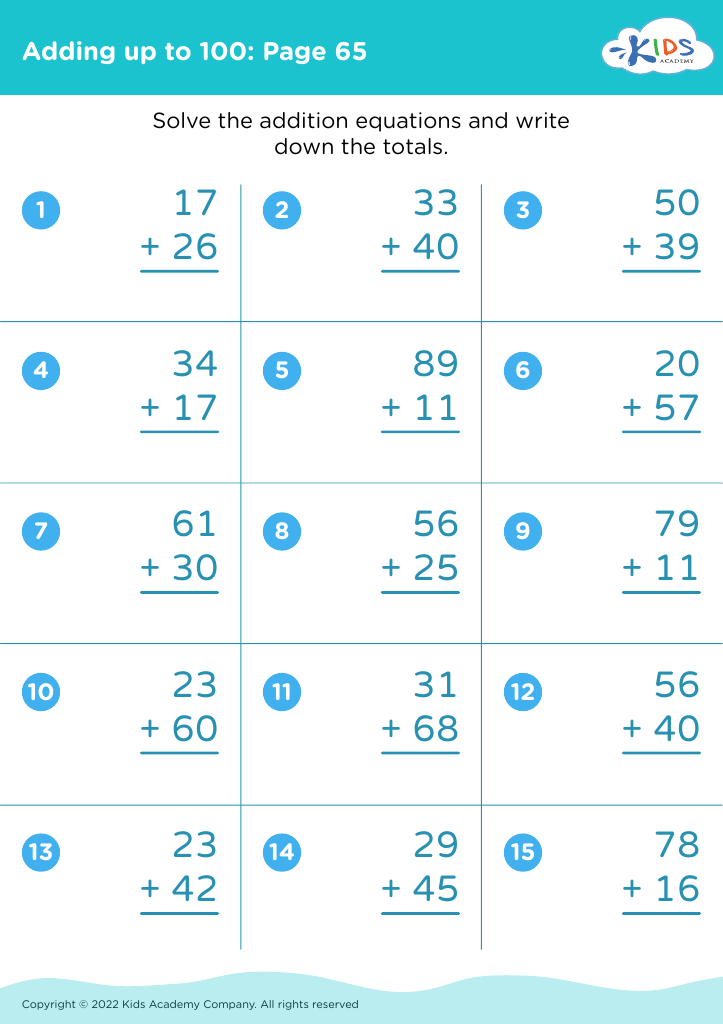
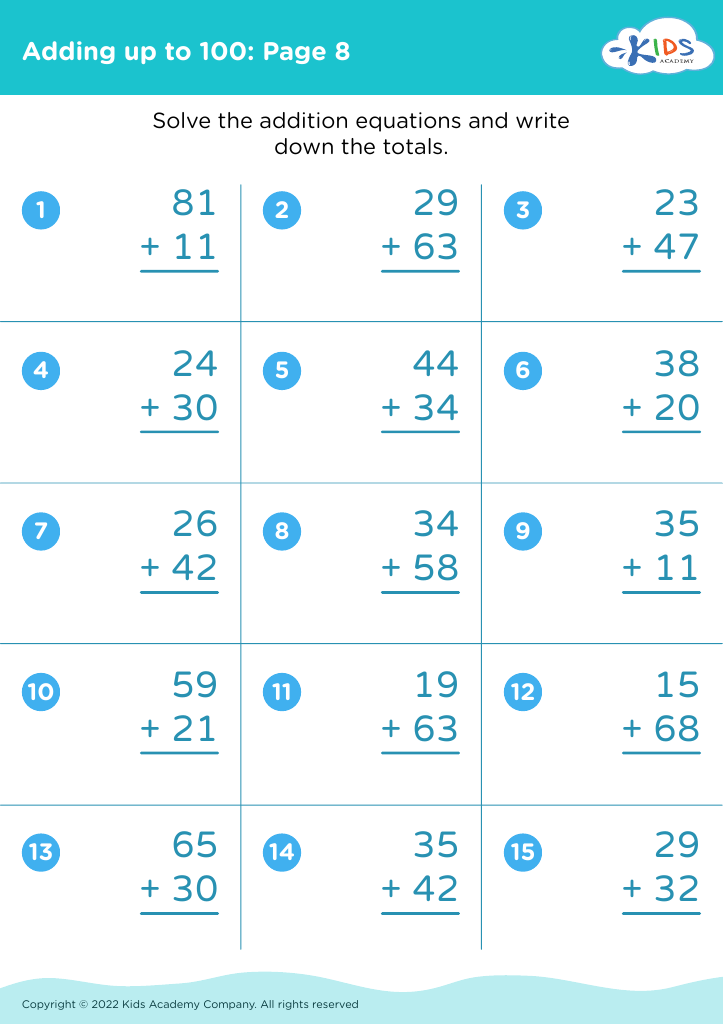
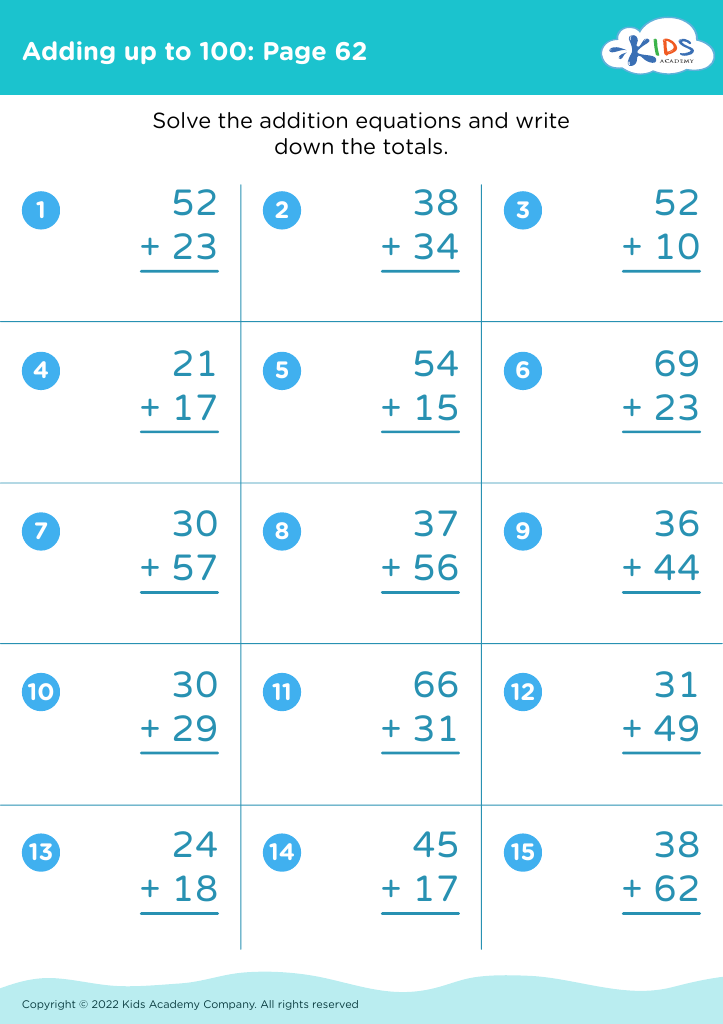
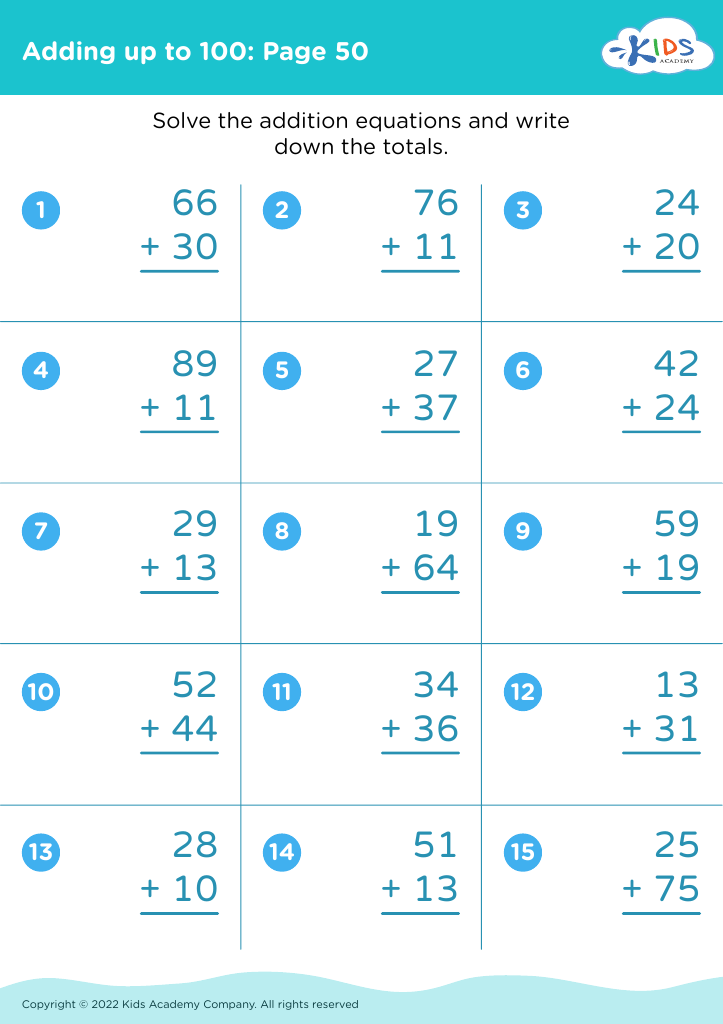
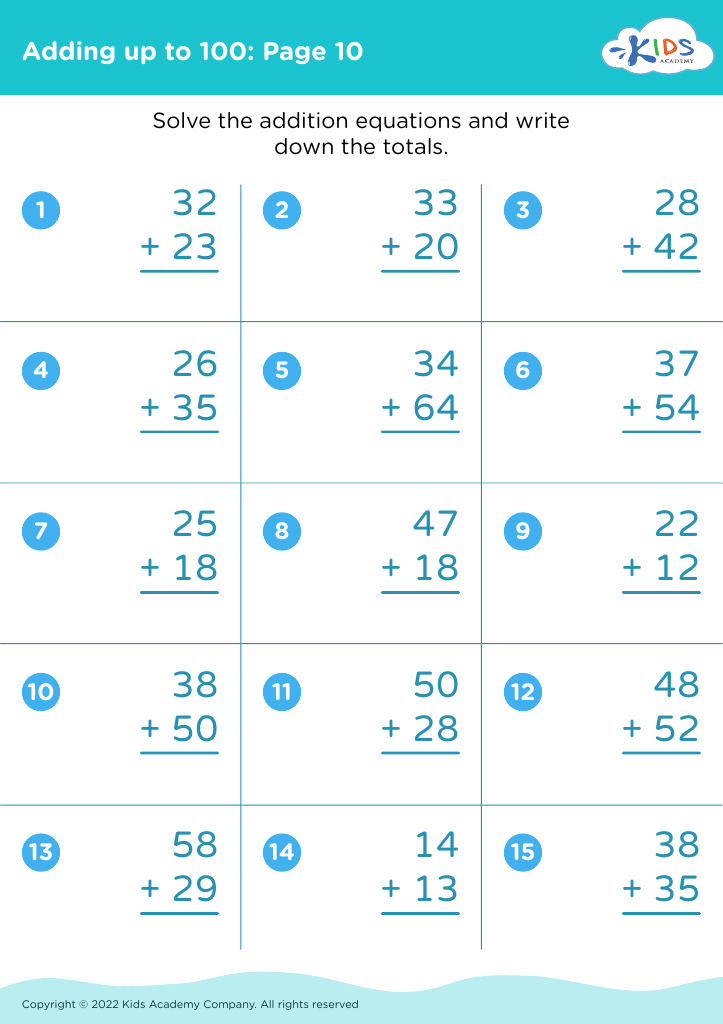


Problem-solving skills are vital for young children, particularly when it involves mathematics like adding up to 100. For children aged 5-8, mastering these skills extends beyond arithmetic; it enhances critical thinking, persistence, and logical reasoning. Firstly, early exposure to problem-solving sets the foundation for future academic achievement. Engaging in addition problems up to 100 bolsters their numeracy skills, helping them understand numerical relationships and improve mental math capabilities.
Additionally, solving these math problems fosters a growth mindset. As children navigate challenges and learn from mistakes, they develop resilience and the confidence to tackle increasingly complex problems. This mindset is crucial not just in academics, but in everyday decision making and lifelong learning.
Moreover, collaborative problem-solving in classroom settings promotes social skills. Working in pairs or groups to address math puzzles encourages communication, cooperation, and the ability to articulate thought processes.
Finally, developing these problem-solving skills early illuminates the practical relevance of math in daily life, making learning more engaging and meaningful. When caregivers and educators prioritize this aspect of learning, they equip children with essential tools for success both within and beyond the classroom. Investing efforts into nurturing these skills at a young age paves the way for well-rounded, capable individuals.