Reading comprehension Adding up to 100 Misc Worksheets for Ages 5-8
3 filtered results
-
From - To
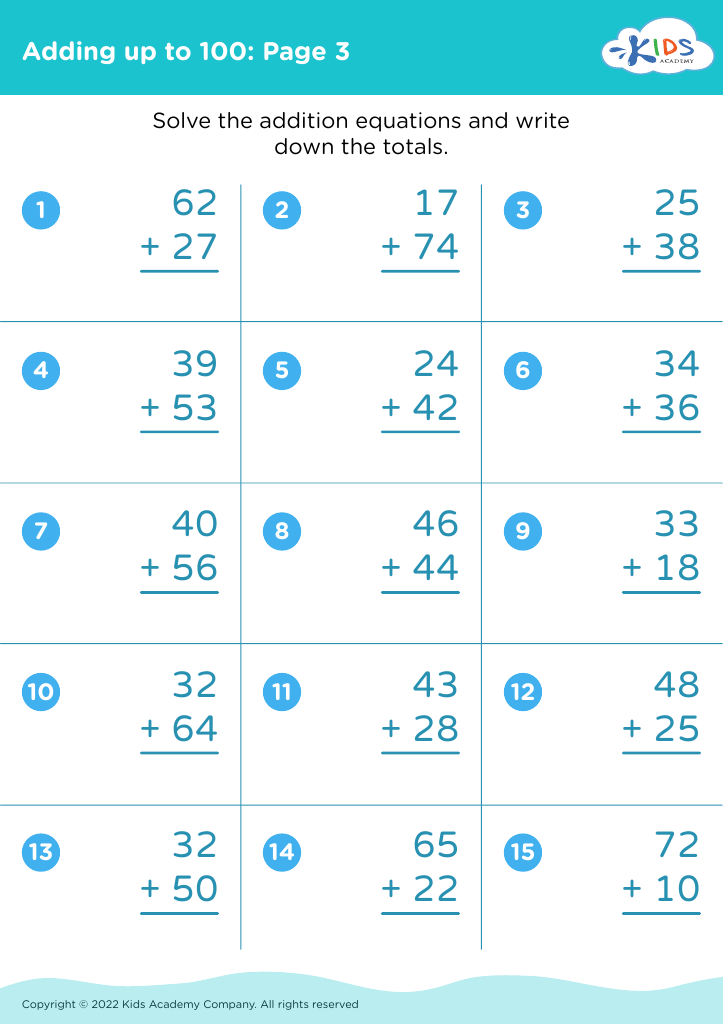
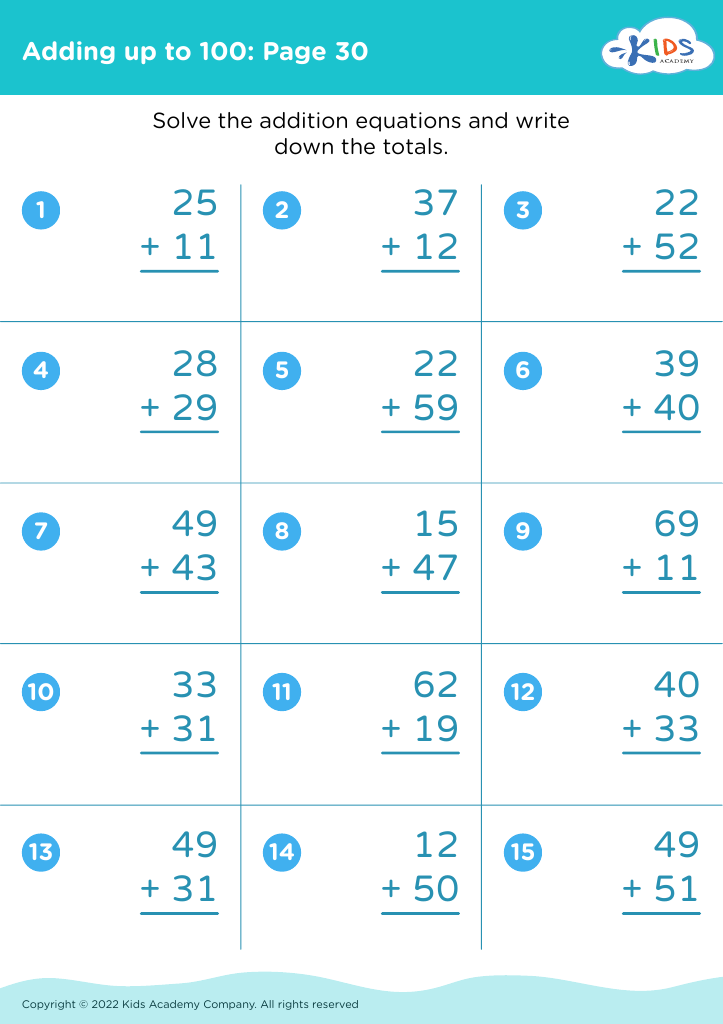
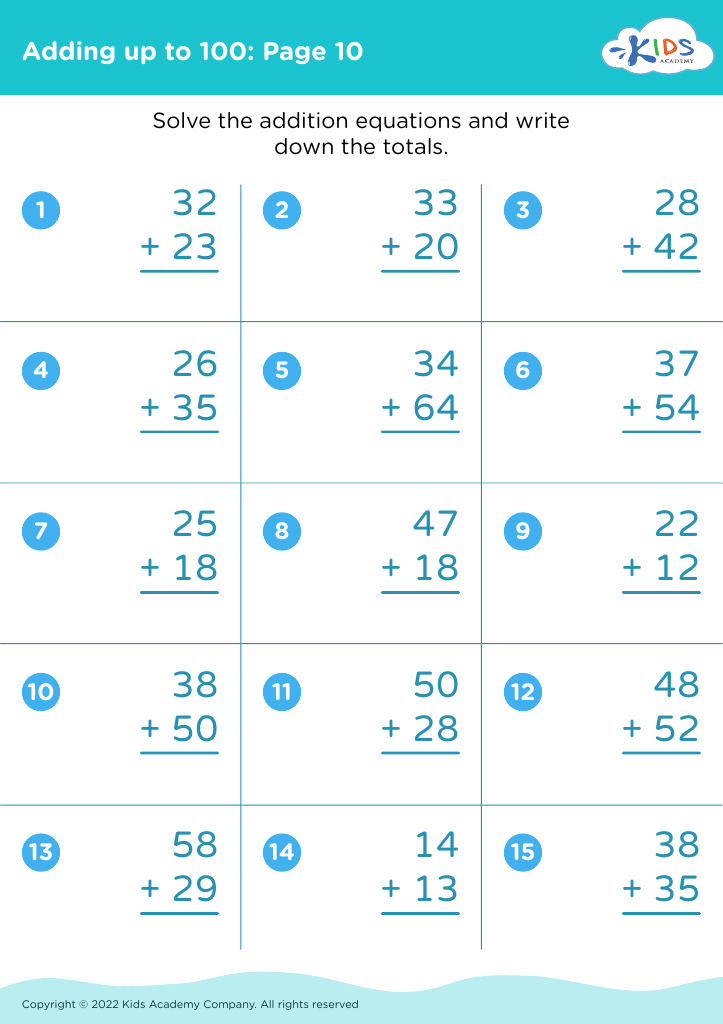
Welcome to our Reading Comprehension Worksheets featuring "Adding Up to 100" for ages 5-8! Enhance your child’s learning experience with a wide range of engaging activities designed to bridge math and literacy skills. Our printable worksheets focus on reading comprehension while incorporating fun math concepts, specifically addition exercises that culminate in sums up to 100. Through enjoyable stories, tasks, and questions, your young learners will not only strengthen their mathematical understanding but will also improve their reading and critical thinking abilities. Explore our collection and make learning an exciting journey for your child today!


Reading comprehension is crucial for children aged 5-8, as it forms the foundation for all future learning. At this early stage, kids are developing their critical thinking and literacy skills, and strong comprehension directly influences their academic success. When parents or teachers emphasize reading comprehension, they help children make connections between ideas, which fosters a deeper understanding of the material.
For young learners, mastering comprehension encourages a love for reading that can last a lifetime. It cultivates curiosity, allowing children to explore diverse topics and broaden their horizons. When kids can understand and discuss what they’ve read, they develop confidence in their abilities and are more inclined to engage with books.
Moreover, reading comprehension aids in social and emotional development, as stories often reflect real-life scenarios and feelings. This allows children to gain empathy and relate better to others.
Supporting reading comprehension also impacts overall educational outcomes. Improved comprehension skills contribute to better performance in all subjects, enhancing a child’s ability to learn and succeed throughout their educational journey. Therefore, parents and teachers play a vital role in nurturing these competencies, ensuring that children are well-prepared for both academic and personal challenges ahead.