Understanding patterns Adding up to 100 Misc Worksheets for Ages 5-8
6 filtered results
-
From - To
Discover a delightful collection of worksheets designed to help children ages 5-8 master adding up to 100 while having fun. These engaging activities enhance their understanding of patterns, promoting essential math skills such as problem-solving and logical thinking. Perfect for early learners, our resources are crafted by experts to align with educational standards and ensure effective learning. Each worksheet is filled with vibrant visuals and interactive exercises that keep young minds stimulated and excited about math. Watch your child's confidence soar as they grasp key concepts and develop a strong math foundation through our "Understanding patterns Adding up to 100 Misc Worksheets."
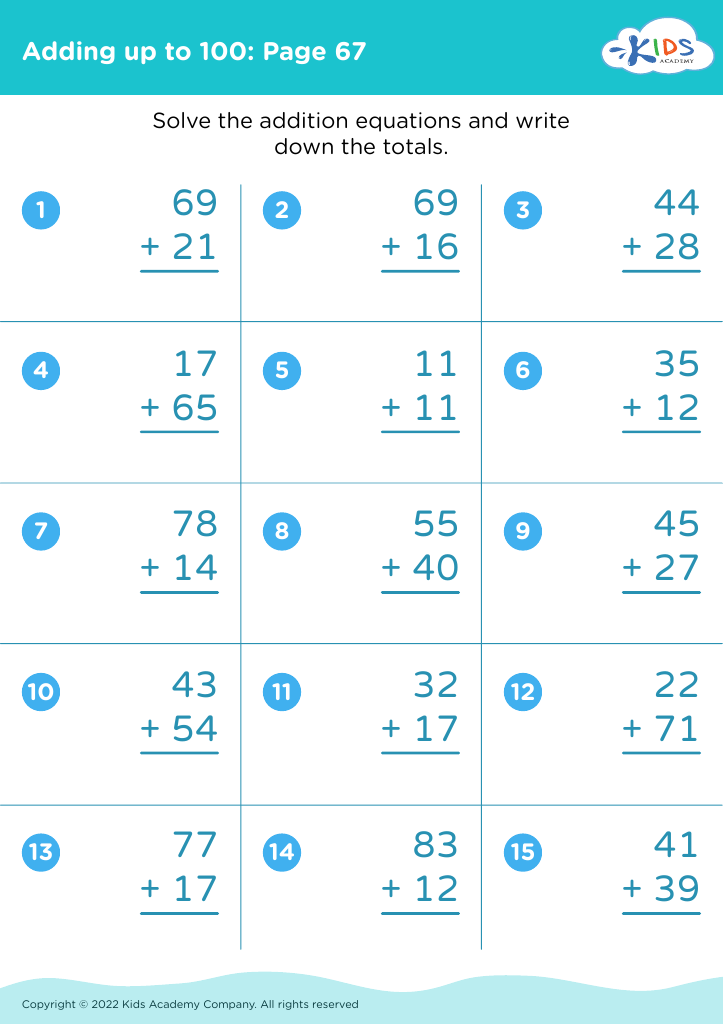
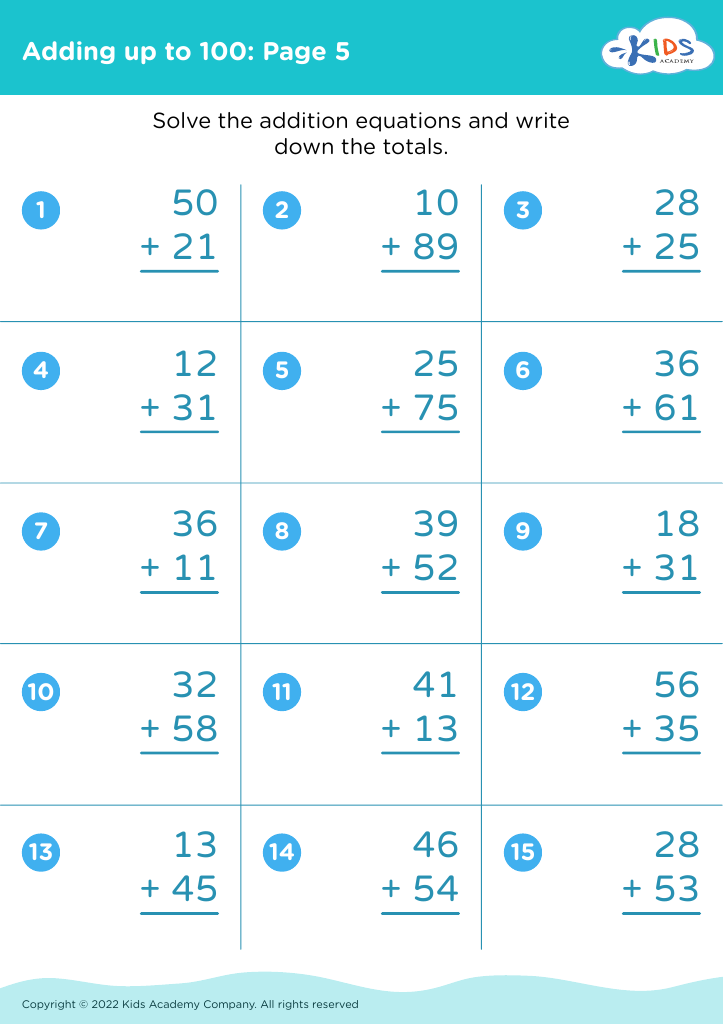
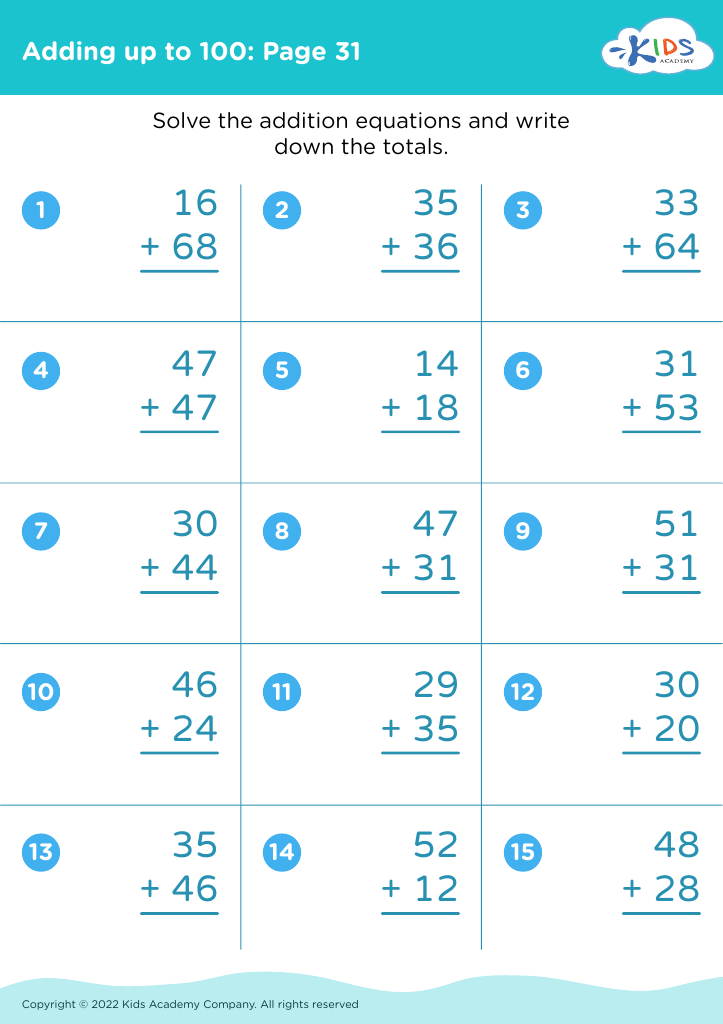
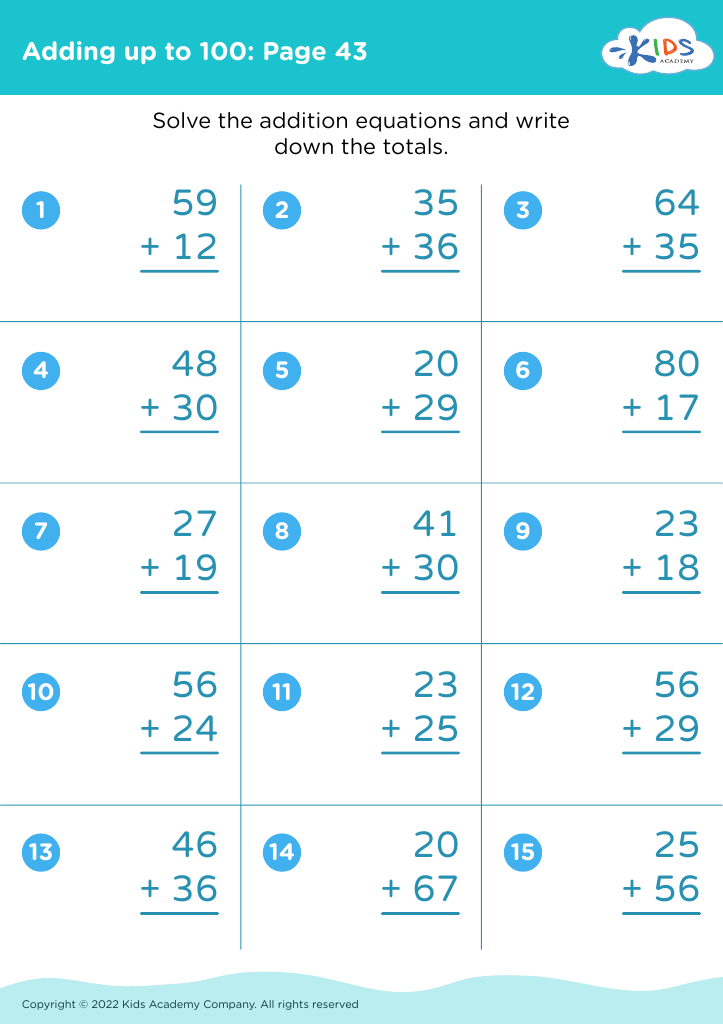
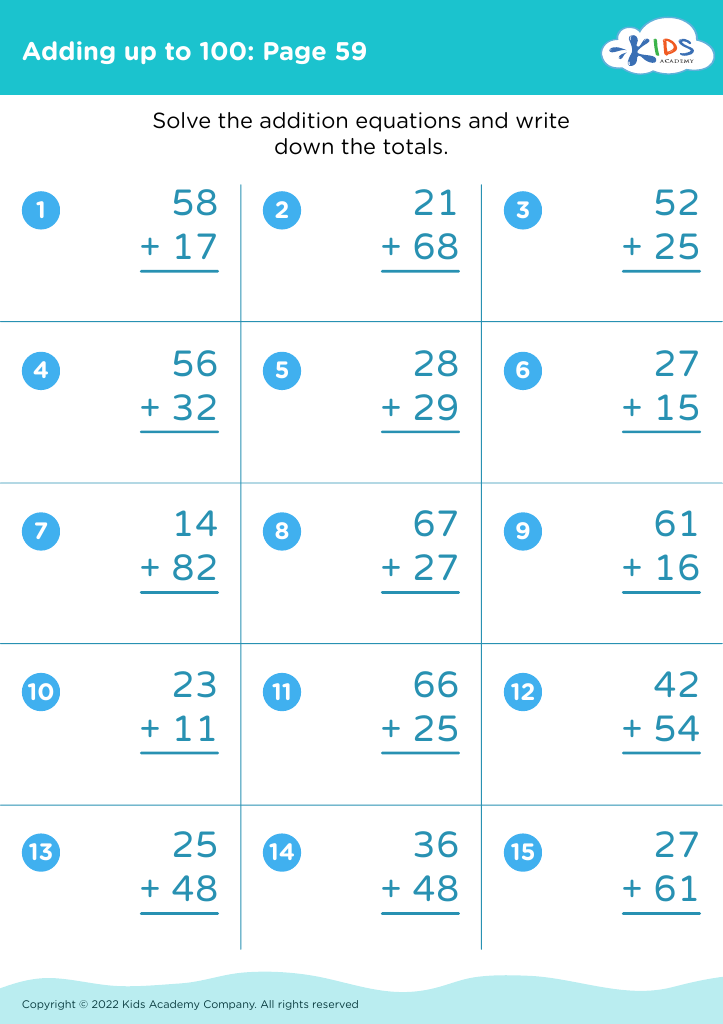
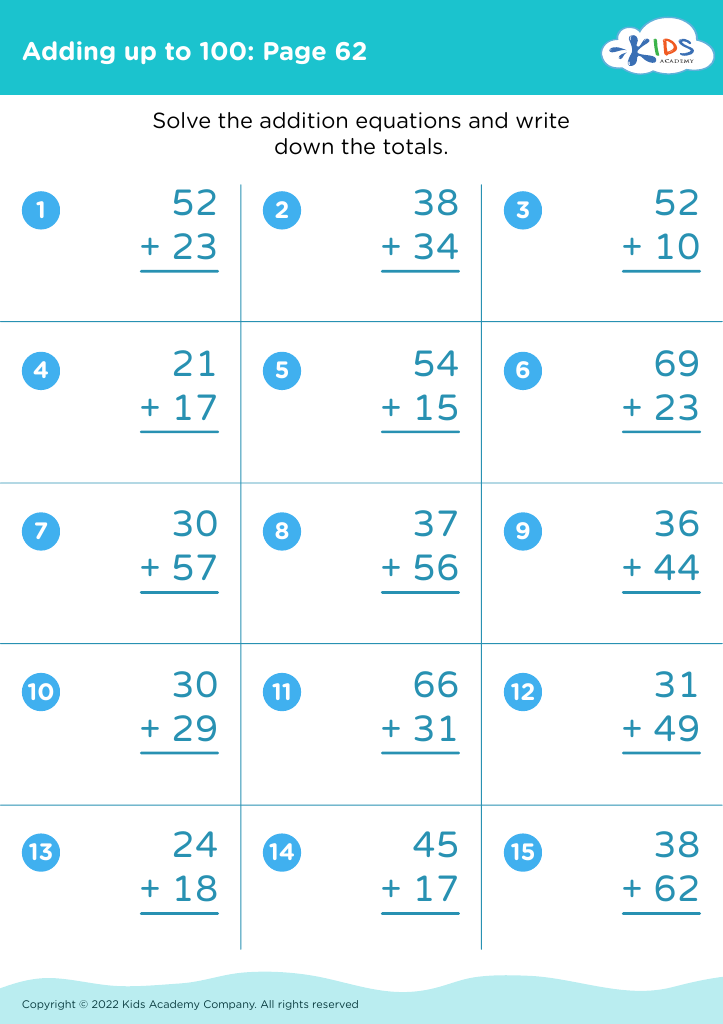


Understanding patterns and basic addition, such as adding up to 100, for children aged 5-8 is fundamental for their cognitive development and future academic success. Firstly, patterns help kids recognize order and predictability in their environment, which are critical for problem-solving and mathematical thinking. Recognizing patterns enhances their ability to see relationships between numbers and better understand more complex math concepts in later years.
Adding up to 100 builds foundational arithmetic skills. Early proficiency in basic addition not only supports more complex operations like subtraction, multiplication, and division, but also boosts confidence and fosters a positive attitude toward math. As children successfully solve simple addition problems, they gain a sense of accomplishment that motivates them to tackle more challenging tasks.
Beyond math, these skills are essential for everyday life activities, such as telling time, handling money, and organizing tasks. Children who can quickly and accurately perform basic math functions are better equipped to manage daily life and academic responsibilities.
In conclusion, fostering an understanding of patterns and basic addition in early childhood lays the groundwork for both academic and life skills. By ensuring young learners grasp these fundamentals, parents and teachers set the stage for continued intellectual development and practical problem-solving abilities.