Mathematical reasoning Adding up to 1000 Misc Worksheets for Ages 5-8
5 filtered results
-
From - To
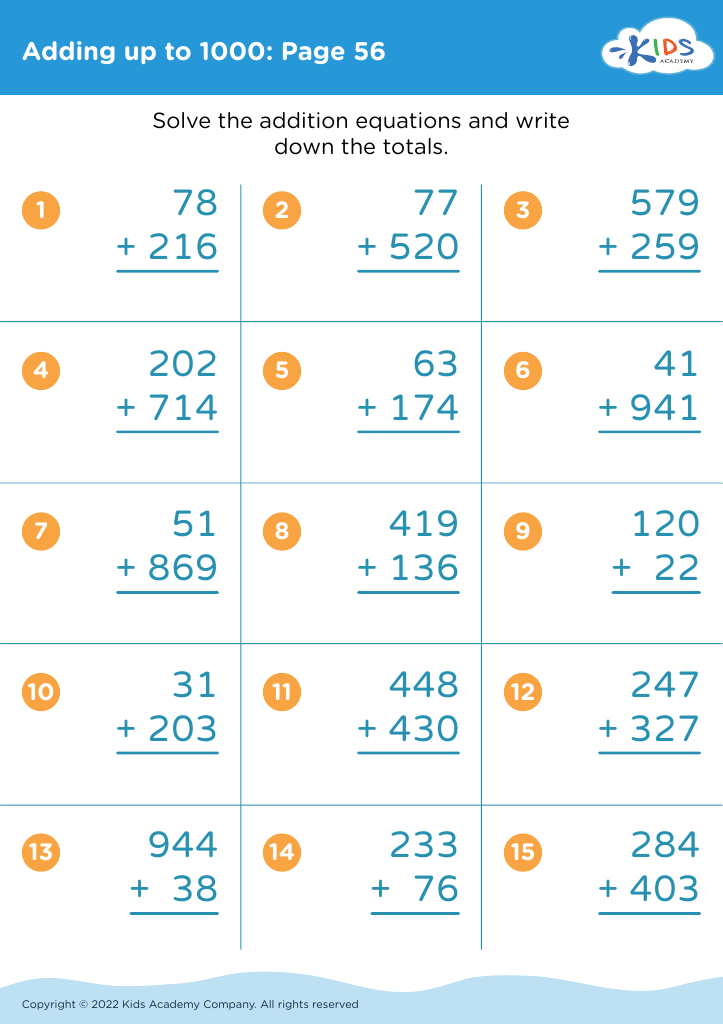
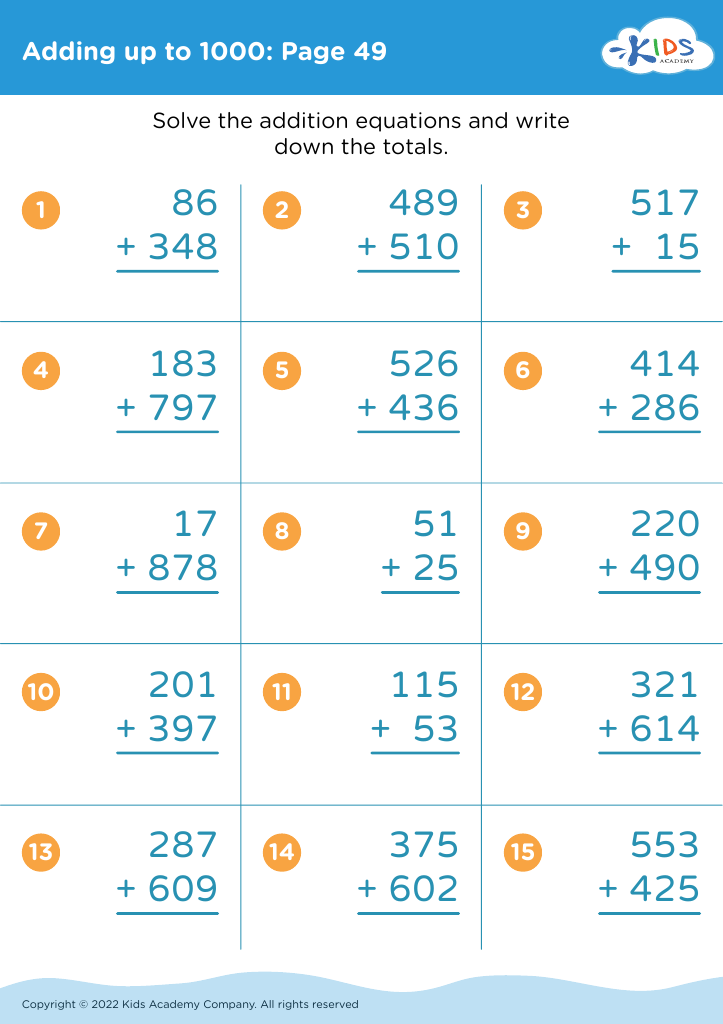
Unlock your child's potential with our "Mathematical Reasoning: Adding up to 1000 Misc Worksheets for Ages 5-8." Thoughtfully designed for young learners, these printable worksheets are perfect for enhancing addition skills while promoting critical thinking. Each activity encourages step-by-step problem-solving, systematic reasoning, and developing a strong mathematical foundation. With various engaging exercises, from simple sums to multidigit addition, the resources aim to make learning enjoyable and effective. Ideal for homeschooling or extra practice, these worksheets ensure that your child learns to add confidently up to 1000, fostering a love for math from an early age.
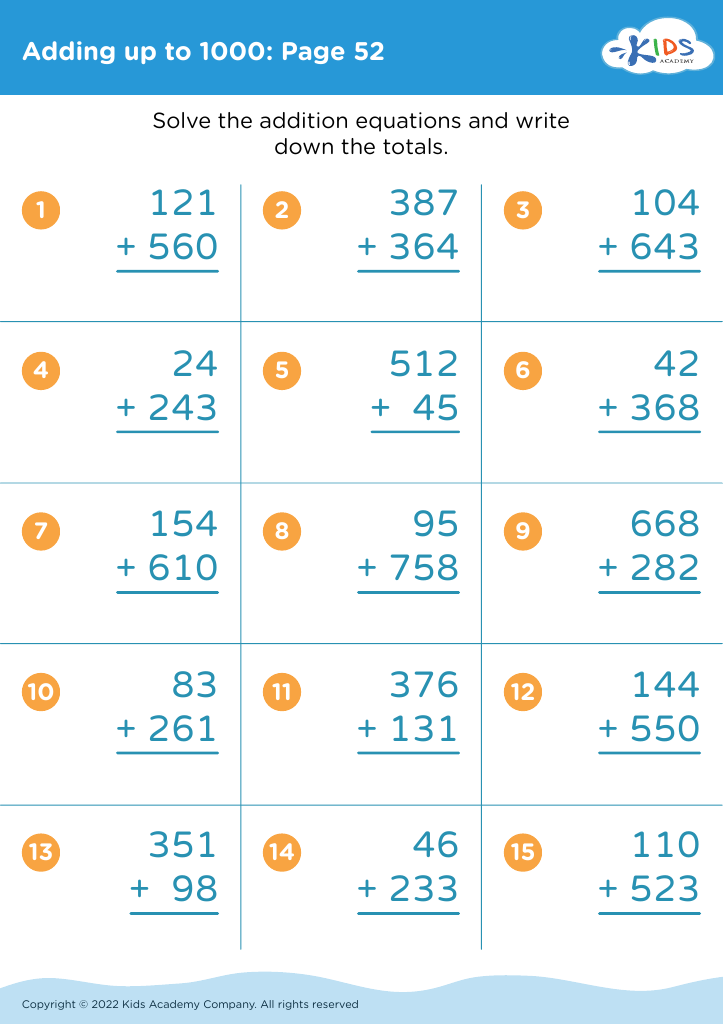
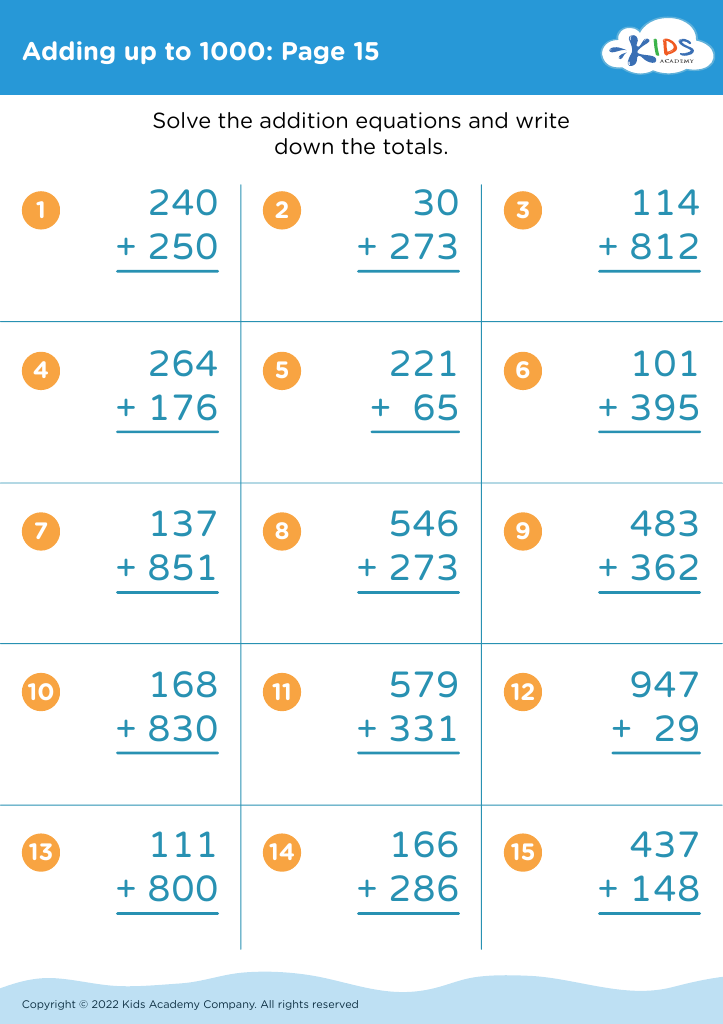
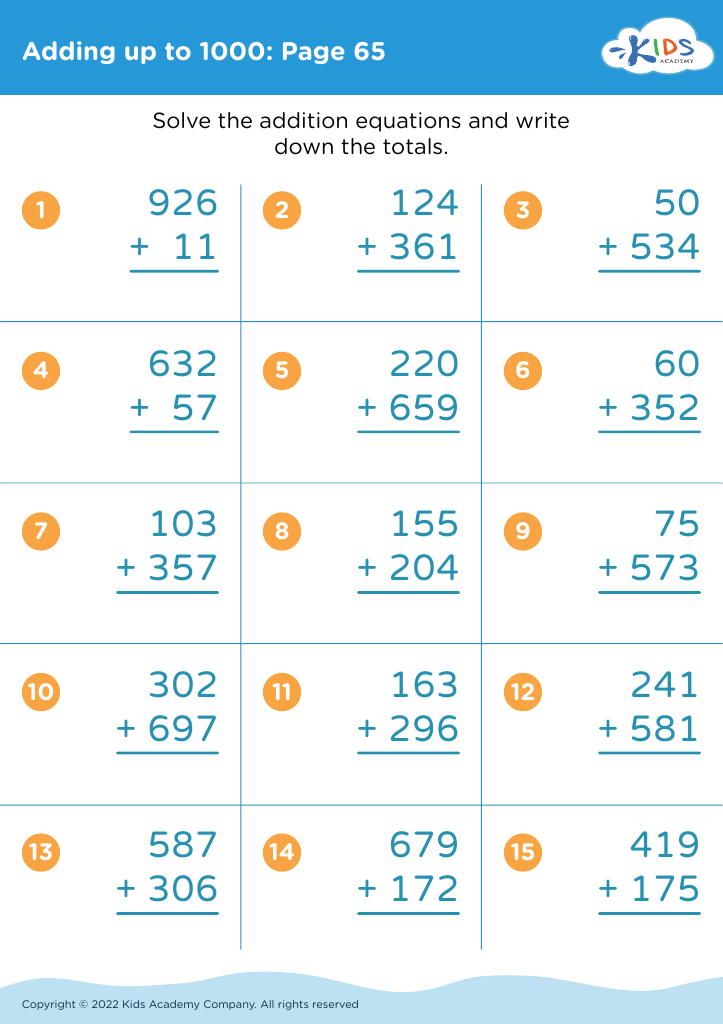


Mathematical reasoning is fundamental for young children, as it forms the basis for many aspects of learning and critical thinking. When children aged 5-8 learn to add numbers up to 1000, it's not just about knowing how to perform arithmetic operations. Engaging in this form of math builds their problem-solving abilities, enhances their understanding of numerical relationships, and promotes logical thinking.
For parents and teachers, fostering these skills early plays a crucial role in a child's academic development. It keeps them challenged and engaged, making mathematics a fun and stimulating subject rather than a daunting one. Learning to add up to 1000 also helps children develop persistence and patience, as these tasks require careful thought and practice.
Incorporating such mathematical reasoning into early education lays the groundwork for more advanced concepts they will encounter later. For example, a solid grasp of addition aids in understanding multiplication and division, decimals, and fractions. It cultivates a positive attitude towards math, encouraging lifelong curiosity and confidence in the subject.
Moreover, numeracy skills are essential in everyday life, from basic shopping tasks to managing money. By nurturing these skills in a caring and supportive environment, parents and teachers can help children build a strong foundation for both their academic journey and their practical, everyday problem-solving capabilities.