Problem-Solving Skills Adding up to 1000 Misc Worksheets for Ages 5-8
14 filtered results
-
From - To
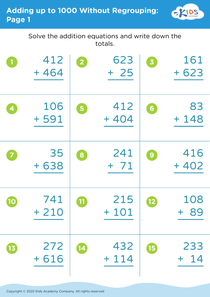
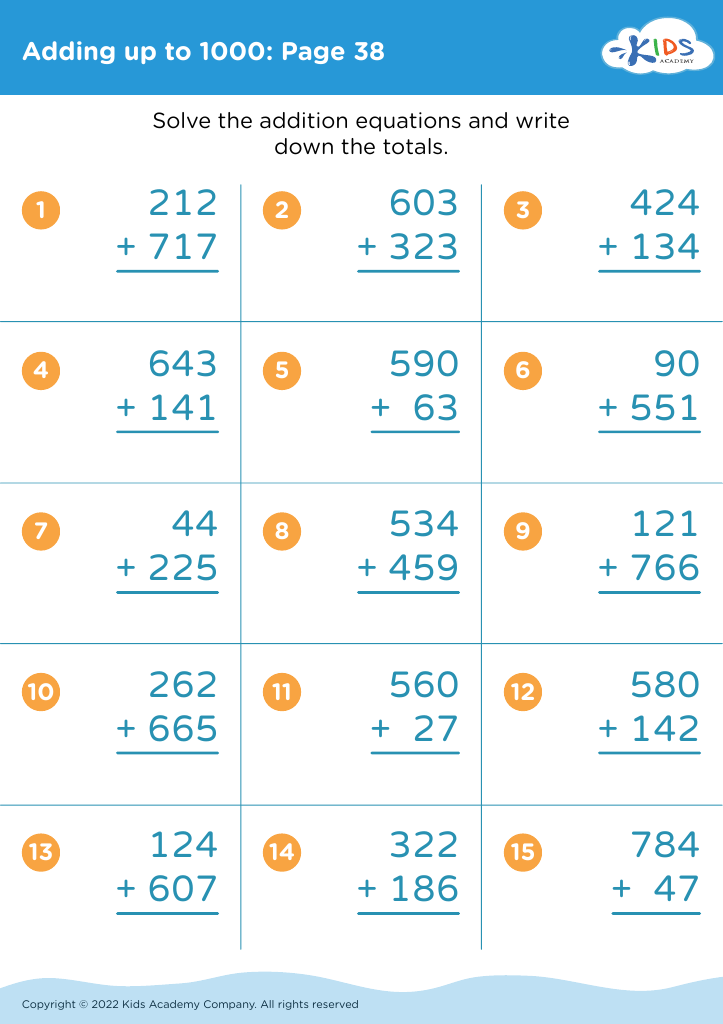
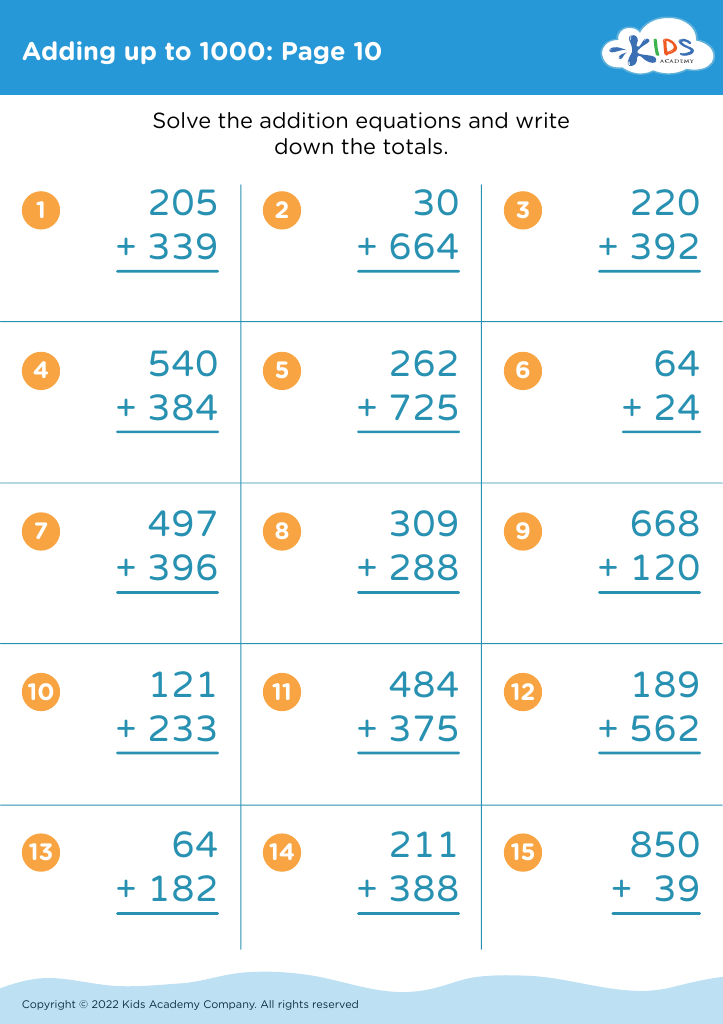
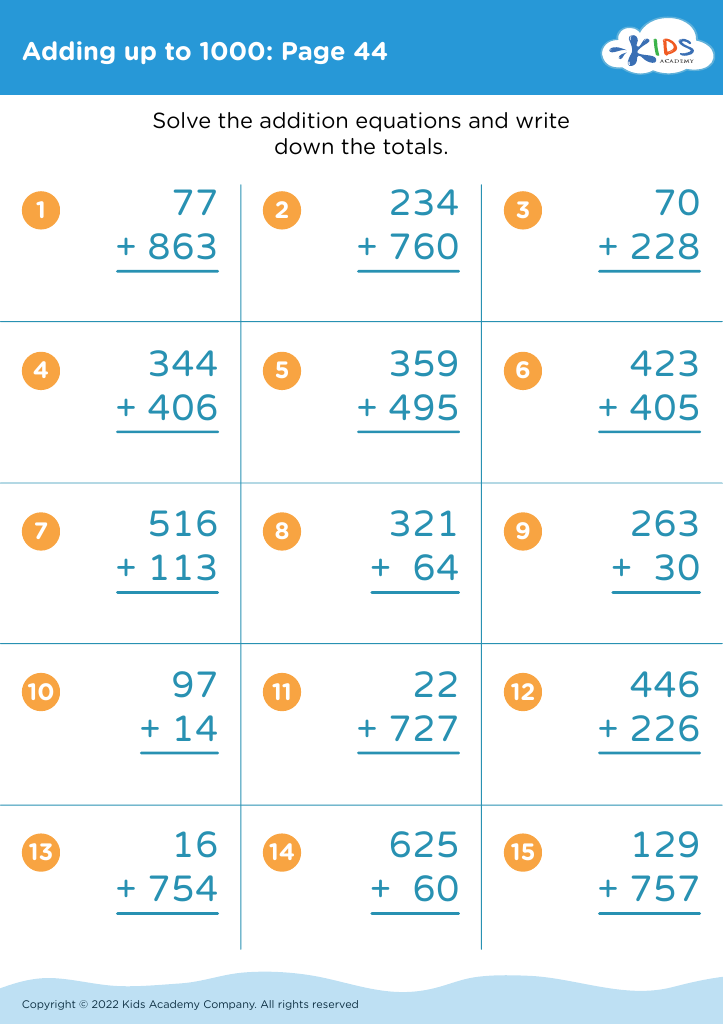
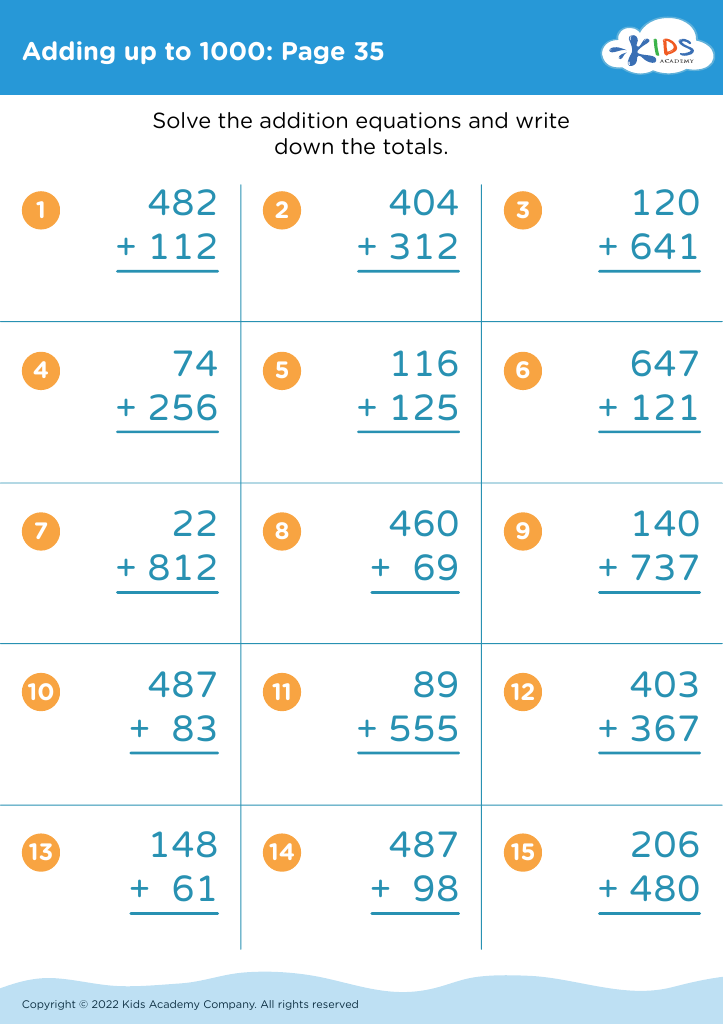
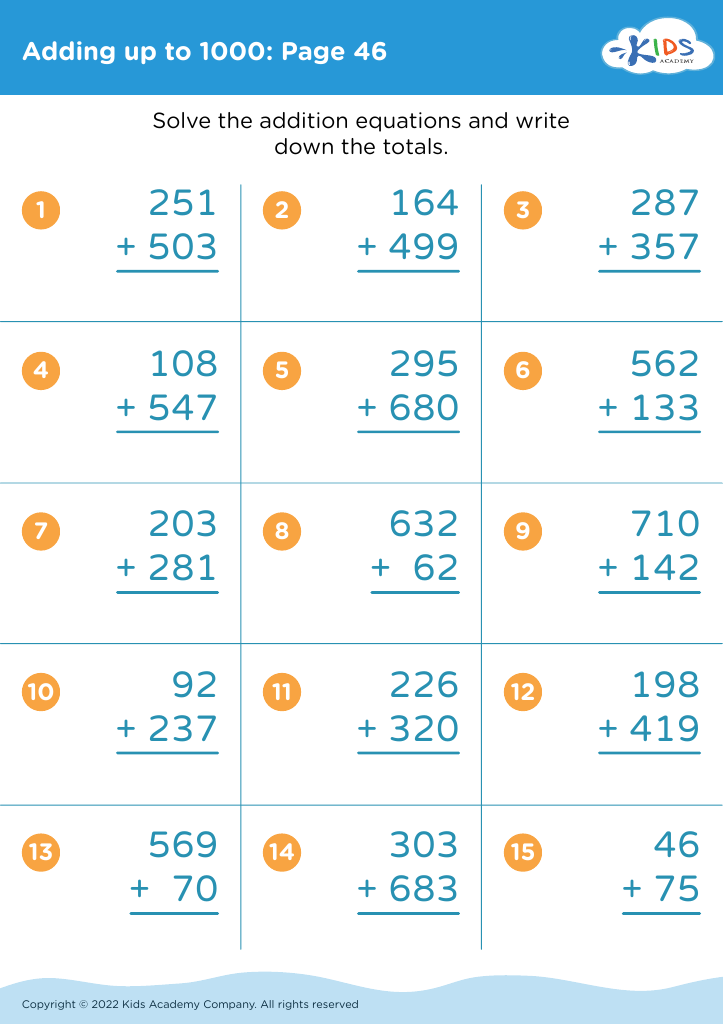
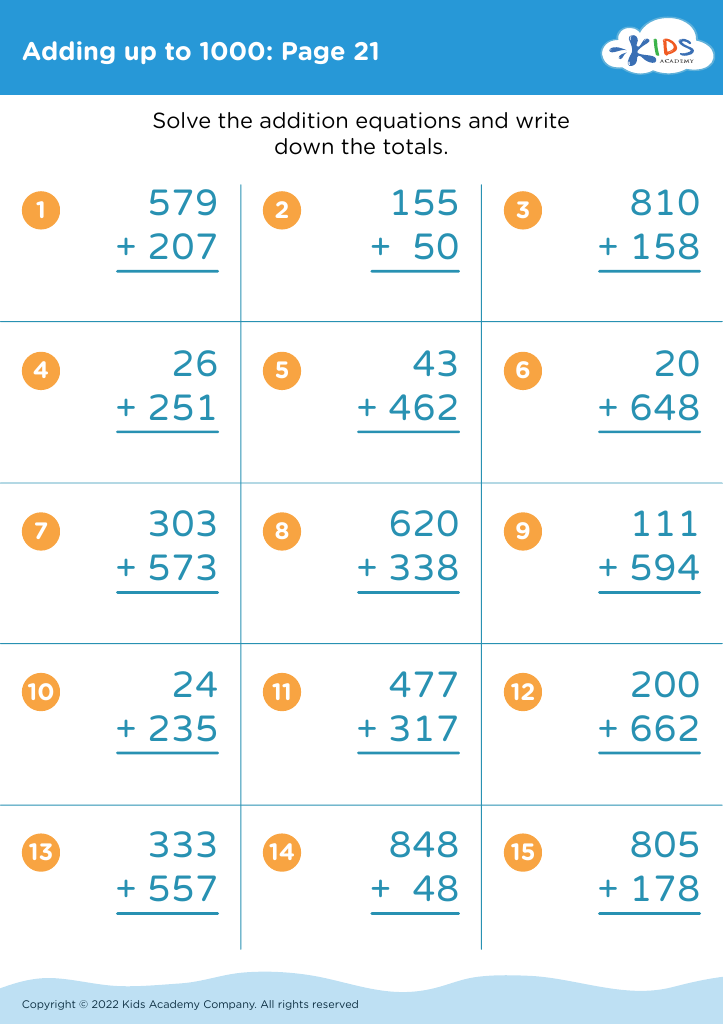
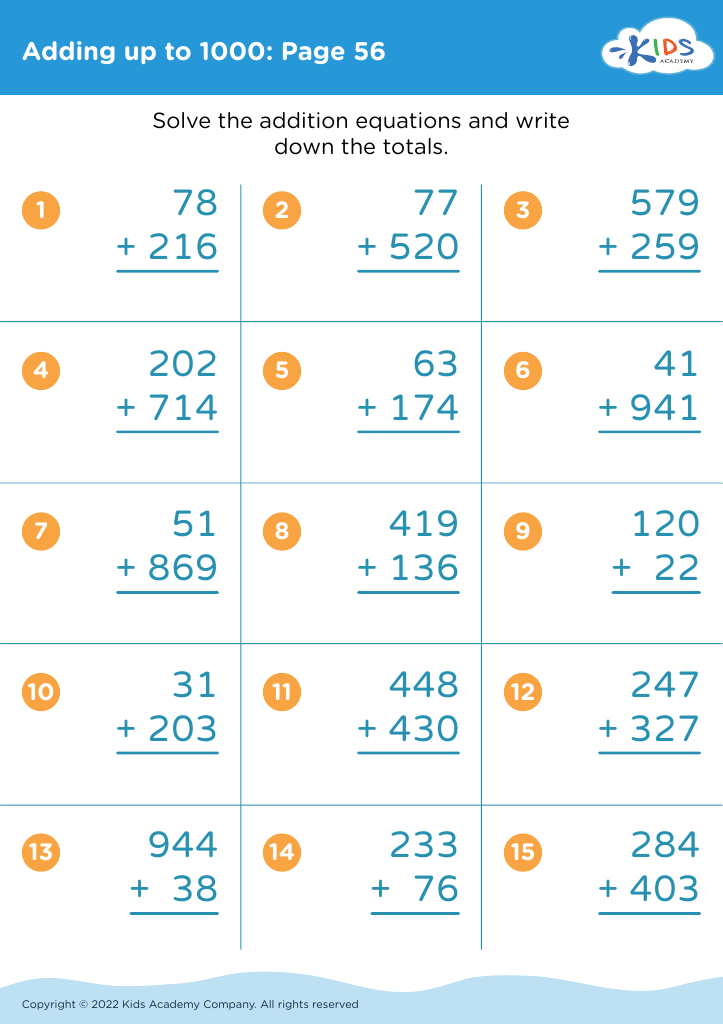
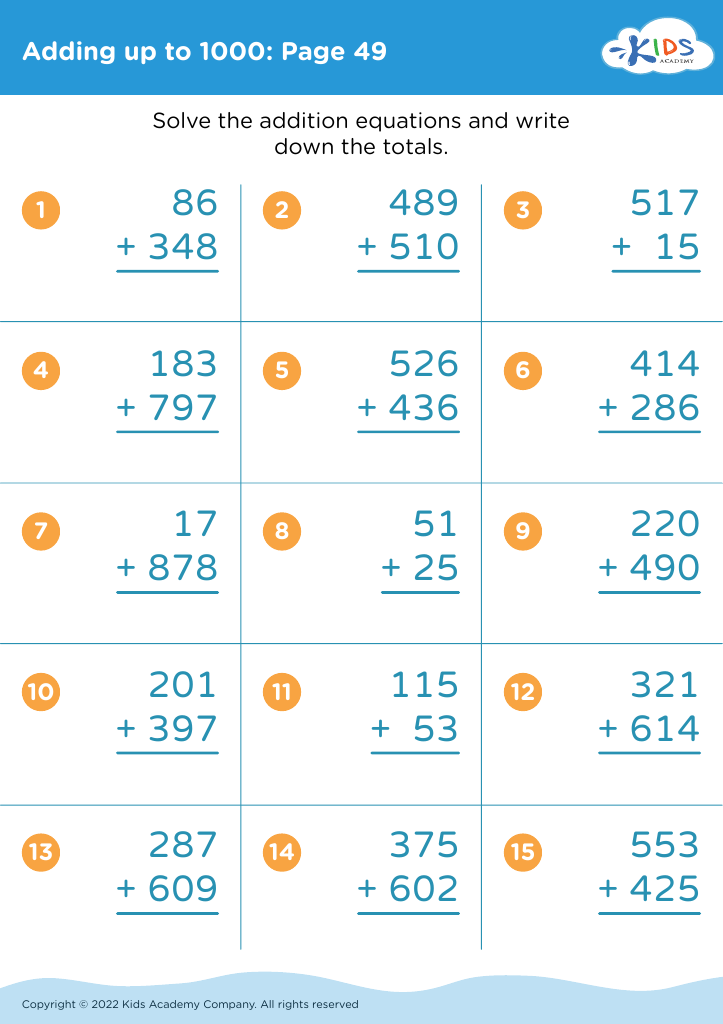
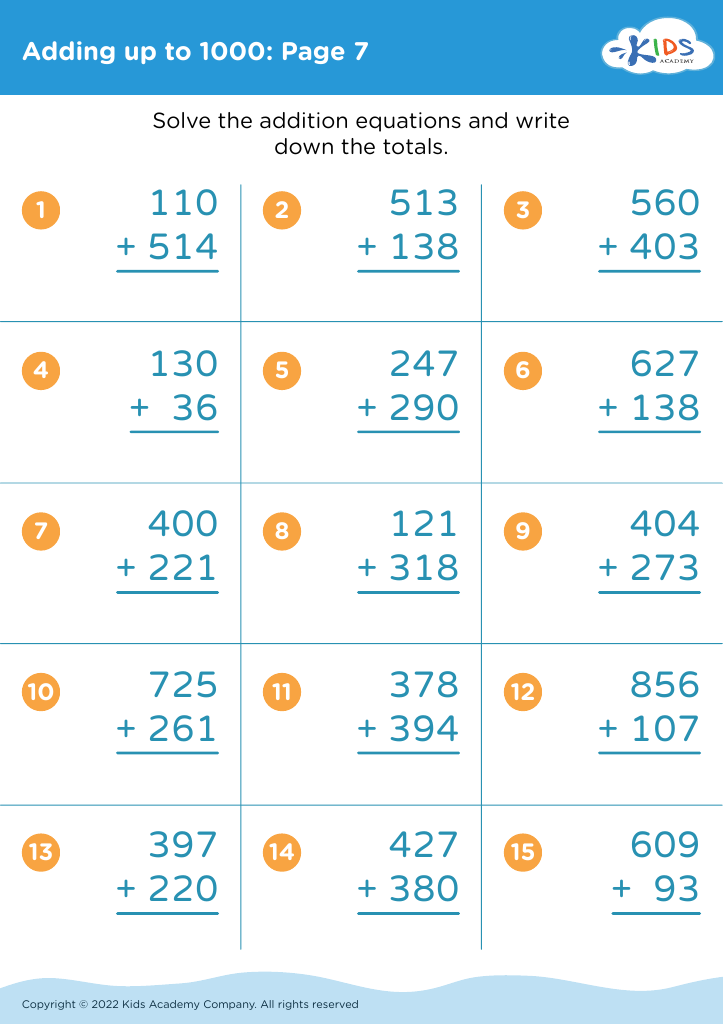
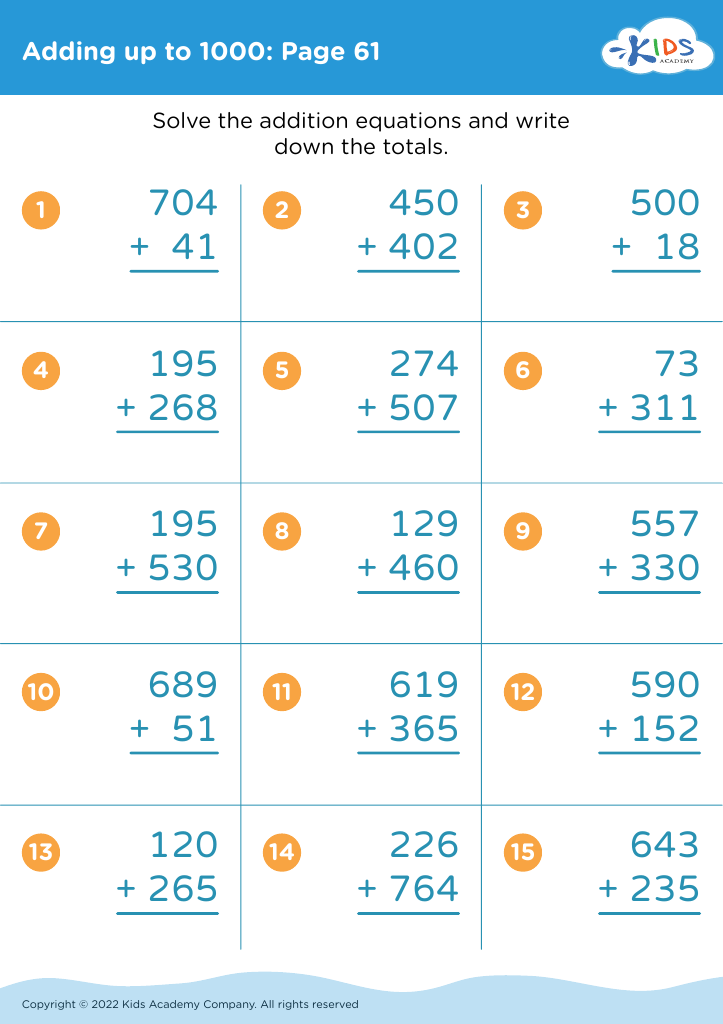
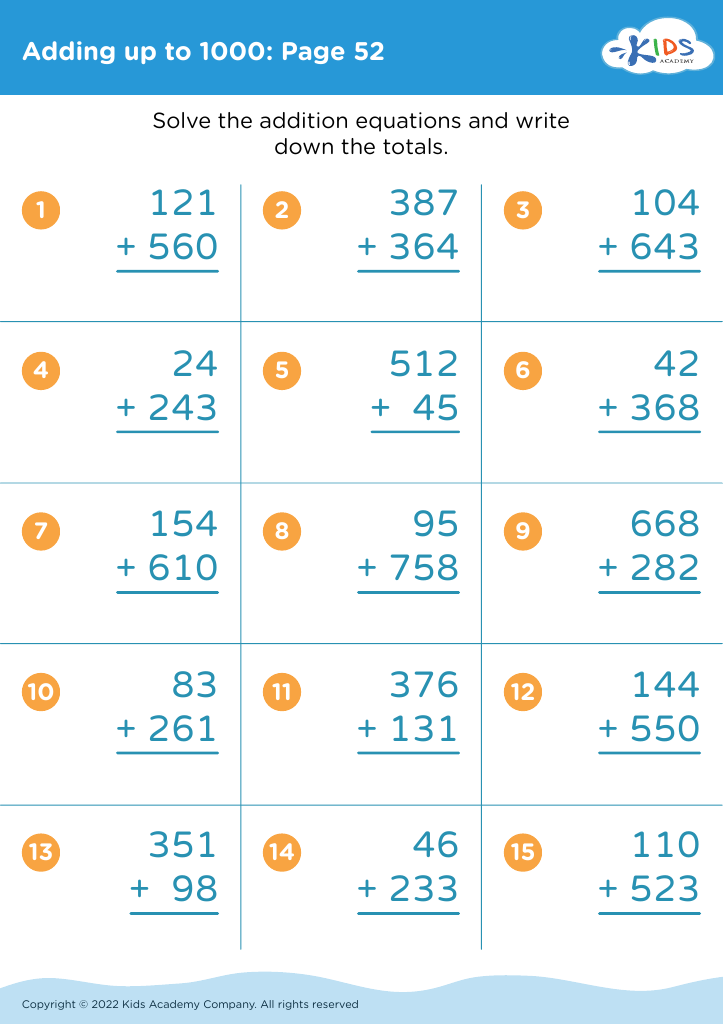
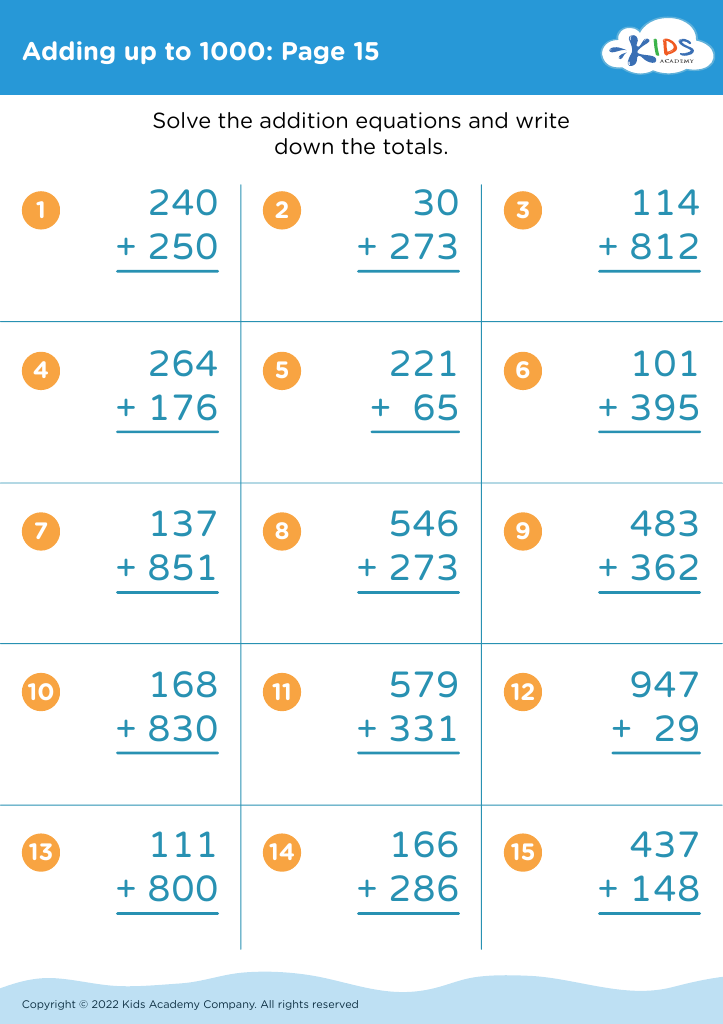
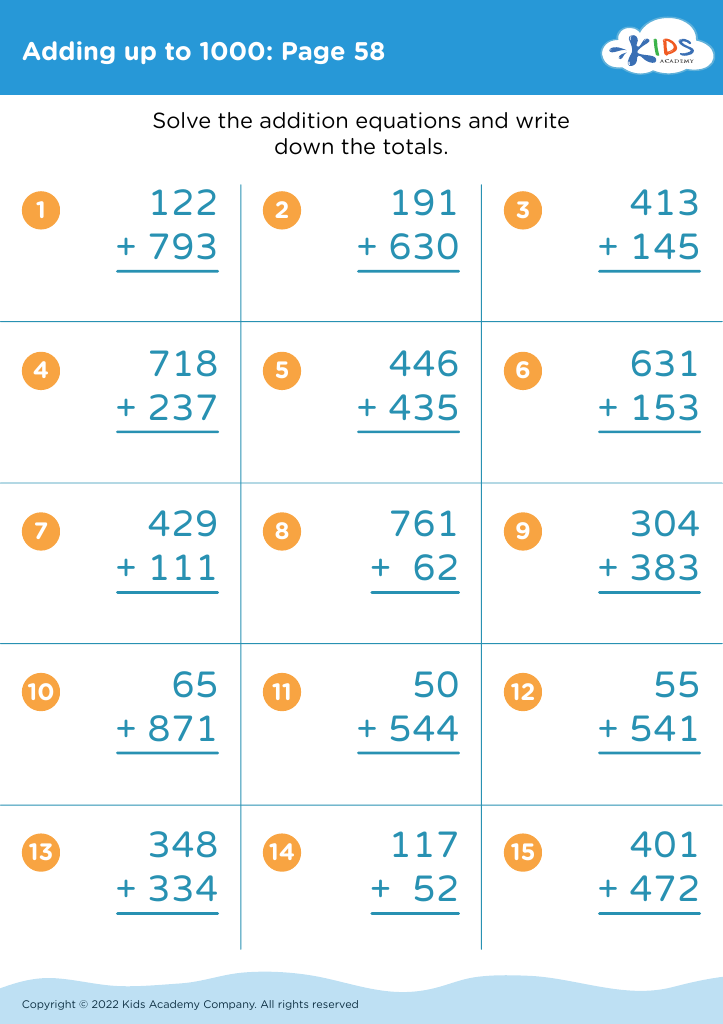
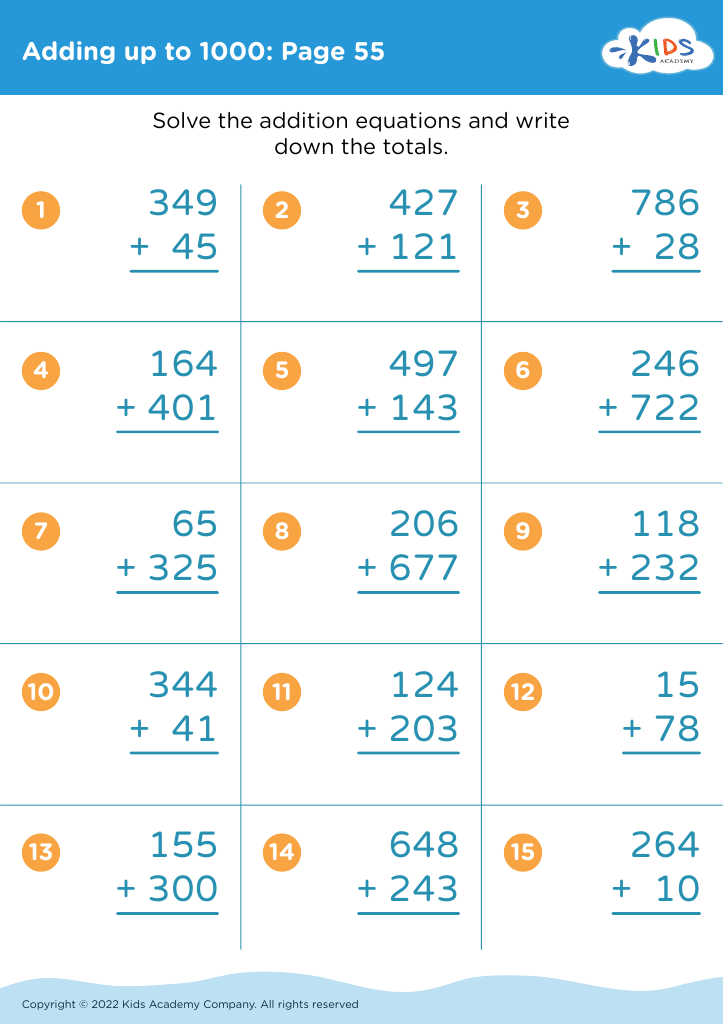
Enhance your child's problem-solving skills with our comprehensive "Adding Up to 1000 Misc Worksheets" designed for ages 5-8. These engaging worksheets encourage critical thinking and promote a love for math through various fun activities focused on addition, subtraction, and number concepts. With a treasure trove of 1000 worksheets, children will develop their ability to approach and solve problems independently. The materials are tailor-made to meet young learners’ cognitive levels, making math enjoyable and accessible. Equip your child with essential skills they’ll use for a lifetime—download our worksheets today and watch their confidence soar as they master problem-solving!


Parents and teachers should prioritize problem-solving skills in children aged 5-8 because these abilities form the foundation for lifelong learning and success. At this crucial developmental stage, children begin to explore and understand their world, and effective problem-solving helps them to make sense of new experiences and challenges.
Problem-solving skills enable children to think critically and creatively, fostering resilience and adaptability. By engaging in activities that require finding solutions, children learn to approach obstacles with confidence rather than frustration. This empowers them to navigate challenges, whether academic, social, or personal.
Moreover, enhancing problem-solving abilities helps children improve their cognitive skills, such as logical reasoning and decision-making. When teachers and parents introduce activities like puzzles, games, or discussions that encourage exploration of different strategies, children become more innovative thinkers.
Additionally, strong problem-solving skills correlate with better academic performance, emotional intelligence, and teamwork capabilities. As children learn to collaborate with peers to address challenges, they develop communication and cooperation skills that enhance their social interactions.
Ultimately, nurturing problem-solving skills in young learners creates a foundation for future success, helping them face challenges throughout life with optimism and ingenuity. Investing in these skills now leads to a more competent and confident generation.