Reading comprehension Adding up to 1000 Misc Worksheets for Ages 5-8
4 filtered results
-
From - To
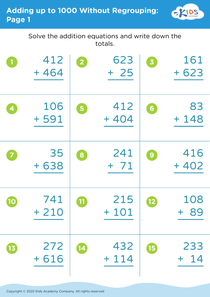
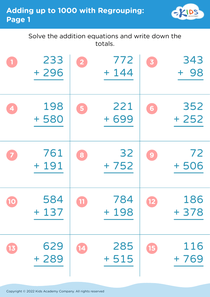
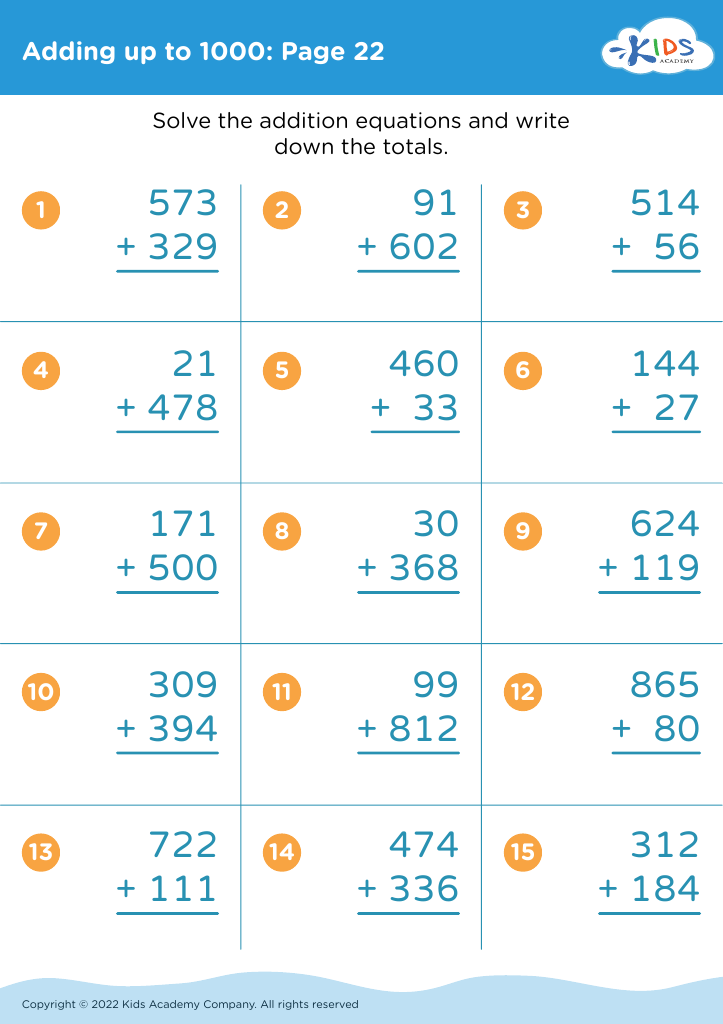
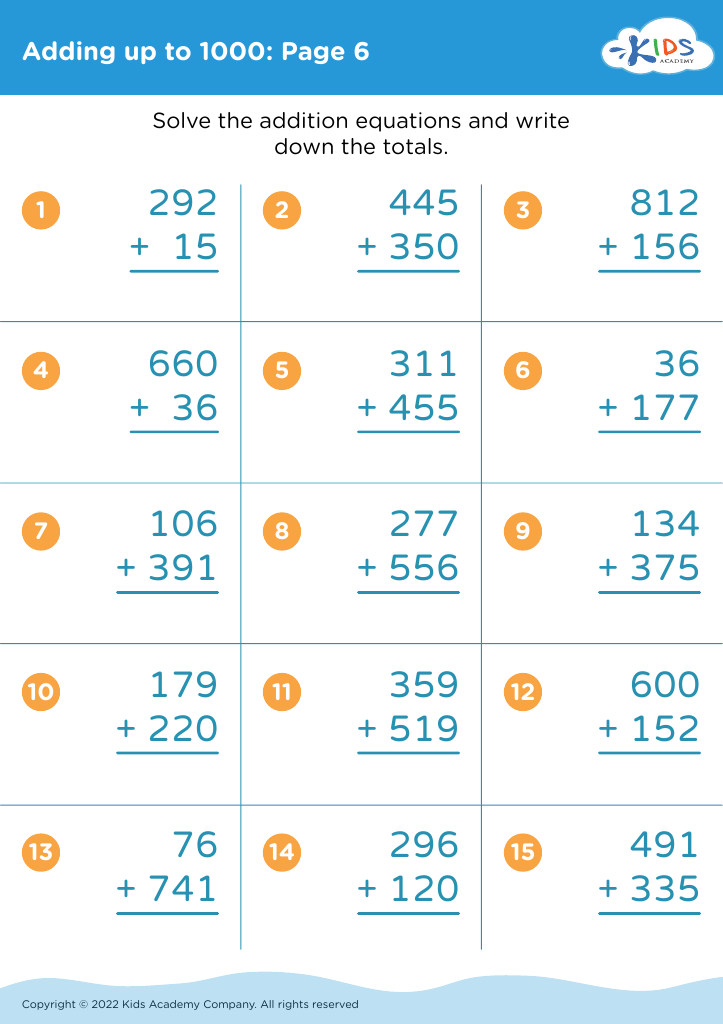
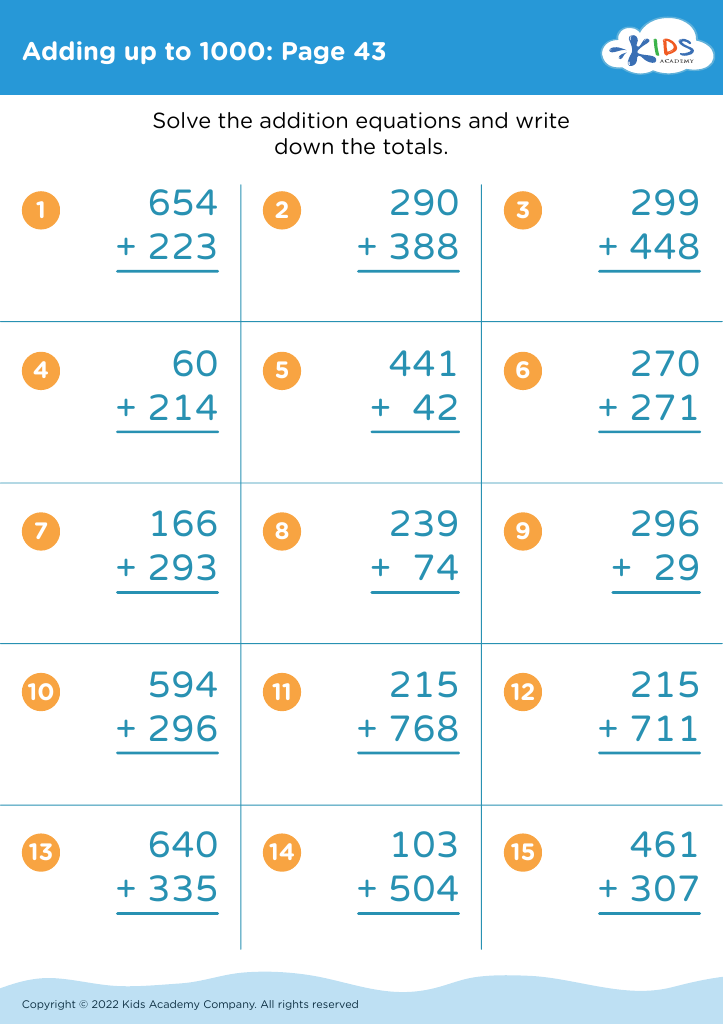
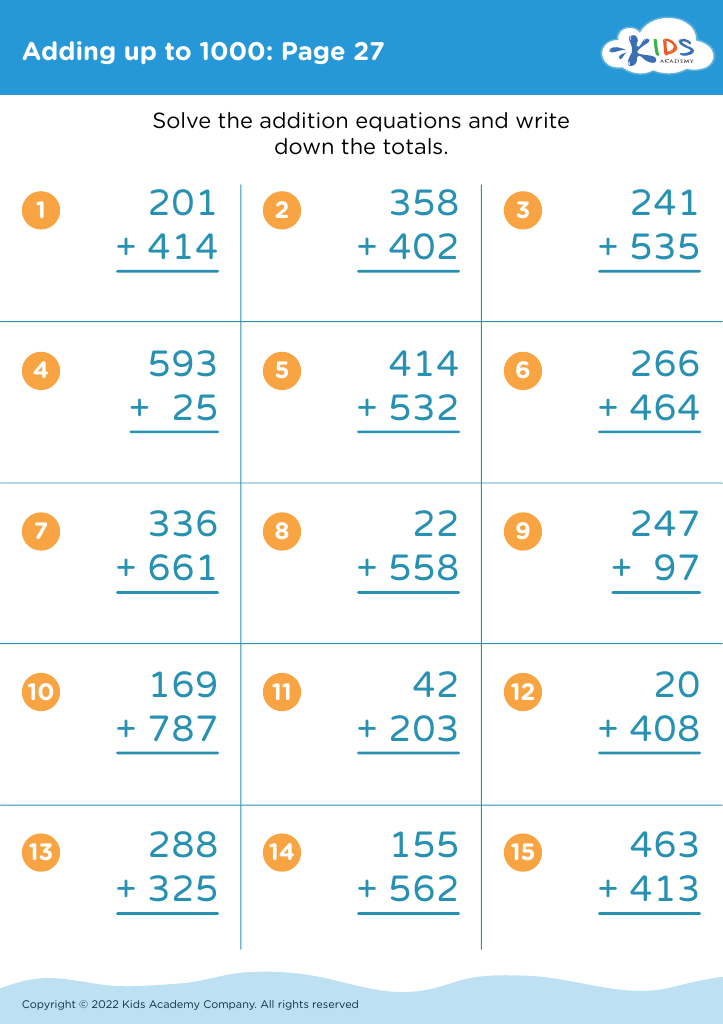
Unlock the potential of your child’s reading comprehension with our Adding Up to 1000 Misc Worksheets designed for ages 5-8. Boost crucial math and reading skills with our engaging and educational exercises. Each worksheet is tailored to strengthen fundamental reading comprehension through fun, math-based problems that focus on adding up to 1000. Perfect for classroom use or extra practice at home, these printables make learning interactive and enjoyable. Explore a variety of activities aimed at enhancing children’s ability to grasp and work through math problems while improving their reading and analytical thinking skills. Let's make learning a delightful adventure!


Reading comprehension and fundamental math skills are crucial building blocks in a child's education, especially for ages 5-8. Developing strong reading comprehension helps children grasp the meaning of texts, follow instructions, and gain fluency, which is necessary for all other learning. It empowers them with the ability to think critically, make connections between ideas, and expand their vocabulary, laying a strong foundation for lifelong learning.
On the other hand, basic math skills, such as adding numbers up to 1000, introduce children to numerical concepts, logical thinking, and problem-solving abilities. Proficiency in these early math skills boosts confidence and paves the way for more complex mathematical understanding in upper grades.
Integrating these skills at a young age not only enhances academic performance but also supports cognitive development and encourages a love for learning. Parents' and teachers' involvement is essential to provide consistent guidance, encouragement, and resources tailored to a child’s unique pace and learning style. This holistic approach fosters curiosity, adaptability, and resilience within children, making them better prepared for future challenges.
In essence, prioritizing reading comprehension and basic math proficiency for young learners sets the stage for success across all subjects, cultivating well-rounded, capable students who are ready to excel in and beyond the classroom.