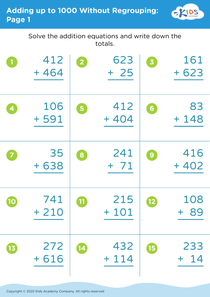
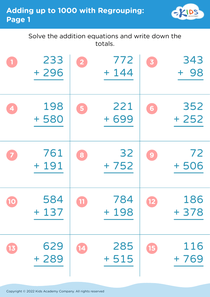
Understand multiplication Adding up to 1000 Misc Worksheets for Ages 5-8
3 filtered results
-
From - To
Welcome to our "Understand Multiplication: Adding Up to 1000" worksheets, designed specifically for children ages 5-8. These engaging, colorful resources help young learners grasp the concept of multiplication through fun and interactive activities. Kids will explore multiplication as a series of repeated addition, building a solid foundation for future math skills. Our worksheets incorporate various exercises that challenge students to practice multiplying numbers, enhancing their problem-solving abilities while sparking their curiosity. Equip your child with essential math skills and boost their confidence with these comprehensive worksheets that turn learning into an enjoyable adventure! Explore and download today!
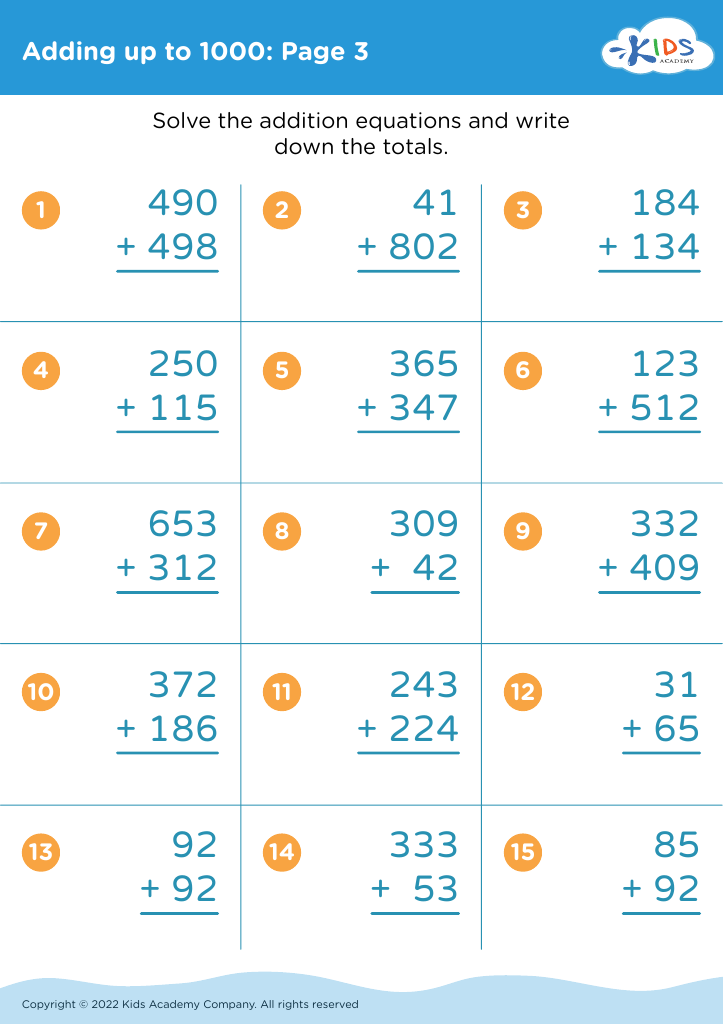
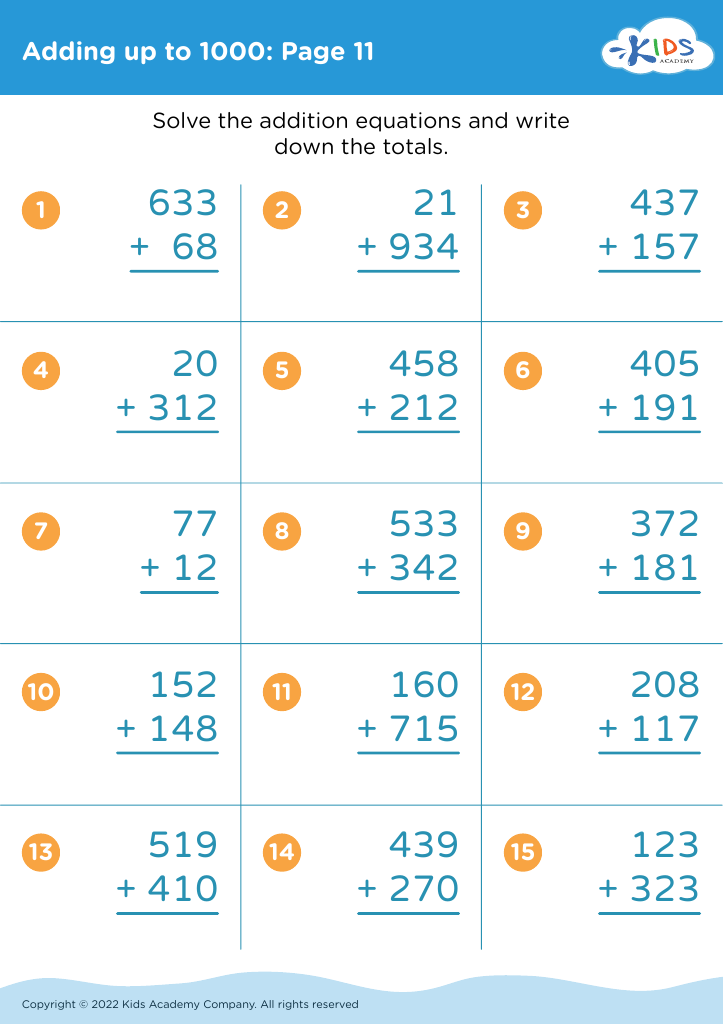
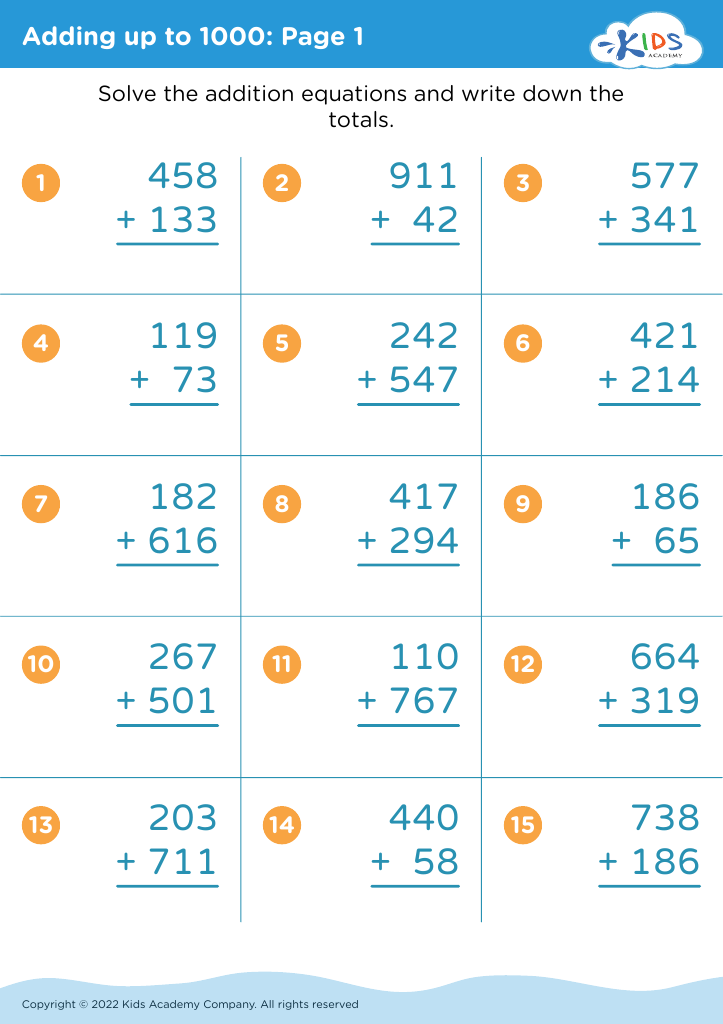


Understanding multiplication and addition, particularly the concept of numbers adding up to 1000, is crucial for children aged 5-8 as it lays the foundation for their future mathematical skills. First, these concepts enhance cognitive development and problem-solving skills, as children learn to manipulate numbers and develop logical reasoning. Mastery of multiplication provides a vital tool for more complex mathematical operations, fostering confidence and independence in young learners.
Additionally, grasping the principles of adding up to 1000 equips children with essential skills for real-life situations, such as budgeting pocket money or estimating purchases. This knowledge builds mathematical fluency, making it easier for them to address more intricate topics in later grades.
Furthermore, understanding these foundational math concepts promotes crucial early literacy skills. When children recognize patterns and relationships in numbers, they engage more deeply with mathematics, which can stimulate interest in subjects like science and technology. As educators and parents, fostering a positive attitude towards math and mastery of these fundamental principles prepares children for academic success and lifelong learning—empowering them to face future challenges with confidence. Ultimately, attention to these early math skills is vital for holistic child development.