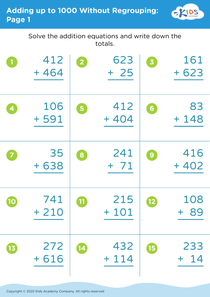
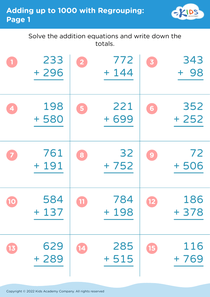
Understanding fractions Adding up to 1000 Misc Worksheets for Ages 5-8
13 filtered results
-
From - To
Welcome to our engaging "Understanding Fractions: Adding Up to 1000" miscellaneous worksheets, tailored for children ages 5 to 8! These carefully designed resources help young learners grasp the fundamental concept of fractions while reinforcing their addition skills. Through a variety of interactive exercises, students will explore parts of a whole and deepen their mathematical understanding. Each worksheet promotes critical thinking and builds a solid foundation in mathematics, making learning fun and effective. Perfect for home or classroom use, these worksheets are ideal for parents and educators looking to enhance their child's numeracy skills while providing a comprehensive approach to learning fractions.
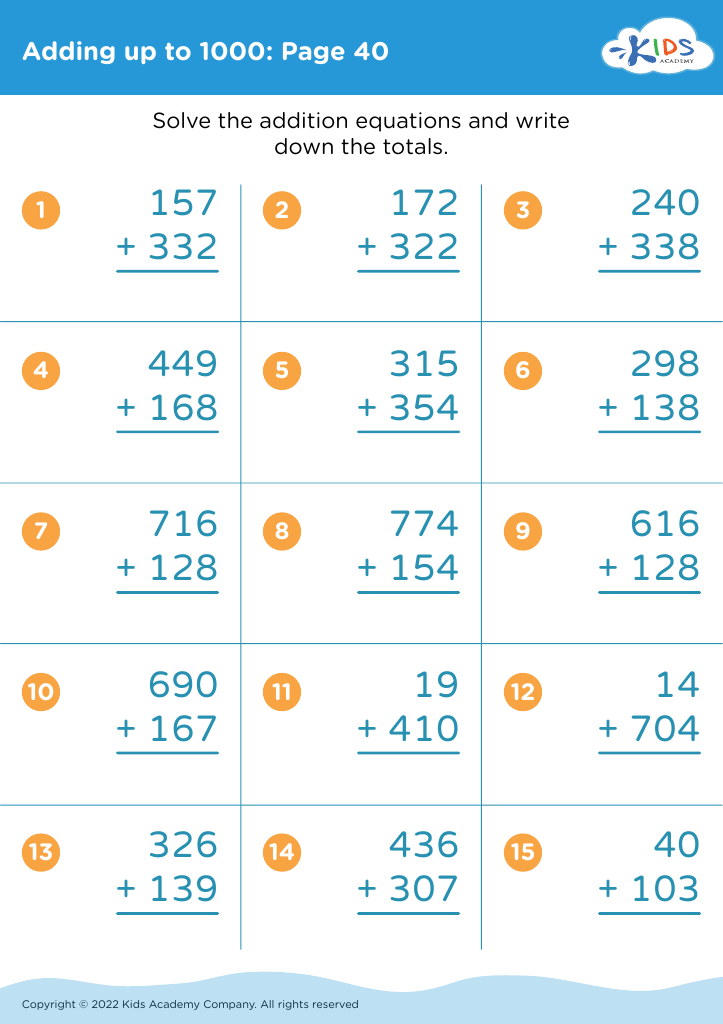
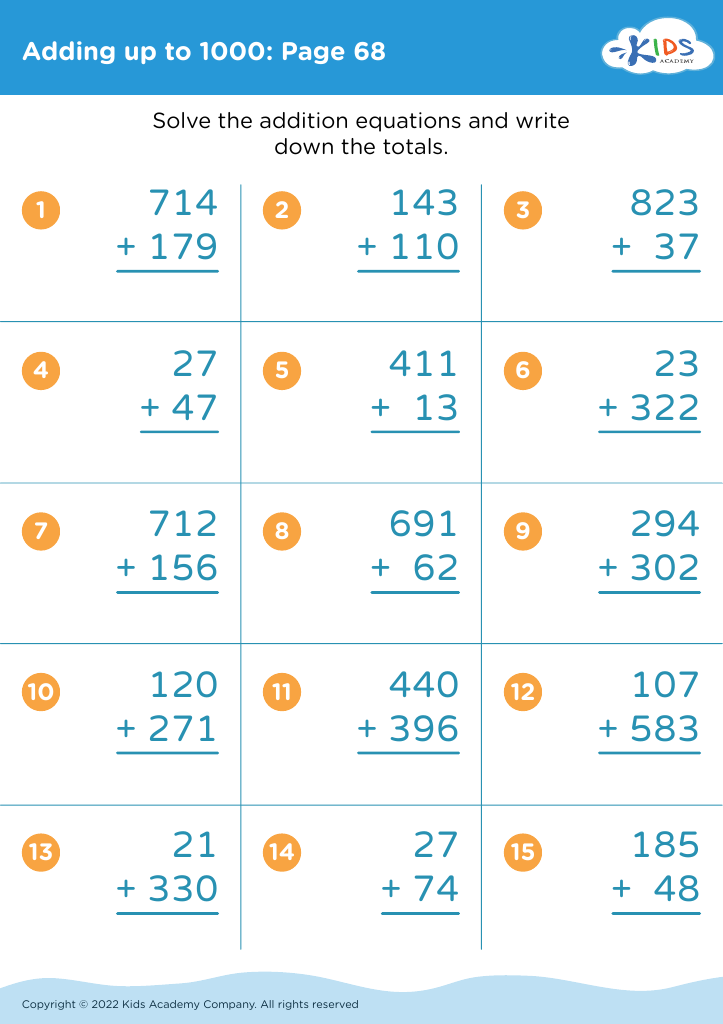
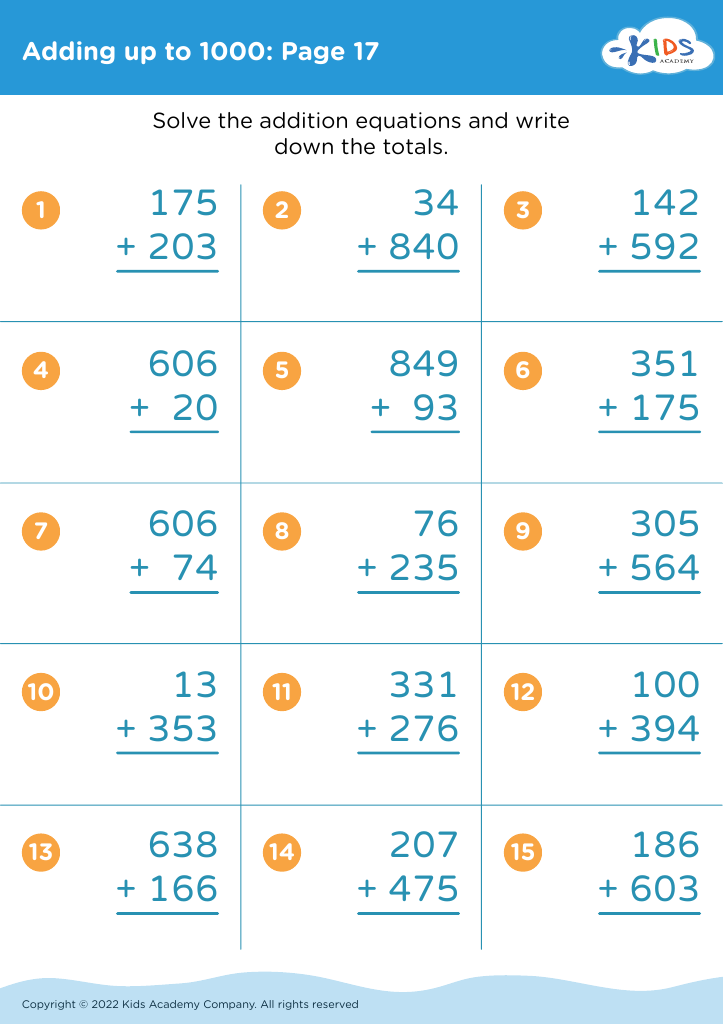
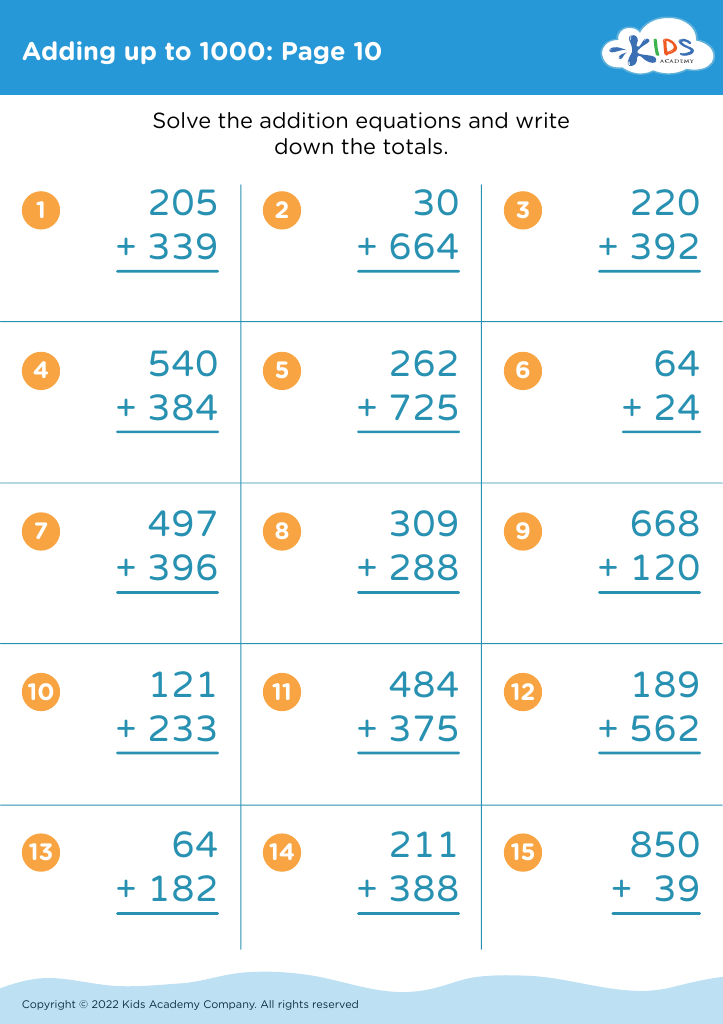
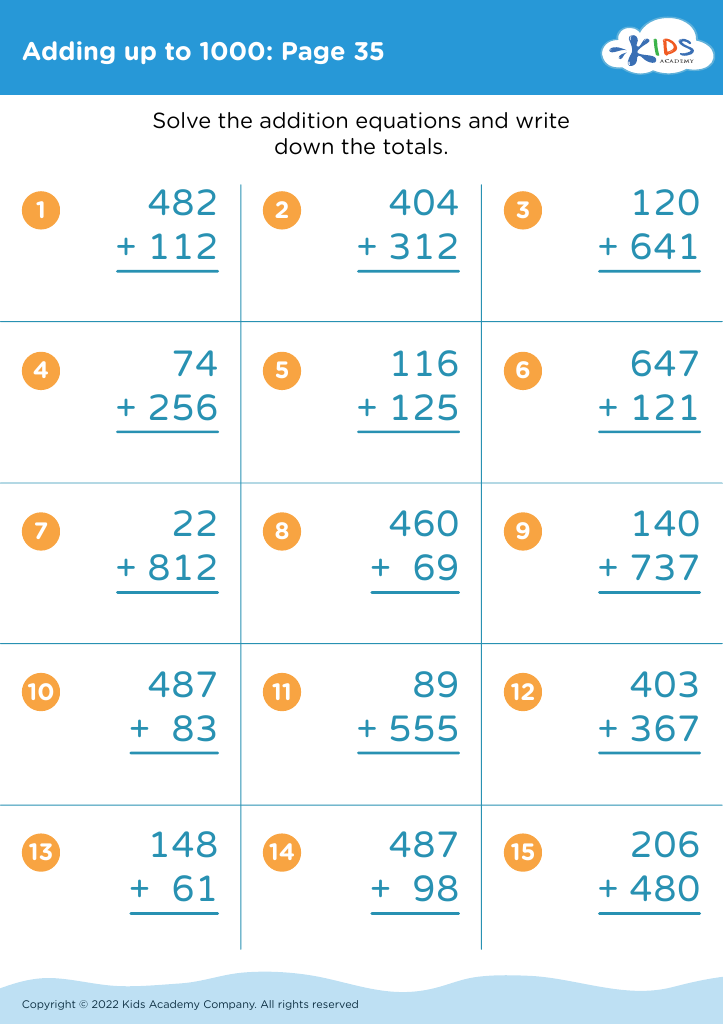
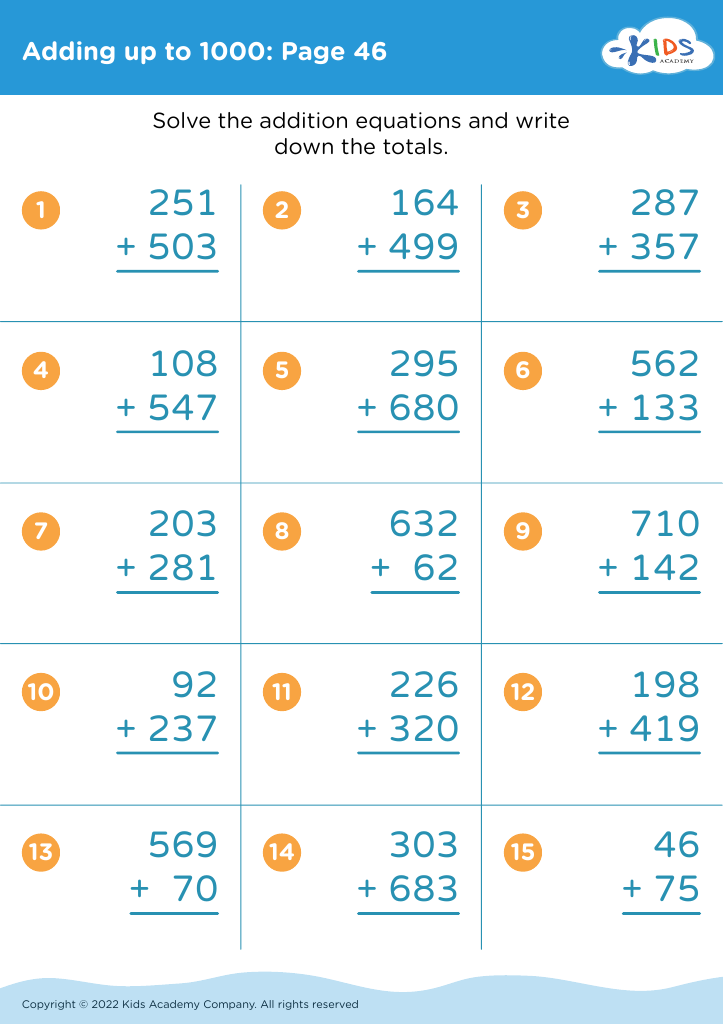
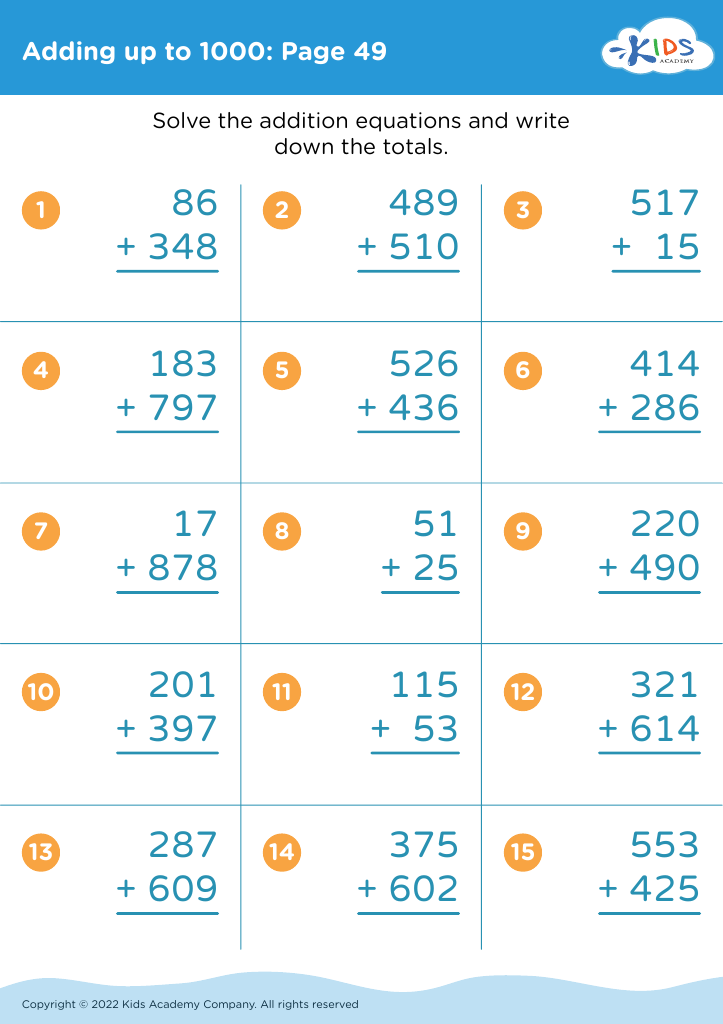
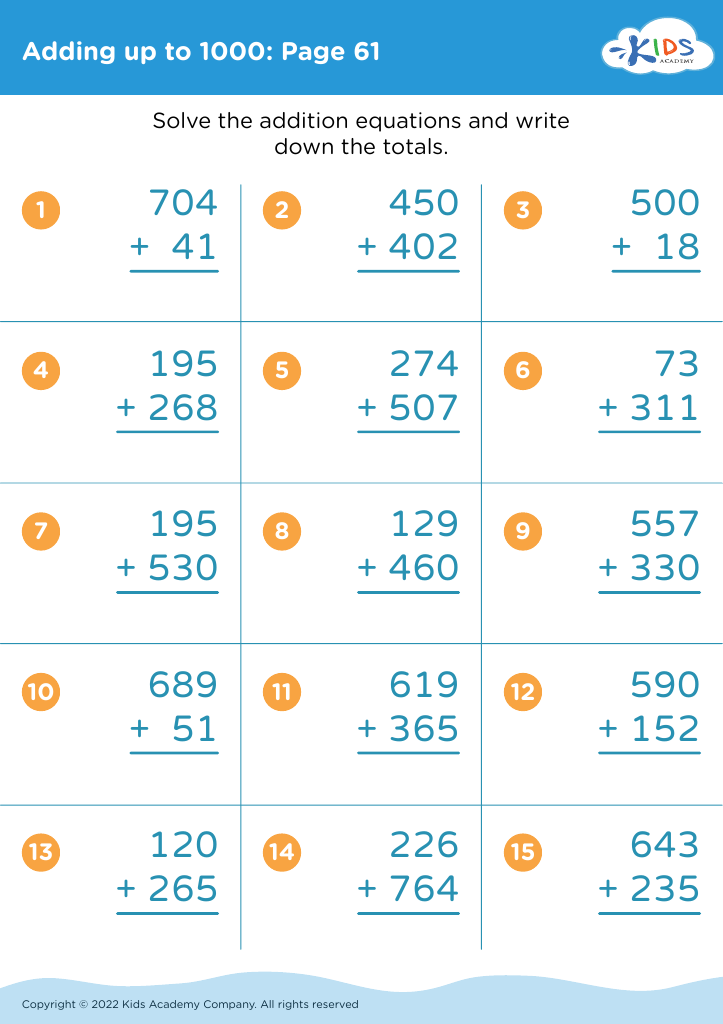
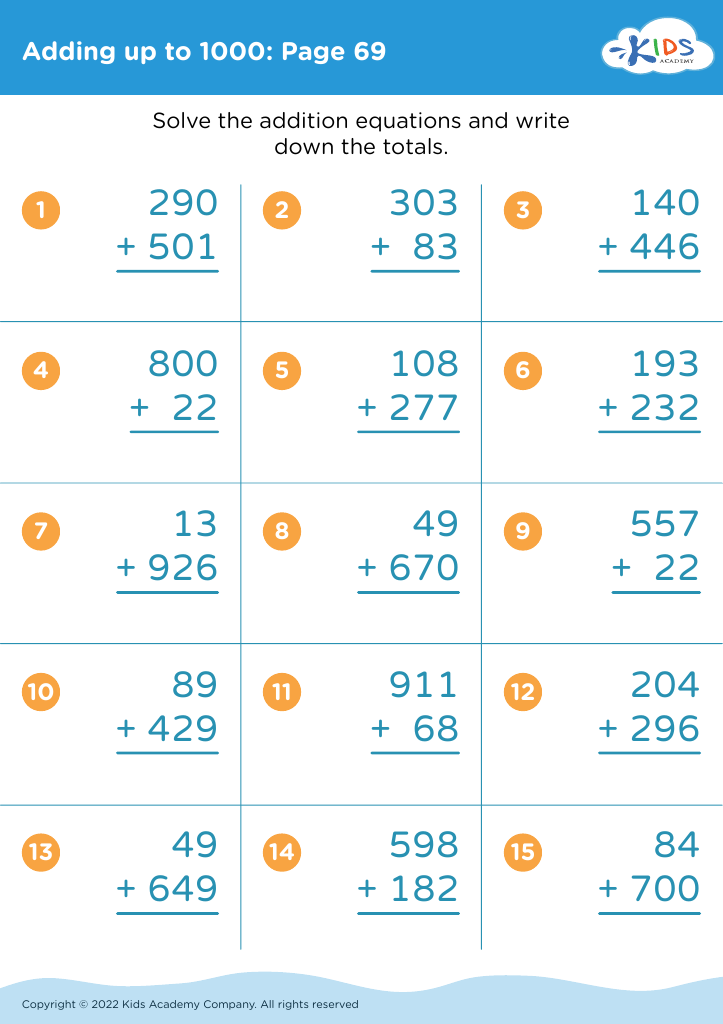
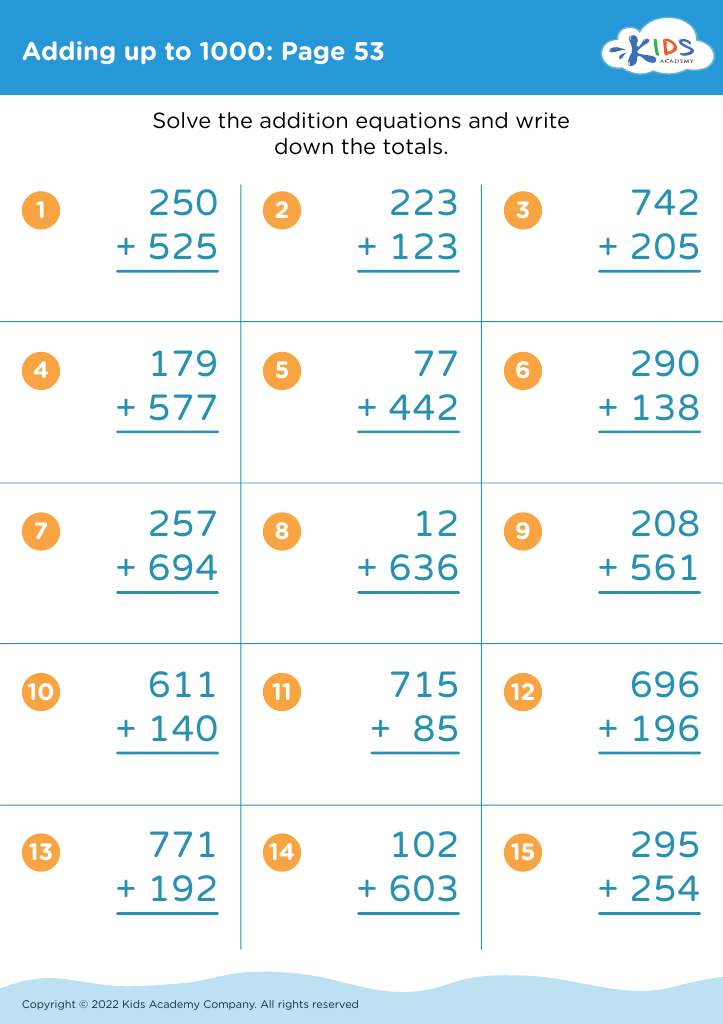
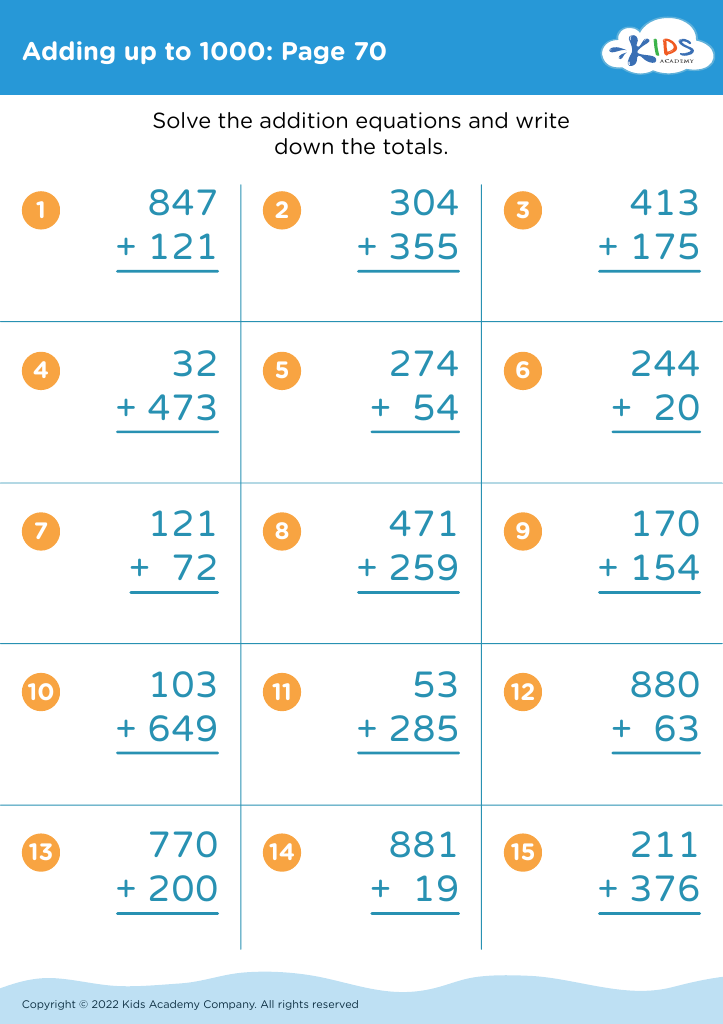
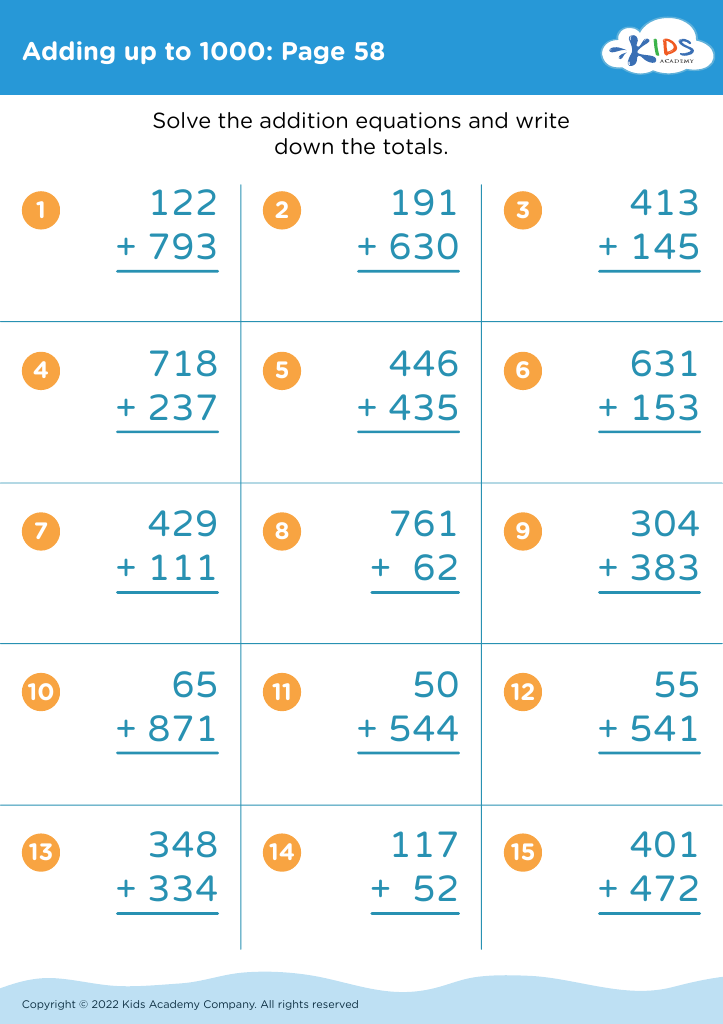
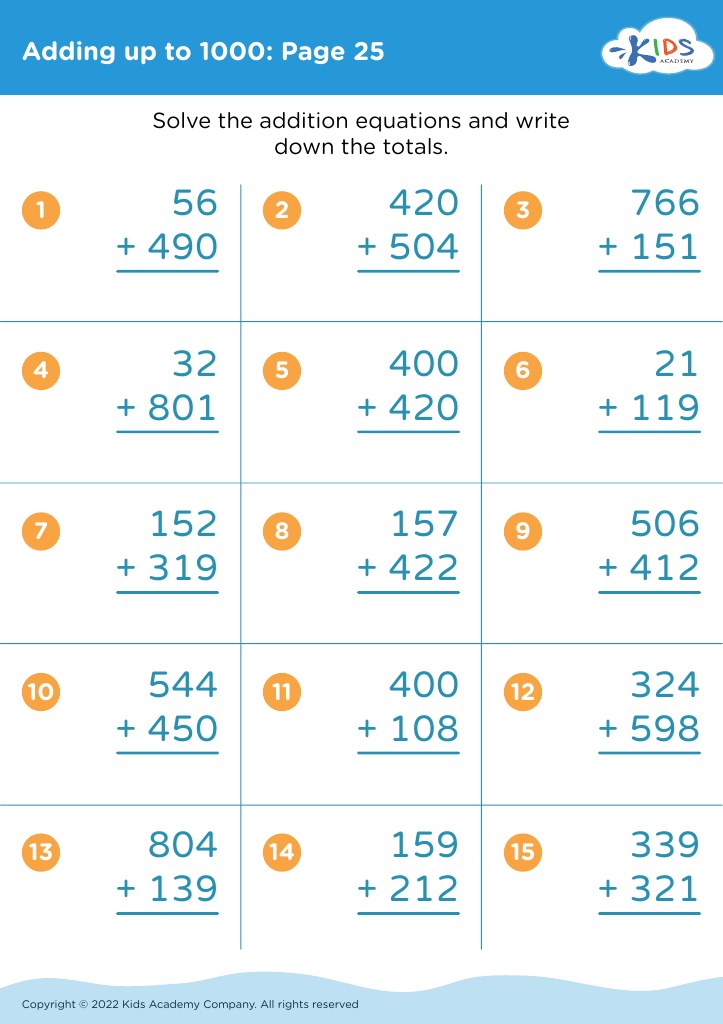


Understanding fractions is a crucial foundation for young learners, especially children aged 5-8. For parents and teachers, fostering this understanding can significantly impact a child's mathematical development and confidence. Fractions help children grasp the concept of part-to-whole relationships and improve their ability to analyze proportions, which is essential in real-life situations, such as cooking or dividing tasks.
When children learn to add fractions and recognize how they contribute to parts that add up to a whole (like 1000 in our example), they enhance their problem-solving skills and critical thinking. It encourages them to visualize numbers in flexible ways, cultivating an understanding that goes beyond simple answers to deeper mathematical concepts.
Furthermore, engaging with fractions at this age prepares students for future topics, like ratios, percentages, and even basic algebra. It promotes a growth mindset, where they learn to embrace mistakes as opportunities for leaning. Parents and teachers play an essential role by creating enriching environments where discussions about fractions are prevalent, ensuring that children develop a strong math foundation early on that will support their future learning journeys. Understanding fractions promotes curiosity, discipline, and confidence in young learners, setting them on a successful educational path to mastery in mathematics.