Comparing Fractions Adding up to 1000 with Regrouping Worksheets for Ages 5-8
8 filtered results
-
From - To
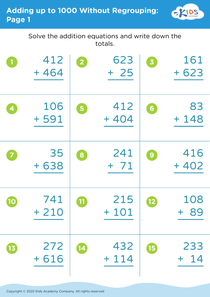
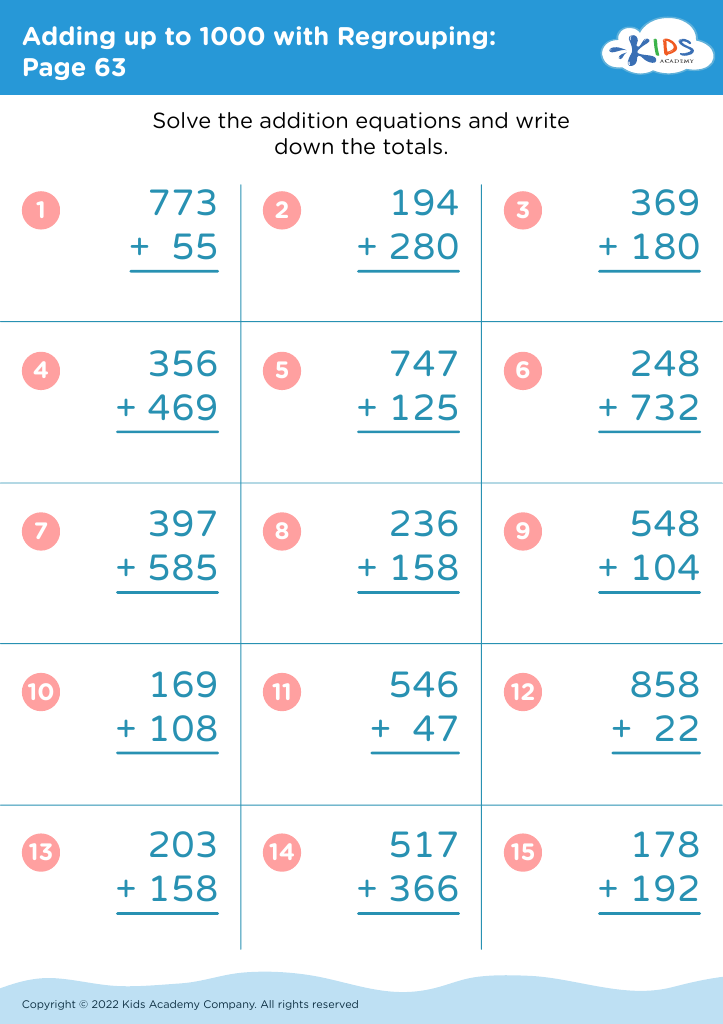
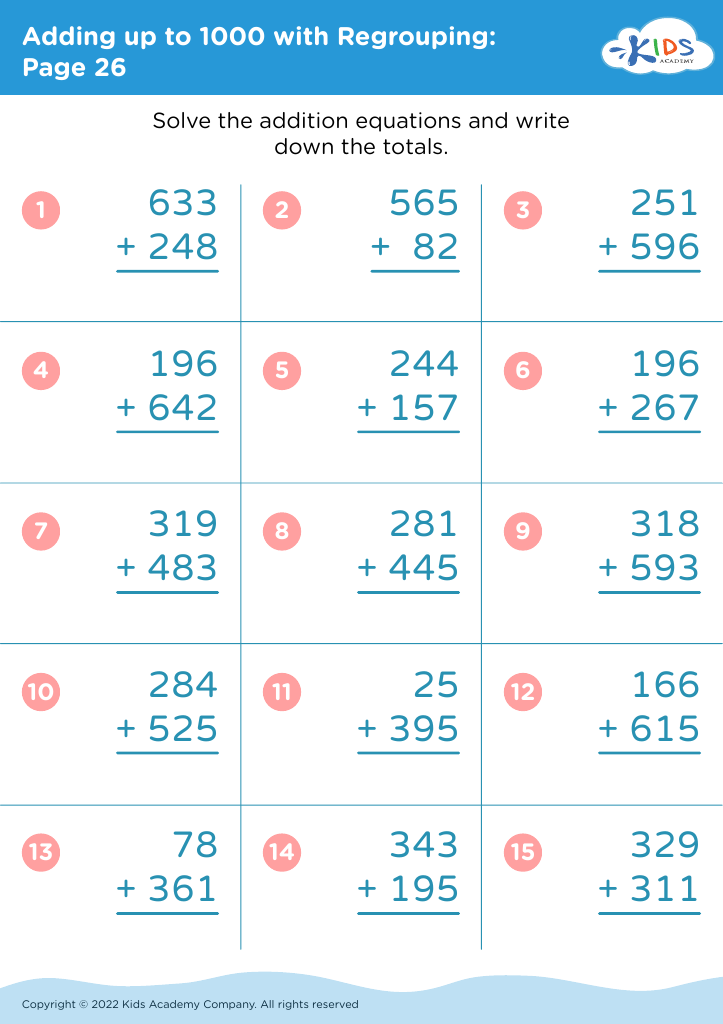
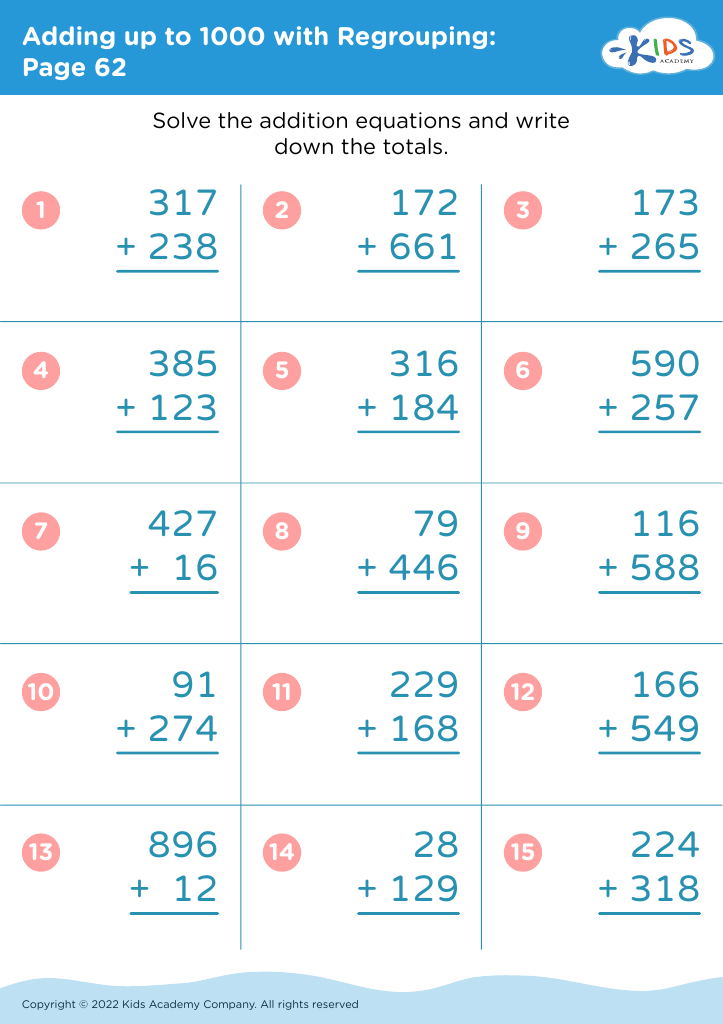
Boost your child's math skills with our "Comparing Fractions Adding up to 1000 with Regrouping Worksheets for Ages 5-8". Designed to make learning fun and effective, these worksheets cover fundamental concepts of comparing fractions, addition up to 1000, and regrouping. Perfectly tailored for young learners, each printable activity aims to strengthen understanding and improve confidence in math. Through engaging exercises, children will enhance their problem-solving abilities, ensuring they grasp essential mathematical principles while having fun. Start building a solid math foundation today with Kids Academy’s expertly crafted resources!
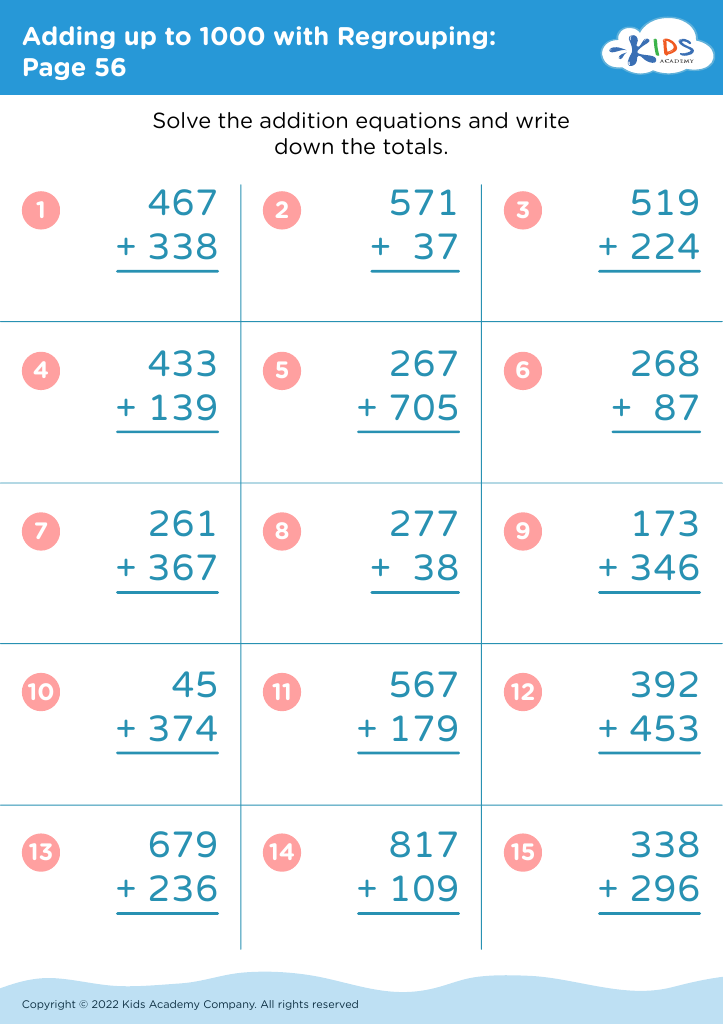
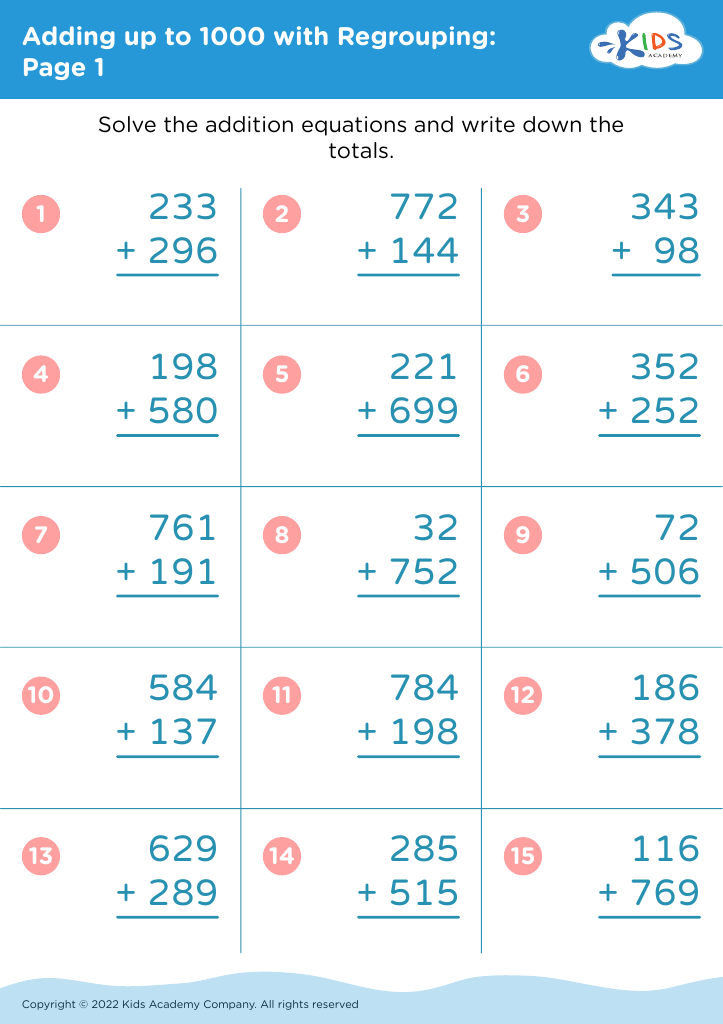
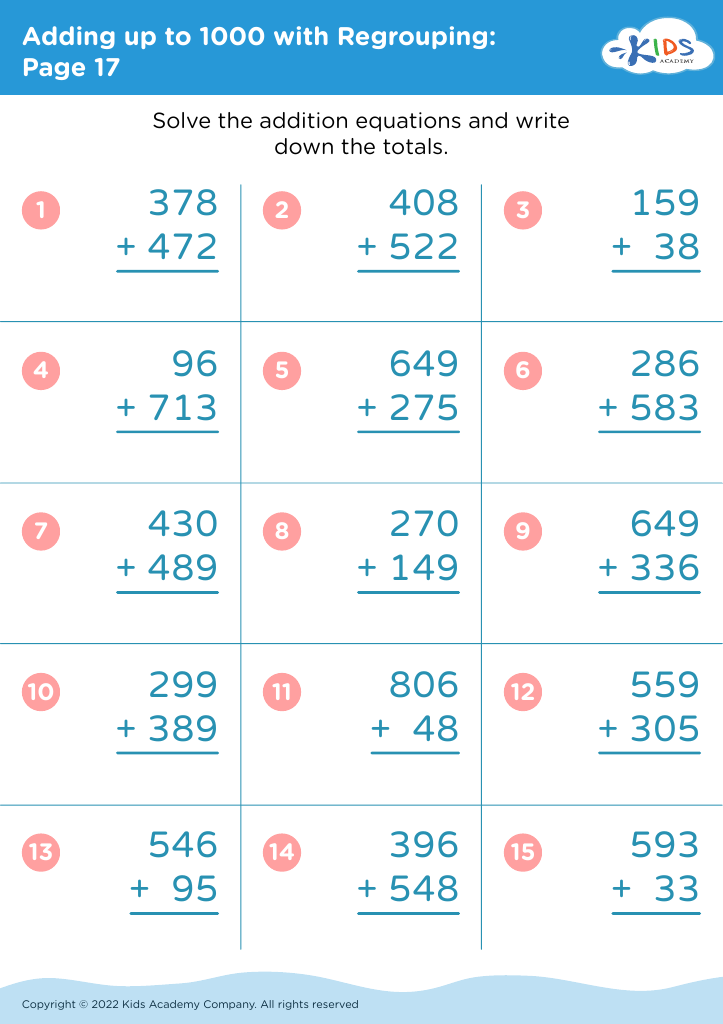
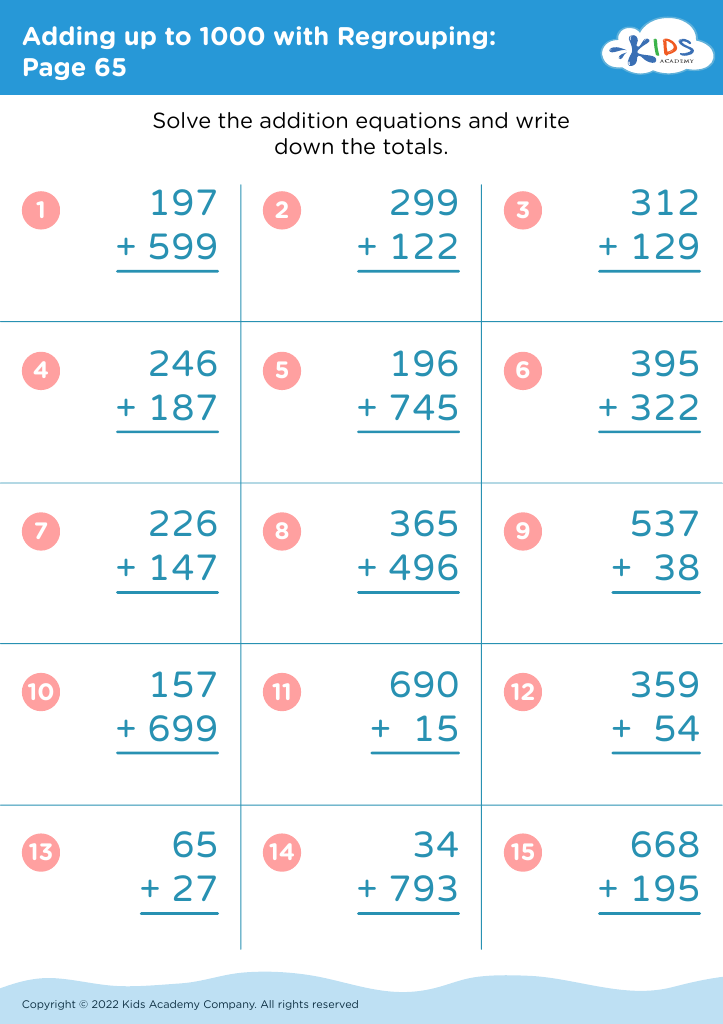
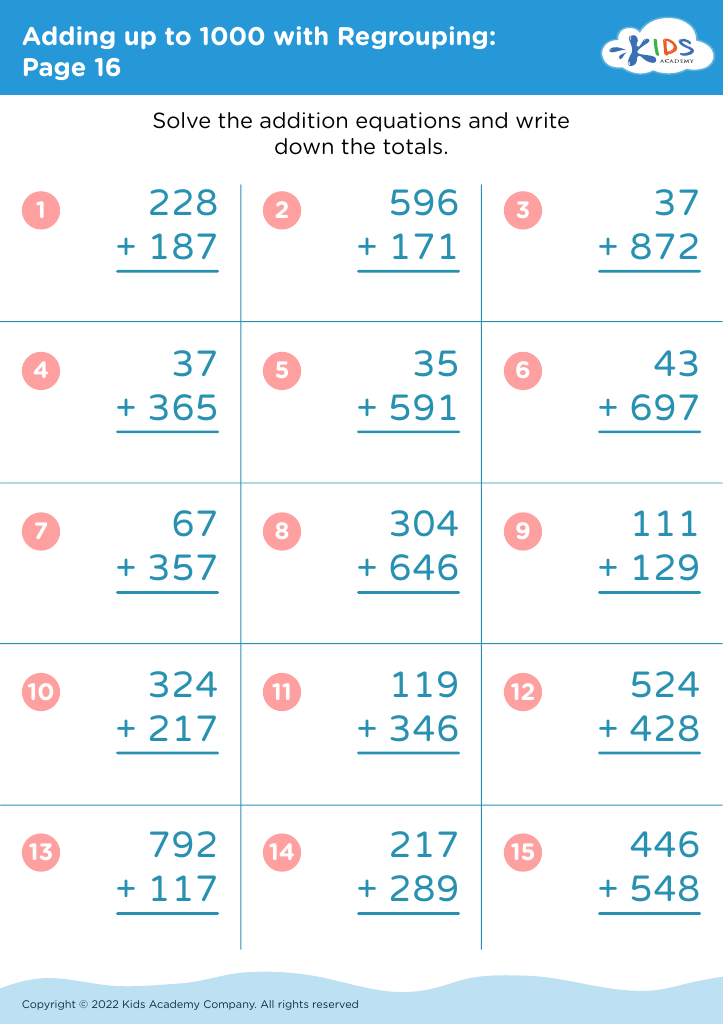


Introducing children to the concept of comparing fractions and regrouping can lay a crucial foundation for numeracy skills essential throughout their academic journey and beyond. For ages 5-8, understanding how fractions work by visualizing and comparing their sizes promotes logical thinking and problem-solving skills. When children grasp these basic concepts early, they build confidence in handling more complex arithmetic later on.
Such practice not only aligns with many curricula standards but also enhances cognitive skills including pattern recognition and analytical abilities. Comparing fractions offers a hands-on approach for children to visualize mathematical relationships, while adding up fractions and dealing with sums that require regrouping introduces them to the significance of place value and number sense at an accessible level.
By mastering these skills early, children strengthen their mathematical foundation, making subsequent concepts in algebra and geometry more approachable. Moreover, we should care about these early practices as they encourage a positive attitude toward math, potentially combating the widespread fear or distaste for the subject as they grow. Engaging parents in overseeing these activities further strengthens communication and provides a supportive learning environment, ensuring that children do not feel isolated in their learning journey. Together, parents and teachers establish robust learning habits that promote lifelong educational successes.