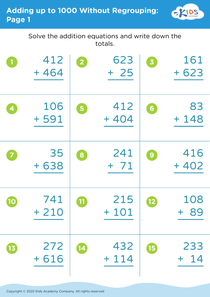
Mathematical reasoning Adding up to 1000 with Regrouping Worksheets for Ages 5-8
3 filtered results
-
From - To
Explore the world of mathematical reasoning with our "Adding Up to 1000 with Regrouping" worksheets designed for children aged 5-8. These engaging and interactive worksheets help develop essential math skills by guiding young learners through the process of addition with regrouping. Perfect for enhancing problem-solving abilities and critical thinking, our resources provide a variety of problems that reinforce concepts in a fun and approachable way. With colorful illustrations and clear instructions, these worksheets make learning enjoyable, fostering a strong foundation in mathematics. Dive into the adventure of numbers with Kids Academy’s thoughtfully designed educational materials for early learners!
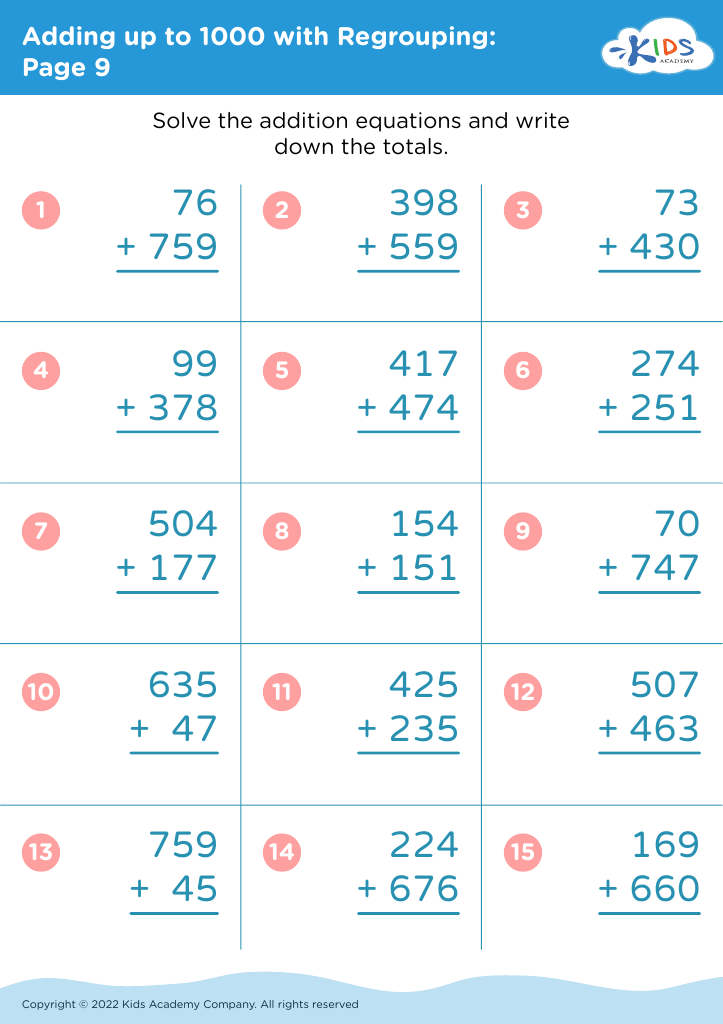
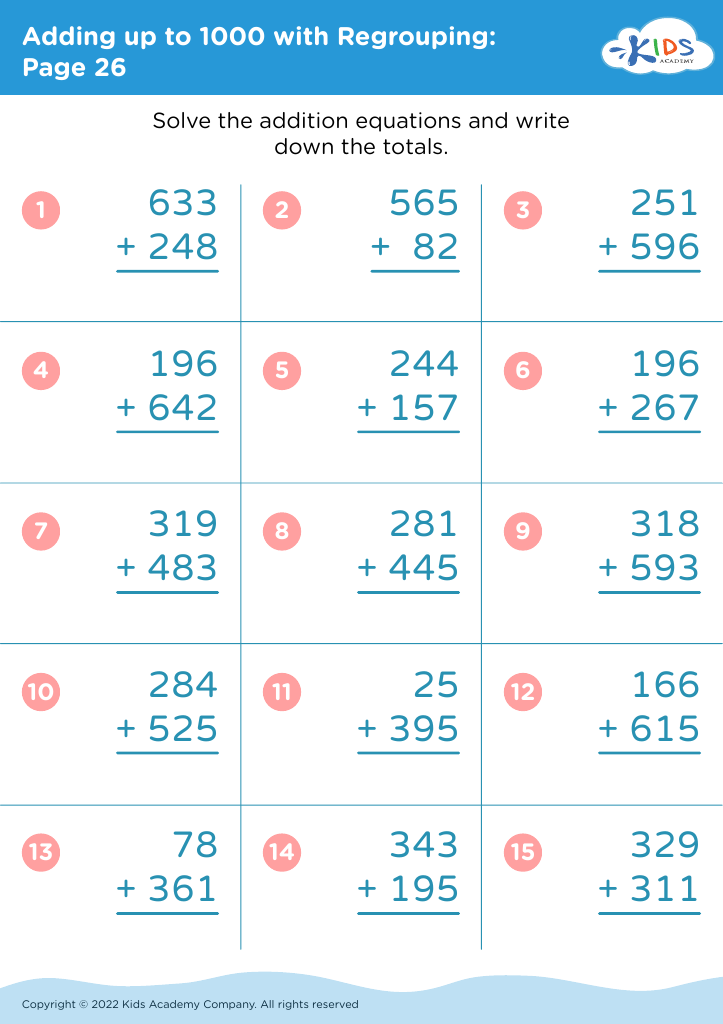
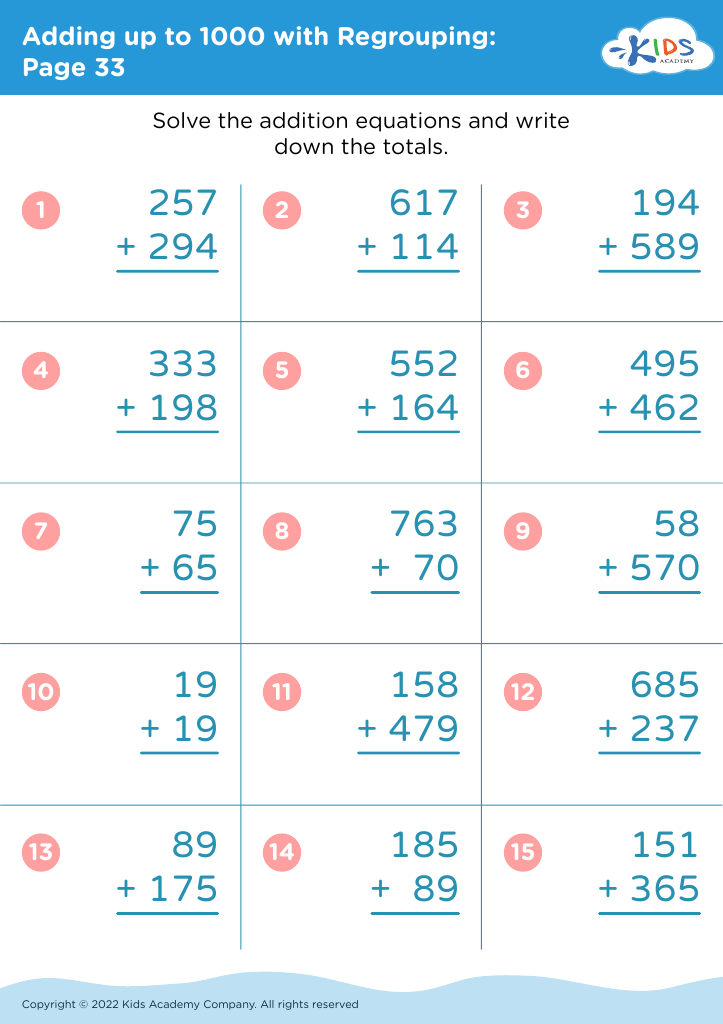


Mathematical reasoning, particularly adding up to 1000 with regrouping, plays a crucial role in the cognitive development of children aged 5-8. At this age, children start moving beyond basic arithmetic to understand the relationships between numbers. Learning to add with regrouping enhances their number sense, allowing them to comprehend larger numbers and perform calculations more confidently.
Teaching this concept empowers children to recognize patterns and think critically about numerical operations. It develops their problem-solving skills and encourages them to explore different strategies, fostering a deeper understanding of mathematics as a whole. Parents and teachers should understand that mastering regrouping lays the foundation for more complex math concepts, such as subtraction, multiplication, and division.
Moreover, mathematical reasoning promotes perseverance and resilience, as children learn to approach challenging problems methodically. It builds confidence, helping them to view math as a space for exploration rather than dread. Engaging children in activities that involve real-life applications of adding with regrouping can also make learning interactive and enjoyable. Ultimately, nurturing these skills in early learners prepares them for future academic success and equips them with essential abilities necessary for a math-focused world.