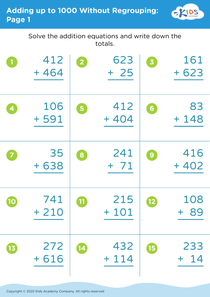
Problem-Solving Skills Adding up to 1000 with Regrouping Worksheets for Ages 5-8
5 filtered results
-
From - To
Enhance your child's mathematical journey with our engaging "Problem-Solving Skills: Adding Up to 1000 with Regrouping Worksheets" designed specifically for ages 5-8. These thoughtfully crafted worksheets focus on developing essential problem-solving abilities while teaching students how to effectively regroup numbers during addition. Each activity encourages critical thinking and offers plenty of opportunities for practice in a fun and interactive manner. As children work through these worksheets, they will gain confidence in their math skills and improve their ability to tackle complex problems. Foster a love for learning and help your young learners master addition with our valuable resource today!
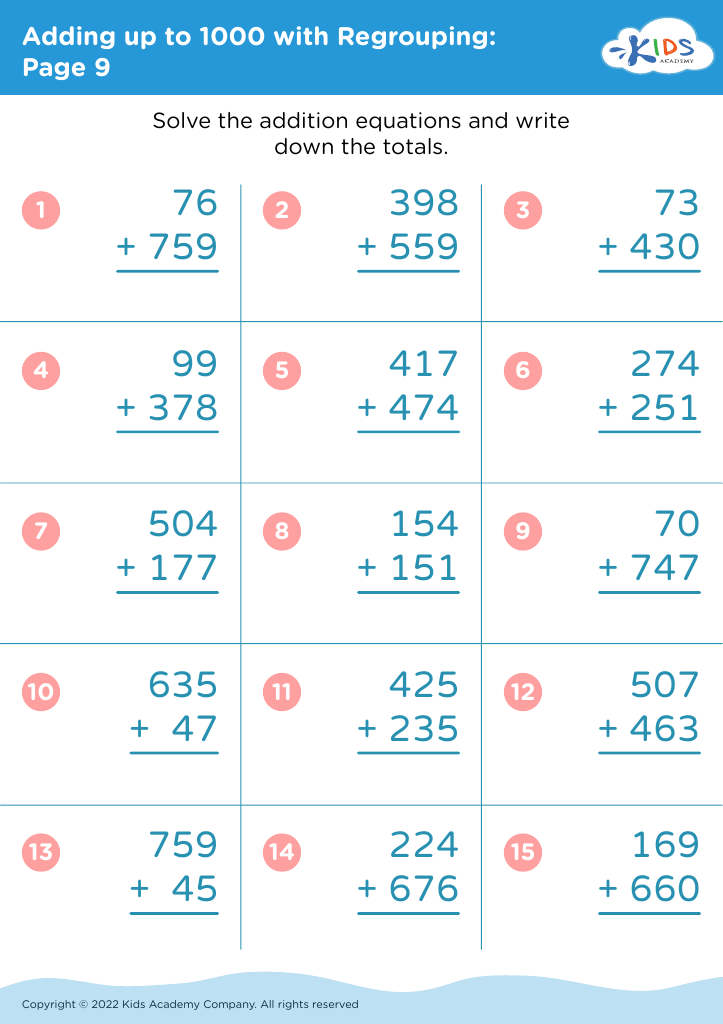
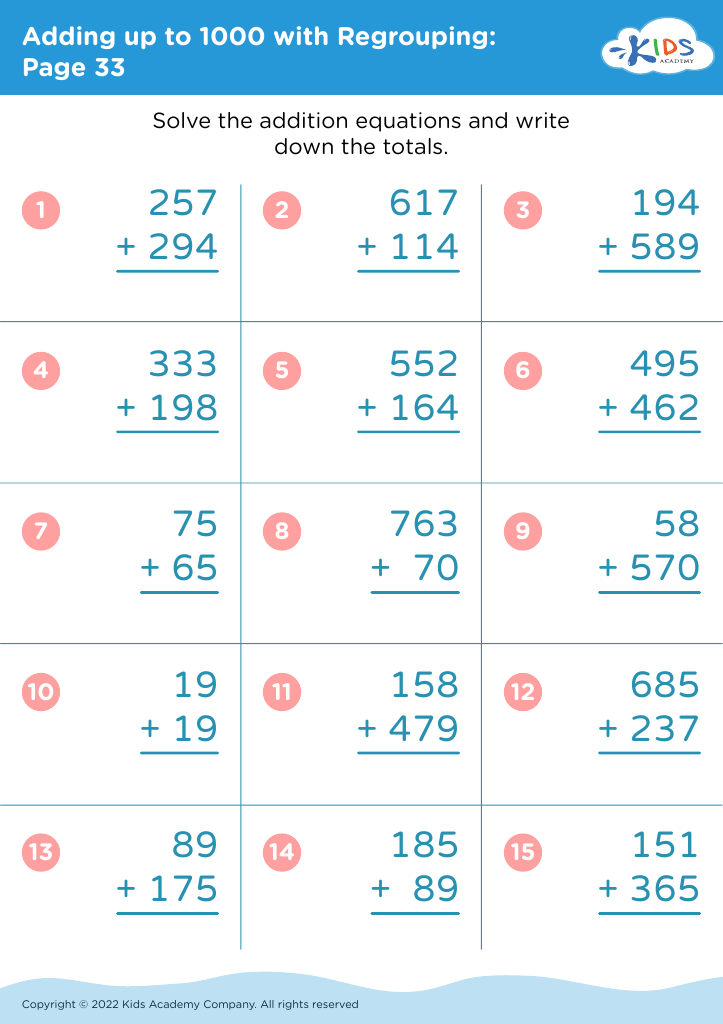
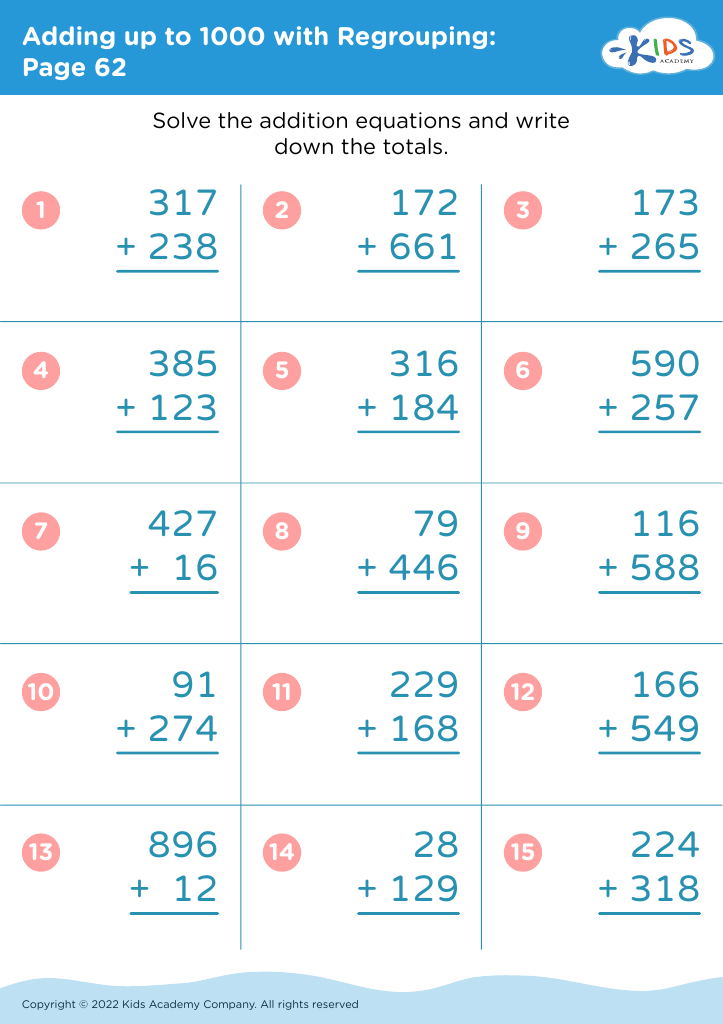
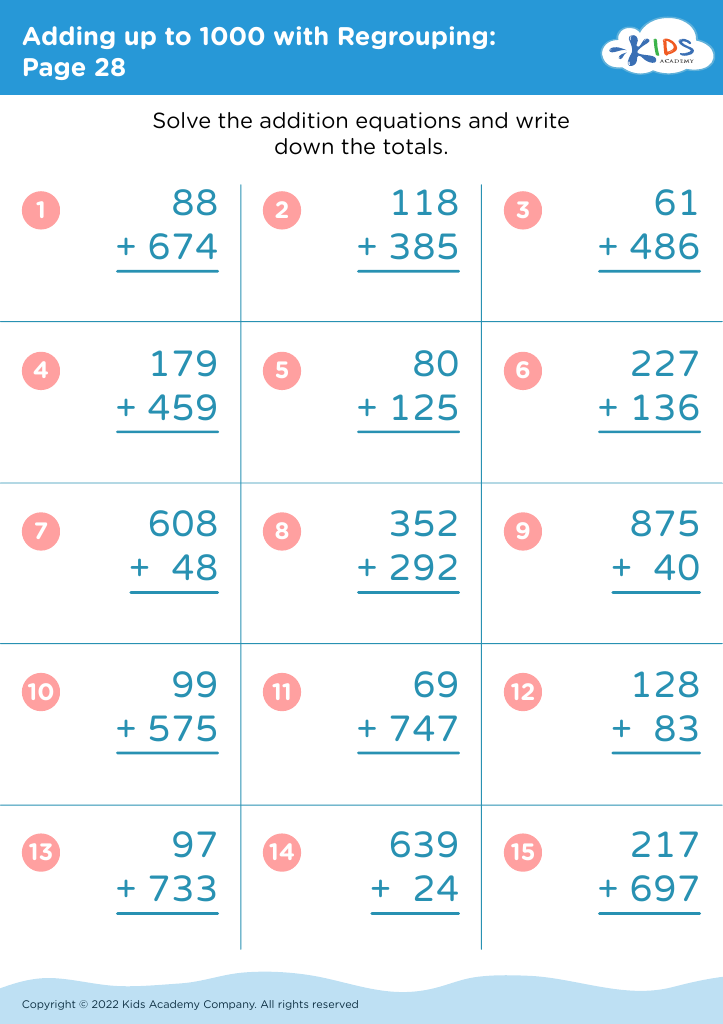
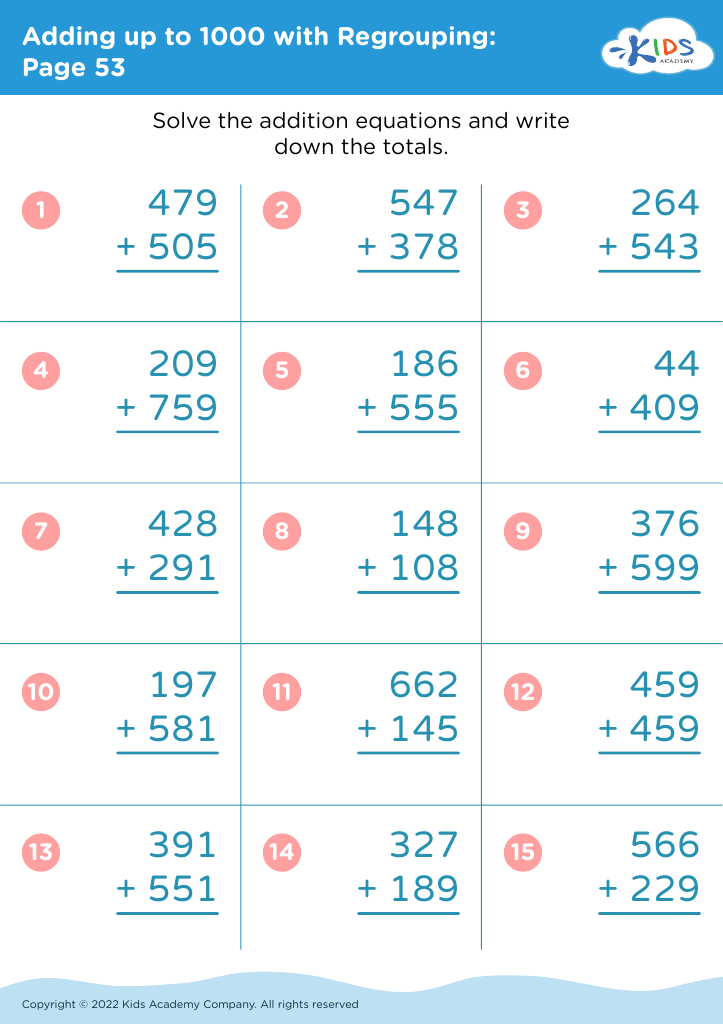


Problem-solving skills, particularly in math for ages 5-8, are crucial for children's overall development. When kids learn to add up to 1000 with regrouping, they're not just mastering a math concept; they're enhancing their cognitive abilities. This process requires critical thinking, pattern recognition, and the ability to apply strategies. By engaging with regrouping, children learn how to handle more complex problems, translating to improved analytical skills.
For parents and teachers, fostering these skills is vital as they lay the foundation for future learning. Children who develop a strong understanding of problem-solving from a young age are more likely to excel academically and approach other challenges with confidence. Moreover, these skills promote resilience; kids learn that mistakes can lead to new solutions and insights.
In addition, problem-solving activities encourage collaboration and communication among peers, helping develop social skills. When they tackle these challenges together, children build teamwork and share different perspectives, vital for their interpersonal growth. Overall, prioritizing problem-solving skills strengthens children's independence and prepares them for a world where effective decision-making and adaptability are essential. By nurturing these abilities, we empower our children to become capable thinkers and lifelong learners.