Fraction comparison Adding up to 1000 Without Regrouping Worksheets for Ages 5-8
4 filtered results
-
From - To
Introducing our engaging "Fraction Comparison Adding Up to 1000 Without Regrouping Worksheets" designed specifically for ages 5-8! These interactive worksheets guide young learners through the essential skills of comparing fractions and numerical addition without regrouping, laying a strong mathematical foundation. Tailored for early grade students, our fun and colorful exercises will make learning enjoyable as they develop their understanding of fractions within the context of adding numbers up to 1000. Perfect for both classroom and at-home practice, these worksheets are a fantastic tool to enhance problem-solving skills and boost confidence in math. Get started today to make fractions fun and accessible!
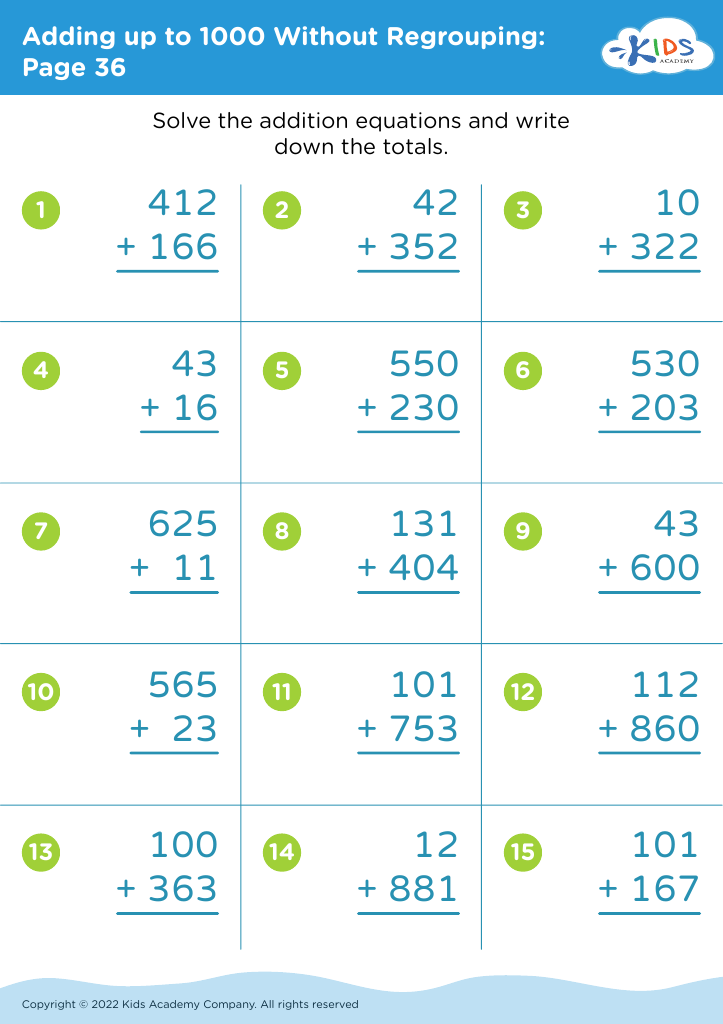
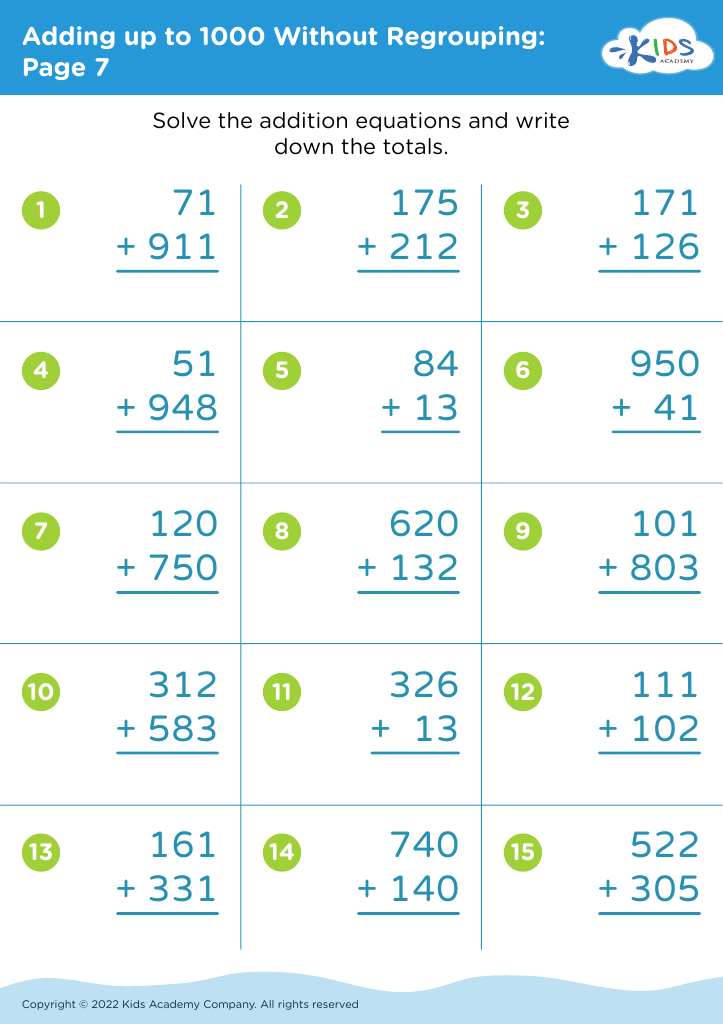
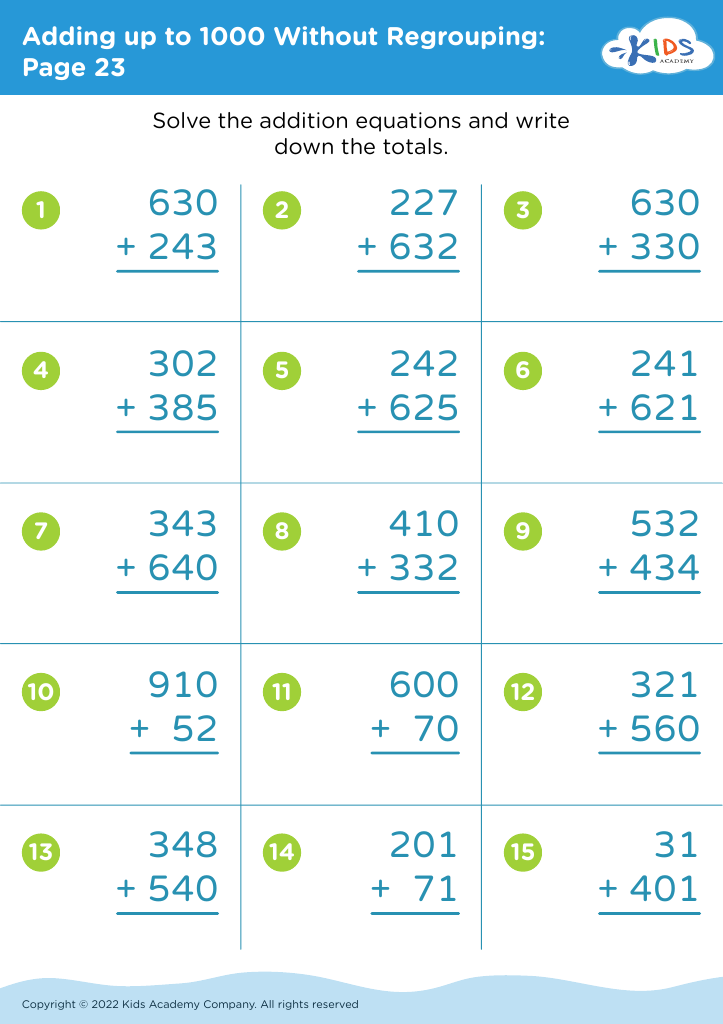
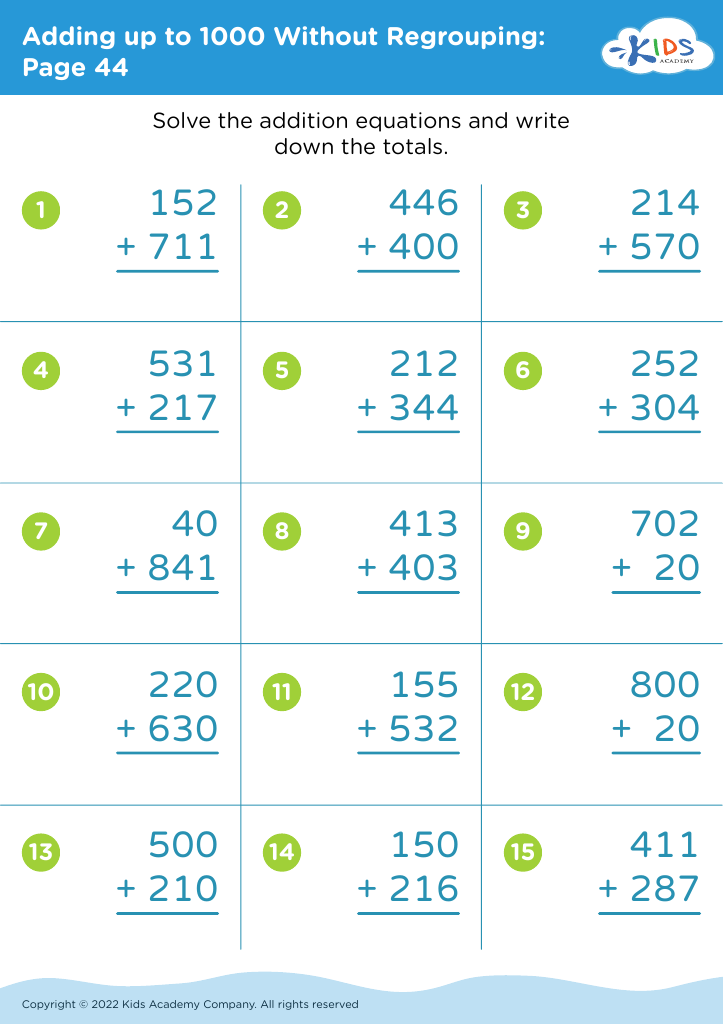


Understanding fraction comparison and adding up to 1000 without regrouping is crucial for children aged 5-8, as it lays the foundation for their numeracy skills. This developmental stage is when children begin to grasp basic mathematical concepts, and a strong grasp of fractions is essential for everyday problem-solving.
For parents and teachers, focusing on these topics encourages critical thinking and sets the stage for more complex mathematical operations in higher grades. Mastering fraction comparison helps kids understand proportions, which is vital for tasks like cooking or understanding portions in real life. Similarly, practicing addition without regrouping aids in building their confidence and mental math skills, making arithmetic more approachable.
By engaging children in these activities, educators and parents foster a love for mathematics, demonstrating its relevance outside the classroom. Moreover, understanding these concepts allows children to participate in activities that require basic financial literacy, like budgeting their allowance or understanding discounts.
In summary, promoting fraction comparison and addition skills in early learners helps create a solid math foundation that benefits them academically and practically throughout their lives.