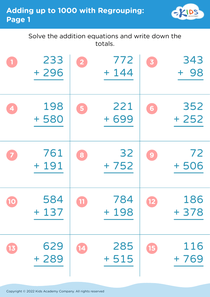
Reading comprehension Adding up to 1000 Without Regrouping Worksheets for Ages 5-8
4 filtered results
-
From - To
Enhance your child's reading comprehension skills while working on math with our "Reading Comprehension: Adding Up to 1000 Without Regrouping" worksheets, designed for ages 5-8. These engaging and age-appropriate worksheets combine math problems focusing on addition up to 1000 without regrouping with fun reading passages that help develop critical thinking and comprehension abilities. Children will not only practice essential addition skills but also improve their understanding of texts, making connections between math concepts and real-life scenarios. Perfect for homeschooling, supplemental learning, or classroom activities, these worksheets make learning enjoyable and effective for young learners. Download today to support your child's educational journey!
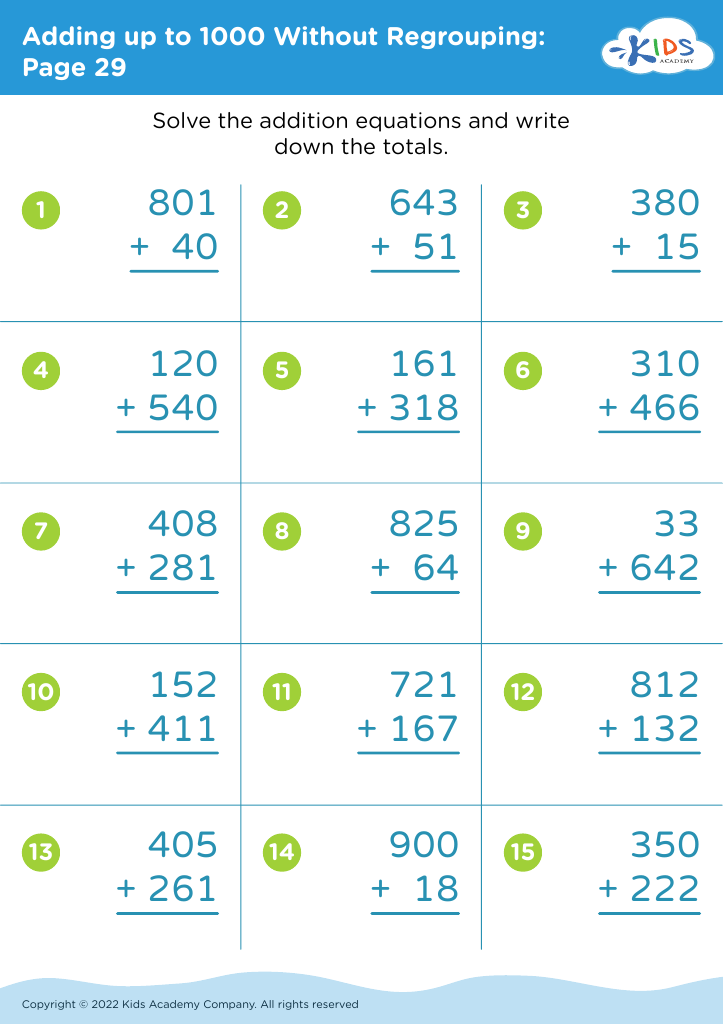
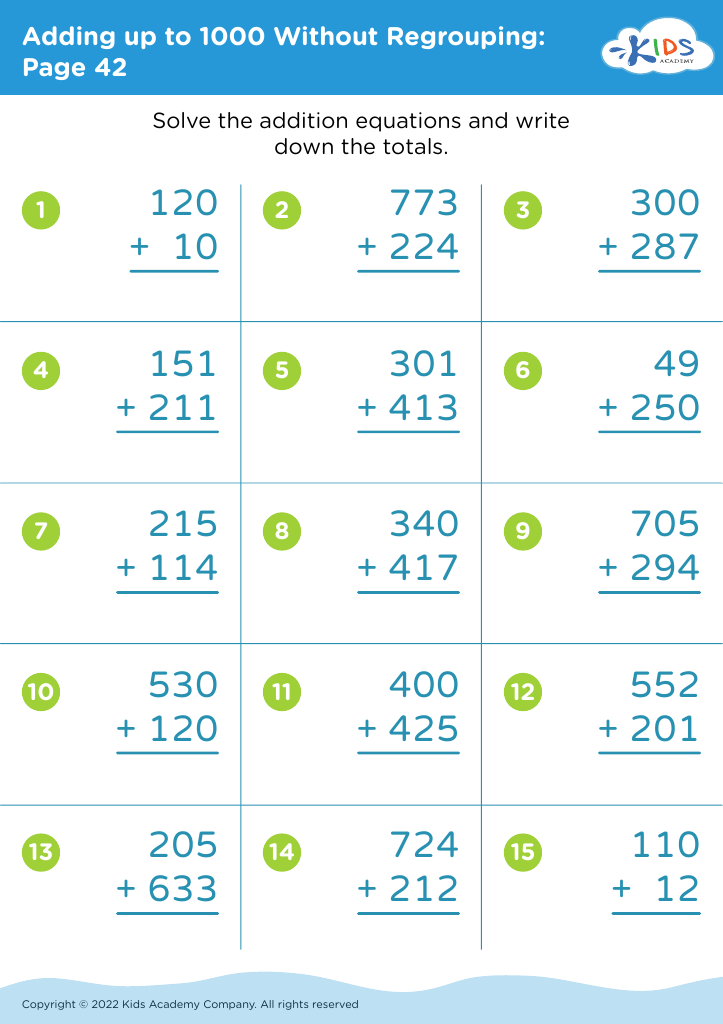
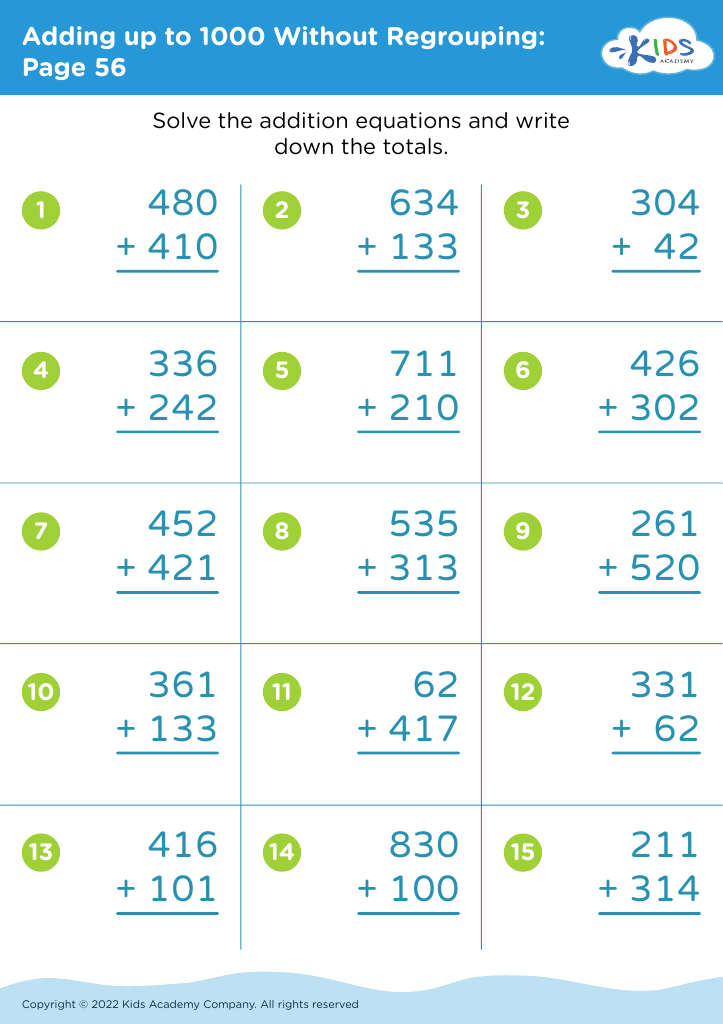
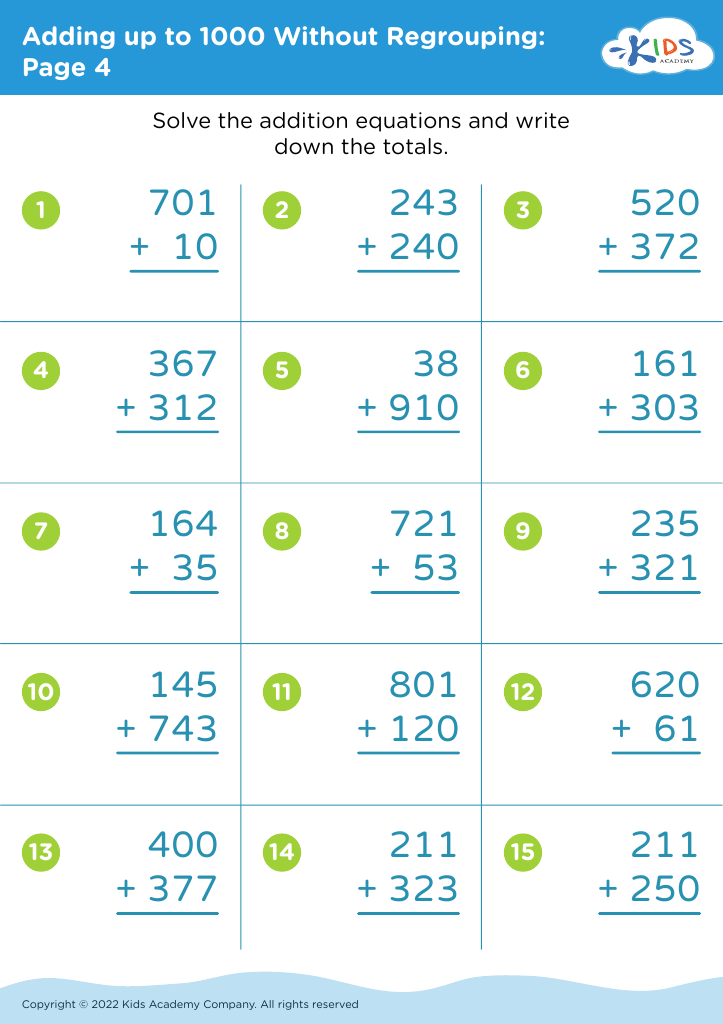


Reading comprehension is a crucial skill for children aged 5-8, serving as a foundation for their academic journey. Understanding texts allows children to absorb information effectively, promoting a love for reading that builds literacy skills over time. When paired with mathematics concepts like Addition Without Regrouping, it enhances critical thinking, as students learn to process and interpret both words and numbers accurately.
Implementing comprehension strategies boosts students' confidence in tackling various subjects. As they engage with reading material related to addition, nurturing their math skills reinforces retention and application. Furthermore, strong comprehension skills aid in problem-solving and decision-making, fostering overall cognitive development.
Parents and teachers play a vital role in promoting these skills through daily activities. They can create an engaging learning environment by incorporating reading material that includes mathematical concepts, encouraging discussions about storylines, characters, and problem-solving scenarios. This not only cultivates reading skills but strengthens the association between language and math, vital for young learners.
Ultimately, investing in reading comprehension alongside basic math concepts equips children with the tools to succeed academically, promoting lifelong learning and curiosity, and laying the groundwork for more advanced skills in the future.