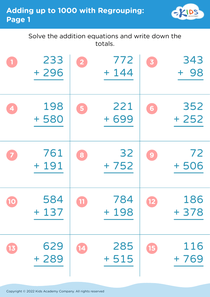
Recognizing shapes Adding up to 1000 Without Regrouping Worksheets for Ages 5-8
3 filtered results
-
From - To
Elevate your teaching with our "Recognizing Shapes Adding Up to 1000 Without Regrouping Worksheets" designed for children ages 5-8. These worksheets seamlessly combine shape recognition and basic addition skills, providing a fun and engaging way for young learners to practice math. By identifying different shapes while adding numbers up to 1000, students enhance their mathematical understanding and cognitive development. Our worksheets promote critical thinking and problem-solving, ensuring kids build a solid foundation in both geometry and addition. Perfect for classroom use or at-home learning, these resources offer a playful approach to mastering essential math skills. Explore, recognize, and add with confidence!
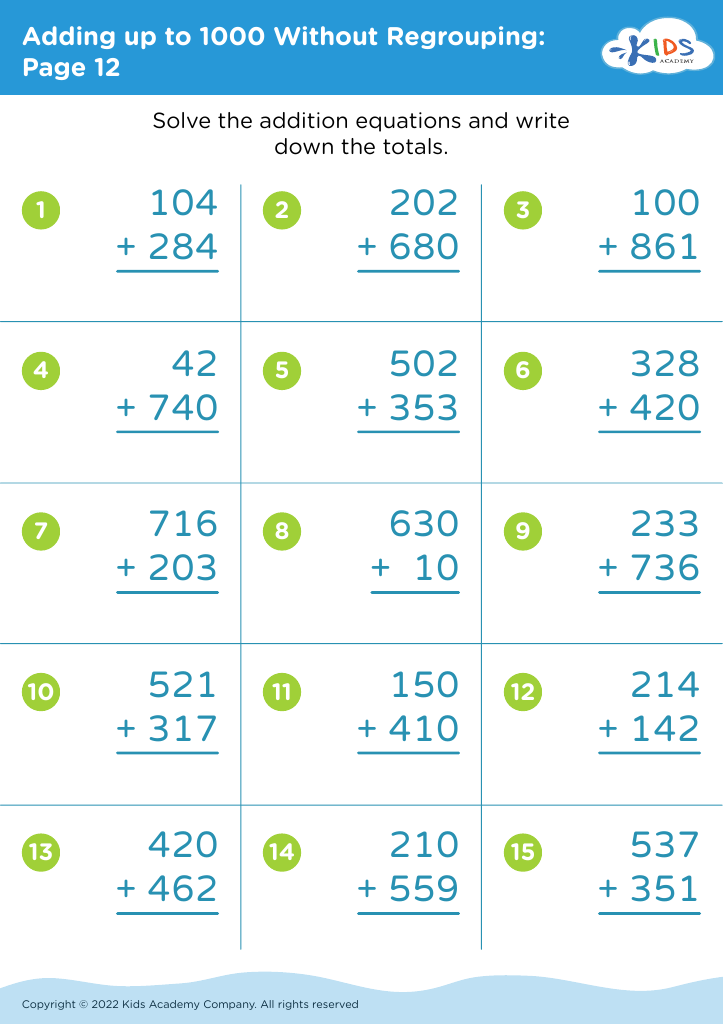
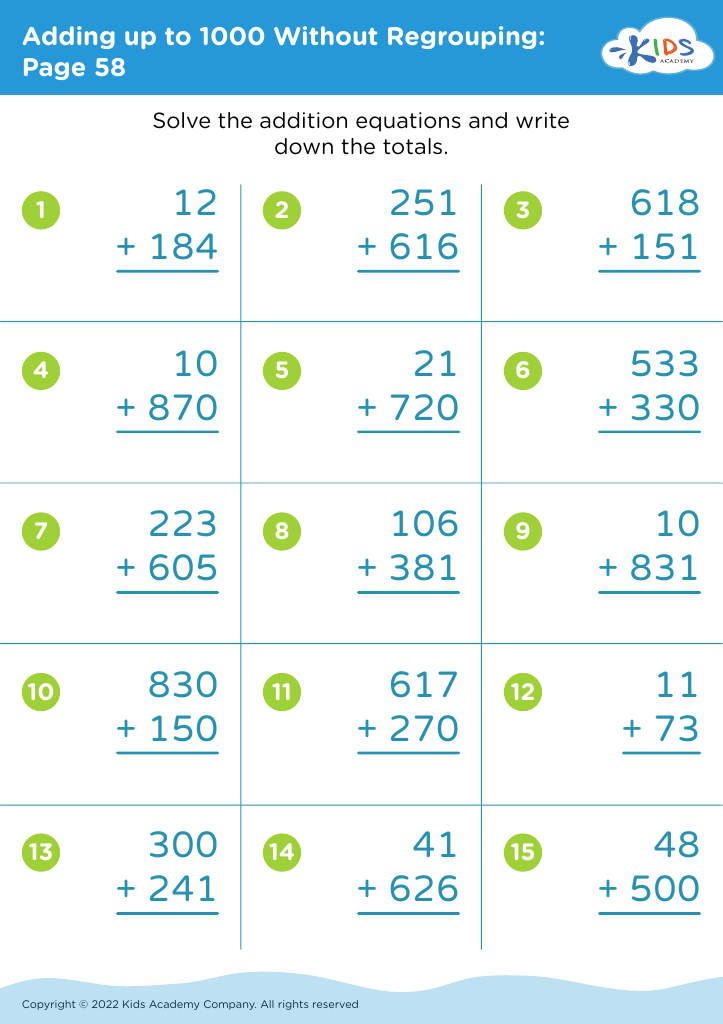
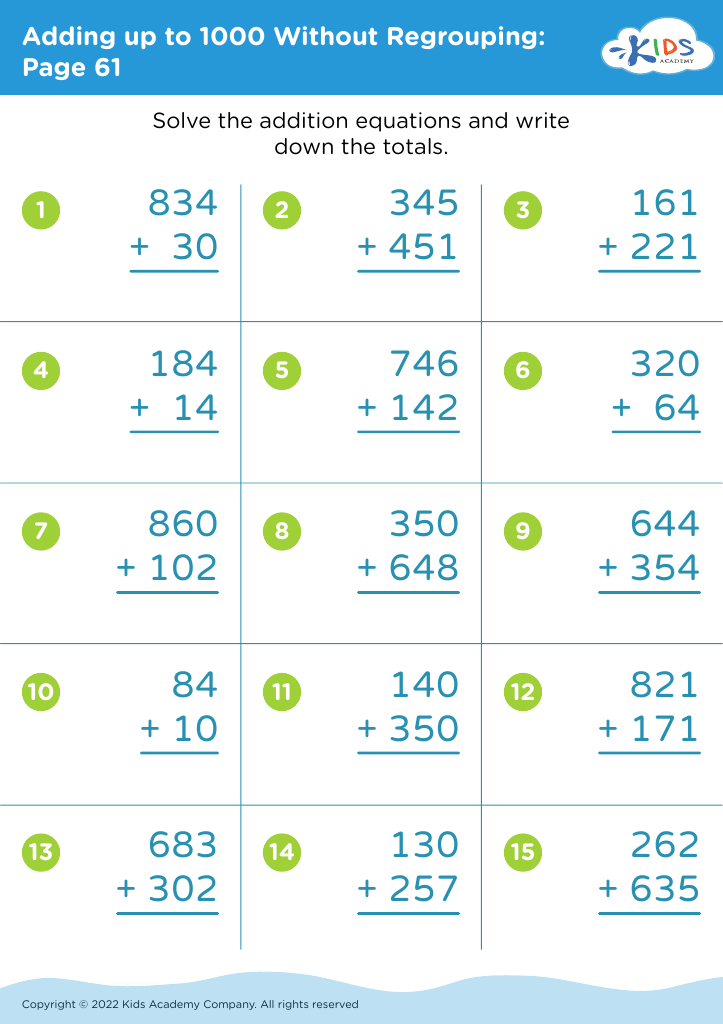


Recognizing shapes and mastering addition techniques, such as adding up to 1000 without regrouping, are foundational skills vital for the development of young learners aged 5-8. First, shape recognition enhances spatial awareness, which is essential for problem-solving and critical thinking. It lays the groundwork for understanding geometry and fosters creativity through activities like art and design.
Equally important, addition without regrouping reinforces the basic mechanics of arithmetic. This skill not only builds a strong mathematical foundation but also increases confidence in handling numbers. Mastery of addition promotes mental math abilities, allowing children to quickly assess quantities and solve everyday problems, such as financial decisions and time management.
Furthermore, when parents and teachers focus on these concepts, they help create a well-rounded educational experience. Engaging children in shape recognition and addition encourages a positive attitude towards math, setting the stage for future academic success and reducing anxiety around mathematical concepts.
In summary, prioritizing shape recognition and basic addition without regrouping fosters essential cognitive and emotional skills that empower children to tackle more complex topics later, establishing a robust foundation for lifelong learning.