Addition skills Adding up to 1000 Worksheets for Ages 5-8
5 filtered results
-
From - To
Boost your child's confidence in math with our "Adding Up to 1000 Worksheets," designed specifically for ages 5-8. These engaging worksheets offer a variety of addition problems, helping young learners to grasp essential skills and improve their arithmetic abilities. Each activity is thoughtfully crafted to provide a balance of challenge and support, ensuring kids can practice addition in a fun and interactive way! With a focus on adding numbers up to 1000, your child will develop a solid foundation in mathematics, setting the stage for future success. Explore our resources today and make learning addition enjoyable!
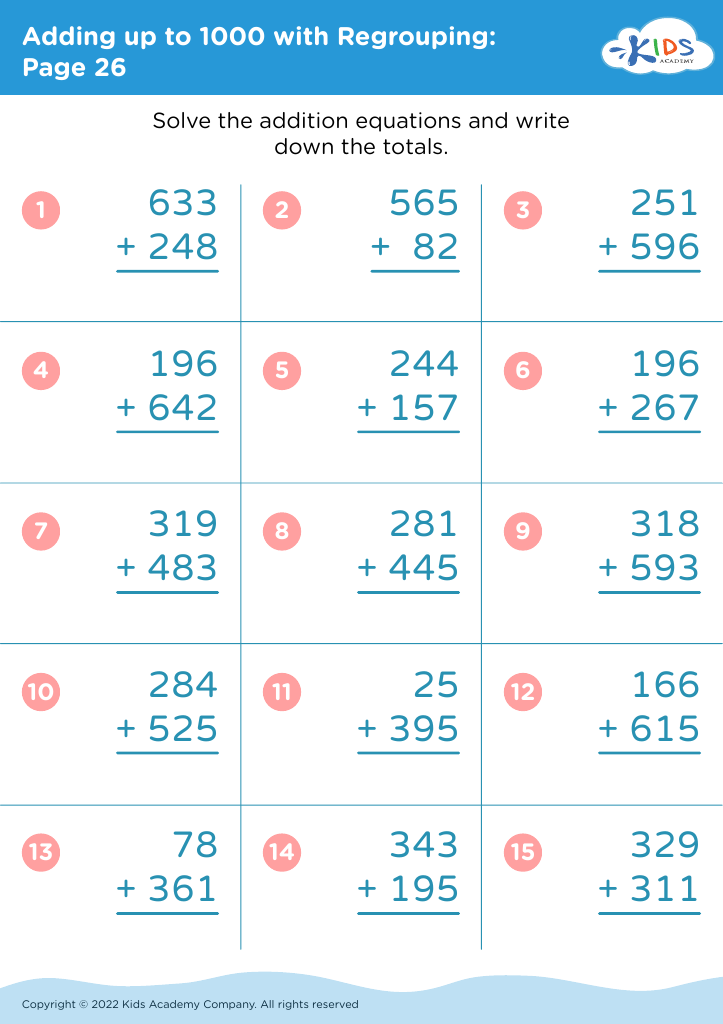
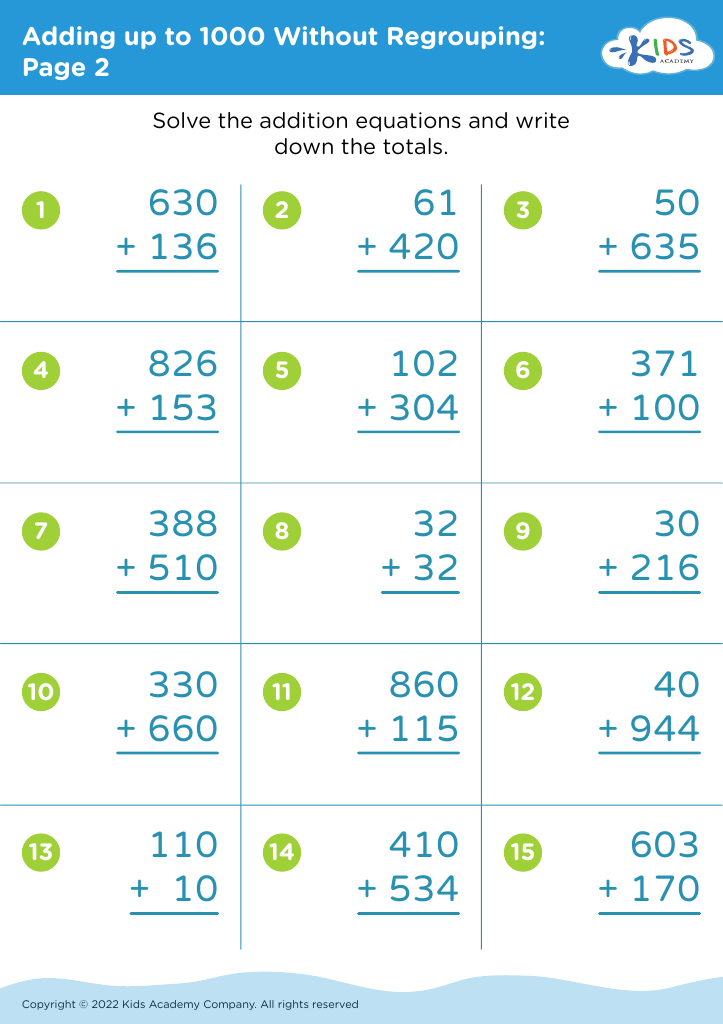
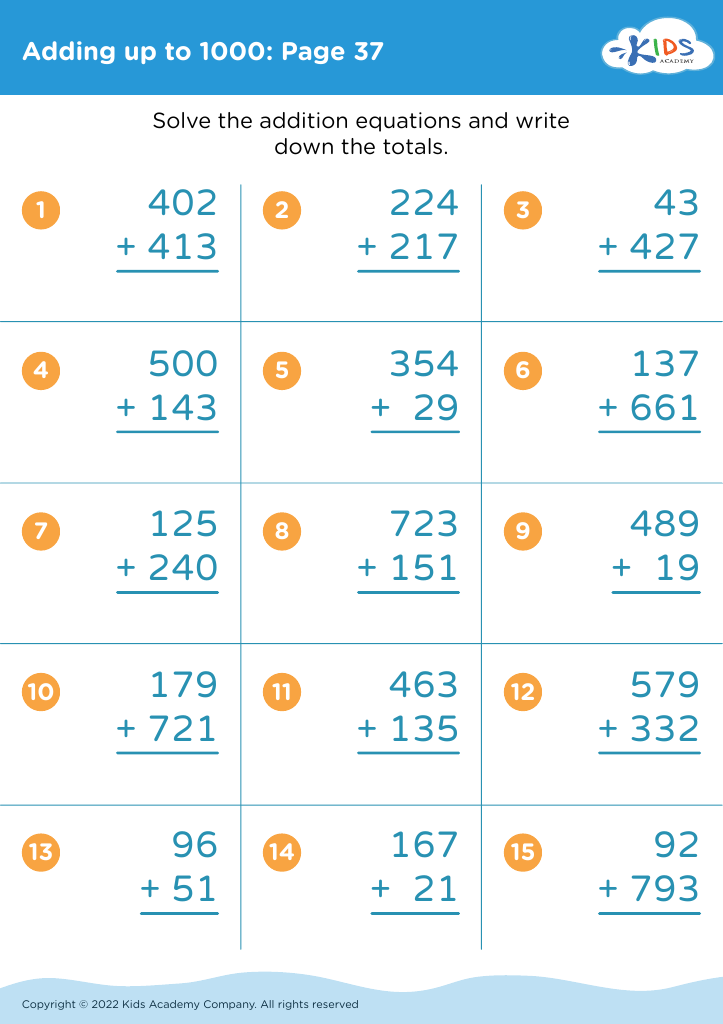
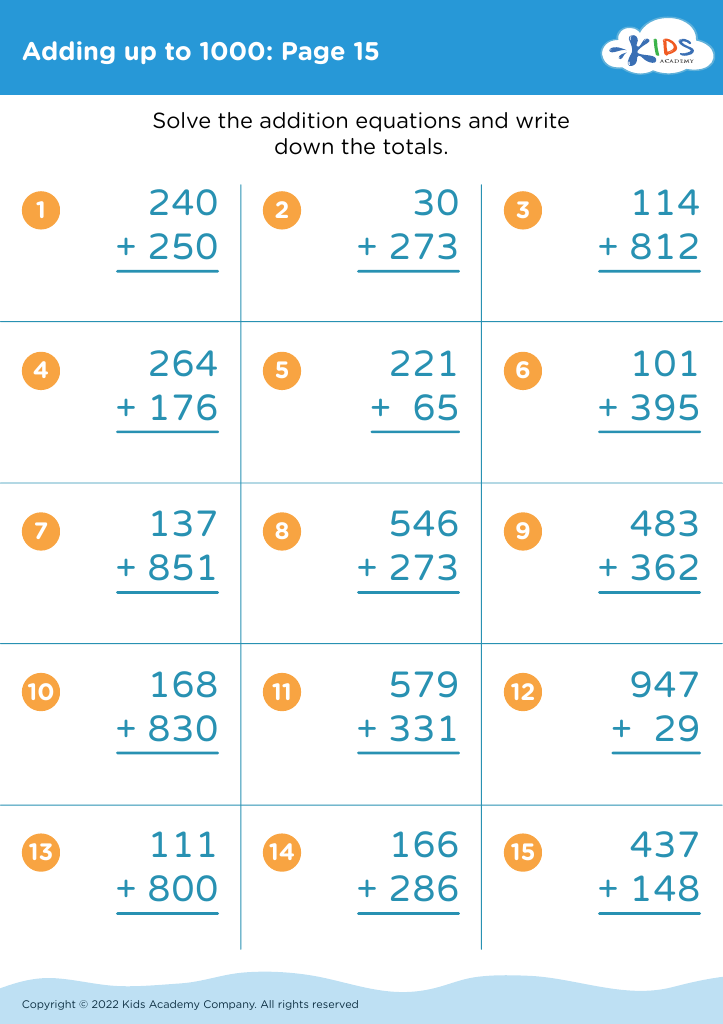
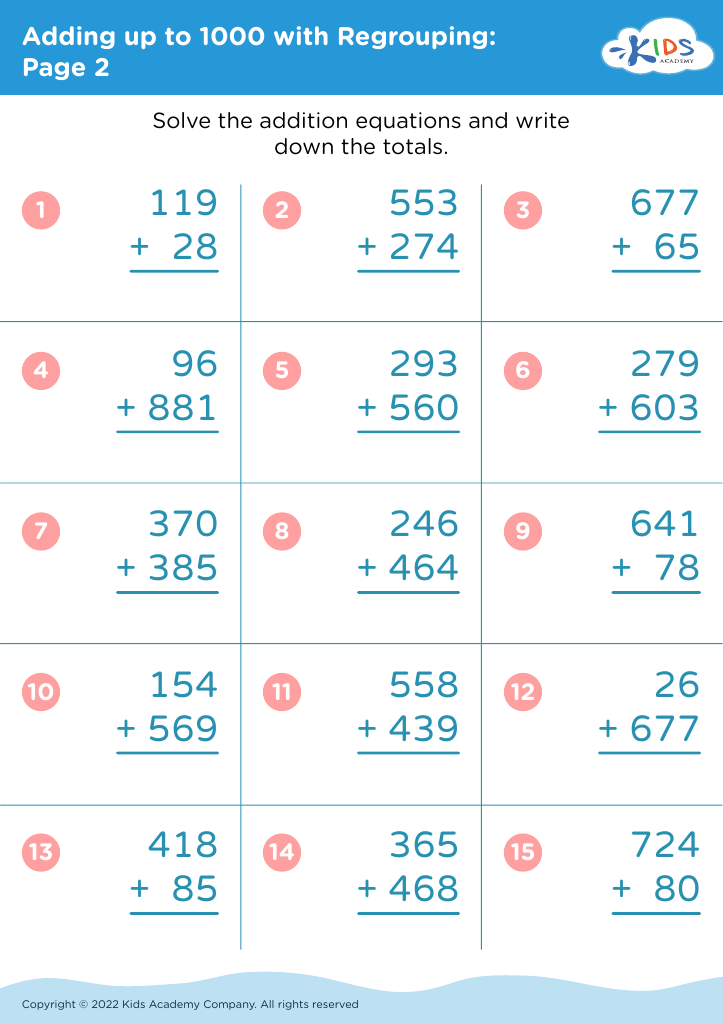



Understanding addition skills, particularly adding up to 1000, is crucial for children aged 5-8 for several reasons. First, foundational math skills form the basis of future learning in mathematics. Proficiency in addition helps children grasp more complex concepts such as subtraction, multiplication, and division, which they will encounter in later grades.
Moreover, the ability to add numbers up to 1000 encourages logical thinking and problem-solving skills. It allows children to manipulate larger quantities, enhancing their number sense and confidence in handling mathematics. Early mastery of these skills can prevent anxiety and hurdles in later academic years.
Additionally, addition is pervasive in everyday life—whether it’s adding up scores in a game, counting change, or measuring ingredients for a recipe. Teaching children to add effectively prepares them not just for the classroom, but for real-world applications as well.
Lastly, parents and teachers play a vital role as supporters in a child's learning journey. By providing engaging activities and encouragement, they can nurture a love for math, making it both enjoyable and rewarding. Ultimately, strong addition skills foster independence and empower children to approach challenges with a positive mindset.








