Alphabet Recognition Adding up to 1000 Worksheets for Ages 5-8
4 filtered results
-
From - To
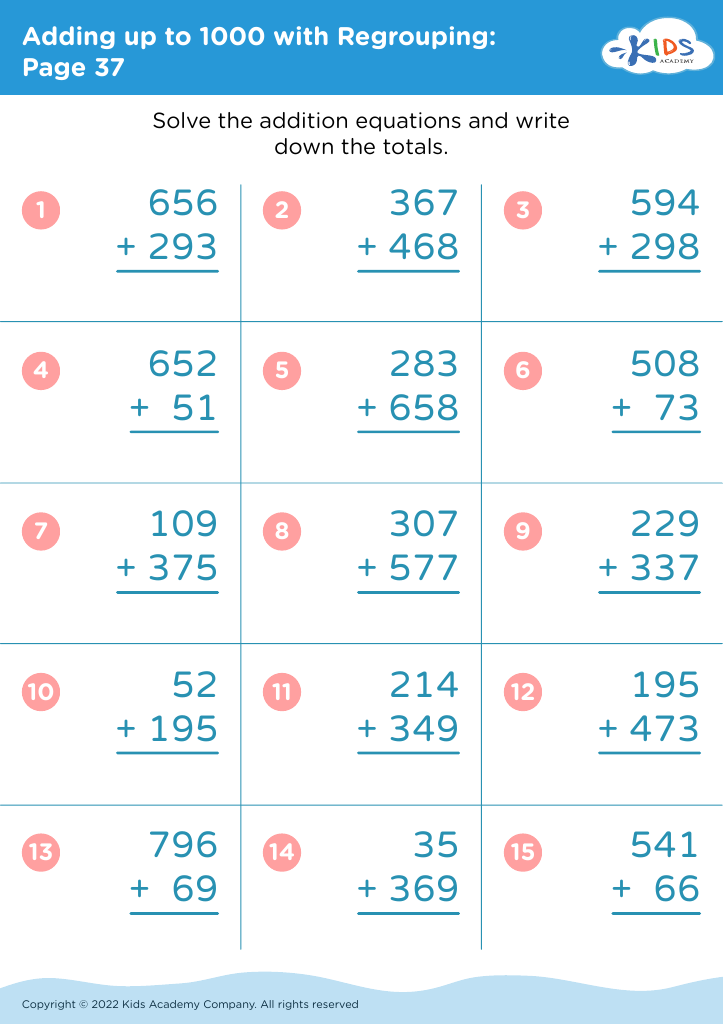
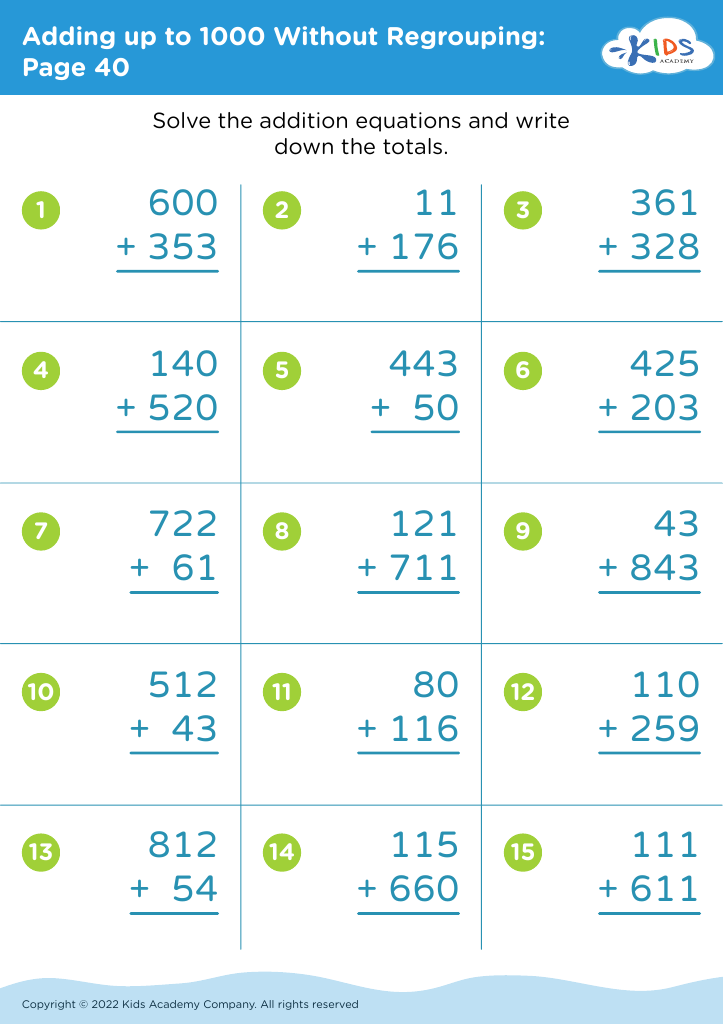
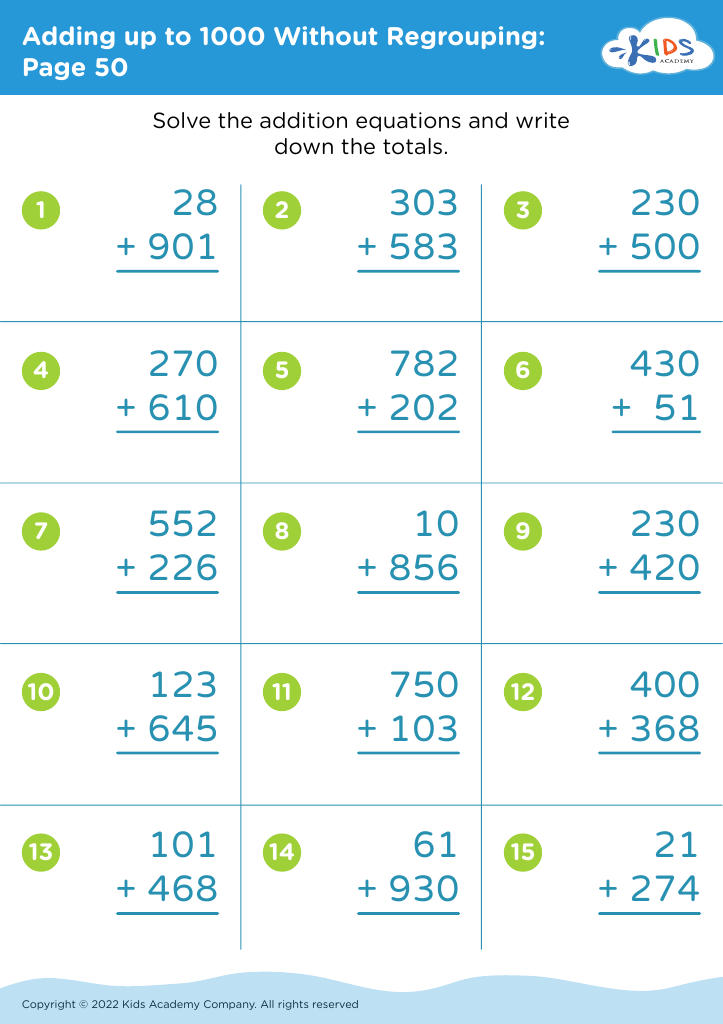
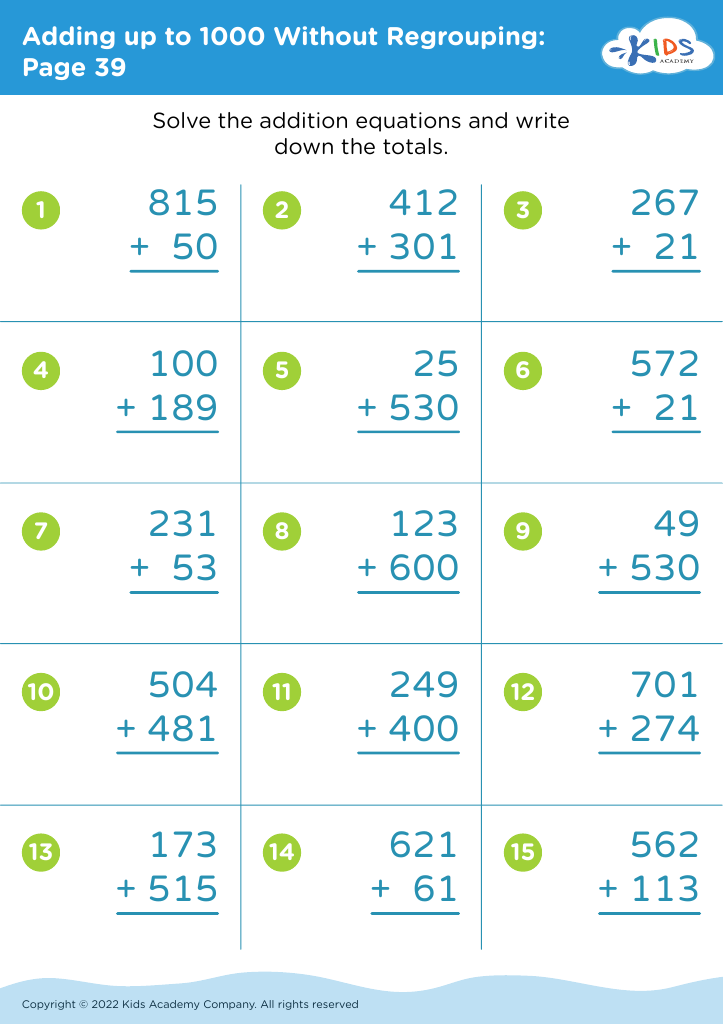
Our "Alphabet Recognition Adding up to 1000 Worksheets" for ages 5-8 offer a fun and educational way to enhance your child's alphabet recognition and math skills simultaneously. Each thoughtfully designed worksheet seamlessly integrates letter identification with addition exercises, ensuring engaging and effective learning. Perfect for young learners, these printable resources will boost both literacy and numeracy, providing a solid foundation for future academic success. Ideal for classroom or at-home practice, our worksheets are the perfect blend of play and education to keep your child motivated and excited about learning. Download now and watch their skills grow!



Alphabet recognition and the ability to add numbers up to 1000 are foundational skills critical for young children between the ages of 5 and 8. For starters, recognizing the alphabet is fundamental to developing essential literacy skills, including reading and writing. When children can readily identify letters, they are better equipped to understand the sounds associated with each letter, build words, and eventually read fluently. Literacy not only forms the basis of communication but also enhances cognitive development, critical thinking, and creativity.
On the other hand, learning to add numbers up to 1000 provides children with a solid numerical foundation, which is a critical component of mathematical literacy. Early numeracy skills are linked to problem-solving abilities and logical reasoning. Children who grasp these concepts early typically show greater confidence and interest in mathematics, which can translate to better academic performance across other subjects. Advanced addition also introduces kids to patterns, promotes mental flexibility, and prepares them for more complex mathematical operations they will encounter later on.
Therefore, parents and teachers have a responsibility to nurture these skills. By investing in activities and educational tools that reinforce alphabet recognition and mathematics, they can set children on a path to academic success and lifelong learning.








