Basic Addition Skills Adding up to 1000 Worksheets for Ages 5-8
3 filtered results
-
From - To
Discover our engaging "Basic Addition Skills Worksheets" designed specifically for children aged 5-8. These worksheets provide a fun and interactive way to master addition concepts, focusing on sums that add up to 1000. Each worksheet is tailored to reinforce foundational math skills, helping young learners gain confidence in their addition abilities. With colorful visuals and activities, children will enjoy practicing their arithmetic while developing critical thinking skills. Perfect for classroom use or at-home learning, our comprehensive resources will support your child’s mathematical journey. Explore our collection today and enhance your child’s arithmetic success with our fun worksheets!
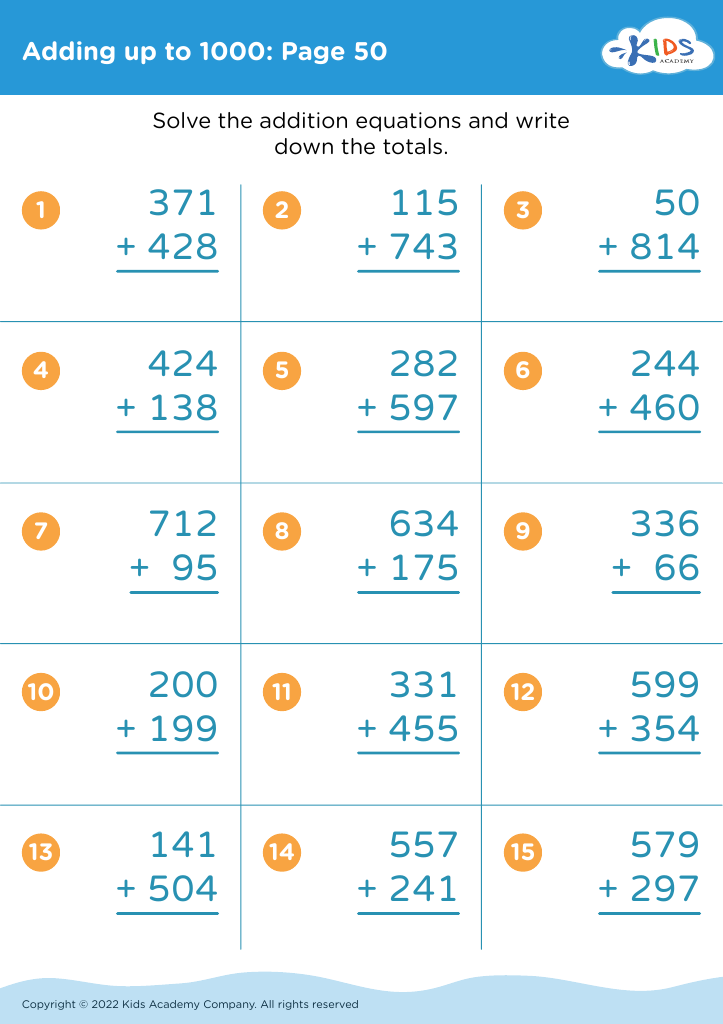
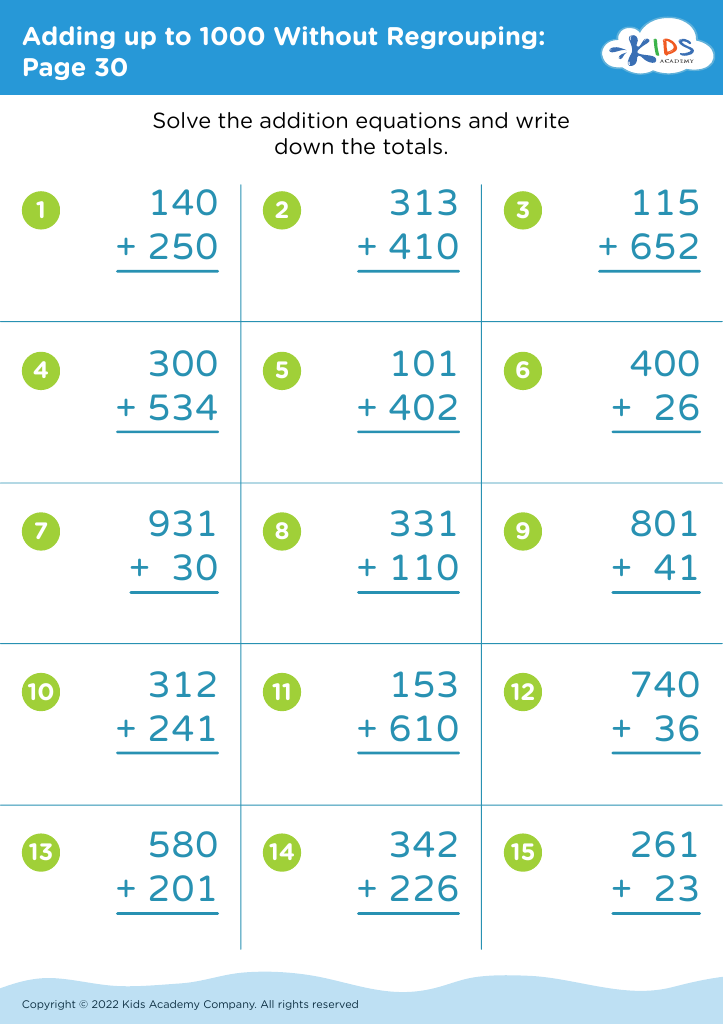
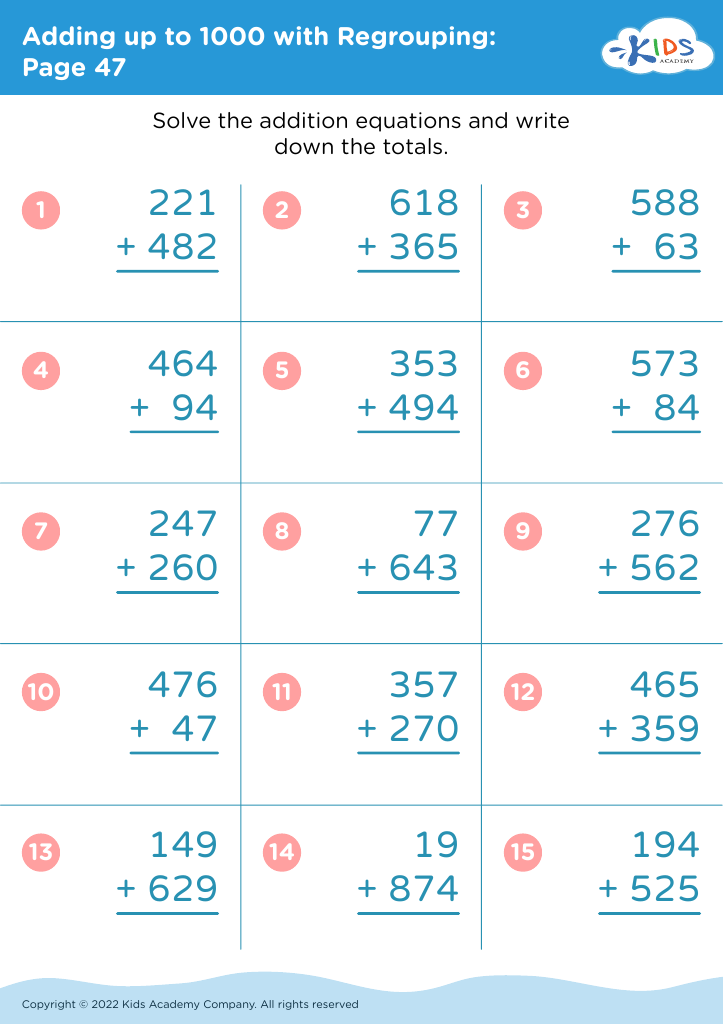



Basic addition skills are fundamental for children aged 5-8, as they form the building blocks for all future mathematics. Mastery of addition not only enhances computational abilities but also fosters logical thinking and problem-solving skills. When children can confidently add numbers up to 1000, they develop a strong foundation necessary for more complex concepts, such as subtraction, multiplication, and division.
Furthermore, early proficiency in addition promotes confidence in math, encouraging a positive attitude towards learning. This confidence can have lasting effects, reducing math anxiety and increasing engagement in the classroom. Basic addition also serves practical purposes, helping children manage everyday situations such as handling money, planning time, or measuring ingredients while cooking.
For parents and teachers, understanding the importance of addition at this stage means they can support their children through targeted activities and reinforcement strategies tailored to their unique learning styles. Engaging in games, interactive activities, and real-life experiences can make learning enjoyable and meaningful. As children grasp addition concepts, they become more adept at expressing thoughts mathematically, which is essential in our increasingly data-driven world. Encouraging these skills now lays the groundwork for future success not only in academia but in everyday life.








