Basic Math Skills Adding up to 1000 Worksheets for Ages 5-8
13 filtered results
-
From - To
Boost your child's math confidence with our "Basic Math Skills Adding up to 1000 Worksheets for Ages 5-8"! Specially designed for young learners, these fun and engaging worksheets help children master addition with ease. Packed with colorful illustrations and interactive exercises, our materials reinforce essential math concepts and problem-solving techniques. Ideal for both classroom and at-home practice, these worksheets transform learning into an exciting adventure, paving the way for future academic success. Inspire joy in learning and build a solid foundation in math for your child today!
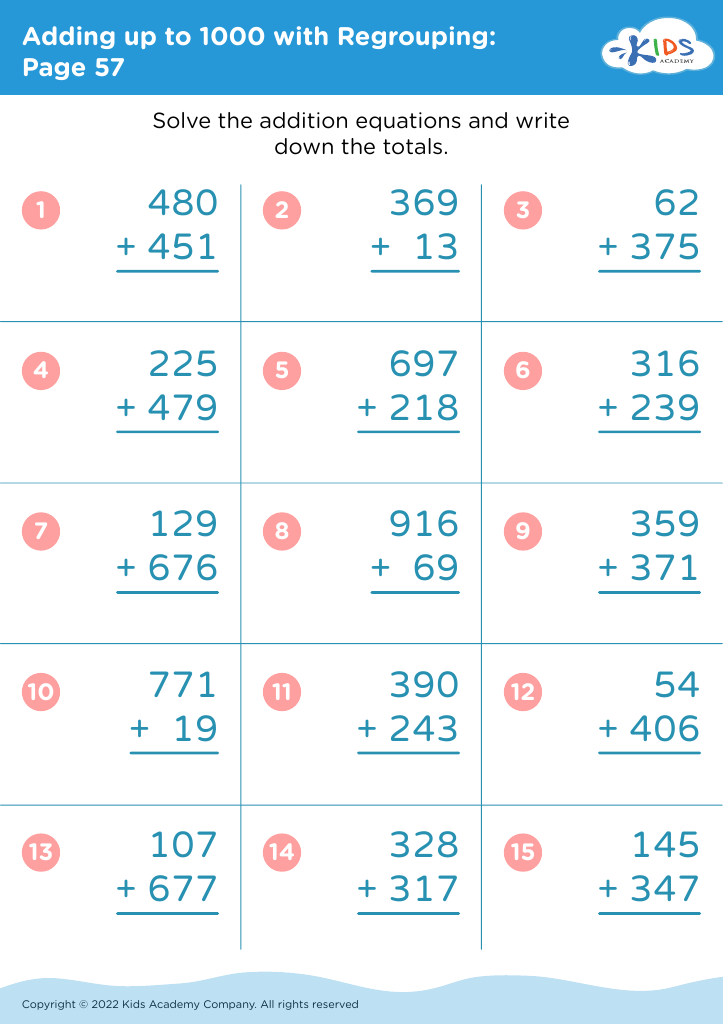
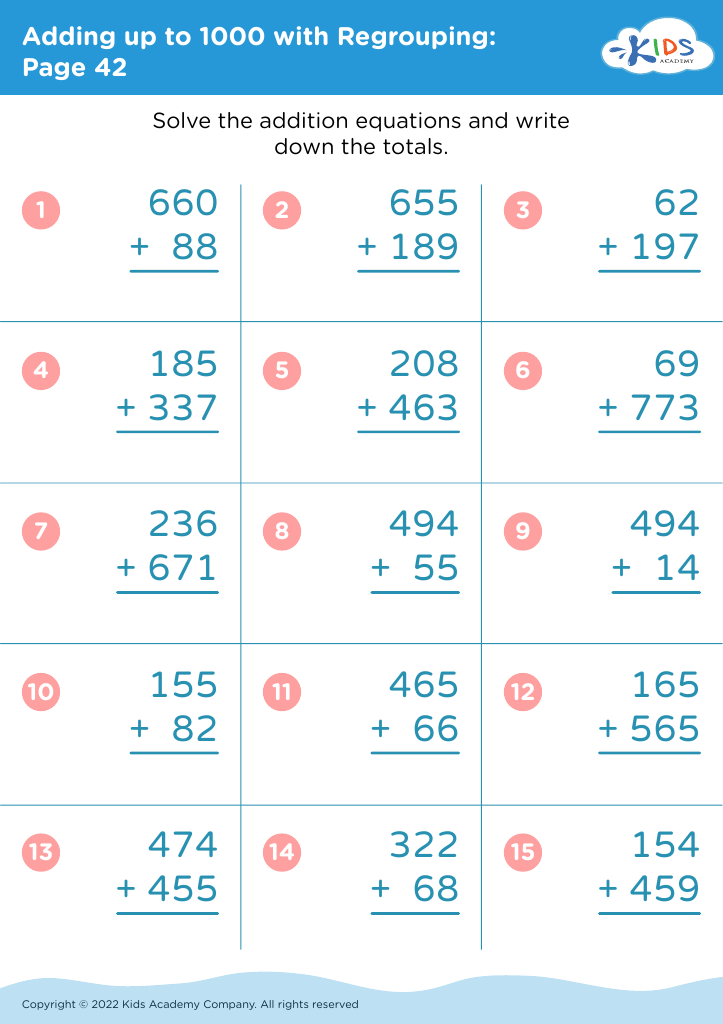
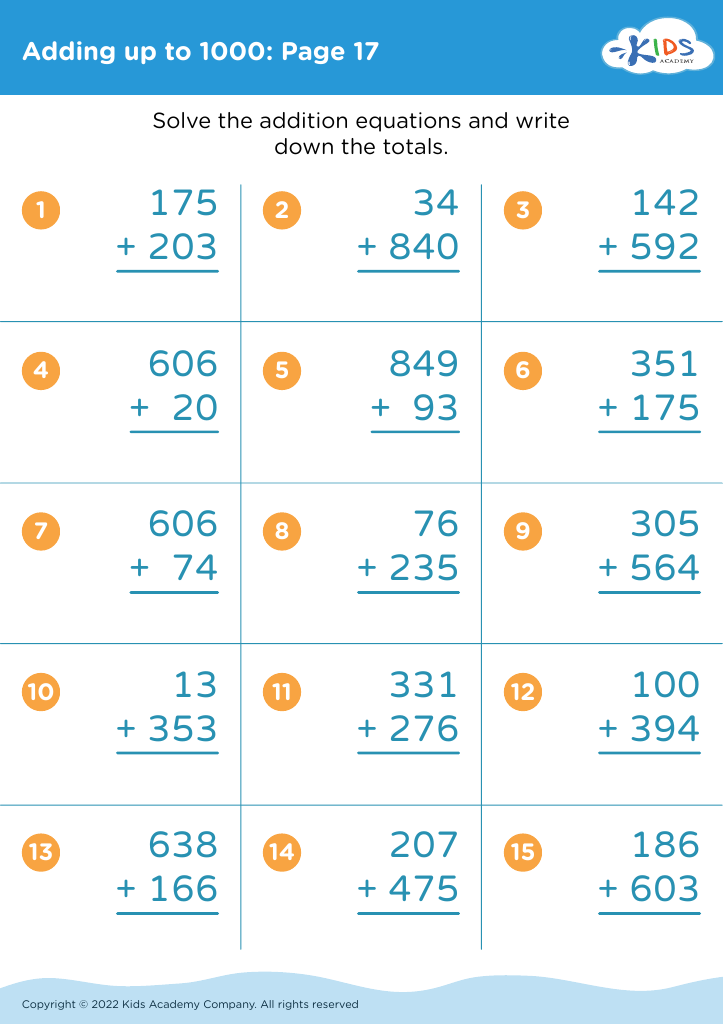
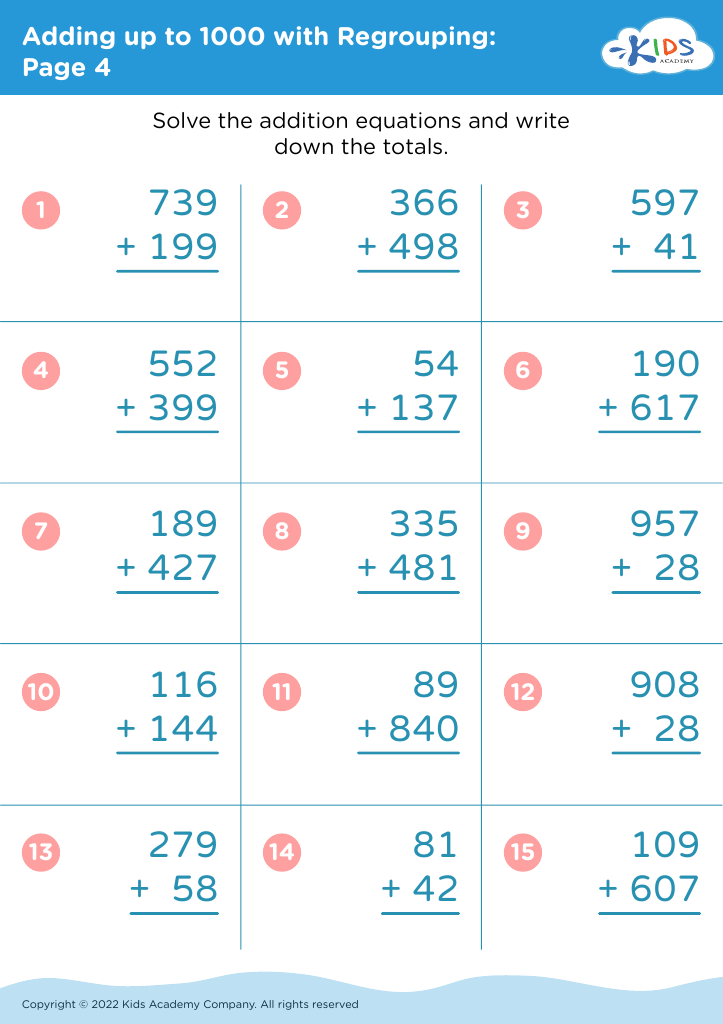
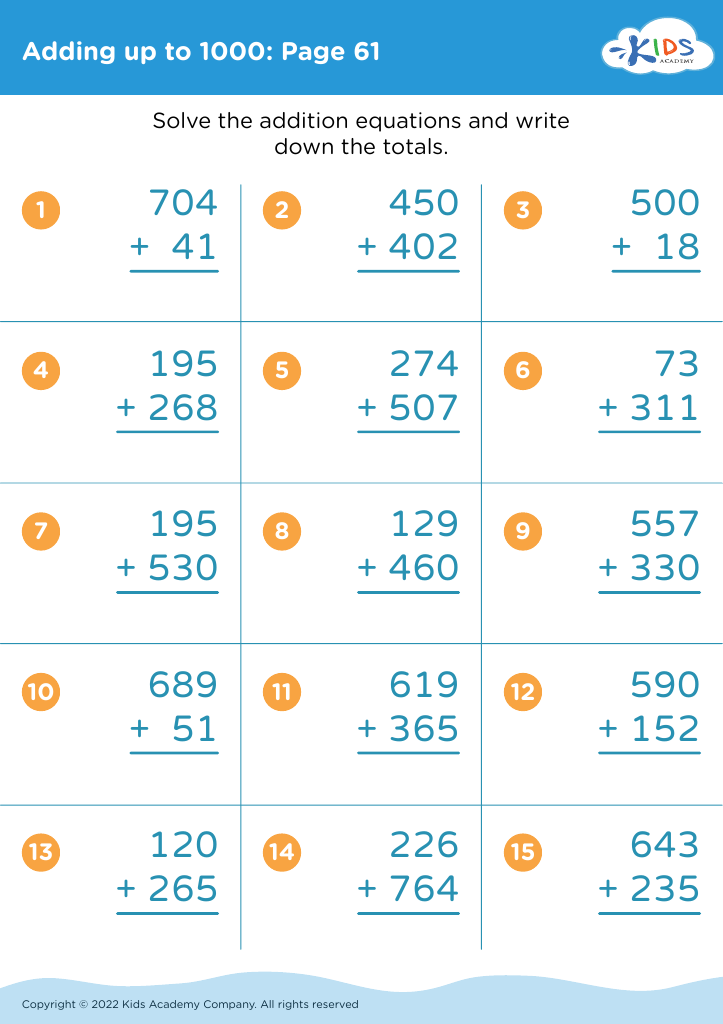
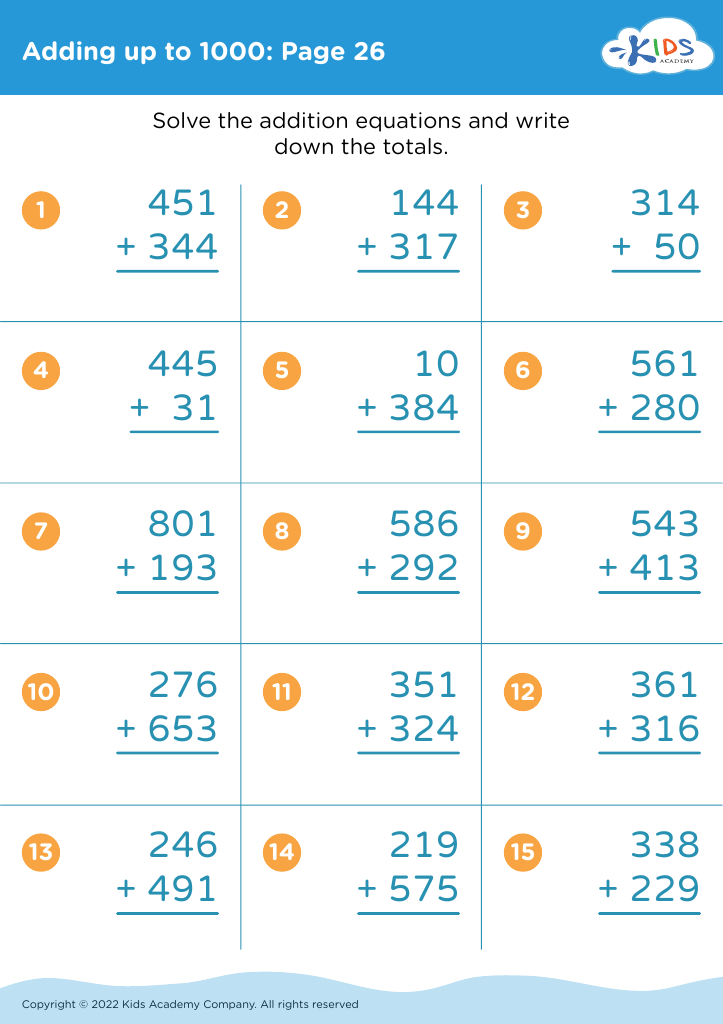
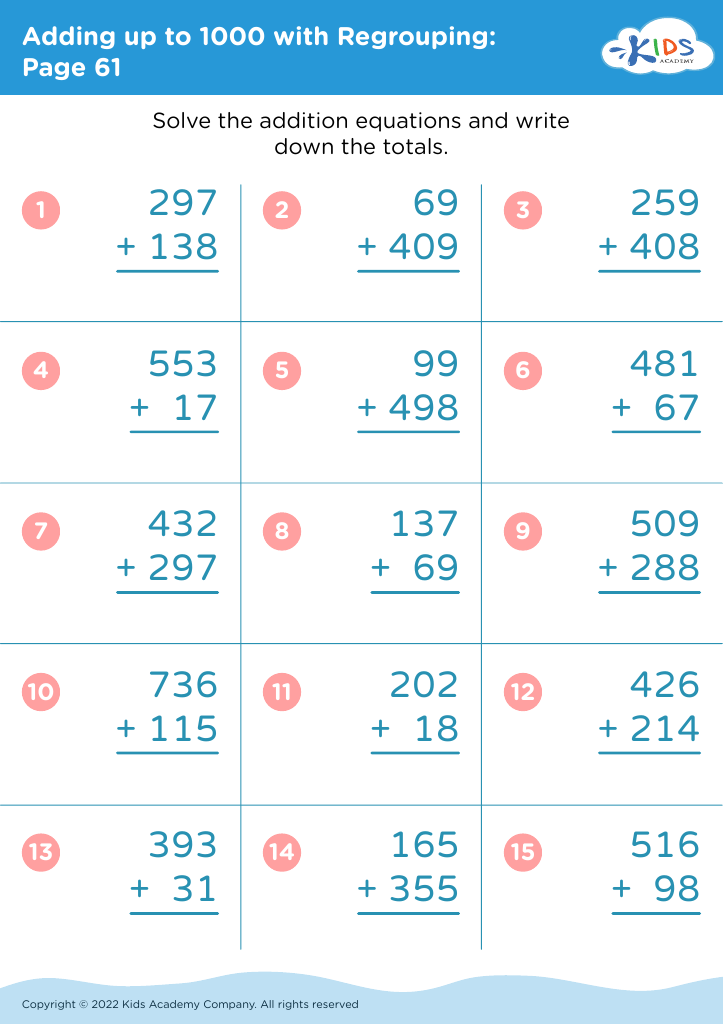
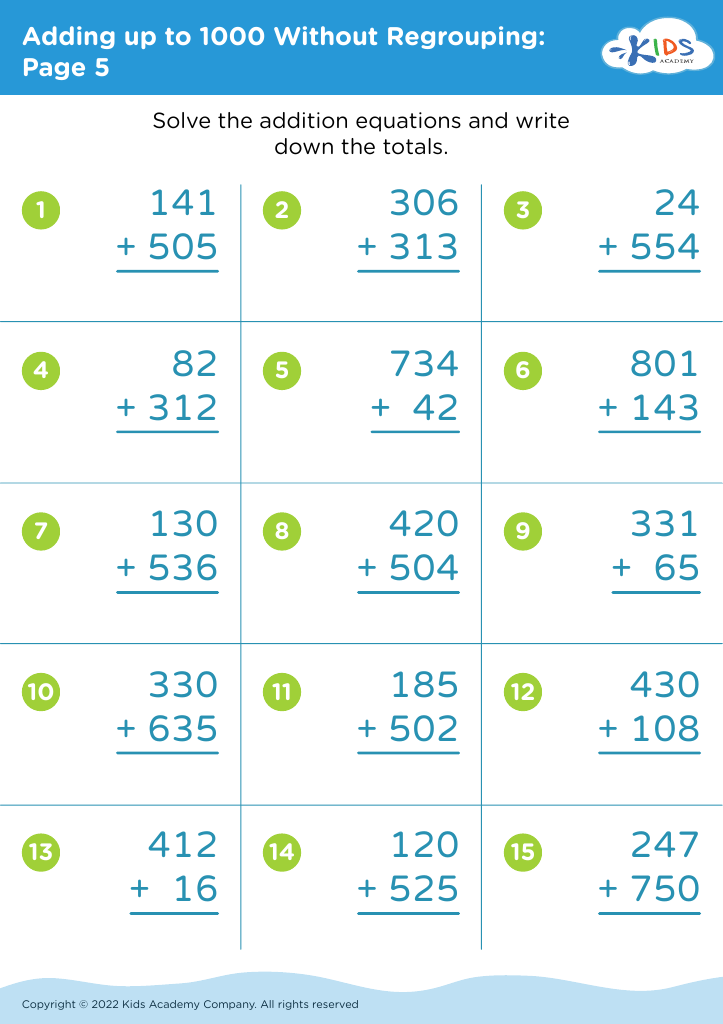
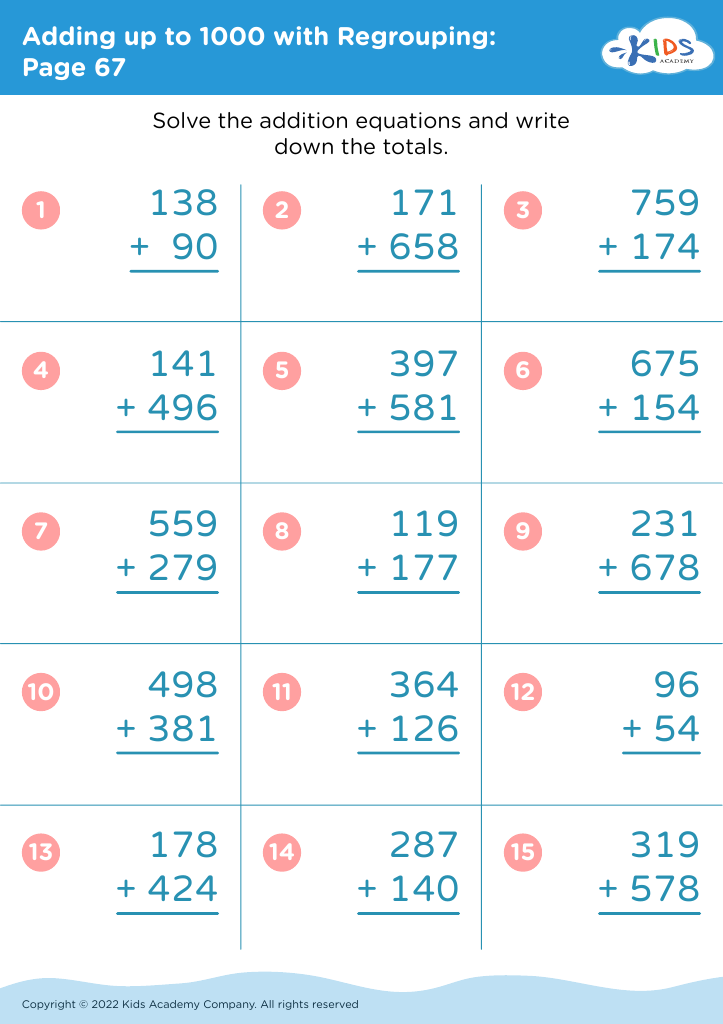
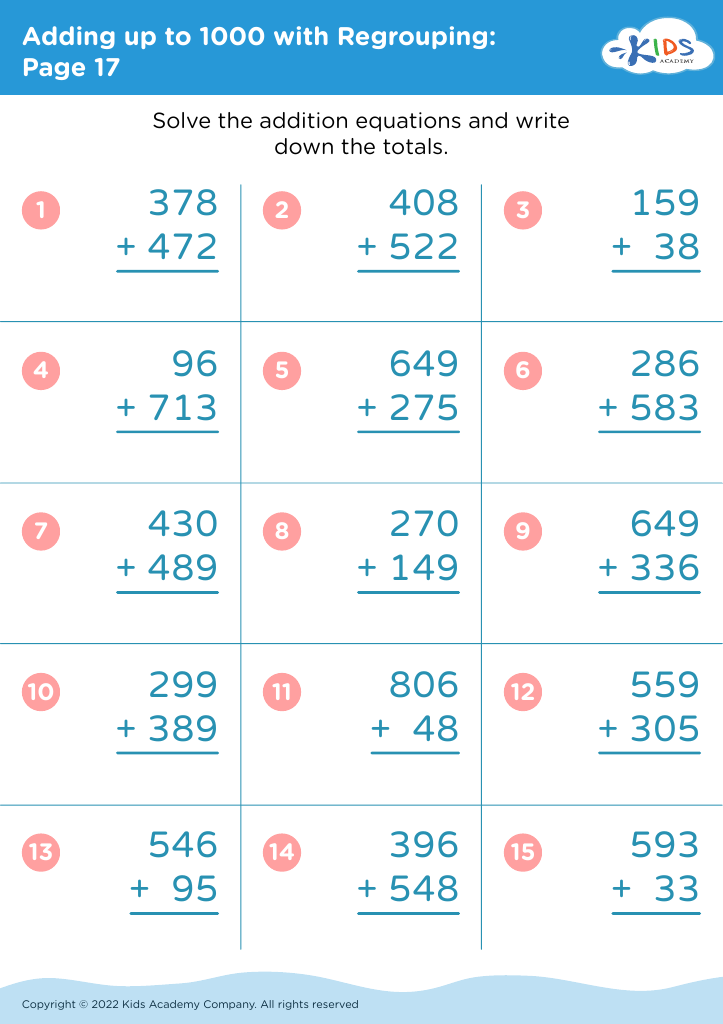
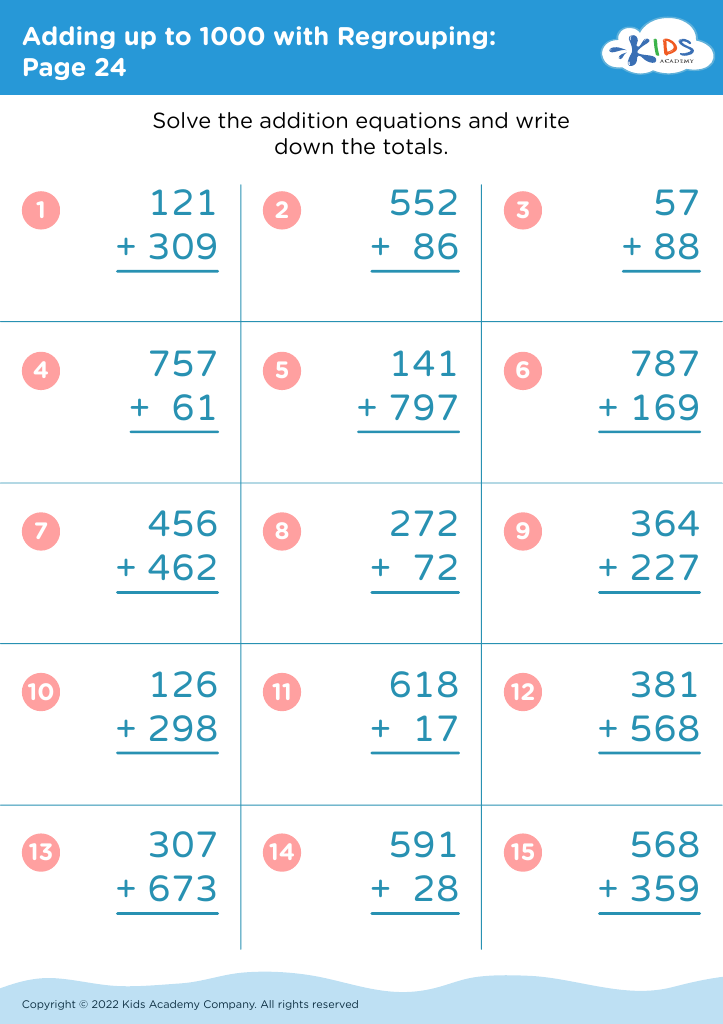
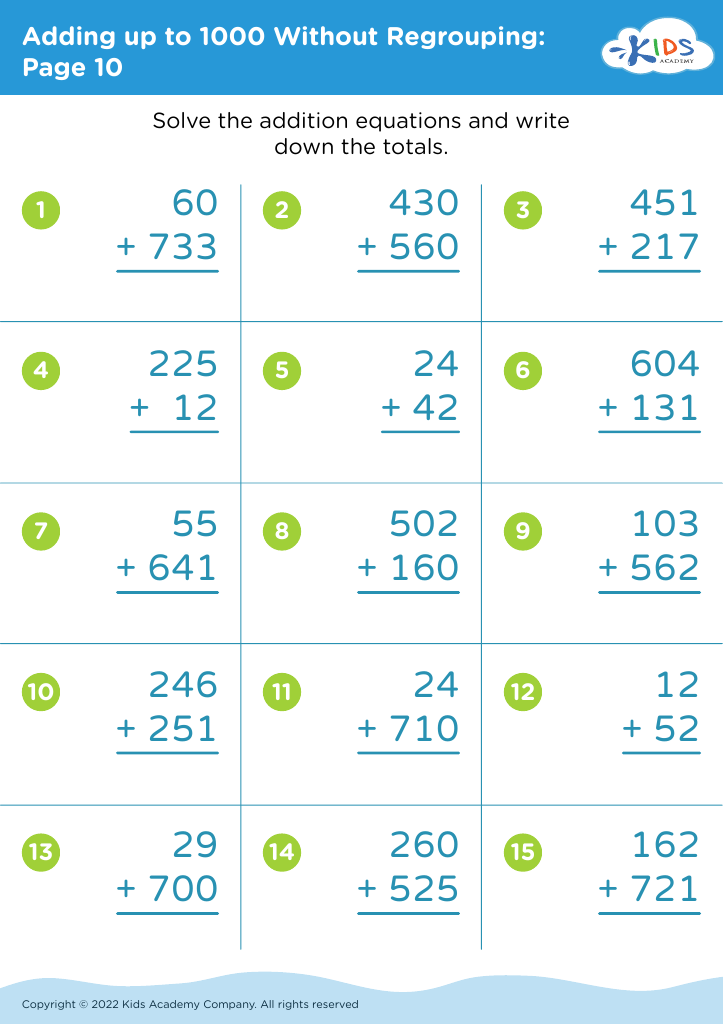
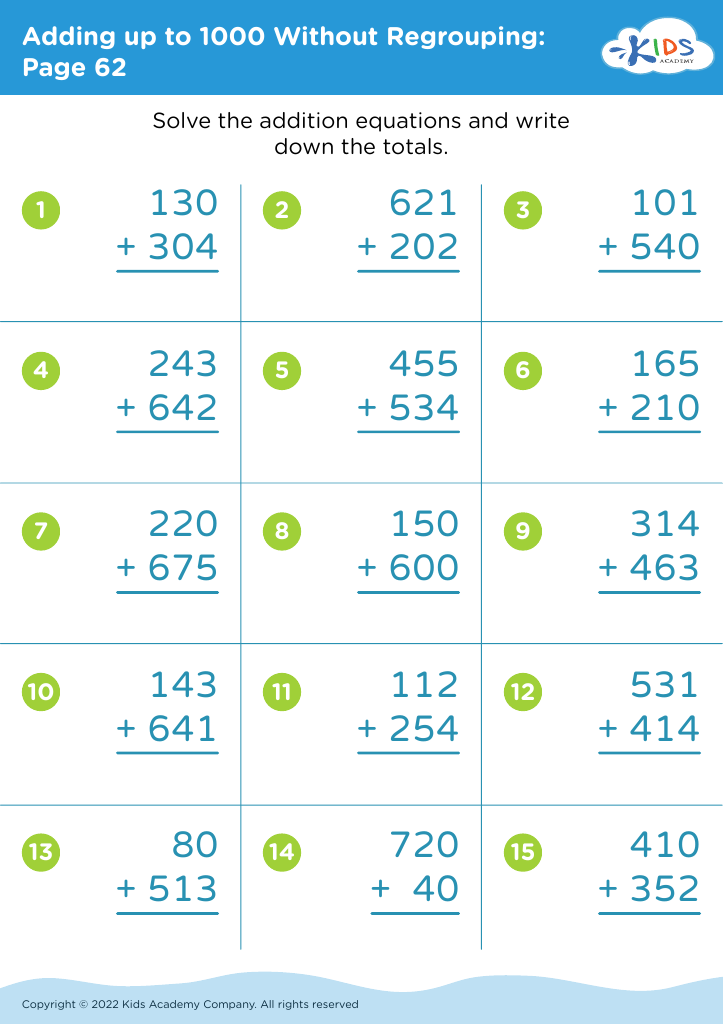



Basic math skills, such as adding up to 1000, lay the critical foundation for more advanced mathematical concepts, making them essential for children aged 5-8. These early skills cultivate number sense, allowing children to understand and manipulate numbers confidently. By mastering addition up to 1000, children develop mental computation strategies, which foster agility with numbers—a necessary asset for tackling more complex operations such as subtraction, multiplication, and division later on.
Moreover, math skills are not confined to the classroom; they are vital in daily life. Whether measuring ingredients for a recipe, budgeting an allowance, or understanding time, basic arithmetic is indispensable. When young learners gain proficiency in addition up to 1000, they grow more self-assured and independent in these everyday tasks, instilling practical life skills and fostering problem-solving abilities.
Additionally, early achievement in math can positively influence a child’s overall academic confidence and motivation. Success in math builds perseverance and a growth mindset, encouraging children to embrace challenges and develop resilience. By valuing and nurturing these skills, parents and teachers enable children to access a broader range of opportunities in the future and inspire a lasting appreciation for learning. Therefore, investing in early math education is crucial for both immediate and long-term benefits.








