Color recognition Adding up to 1000 Worksheets for Ages 5-8
3 filtered results
-
From - To
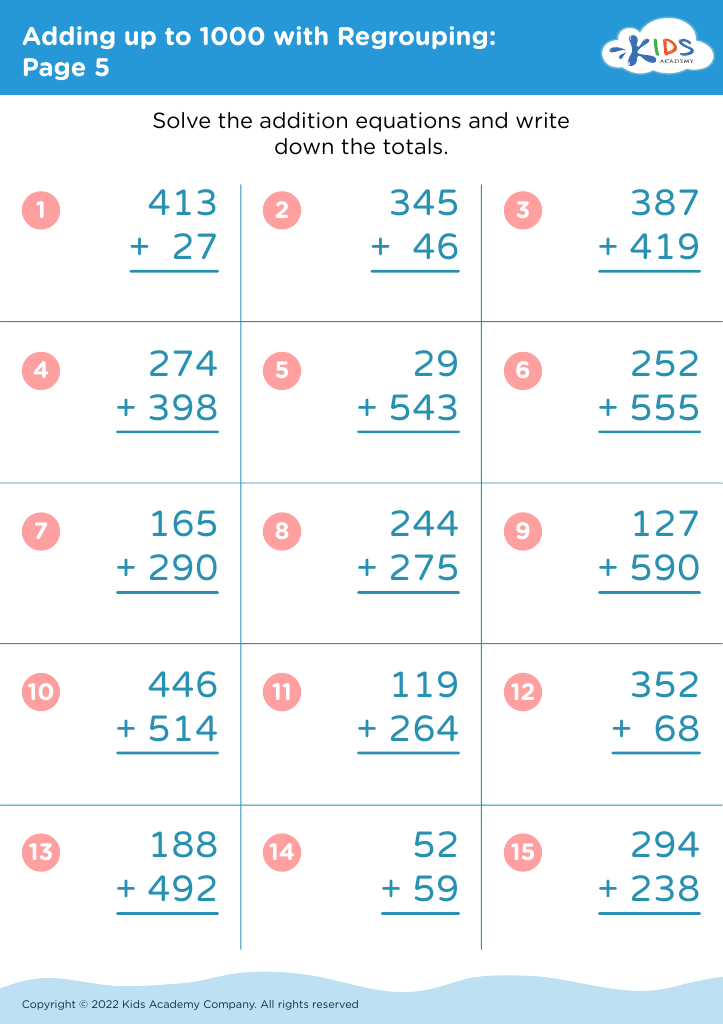
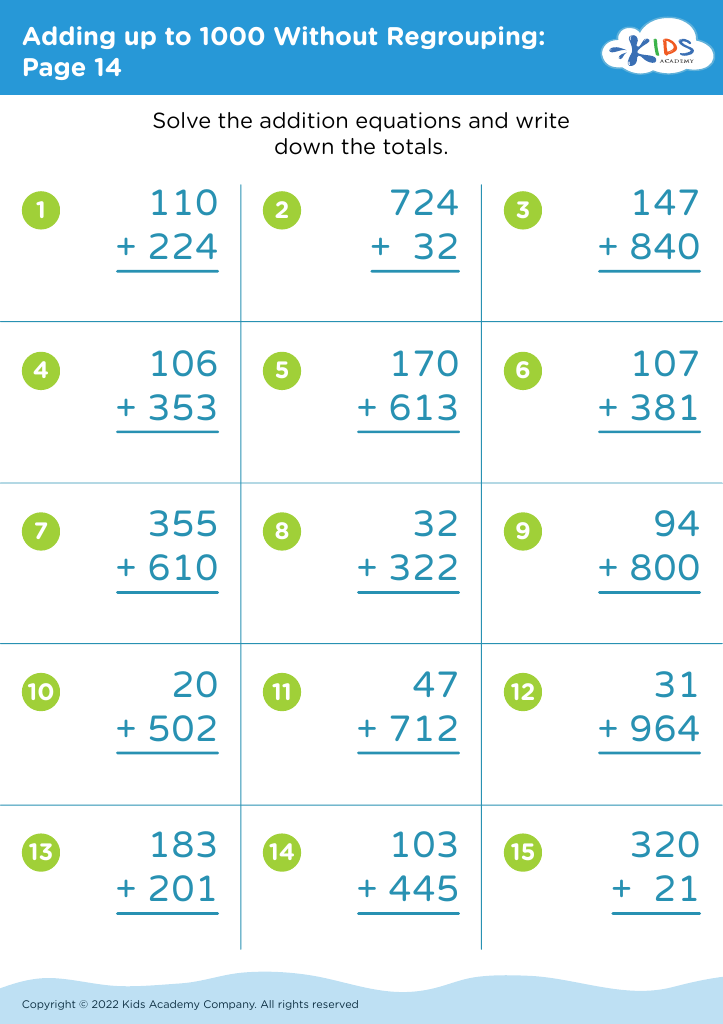
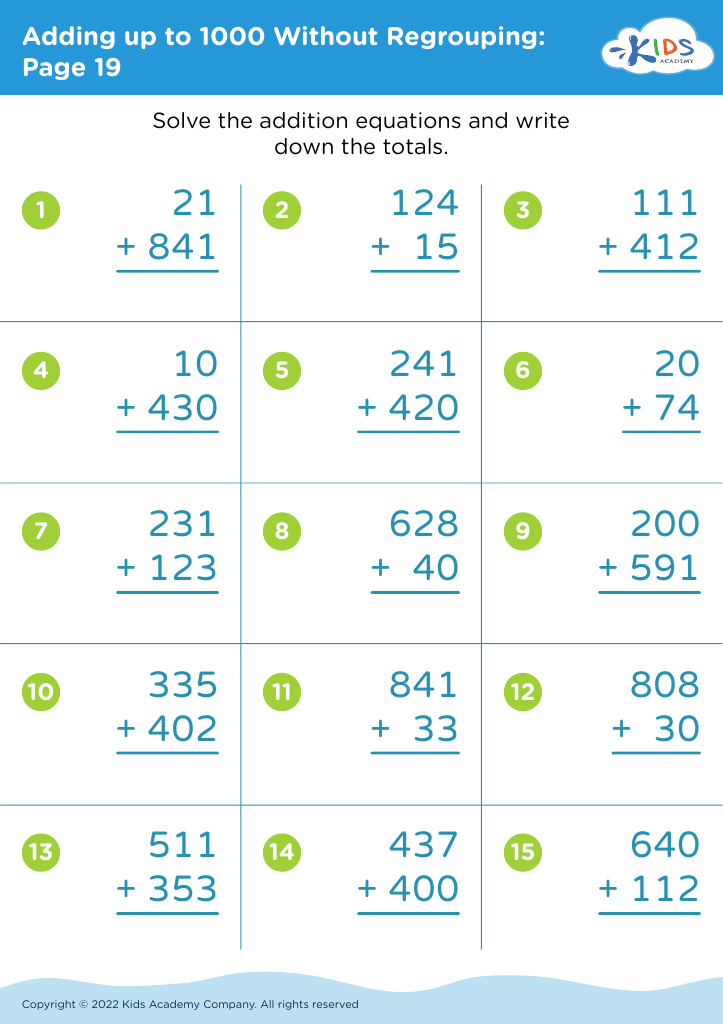
Welcome to our Color Recognition Adding Up to 1000 Worksheets for Ages 5-8! This engaging collection of worksheets is designed to enhance your child’s math skills while introducing them to the vibrant world of colors. Our interactive activities help children master addition up to 1000, all while recognizing and identifying various colors. Ideal for home or classroom use, these worksheets promote cognitive development and creativity. Each page features fun visuals that make learning a colorful adventure. Support your child's academic growth and boost their confidence in math with these educational resources that blend color recognition with essential arithmetic skills!



Color recognition is a vital skill for children aged 5-8 that contributes significantly to their cognitive development and everyday functioning. Firstly, recognizing colors enhances children’s ability to identify and categorize objects in their environment, fostering observational skills and critical thinking. When they learn to differentiate colors, they also begin to understand concepts such as similarity and difference, which are foundational for more complex problem-solving tasks.
Furthermore, color recognition can play a crucial role in emotional and social development. Colors often carry emotional associations—and understanding these can help children articulate their feelings and respond appropriately to others. For instance, children might associate blue with calmness or red with excitement. Engaging with colors in a classroom setting encourages collaborative play and communication, serving to build interpersonal skills.
Additionally, recognizing colors often leads to improved literacy and language skills. Teachers and parents can incorporate color-identifying activities into reading and storytelling, making connections between visual stimuli and verbal expression. Lastly, mastery of color recognition lays the groundwork for mathematical understanding. Recognizing groups of fruits, objects, or uses of color in art can lead to discussions about counting and sorting, aligning education with fun and creativity. Therefore, advocating for color recognition is an essential aspect of holistic development.








