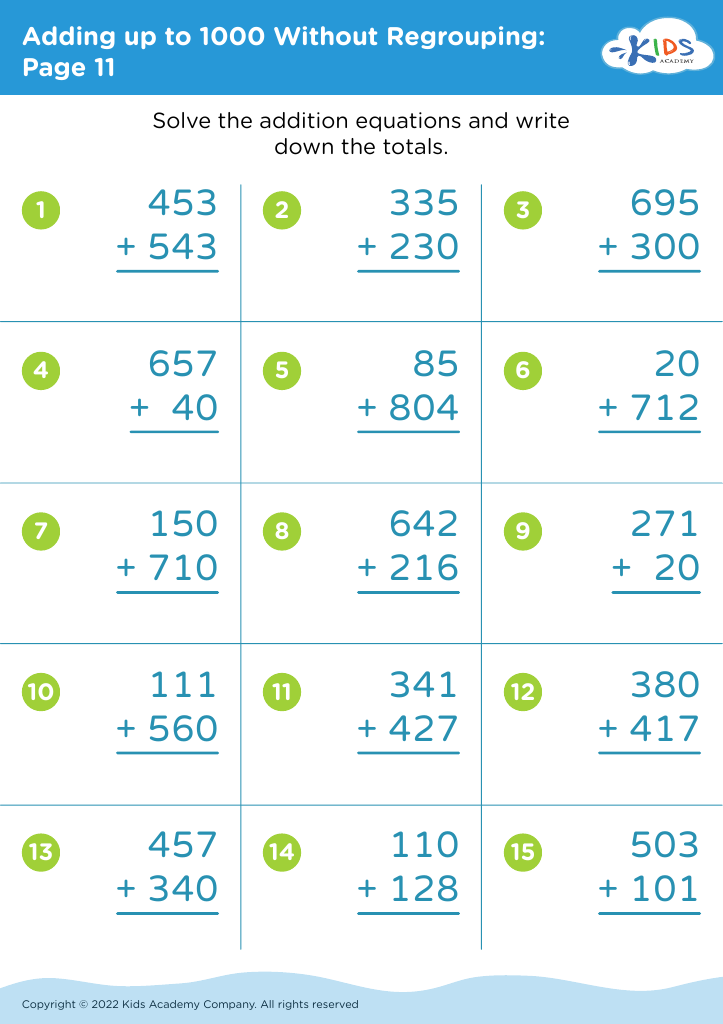
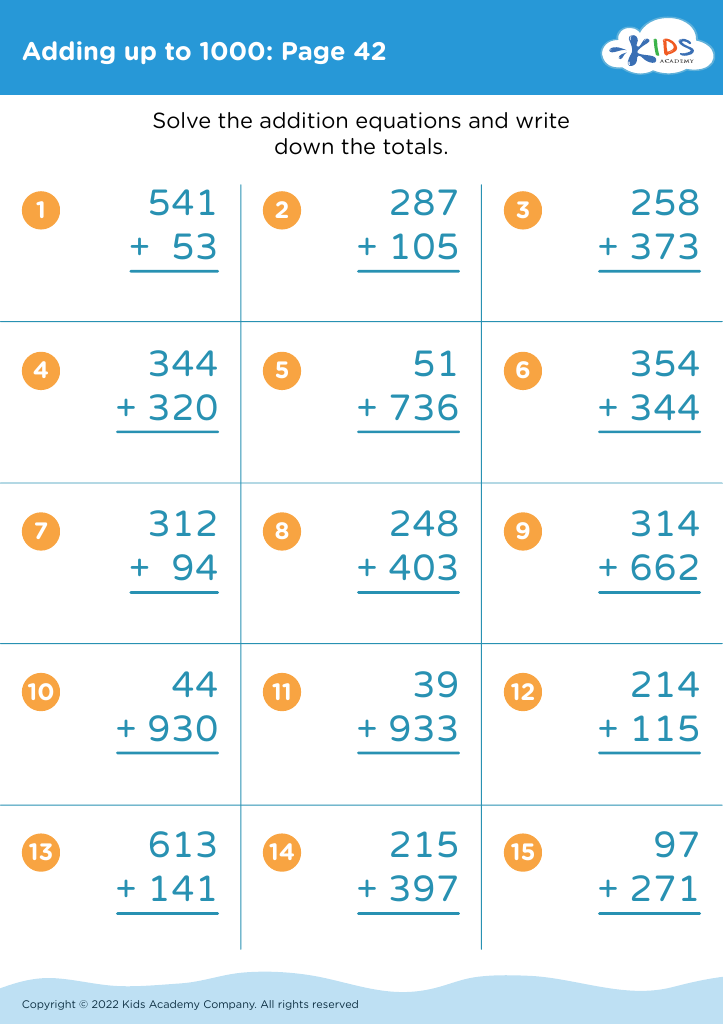




Counting skills, particularly adding up to 1000, are crucial for children aged 5-8 as they lay the foundation for future mathematical understanding and overall cognitive development. At this age, children are developing critical thinking, problem-solving abilities, and cognitive skills that are necessary for more complex mathematics. Being proficient in counting and addition helps them gain confidence in their abilities and fosters a positive attitude towards learning.
Moreover, strong counting skills not only influence mathematics but also interlink with subjects like science, geography, and economics. Understanding numbers enhances children’s ability to comprehend and navigate the world around them, promoting better decision-making skills. Parents and teachers play an essential role in nurturing these skills.
Through interactive activities, such as games involving counting up to 1000, educators can make learning enjoyable and engaging. This can also strengthen parent-child relationships—spending quality time over mathematical concepts promotes a collaborative learning environment.
Furthermore, mastering these skills early on can help prevent future struggles with mathematics and build a solid foundation for more advanced concepts, equipping children with the tools they need for academic success. By prioritizing counting skills, parents and teachers contribute significantly to a child's holistic development and lifelong learning journey.








