
Critical Thinking Adding up to 1000 Worksheets for Ages 5-8
5 filtered results
Difficulty Level
Grade
Age
-
From - To
Subject
Activity
Standards
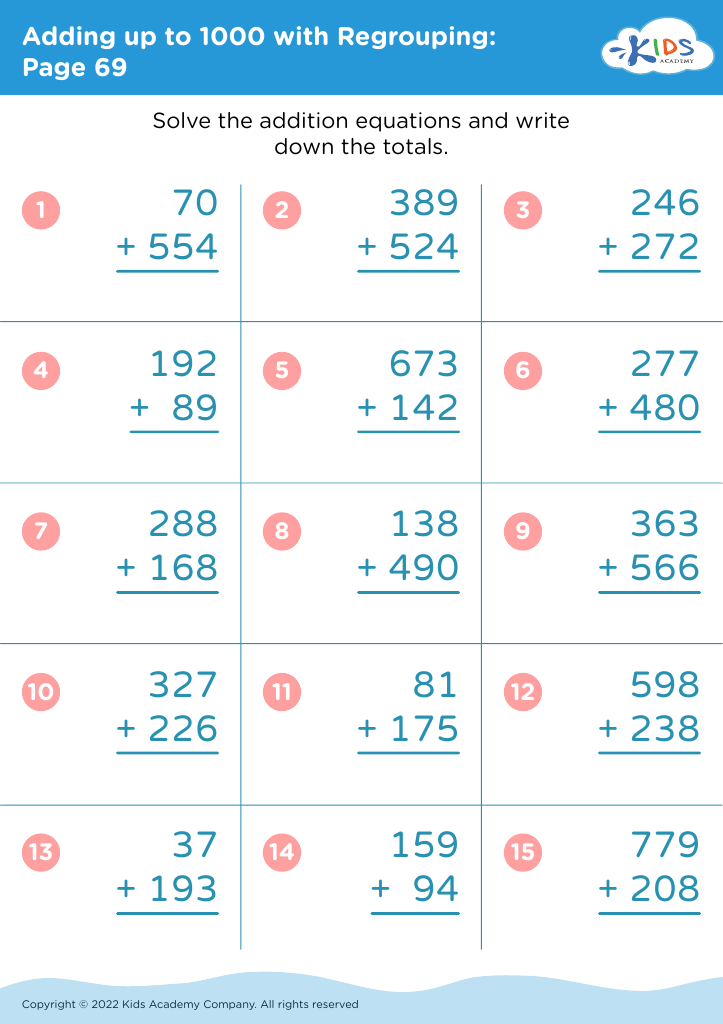
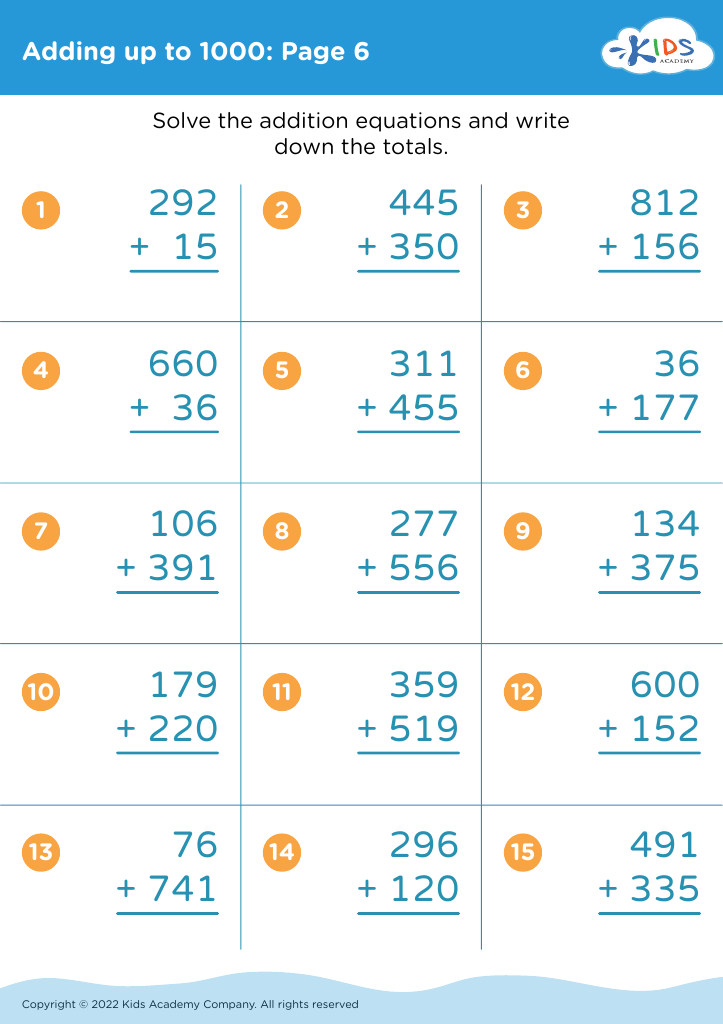
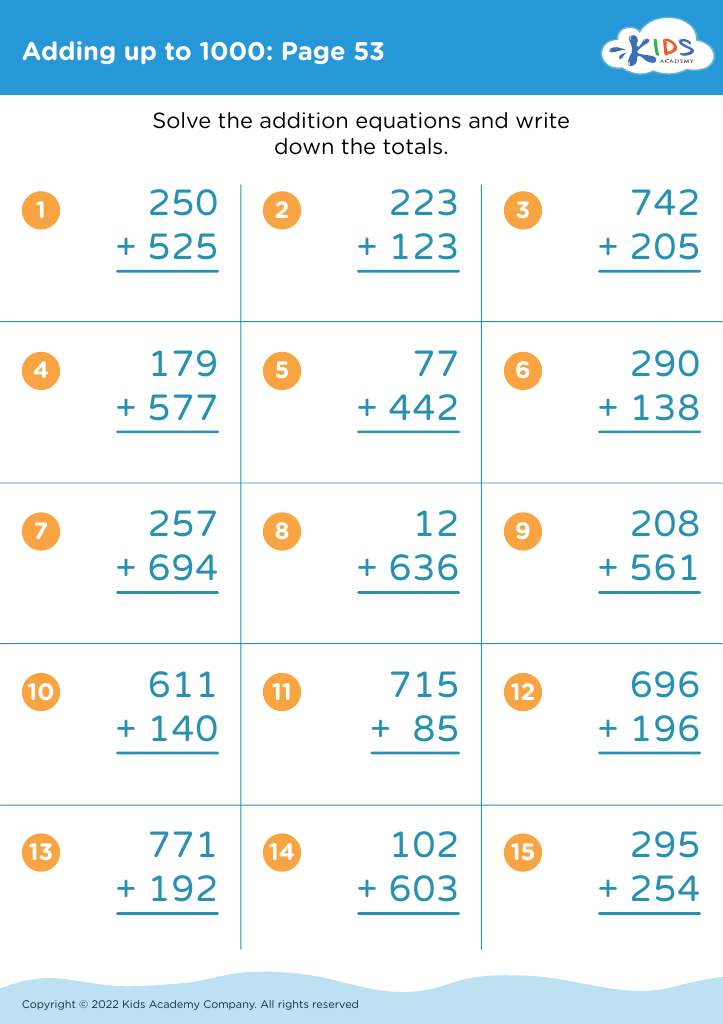
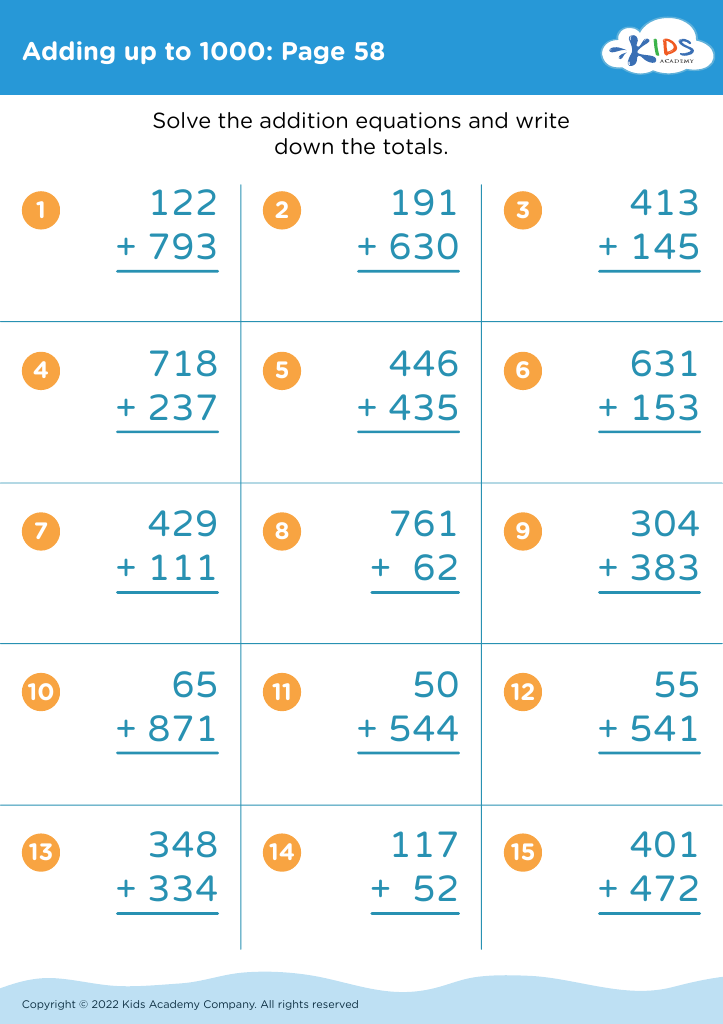
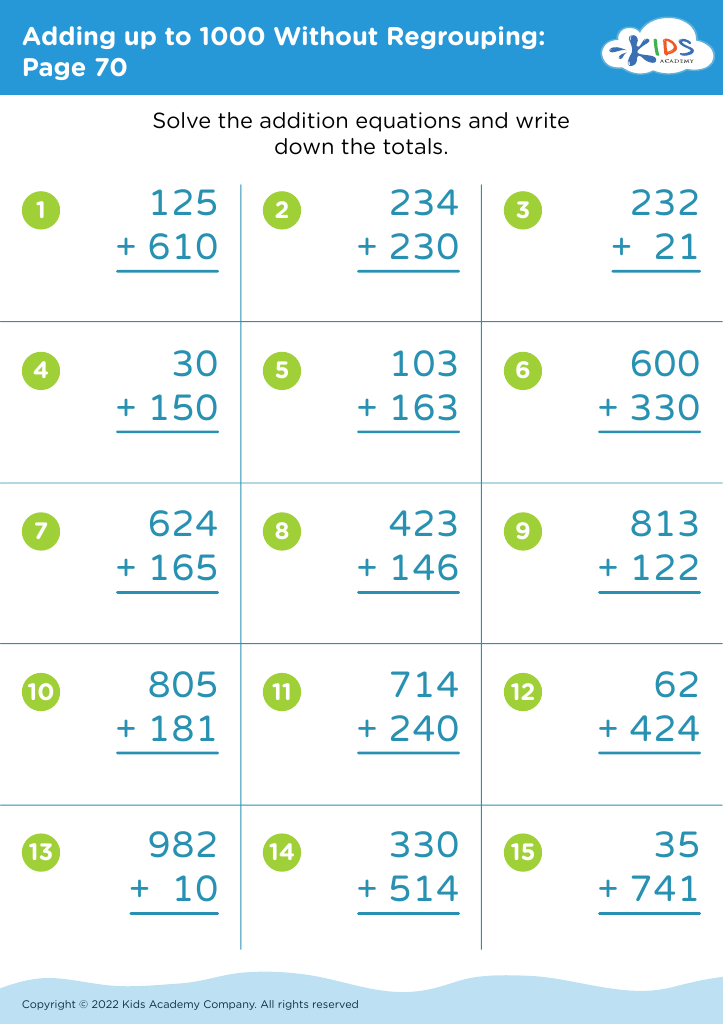
Unlock your child's potential with our "Critical Thinking Adding up to 1000 Worksheets" designed for ages 5-8. These engaging worksheets promote critical thinking skills alongside essential math concepts, helping young learners grasp addition up to 1000. Each activity encourages problem-solving, logical reasoning, and analytical thinking, making math both fun and educational. Perfect for use at home or in the classroom, our worksheets foster a growth mindset, ensuring children build confidence as they tackle various challenges. Equip your child with the tools they need for academic success and watch their skills flourish as they explore the world of numbers through interactive learning experiences!
Favorites
With answer key
Interactive
Join Kids Academy for Free
Who is primarily going to use this learning content?



Critical thinking is a vital skill for children aged 5-8 because it lays the foundation for their academic success and personal development. At this age, children are naturally curious and eager to explore their surroundings. Teaching them the basics of critical thinking encourages them to ask questions, analyze information, and make reasoned conclusions.
Parents and teachers should care about fostering critical thinking skills in young learners, as such skills not only enhance problem-solving abilities but also boost confidence. When children learn to think critically, they develop the ability to reflect on their own thoughts and decisions, a trait that can help them navigate challenges throughout life.
Furthermore, critical thinking equips kids to better understand complex concepts in subjects like math, science, and reading. By learning to evaluate information, they become discerning consumers of knowledge, able to sift through opinions and facts to form their own judgments.
In today's fast-paced, information-rich world, teaching critical thinking at a young age helps children become independent thinkers who can adapt to new situations and challenges. Ultimately, promoting critical thinking in children fosters lifelong learning, allowing them to approach problems creatively and with confidence as they grow.








