Develop critical thinking Adding up to 1000 Worksheets for Ages 5-8
3 filtered results
-
From - To
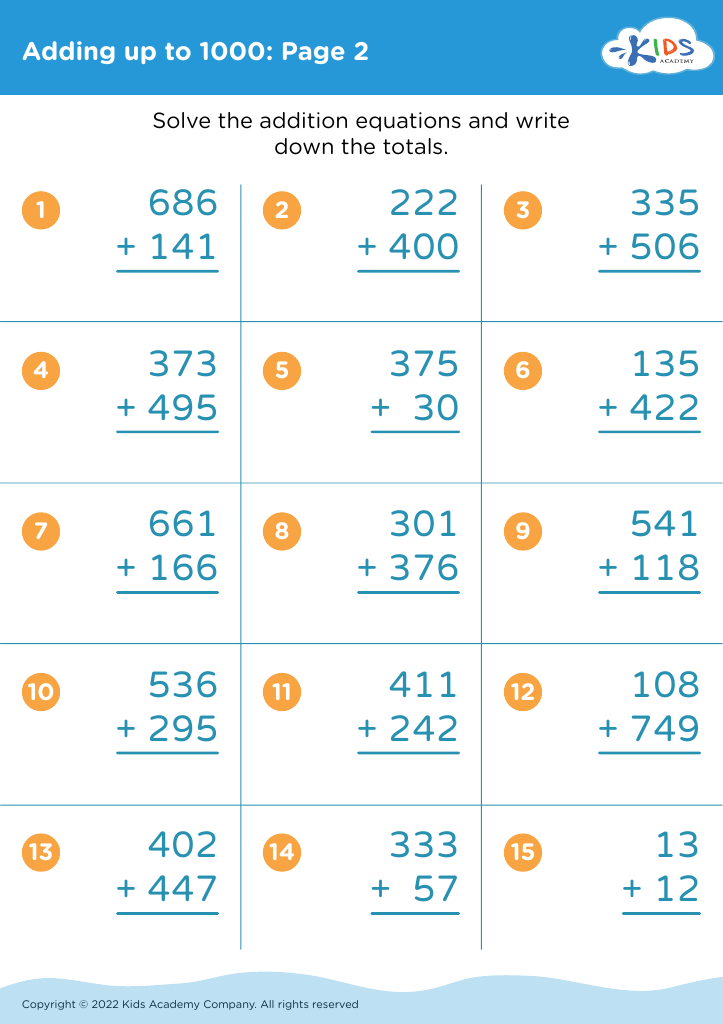
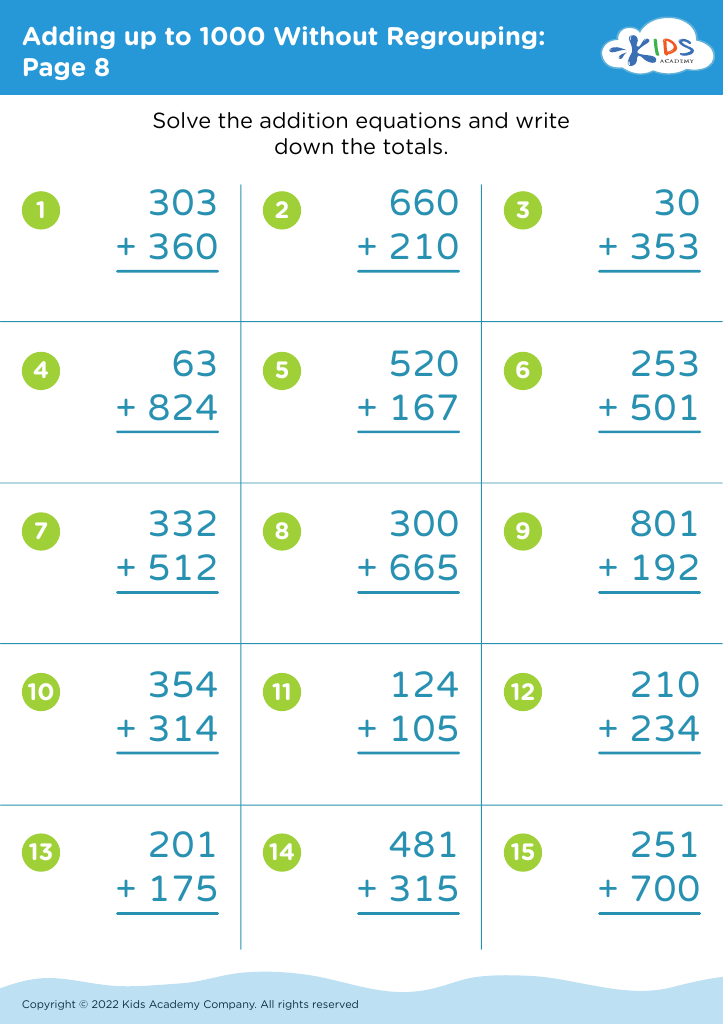
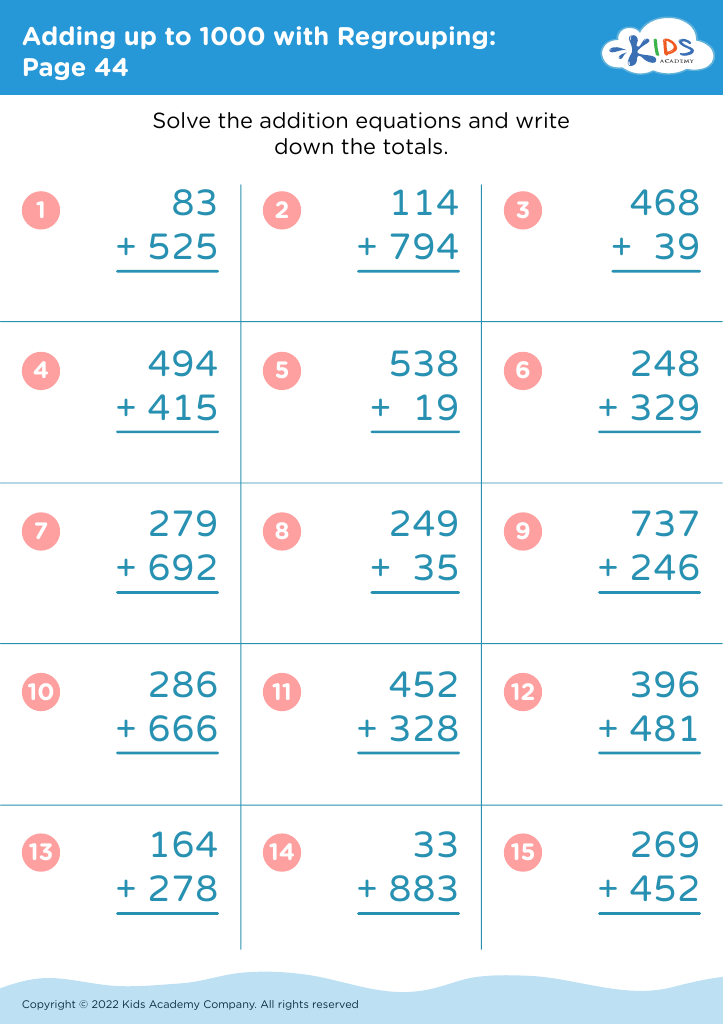
Welcome to our engaging collection of "Adding Up to 1000 Worksheets" designed specifically for children aged 5-8. Our interactive worksheets aim to foster critical thinking skills while reinforcing essential math concepts. Through fun exercises that involve addition and problem-solving, children will not only grasp fundamental math principles but also develop their ability to analyze and reason effectively. With 1000 thoughtfully crafted worksheets, your child will discover a variety of challenges that build confidence and encourage a deeper understanding of numbers. Empower your young learner to think critically as they master addition in an environment of exploration and creativity!



Developing critical thinking skills in children aged 5-8 is crucial for both parents and teachers. Critical thinking fosters curiosity and encourages children to ask questions, analyze situations, and make informed decisions. At this formative age, children are beginning to form their understanding of the world, and a strong foundation in critical thinking can stimulate their cognitive development.
By nurturing critical thinking, parents and teachers equip children with the ability to assess information, recognize biases, and solve problems creatively. This skill not only aids in academic success but also prepares children for real-world challenges as they grow. In a rapidly changing world, being able to critically evaluate information is essential, especially in an age inundated with digital content and media.
Additionally, fostering critical thinking promotes independence and confidence. When children learn to think for themselves, they become more self-reliant and better prepared to engage with others’ viewpoints while developing their opinions.
Incorporating activities that encourage critical thinking, such as puzzles, storytelling, and open-ended questioning, invites children to explore ideas deeply. This investment in cultivating critical thinking yields lifelong benefits, preparing them for future academic pursuits, career demands, and societal roles. Therefore, parents and teachers should prioritize this vital aspect of a child’s education.








