Fine motor skills (writing) Adding up to 1000 Worksheets for Ages 5-8
5 filtered results
-
From - To
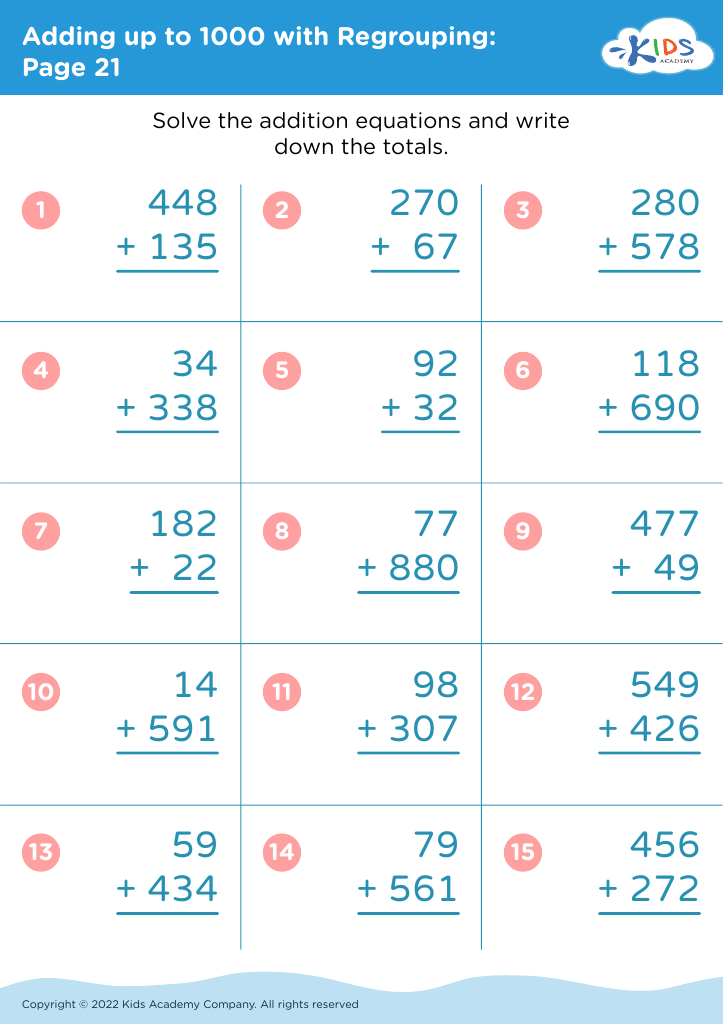
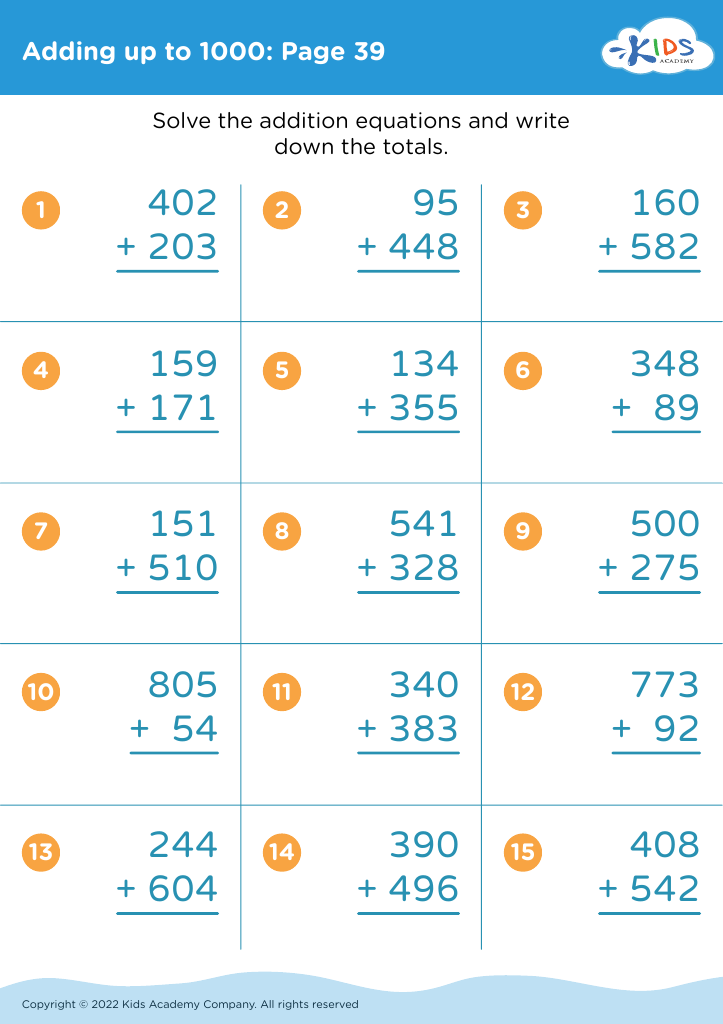
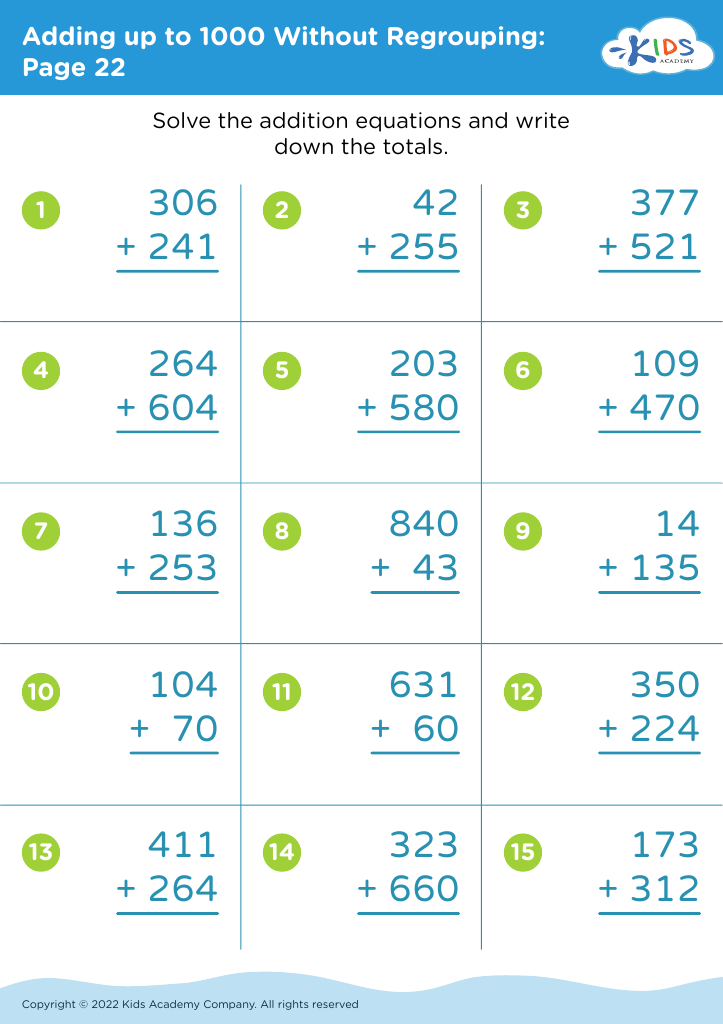
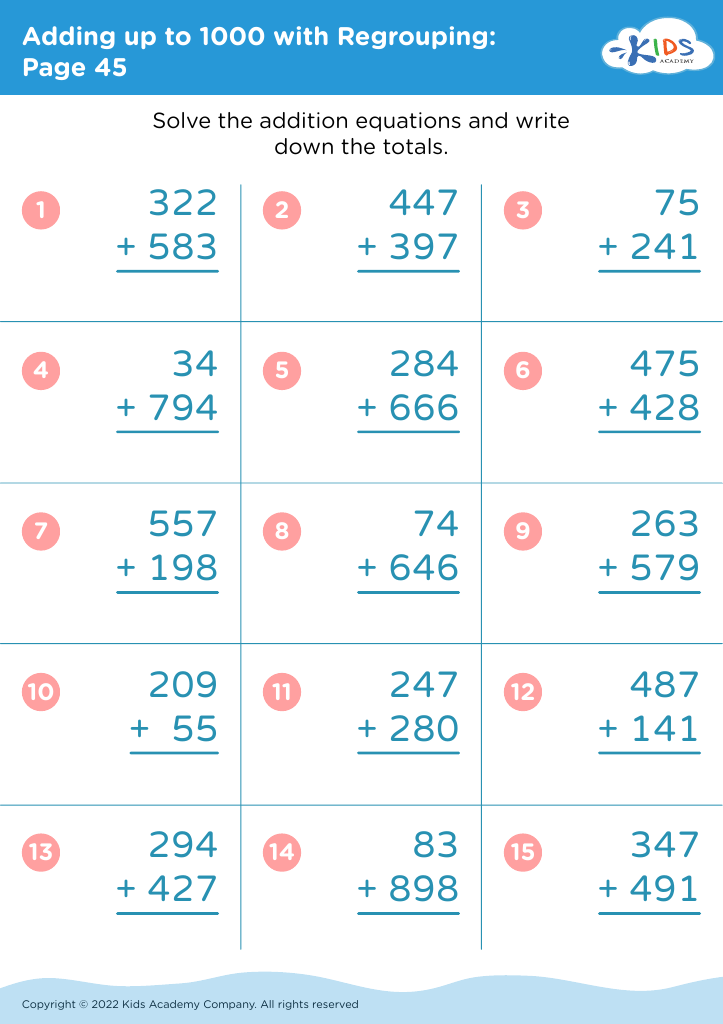
Enhance your child's fine motor skills while developing their writing abilities with our "Fine Motor Skills (Writing) Adding up to 1000 Worksheets" designed for ages 5-8. These engaging worksheets combine fun activities that promote hand-eye coordination, grasp control, and dexterity, all crucial for effective writing. Children will practice tracing, writing numbers, and engaging in drawing exercises that make learning enjoyable and interactive. Our carefully crafted resources support early learners in building confidence as they master writing skills alongside arithmetic concepts. Equip your child with the tools they need for a strong educational foundation. Download and watch their skills flourish today!
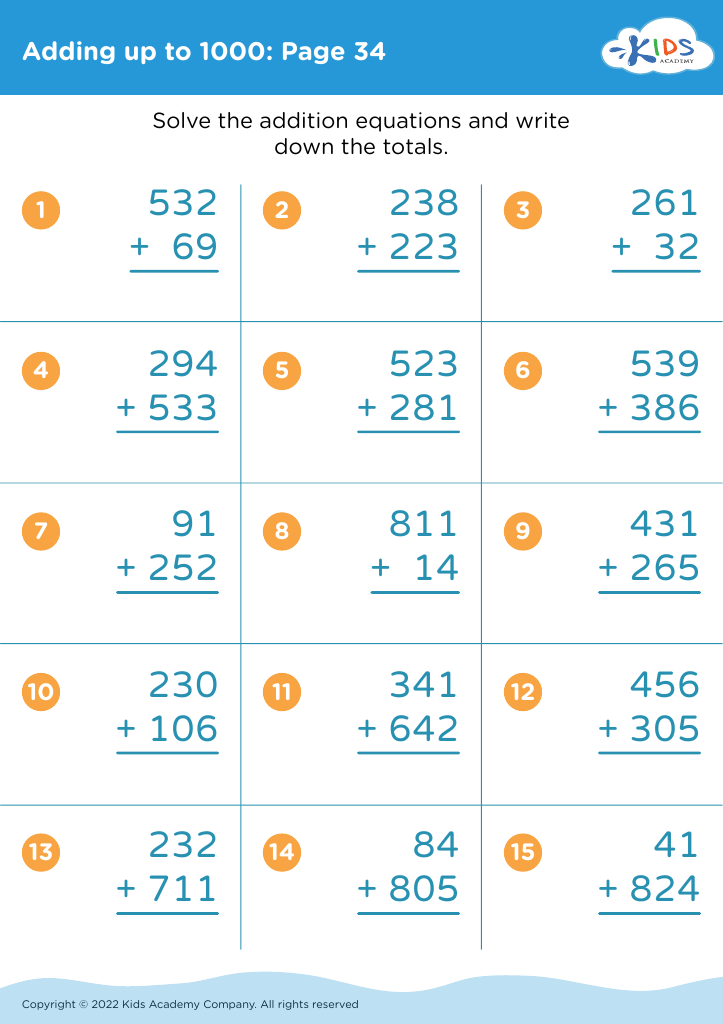



Fine motor skills are essential for children aged 5-8, particularly in writing, as they form the foundation for various academic and everyday activities. First, these skills help develop hand-eye coordination, allowing children to effectively control writing tools like pencils and crayons. Mastery in fine motor skills translates to better handwriting, which enhances their ability to express thoughts and ideas clearly on paper.
Additionally, fine motor skills are linked to cognitive development. As children practice writing, they engage their brains in critical thinking and problem-solving, which is crucial in their early education. In this stage of life, children also begin to understand letter formation and spelling, laying the groundwork for reading and comprehension skills.
Socially, fine motor skills help children engage in group activities that involve crafts and games, fostering communication and teamwork. Moreover, writing tasks can boost confidence; as children improve their skills, they feel a sense of accomplishment that motivates them to take on new challenges.
From a practical standpoint, these skills correlate with success in school and beyond. Thus, parents and teachers should prioritize fine motor development, ensuring children not only succeed academically but also thrive in everyday life.








