Fraction simplification Adding up to 1000 Worksheets for Ages 5-8
7 filtered results
-
From - To
Help young learners master fraction simplification with our engaging worksheets designed for children ages 5-8. Our vibrant and easy-to-follow printables make learning math enjoyable, focusing on simplifying fractions while building confidence in adding up to 1000. These resources are perfect for both classroom and home use. By regularly practicing with these sheets, kids will develop essential math skills and a solid understanding of fractions, ensuring a smooth transition to more advanced math concepts. Boost your child’s fraction simplification skills today with Kids Academy's expertly crafted worksheets! Download and print for fun and effective learning.
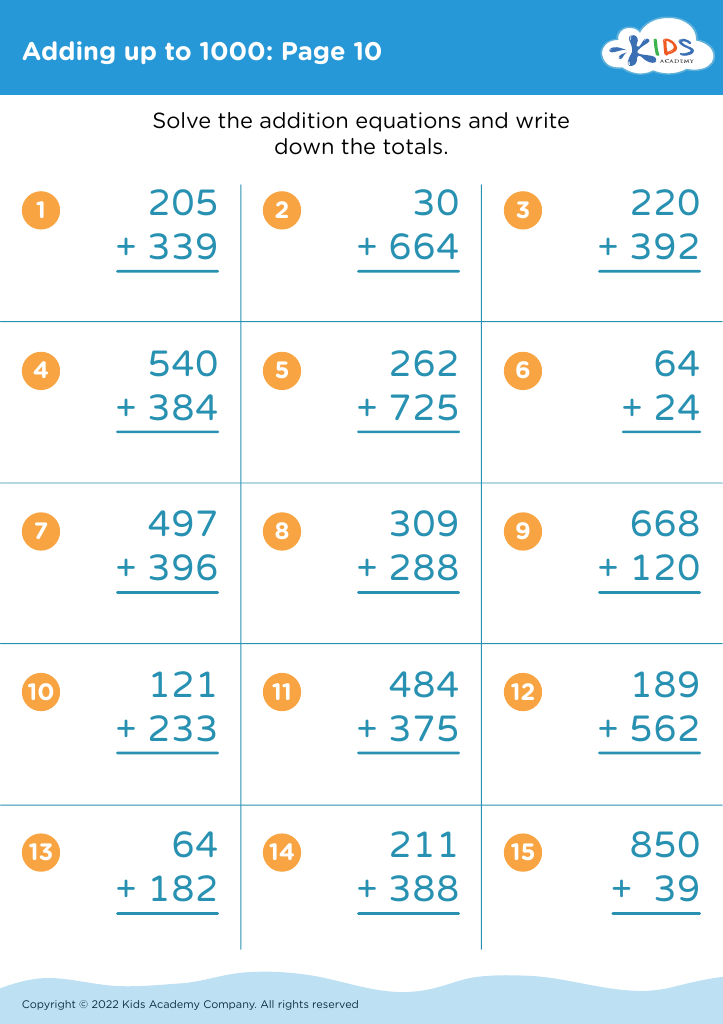
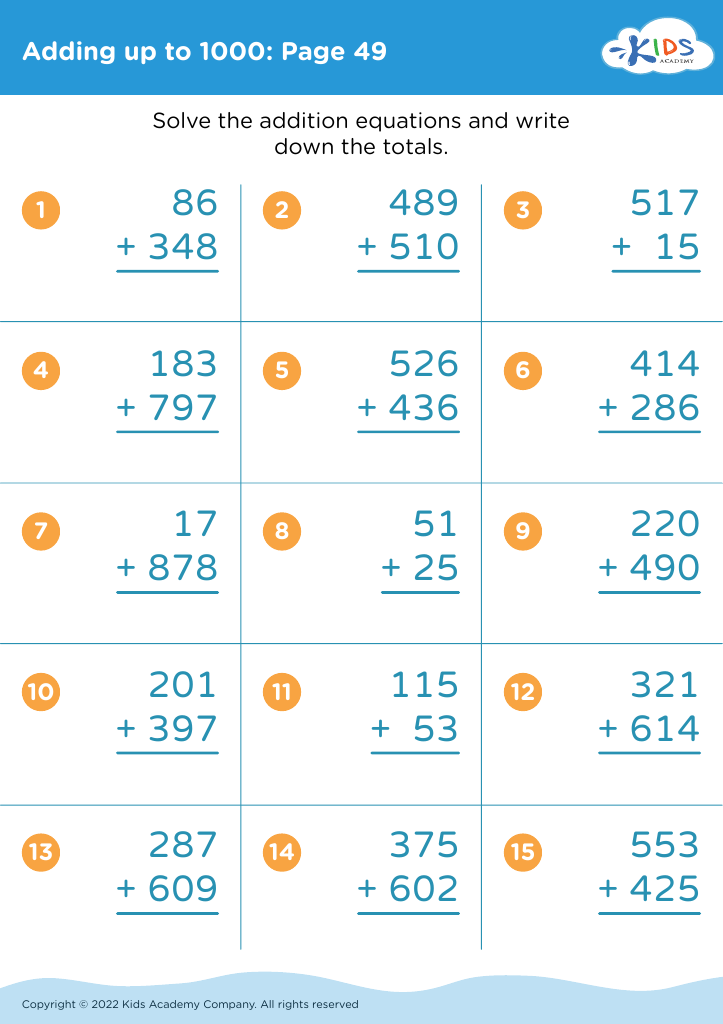
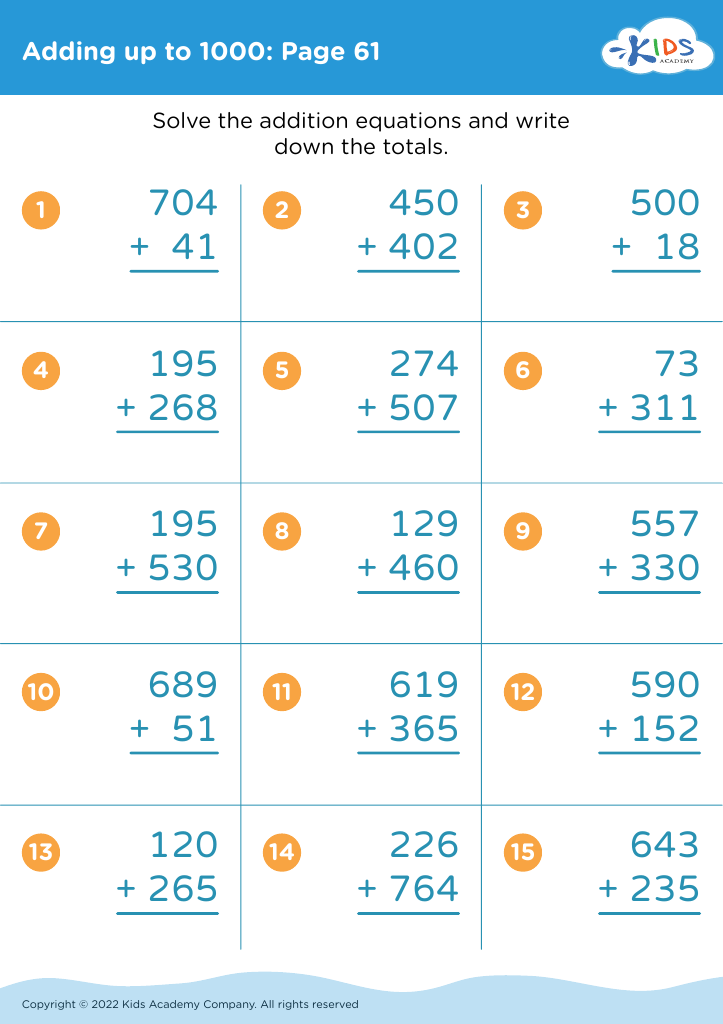
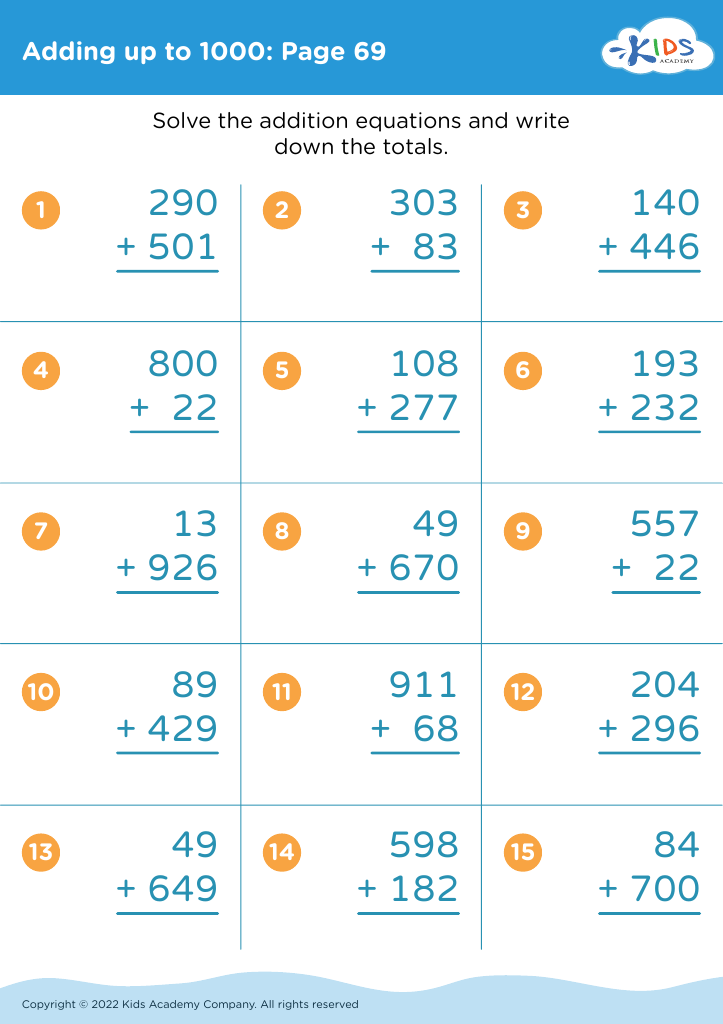
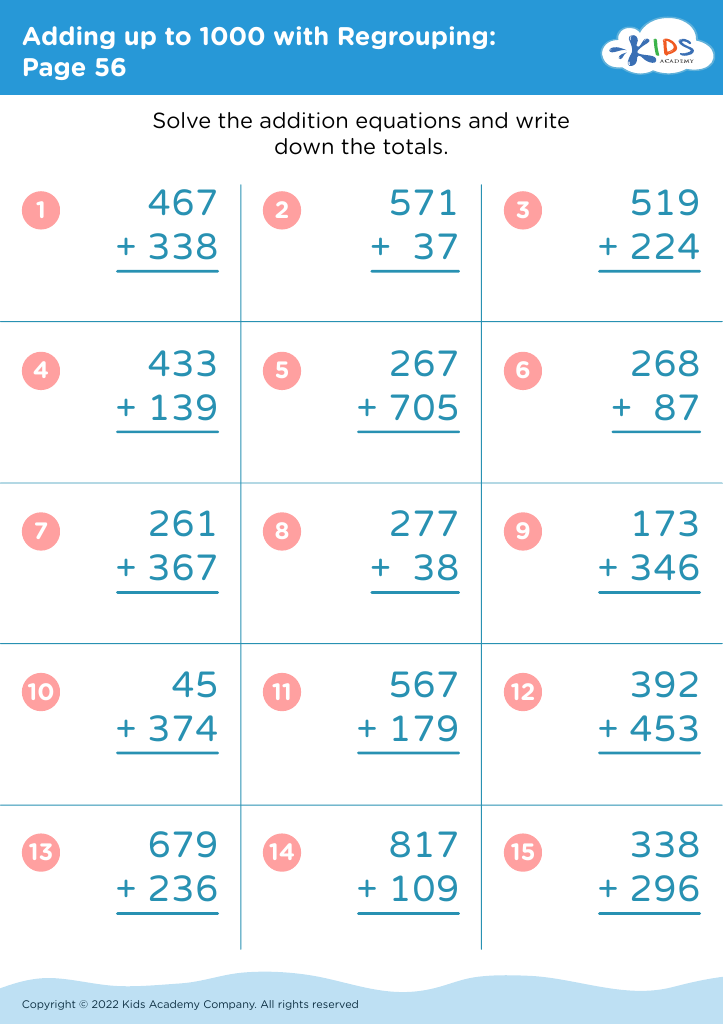
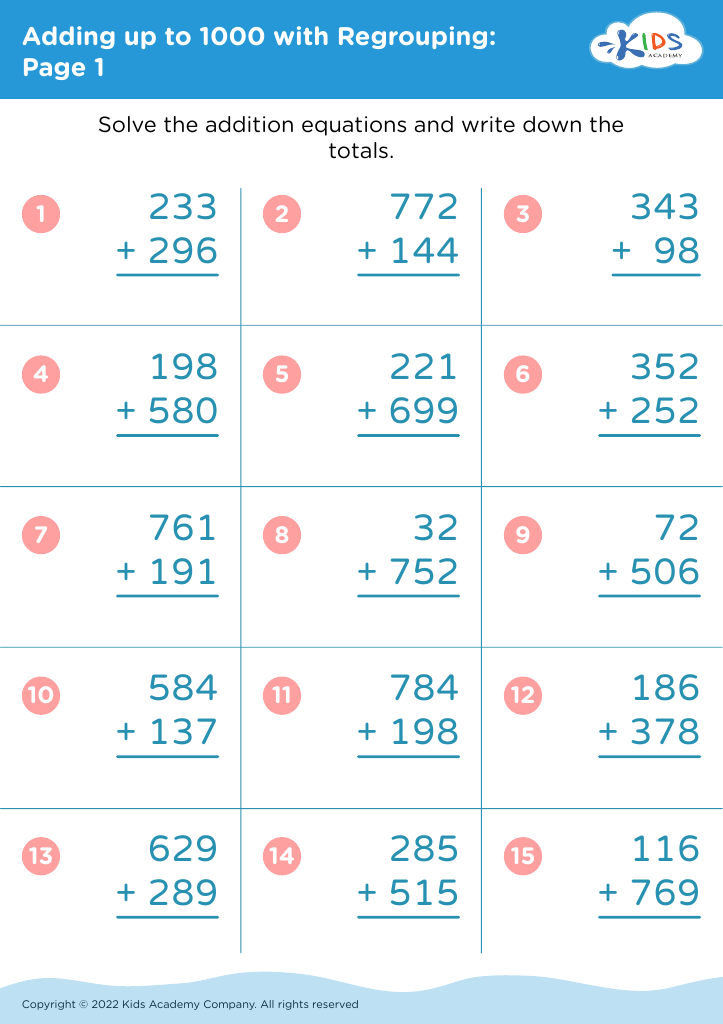
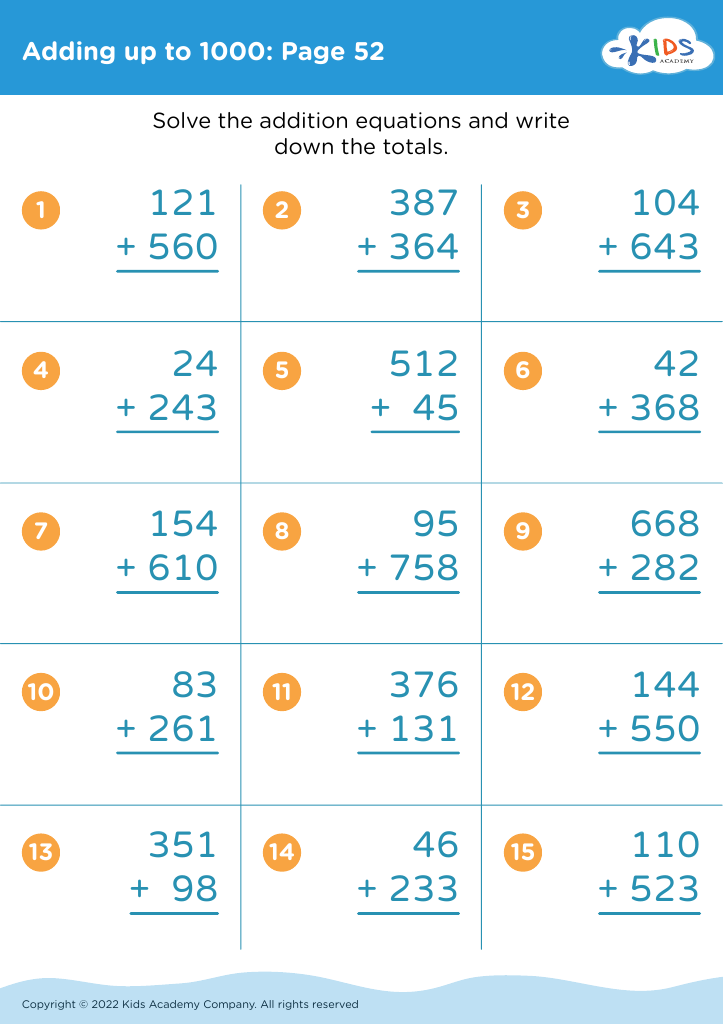



Fraction simplification and understanding addition up to 1000 are foundational math skills crucial for children ages 5-8. Firstly, grasping fraction simplification at an early age helps children recognize equivalency and proportionality. This paves the way for advanced math topics, such as algebra and geometry, where simplification is essential for problem-solving.
Comprehending how to add up to 1000 expands a child’s ability to handle larger numbers, fostering numerical fluency and confidence. This capacity is fundamental not only for mathematics but for everyday situations, like doing simple transactions in a store. Accurate addition also reinforces a solid number sense, improving their overall understanding of the number system.
Parents and teachers should emphasize these concepts, ensuring hands-on activities and real-world applications, to help cultivate strong analytical thinking skills. For this age group, learning-focused play and engaging activities that incorporate fractions and addition promote curiosity and a positive attitude toward math. Addressing these skills early helps regulate a child's approach to future coursework, reducing math anxiety and fostering academic competence throughout their education.
Ultimately, investing time in teaching these skills develops not just mathematically adept students but also critical thinkers equipped with essential life skills.oring advancedされす。








