Identify shapes Adding up to 1000 Worksheets for Ages 5-8
4 filtered results
-
From - To
Discover an engaging and educational way for young learners to master math with our "Identify Shapes Adding up to 1000 Worksheets" designed for ages 5-8. These thoughtfully crafted worksheets combine fun shape recognition tasks with essential addition practice, helping kids develop both their geometric and arithmetic skills. Perfect for kindergarten through 2nd grade, these activities encourage independent learning while reinforcing classroom concepts. Enhance your child’s math abilities and boost their confidence with interactive exercises that make learning enjoyable and effective. Download now to give your little mathematician the tools they need to succeed!
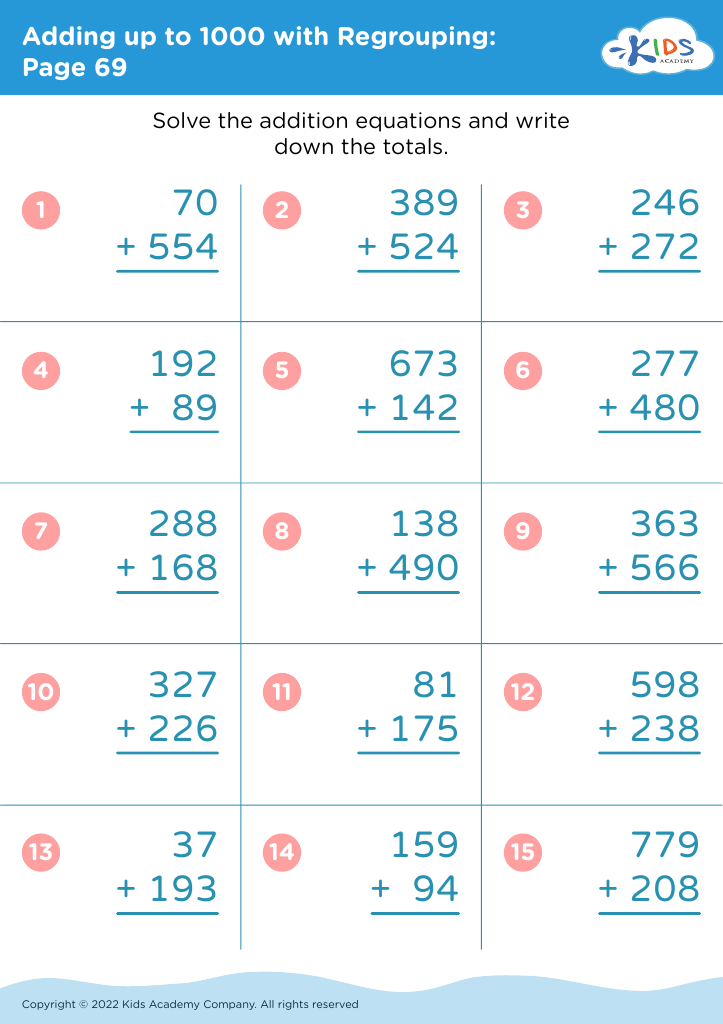
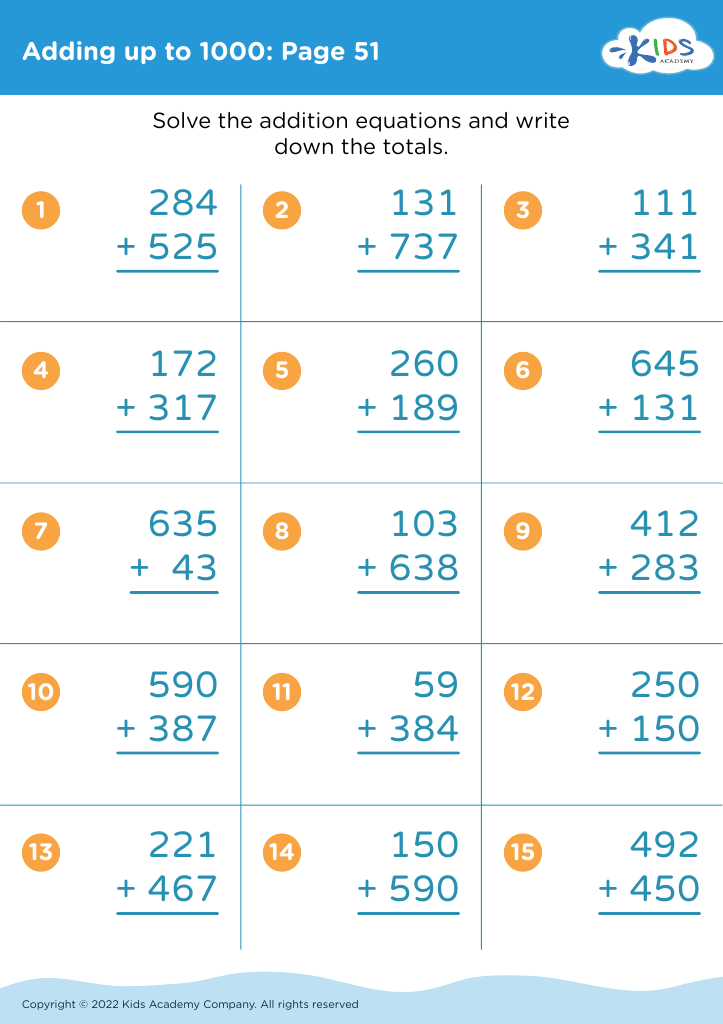
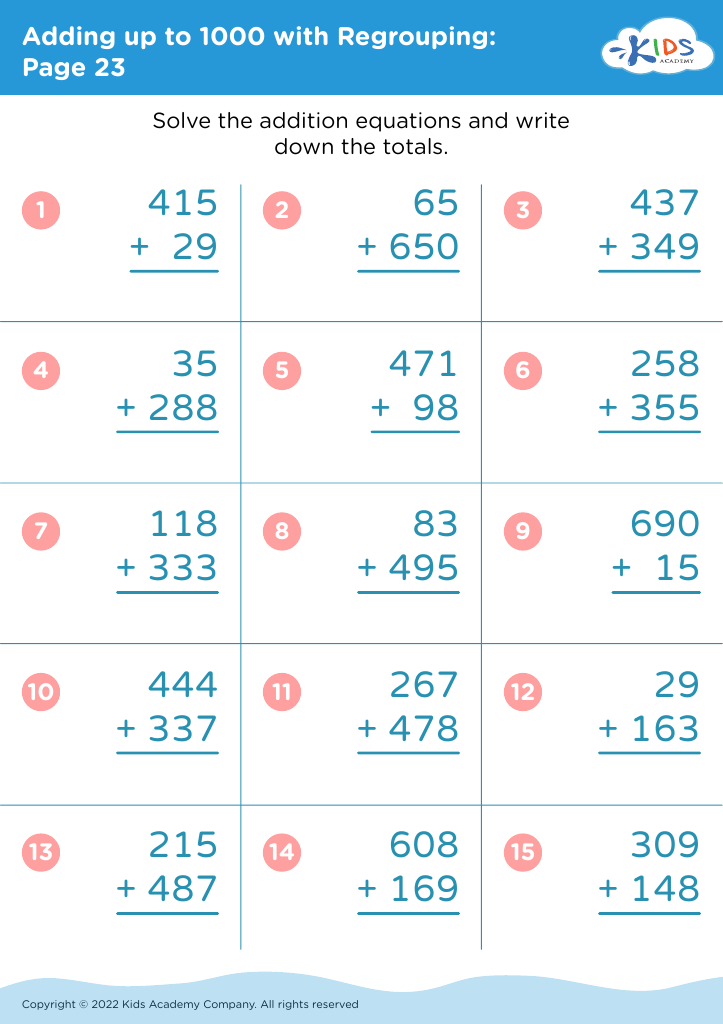
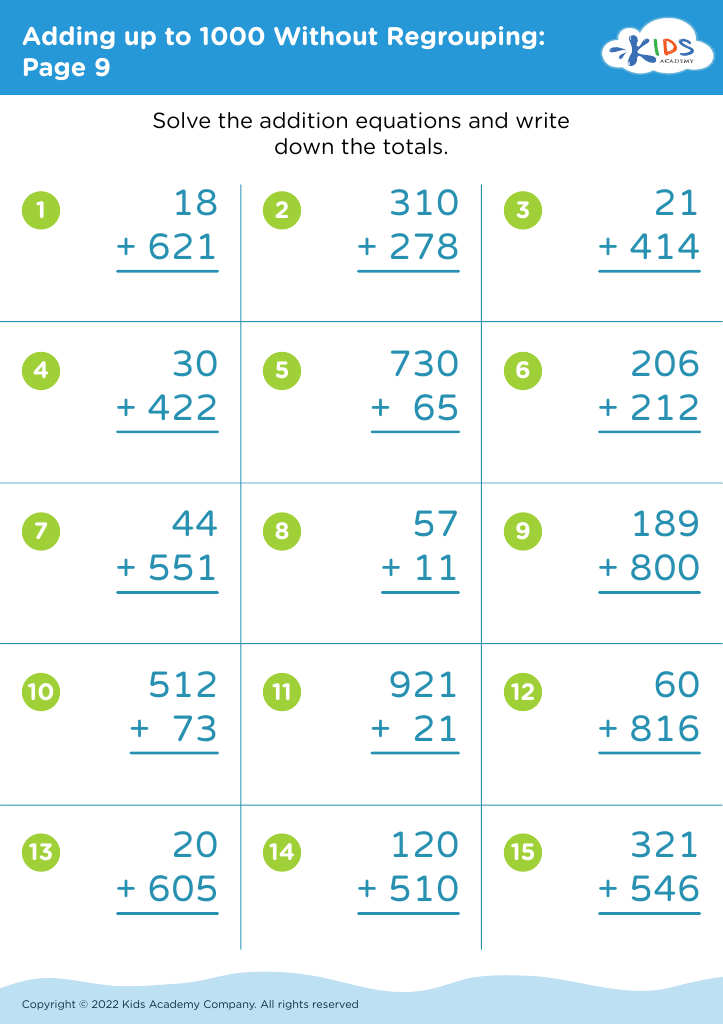



Encouraging children aged 5-8 to identify shapes and understand basic addition, such as adding up to 1000, is crucial for several reasons. Firstly, identifying shapes helps children develop spatial awareness and visual perception, which are foundational skills in daily life and advanced subjects like geometry, art, and even sciences. Recognizing shapes allows children to make sense of the physical world around them, promoting cognitive development and problem-solving abilities.
Meanwhile, understanding addition up to 1000 introduces basic arithmetic and number sense, essential early math skills. This fosters logical thinking, enhances memory through the learning and application of number facts, and promotes the ability to perform more complex calculations in the future. Additionally, these mathematical exercises enhance patience and concentration, essential skills for academic pursuits and daily activities.
Moreover, such skills integrate seamlessly into various subjects and activities, making learning holistic rather than fragmented. For instance, students may employ shape identification in art projects or construction toys and use addition in practical settings like counting toys or understanding calendars. Lastly, mastering these abilities early on builds confidence and a positive attitude towards learning, laying a strong foundation for future academic success and lifelong learning. Encouraging these skills early supports cognitive development and in fostering a well-rounded, knowledgeable child.








