Math problem-solving Adding up to 1000 Worksheets for Ages 5-8
4 filtered results
-
From - To
Unlock your child's mathematical potential with our engaging "Math Problem-Solving: Adding Up to 1000 Worksheets" designed for ages 5-8! These thoughtfully crafted worksheets provide a fun and interactive way for young learners to practice addition while enhancing their problem-solving skills. Each worksheet features colorful graphics and age-appropriate challenges to ensure an enjoyable learning experience. As your child learns to add numbers effectively, they’ll develop critical thinking and analytical skills that lay the foundation for future math success. Perfect for home or classroom use, these worksheets are essential tools for making math exciting and accessible. Download today and watch your child's confidence soar!
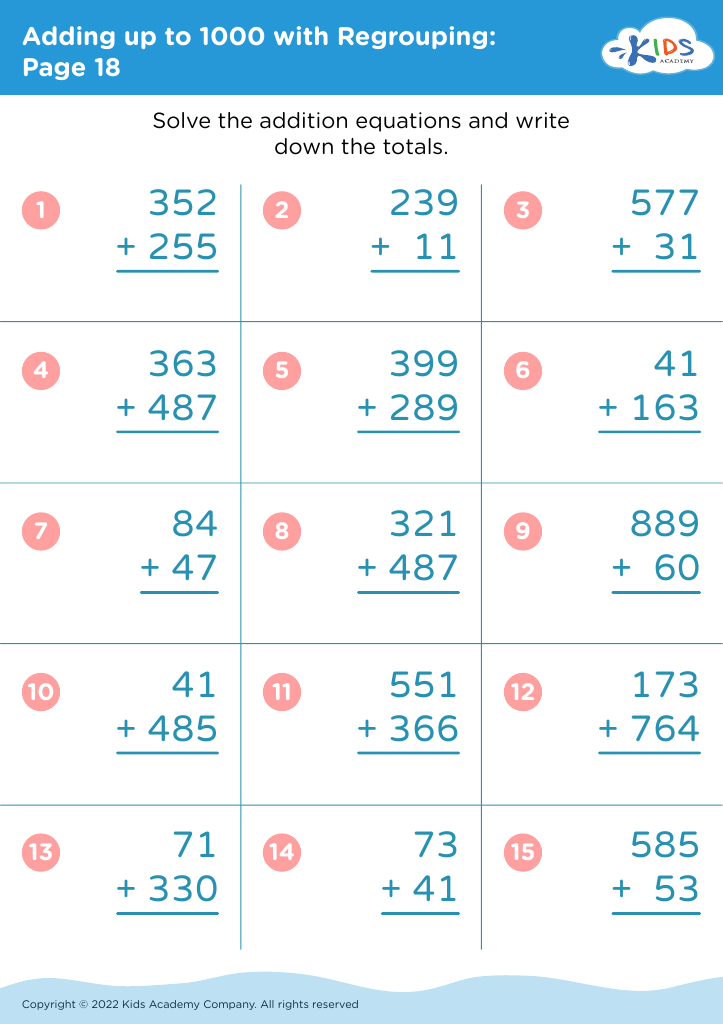
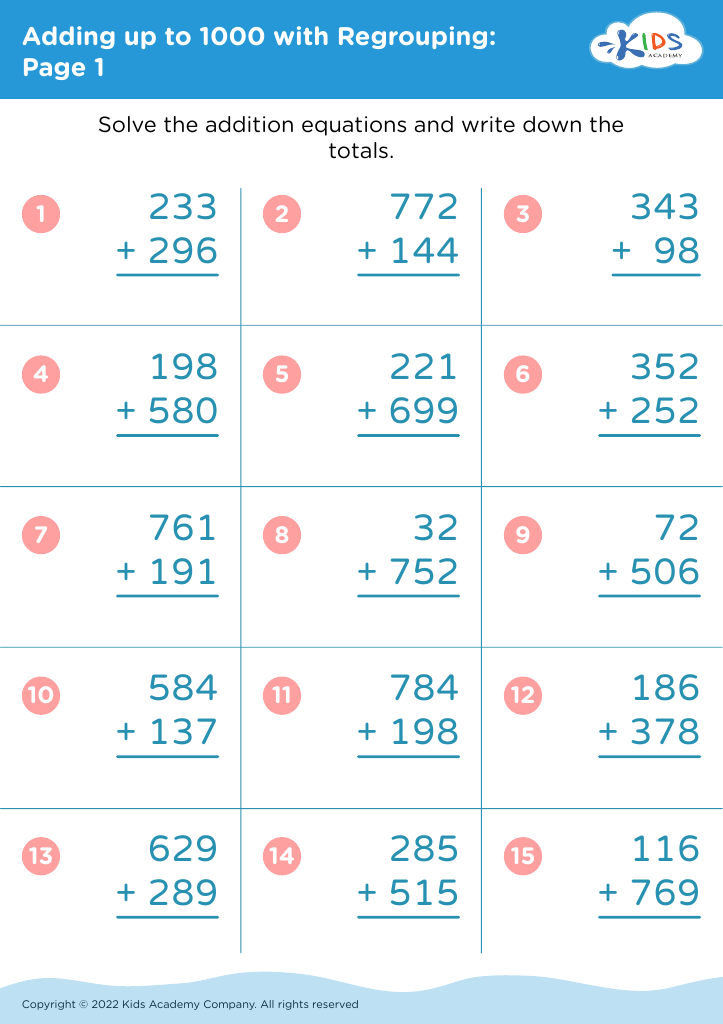
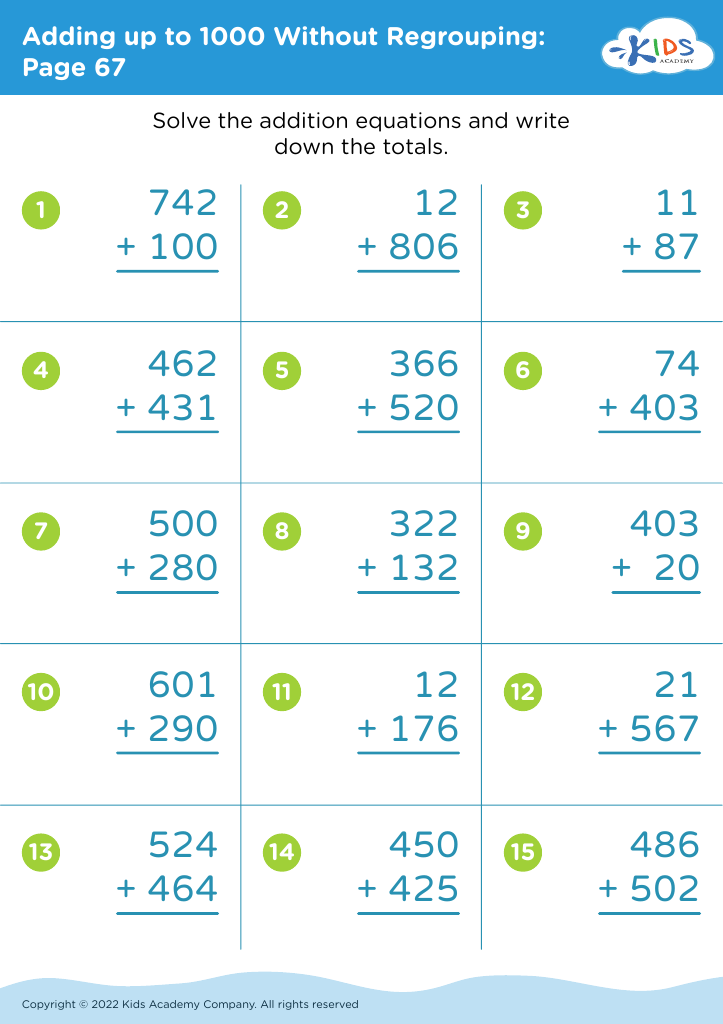
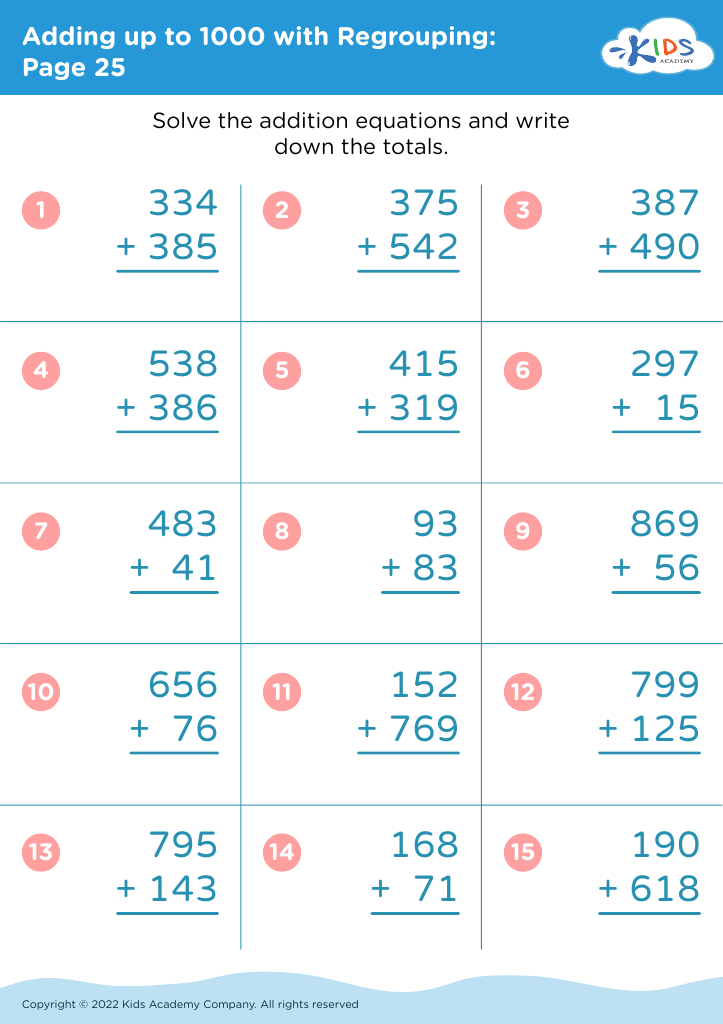



Math problem-solving, especially with tasks like adding up to 1000, is crucial for children aged 5-8, and here's why parents and teachers should care. Firstly, foundational math skills serve as the bedrock for more complex concepts in later years. Understanding how to add and manipulate numbers fosters a strong number sense, enabling children to approach problems confidently.
Moreover, engaging with larger numbers strengthens critical thinking and boosts cognitive development. It teaches children to break down complex problems into manageable parts, fostering persistence and resilience.
Additionally, problem-solving in math cultivates collaboration and communication skills. When working in pairs or groups, children learn to explain their thinking, listen to others, and refine their strategies based on feedback.
Furthermore, this skill encourages a growth mindset. As children tackle challenging math problems, they learn that effort leads to improvement, thereby nurturing a love for learning.
Lastly, math literacy goes beyond the classroom. In our increasingly data-driven world, strong math skills are essential for success in everyday life, from budgeting to analyzing information. Therefore, by prioritizing math problem-solving activities, parents and teachers equip children with the tools they will need for future academic and personal success.








