Number Recognition Adding up to 1000 Worksheets for Ages 5-8 - Page 2
31 filtered results
-
From - To
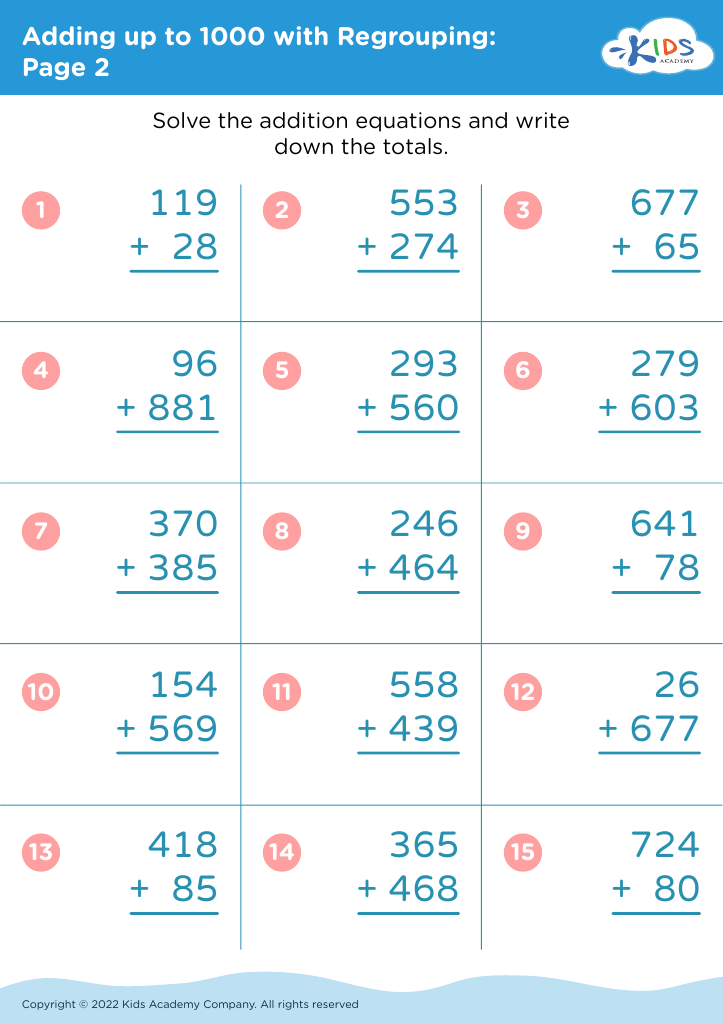
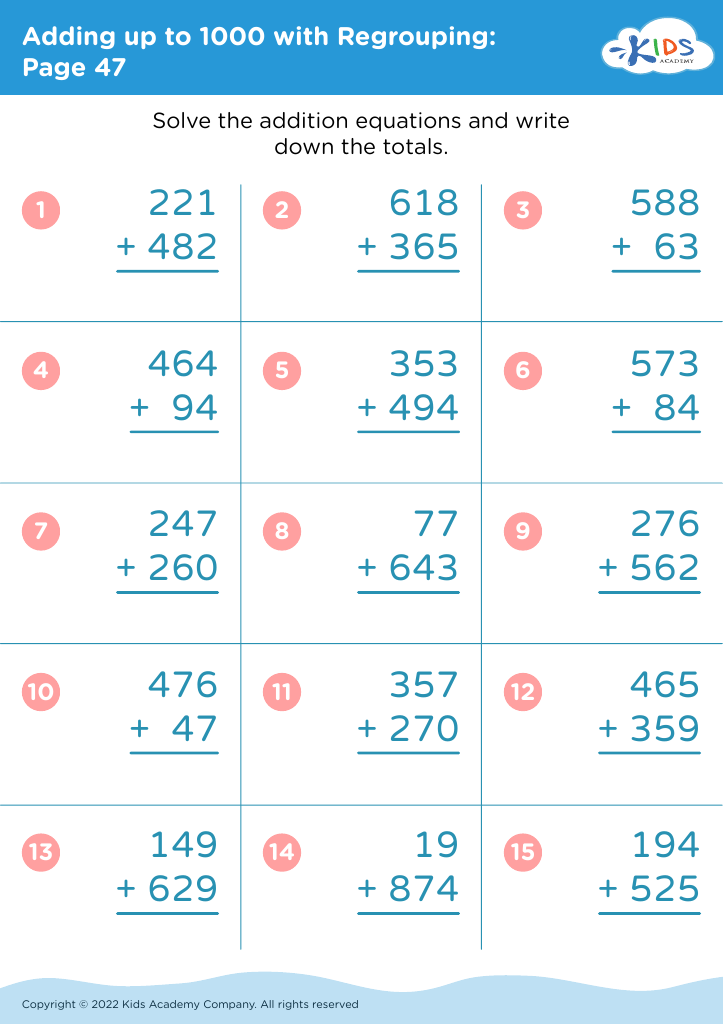
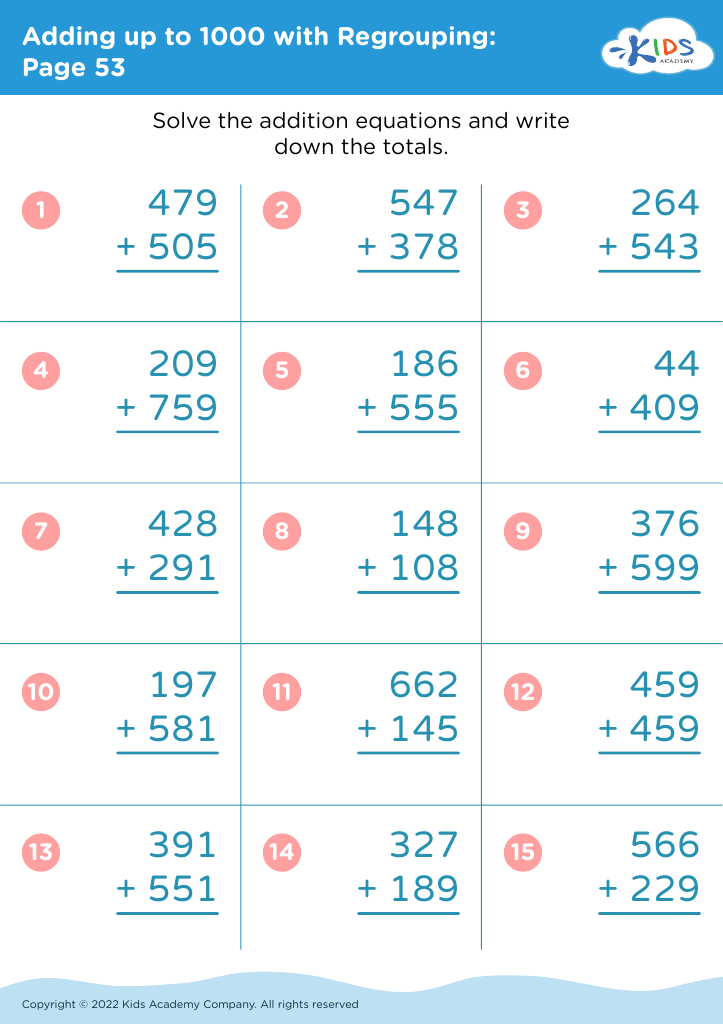
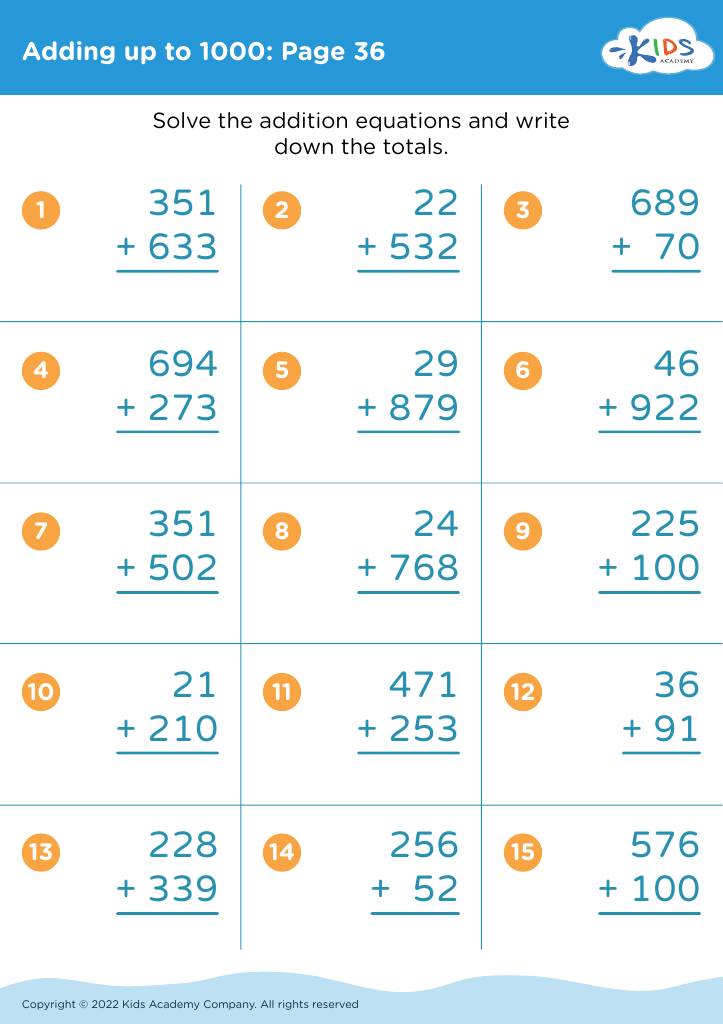
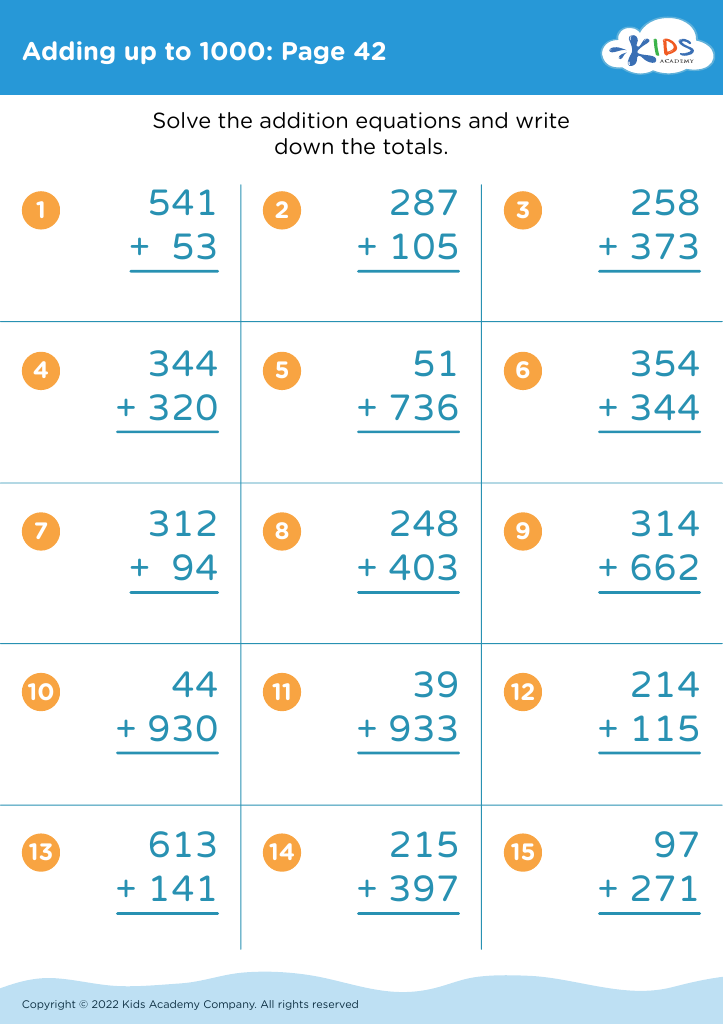
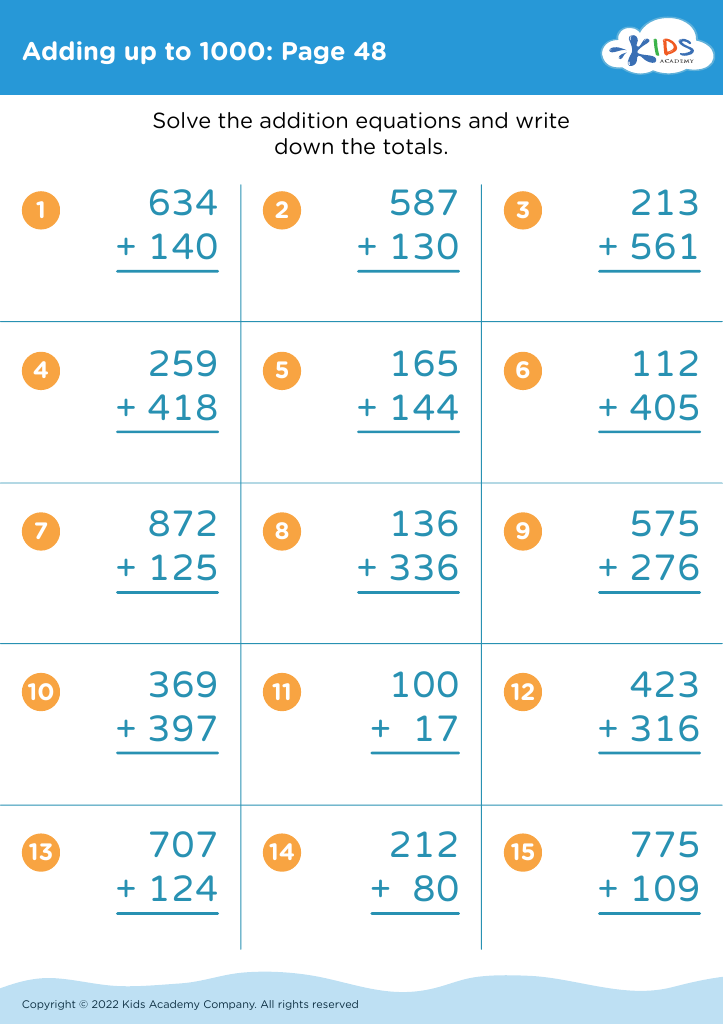
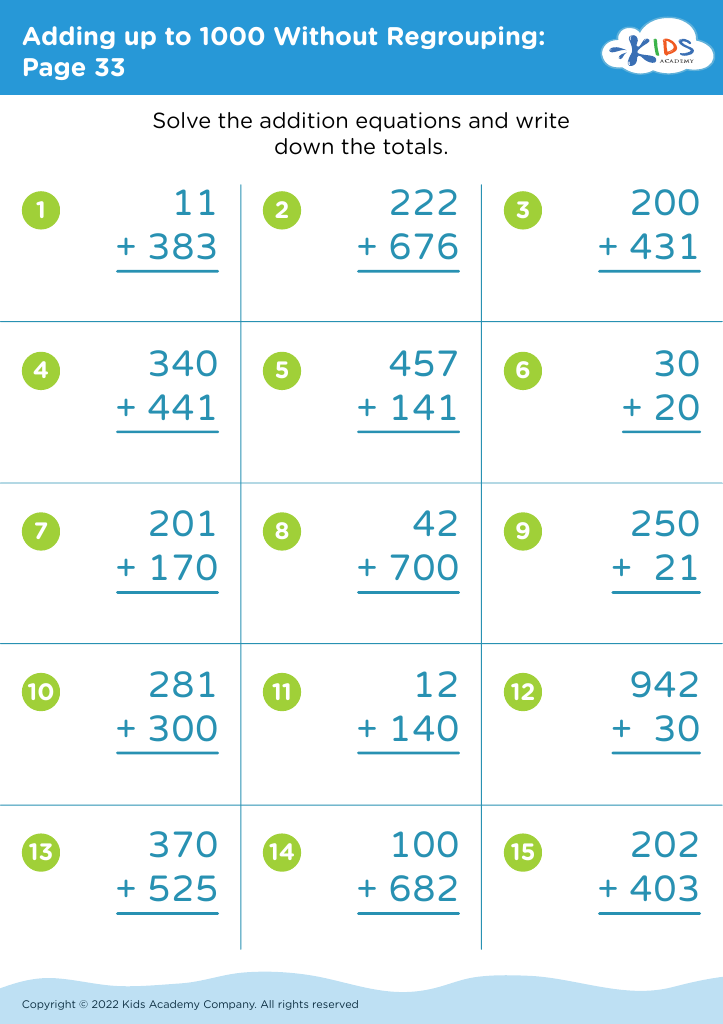




Number recognition is a foundational skill that significantly impacts a child's mathematical development, especially for ages 5-8. As children begin to understand and manipulate numbers up to 1000, they are effectively preparing their brains for more complex mathematical concepts later on. When parents and teachers focus on number recognition during this critical period, they support the development of essential skills such as counting, comparing, and ordering numbers, which form the basis of addition, subtraction, and beyond.
Recognizing numbers contributes to a child’s ability to engage in everyday activities, such as understanding time, managing basic finances, and solving practical problems. It fosters confidence as kids become familiar with numbers encountered in their surroundings, from addresses to prices in a store.
Additionally, building a strong number sense lays the groundwork for success in higher mathematics. Early mastery helps children avoid future math anxiety, as they grow increasingly comfortable with numbers. Moreover, parents and teachers play a vital role in creating a positive learning environment, facilitating hands-on activities that make number recognition enjoyable. Ultimately, investing in these foundational skills not only enhances academic success but also prepares children for lifelong learning and critical thinking.








