Number Sequencing Adding up to 1000 Worksheets for Ages 5-8
5 filtered results
-
From - To
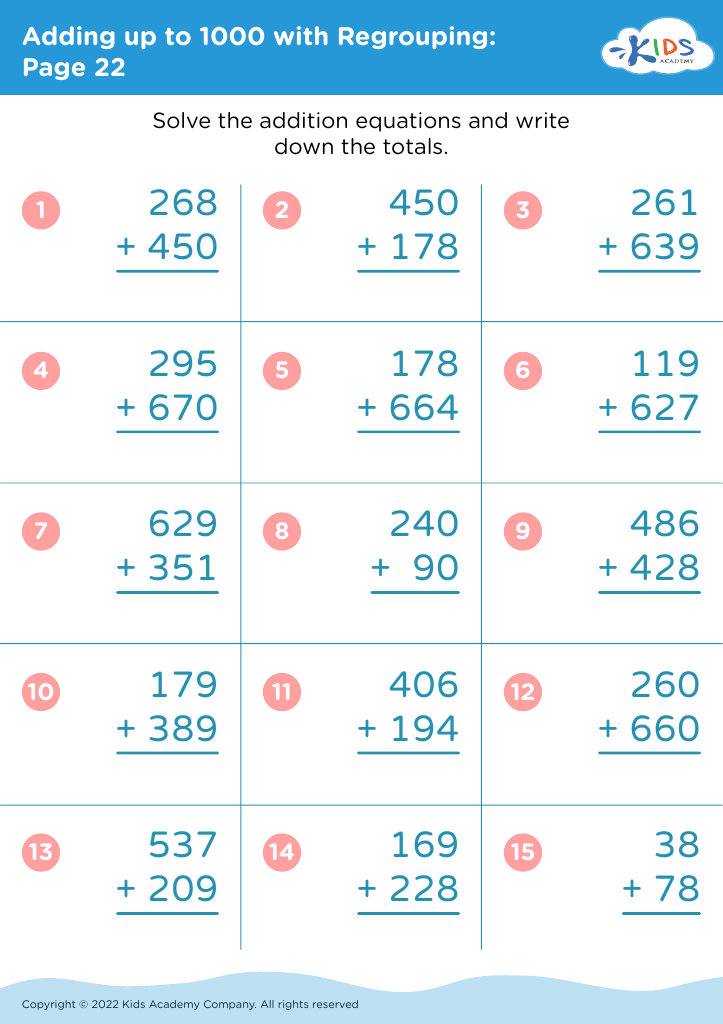
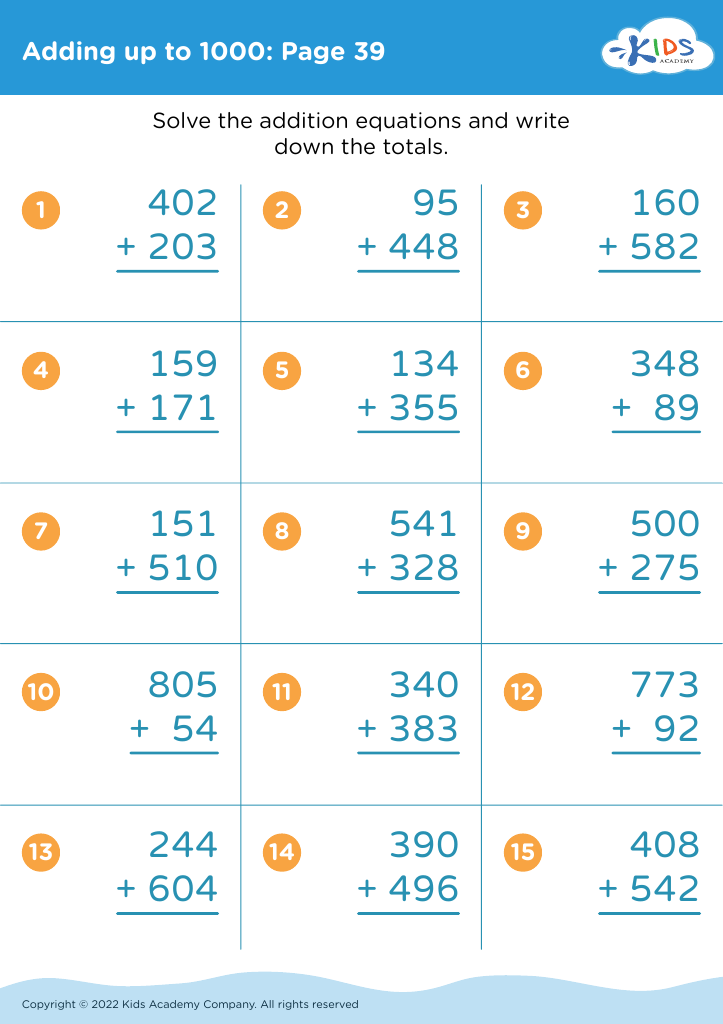
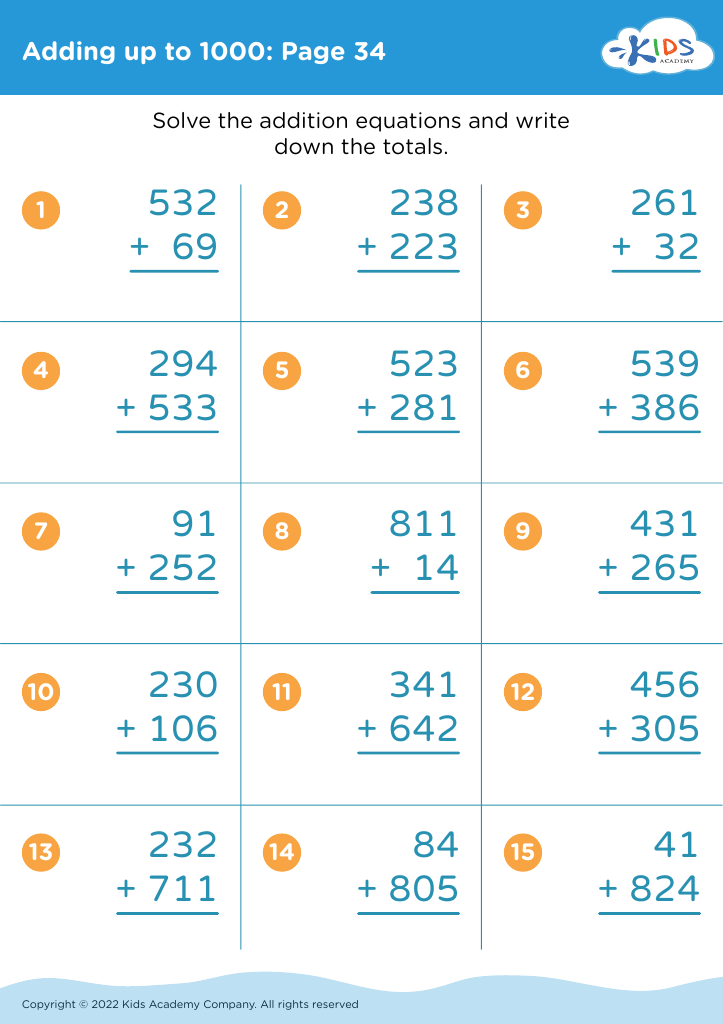
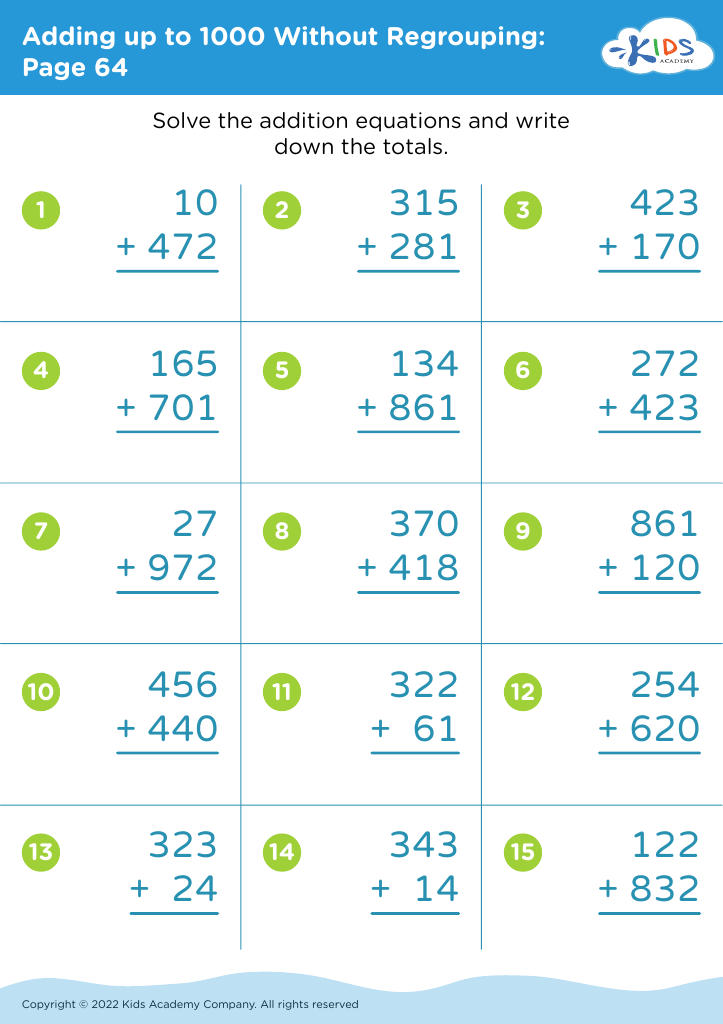
Discover our engaging "Number Sequencing Adding up to 1000 Worksheets," designed specifically for children aged 5-8. These interactive worksheets help young learners master important math skills while having fun! Each activity focuses on number sequencing and reinforces the concept of addition, empowering children to confidently add numbers up to 1000. Suitable for home or classroom use, these worksheets promote critical thinking and improve problem-solving abilities. With colorful illustrations and step-by-step exercises, children will stay motivated and excited to learn. Perfect for supporting early math education, our worksheets are a great resource for teachers and parents alike. Start your child's math journey today!
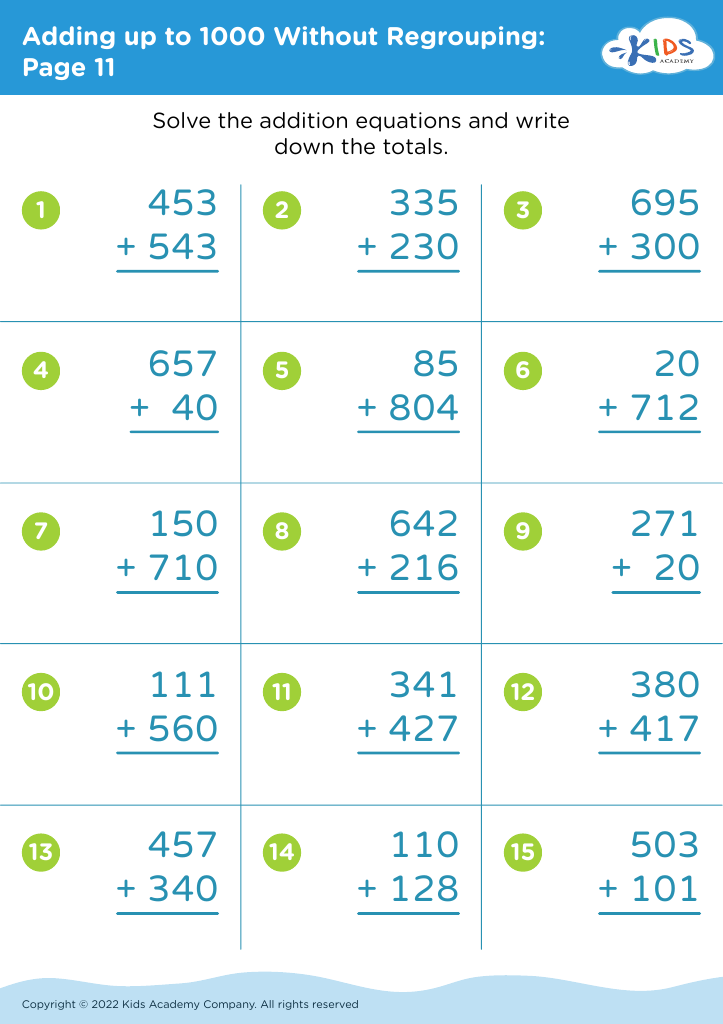



Number sequencing and the ability to add up to 1000 are foundational skills in mathematics, especially for children aged 5-8. Understanding number sequences helps build a solid grasp of the number line, which is crucial for both addition and subtraction. When children learn to recognize patterns in sequences, they develop critical thinking and problem-solving skills that extend beyond math.
For parents and teachers, fostering a strong number sense at this age unlocks more complex mathematical concepts in the future. Mastery of number sequencing and addition builds confidence and reduces anxiety around math, allowing children to approach more challenging problems with a positive mindset.
Moreover, the ability to add numbers up to 1000 encourages mental math strategies, which improve calculation speed and efficiency. This is particularly beneficial in real-life contexts, where quick estimations are often required.
Engaging children with fun activities related to number sequencing also promotes involved learning environments, reinforcing their early literacy and reasoning skills. In essence, early engagement with number sequencing lays the groundwork for academic success, builds self-esteem, and fosters a love for mathematics, ultimately supporting lifelong learning and analytical thinking. Parents and teachers play a crucial role in nurturing this essential foundation.








