Pattern recognition Adding up to 1000 Worksheets for Ages 5-8
3 filtered results
-
From - To
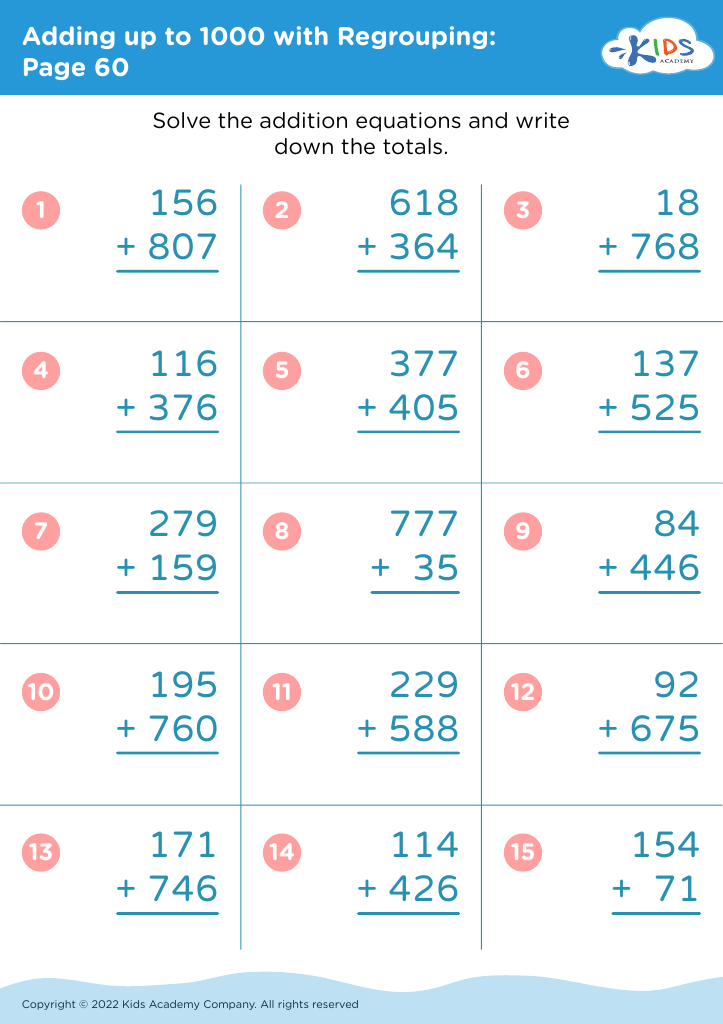
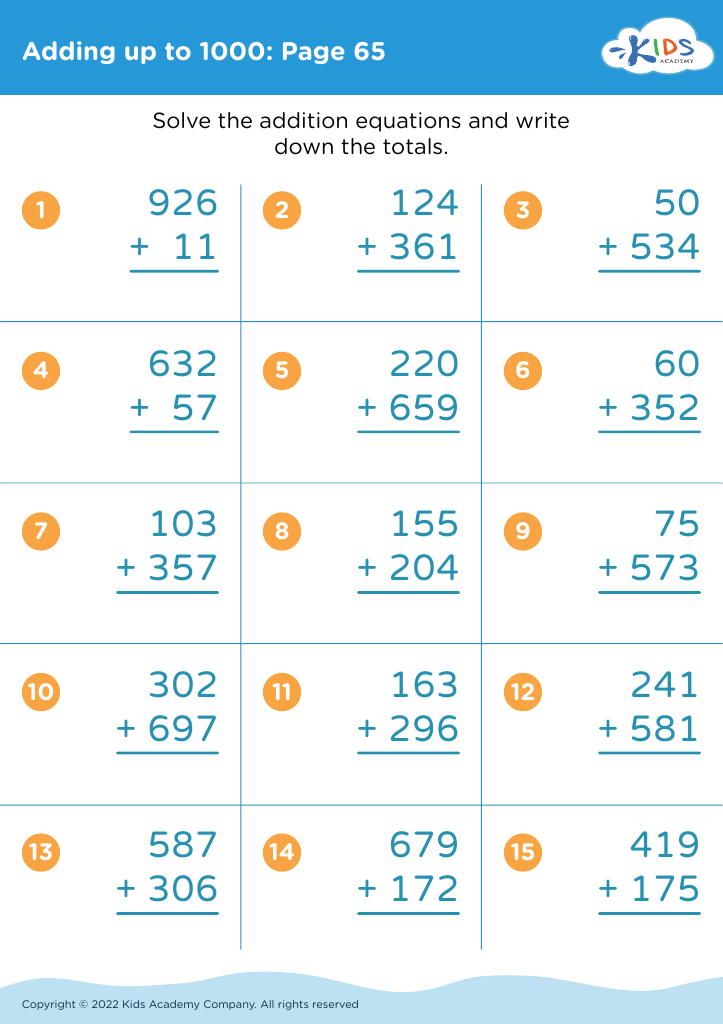
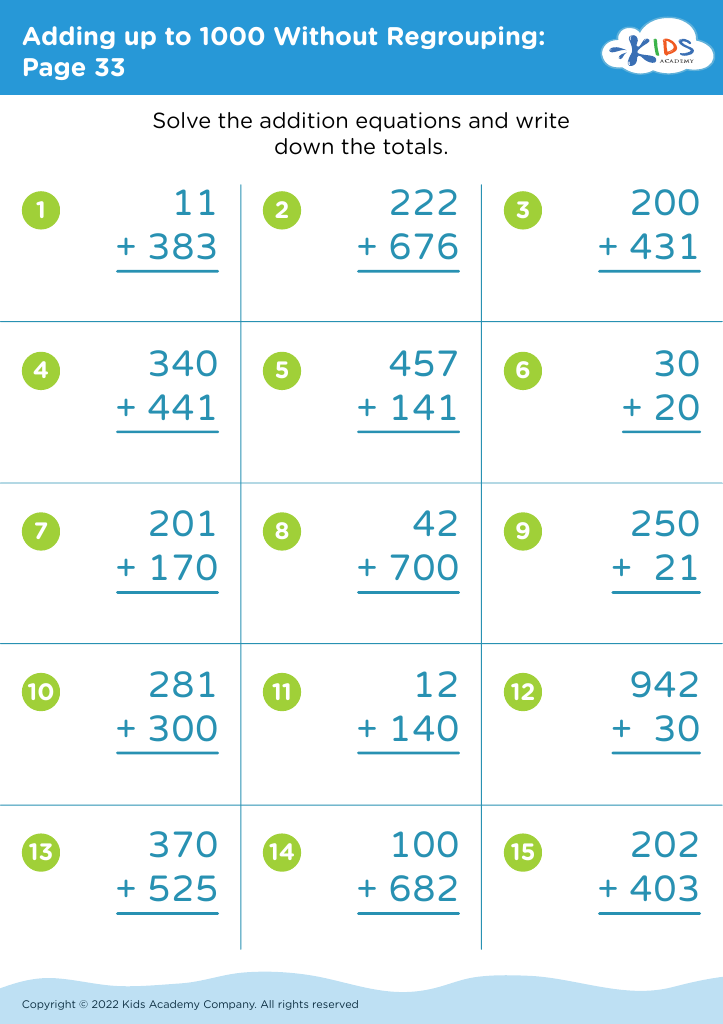
Welcome to our "Pattern Recognition Adding Up to 1000 Worksheets" designed specifically for children ages 5-8! These engaging worksheets help young learners develop essential math skills by focusing on pattern recognition. Through various fun activities, children will explore number patterns and improve their ability to add up to 1000. Our worksheets encourage critical thinking and problem-solving while making math enjoyable. Perfect for home or classroom use, these resources support early literacy and numerical competence. Join us in fostering a love for math as your child discovers the fascinating world of numbers! Start enhancing their learning journey today!



Pattern recognition is a fundamental cognitive skill crucial for early learners, especially for children aged 5-8. Teaching children to recognize patterns helps in developing their analytical thinking and problem-solving abilities. In mathematics, pattern recognition lays the groundwork for more complex concepts, such as addition, subtraction, and even later numbers. When children work on adding up to 1000, recognizing number patterns facilitates their understanding of numbers, sequences, and mathematical relationships.
In addition, patterns help children predict outcomes and establish a sense of order. Recognizing numerical patterns allows them to identify shortcuts and strategies, making calculations more intuitive and efficient. For instance, when kids learn to recognize that adding 10 ten times gives them 100, they begin to grasp the scale of large numbers more easily.
Moreover, pattern recognition isn’t limited to math; it plays a crucial role in literacy and other subjects. Engaging children in activities that stimulate pattern recognition—like puzzles, games, or storytelling—can foster a love for learning. This foundational skill not only boosts their confidence but also prepares them for future academic success. Hence, parents and teachers should prioritize activities that enhance pattern recognition to support their child’s holistic growth in various learning fields.








