Practice writing numbers Adding up to 1000 Worksheets for Ages 5-8
3 filtered results
-
From - To
Welcome to our "Practice Writing Numbers Adding Up to 1000 Worksheets" designed specifically for ages 5-8! These engaging worksheets provide young learners with the opportunity to develop their number writing skills while mastering addition concepts. Through fun exercises and a variety of formats, your child will practice writing numbers clearly and accurately in the context of adding up to 1000. Each worksheet is crafted to enhance numerical fluency, fine motor skills, and confidence in math. Perfect for home or classroom use, our resources are ideal for reinforcing foundational math skills while making learning enjoyable! Start your math journey today!
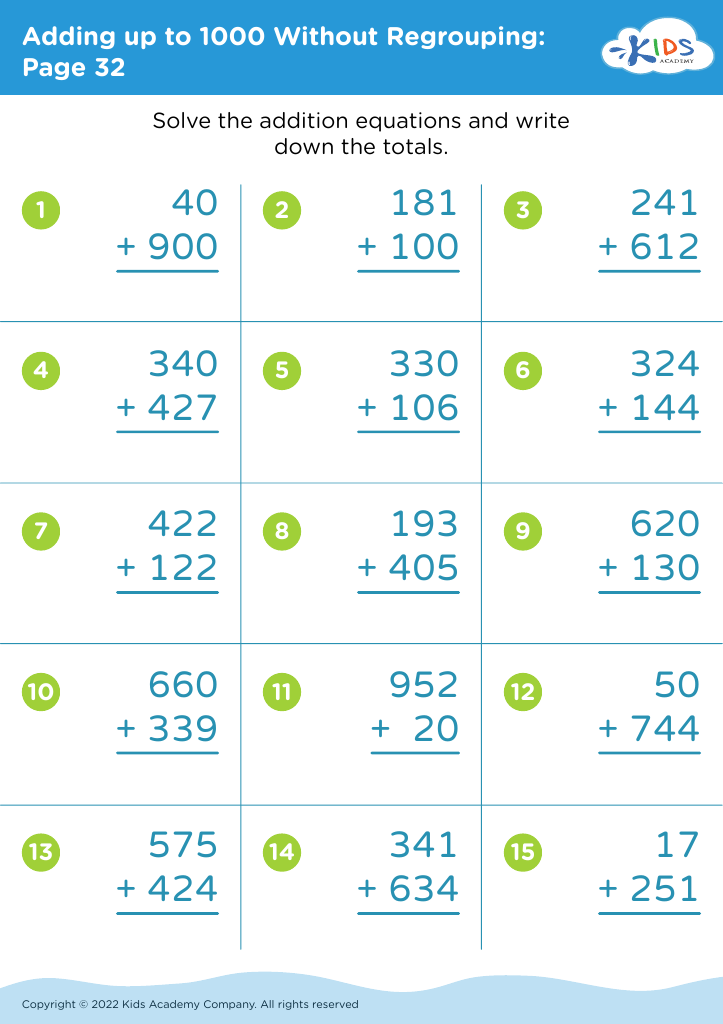
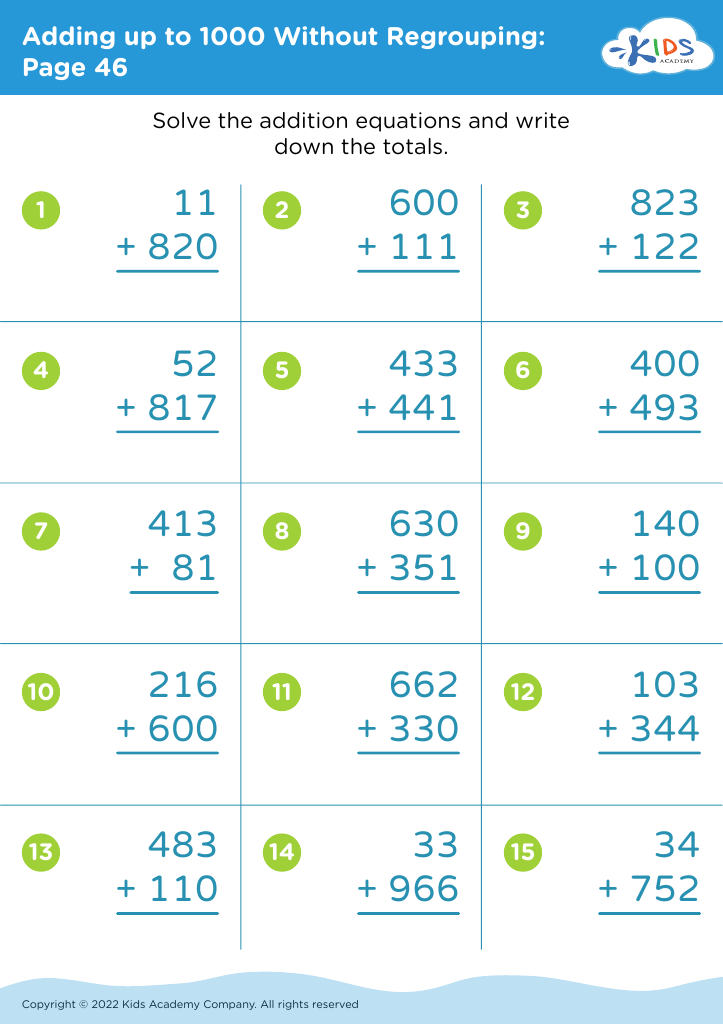
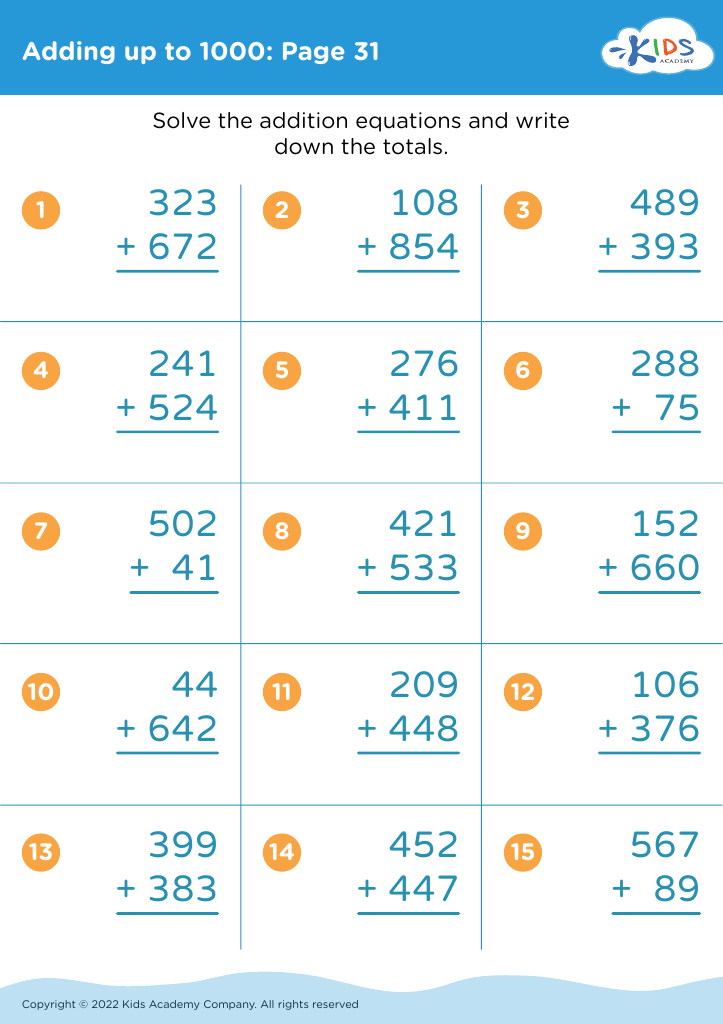



Practicing writing numbers that add up to 1000 is crucial for children aged 5-8, as it provides foundational skills in mathematics and cognitive development. Engaging in such activities helps students grasp the concept of place value, enhancing their understanding of the numerical system. By manipulating numbers in various combinations, children learn essential addition strategies and develop critical problem-solving skills.
Moreover, reinforcing number writing and arithmetic at this age fosters confidence in mathematics, encouraging a positive attitude towards the subject in the long run. When children practice, they not only enhance their fine motor skills through handwriting but also engage in cognitive processing that strengthens memory and number recognition.
For teachers and parents, encouraging these practices can build a child's resilience when facing future mathematical challenges. Early mastery of these concepts lays the groundwork for more complex number operations as they progress through their education. Additionally, integrating fun and interactive learning experiences can make practicing numbers enjoyable, keeping young learners motivated and enthusiastic about math as they grow. This foundational experience is essential for cultivating a lifelong appreciation for learning and numeracy skills.








