Shape identification Adding up to 1000 Worksheets for Ages 5-8
6 filtered results
-
From - To
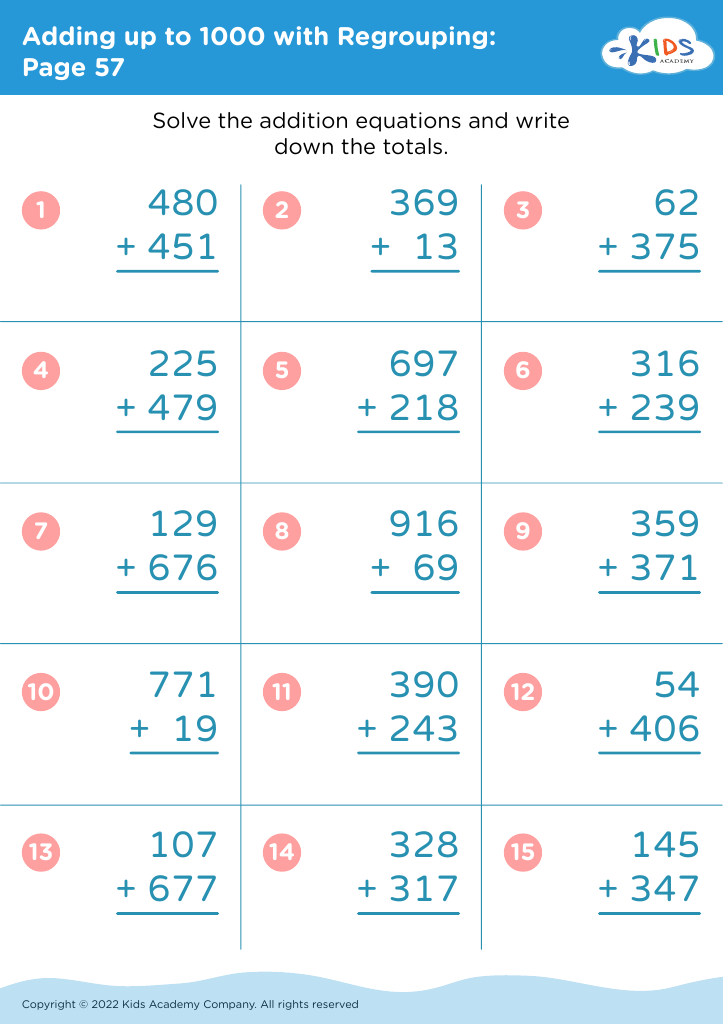
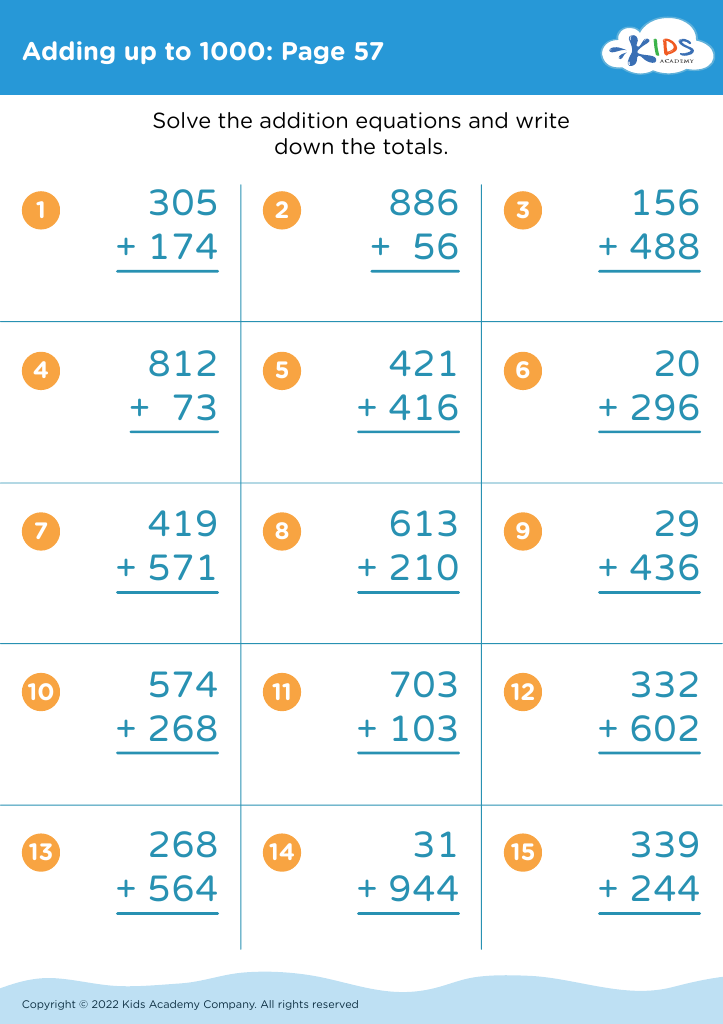
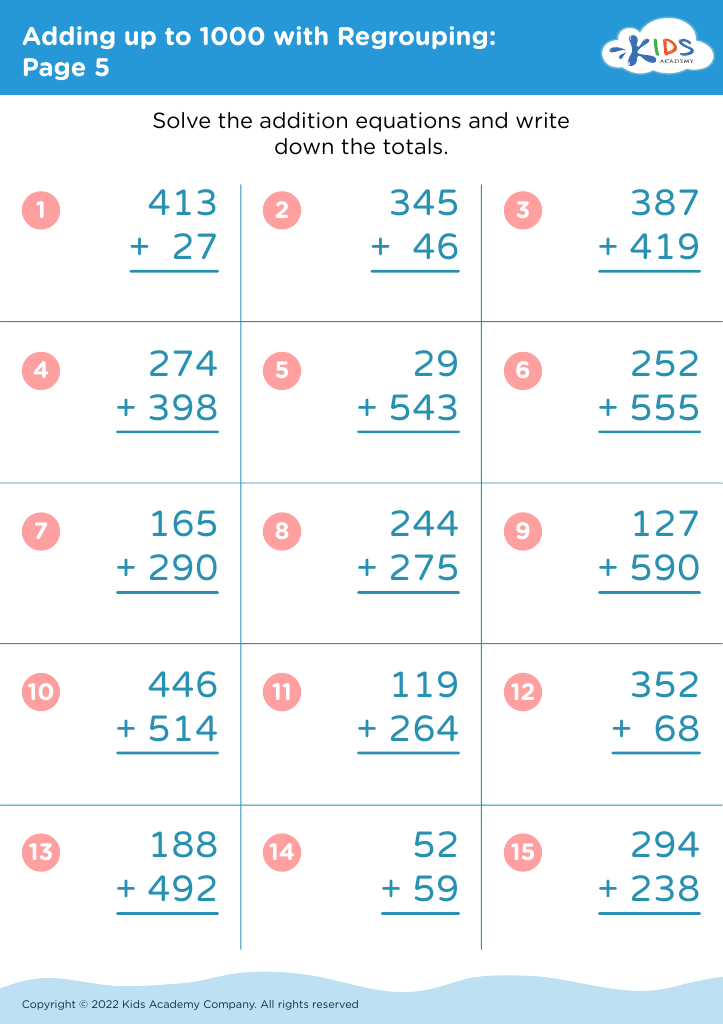
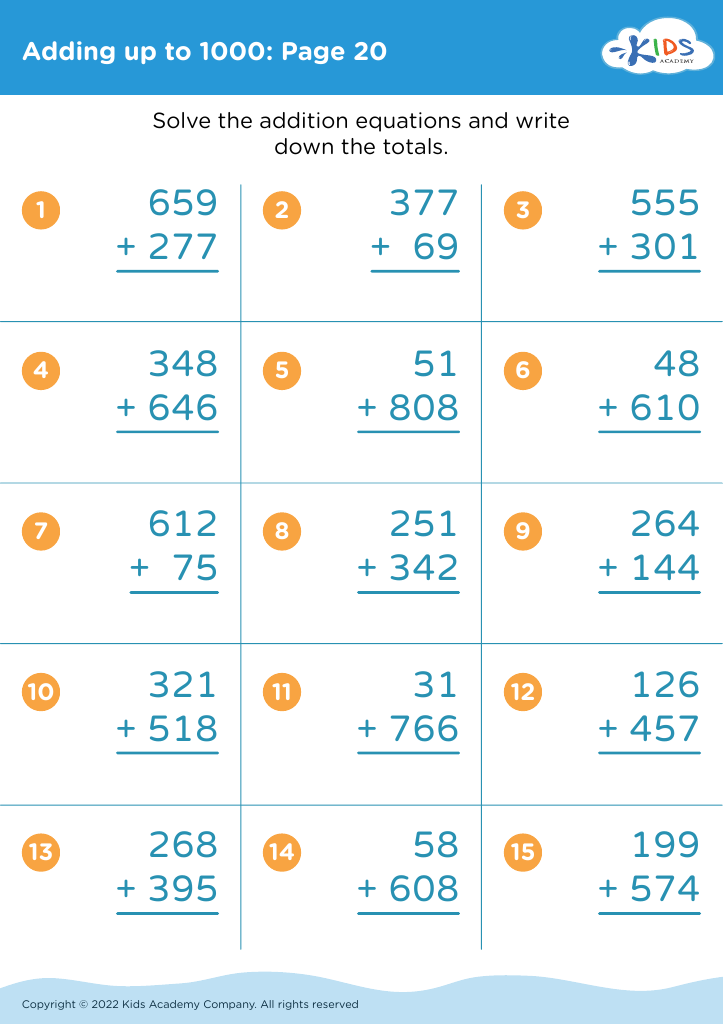
Unlock your child's potential with our "Shape Identification Adding Up to 1000 Worksheets," designed for ages 5-8! These engaging worksheets blend math and geometry, helping young learners master the concept of shapes while practicing addition up to 1000. Each worksheet is thoughtfully crafted to develop critical thinking skills, enhance shape recognition, and promote early mathematical understanding. Perfect for homeschooling or classroom use, these printable resources offer step-by-step exercises that encourage creativity and problem-solving. Foster a love for learning in a fun and interactive way! Explore our collection today and watch your child thrive in their educational journey.
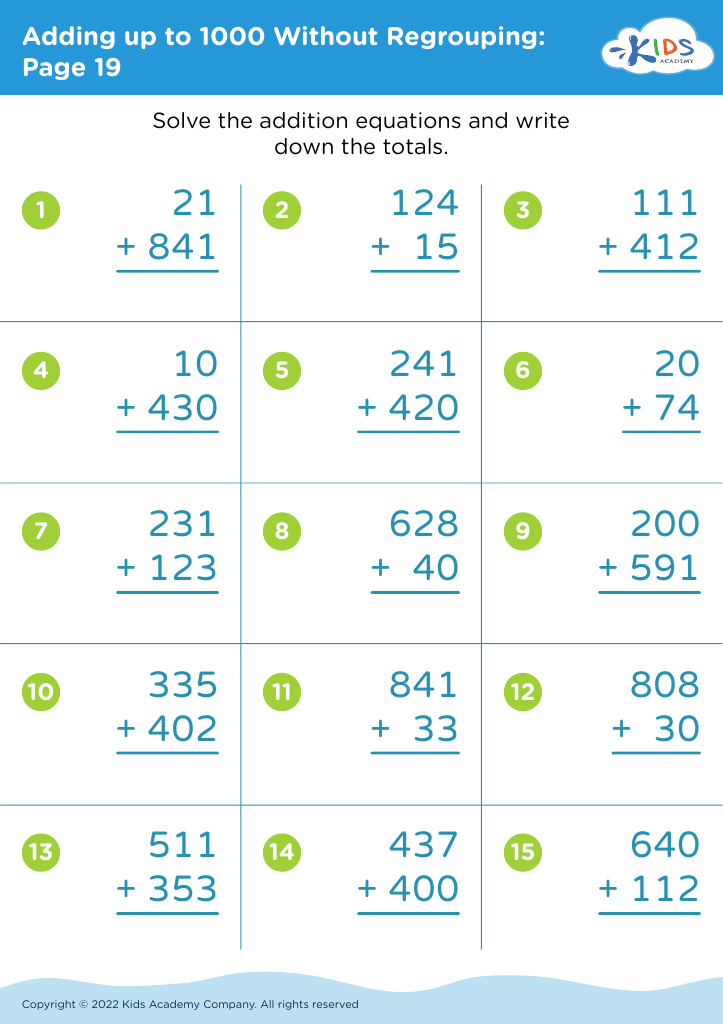
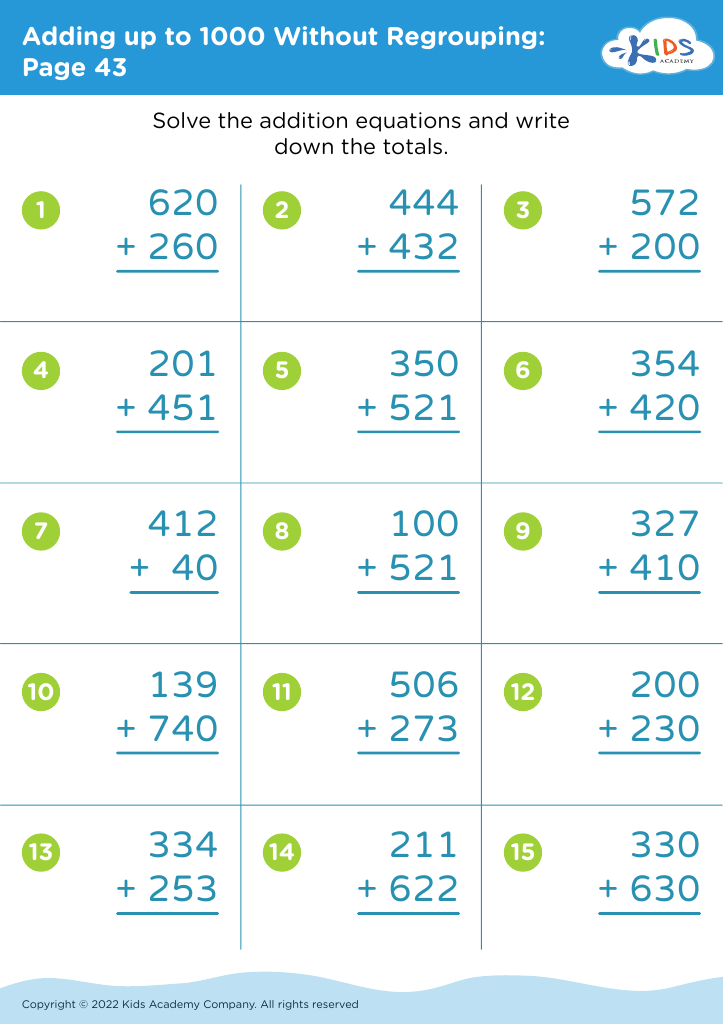



Shape identification and addition skills are fundamental building blocks for children ages 5-8, deeply rooted in early mathematical education. Understanding shapes cultivates spatial awareness and improves problem-solving skills. When children learn to identify different shapes, they enhance their cognitive development and prepare for more complex concepts in geometry. This foundational knowledge fosters creativity, as they can connect shapes in art and design, helping them see the world in new ways.
Furthermore, incorporating addition skills while working with shapes reinforces basic arithmetic and lays the groundwork for future mathematical fluency. Activities that blend shape recognition with addition engage students in hands-on learning, making abstract concepts tangible. They develop critical thinking by exploring patterns and relationships within shapes, which are essential skills that extend beyond the classroom.
For parents and teachers, supporting shape identification and addition not only aids academic success but also nurtures a love for learning in young children. Encouraging these skills through interactive games and activities can promote collaboration, communication, and a positive attitude towards mathematics. By caring about these foundational concepts, adults set the stage for children's continued success in both math and their overall educational journey.








