Shape Recognition Adding up to 1000 Worksheets for Ages 5-8
11 filtered results
-
From - To
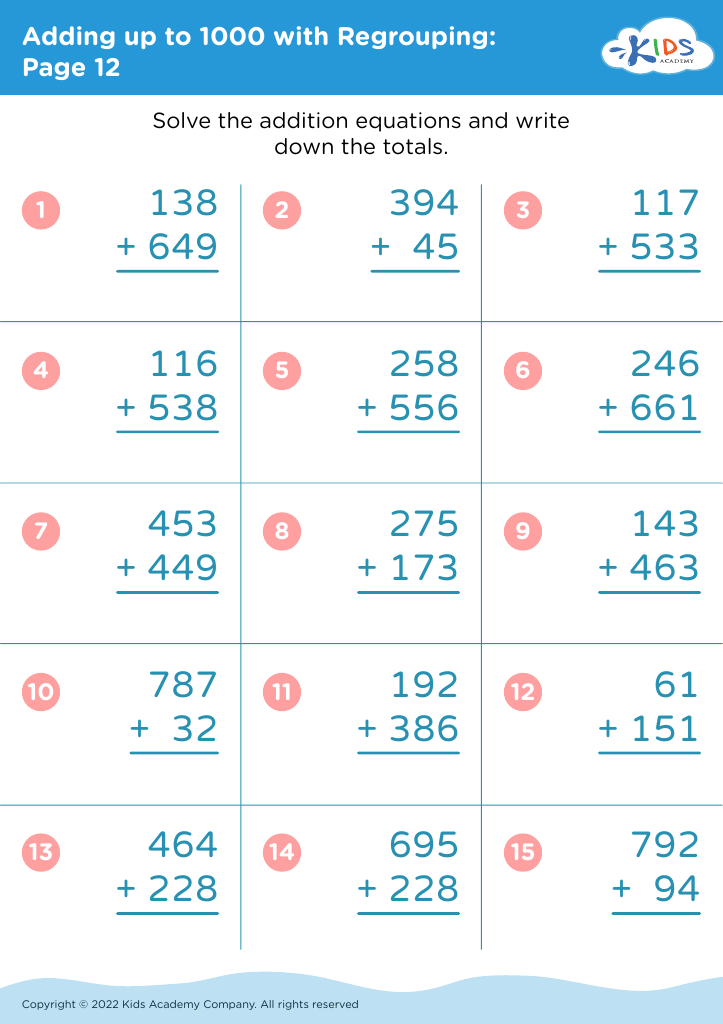
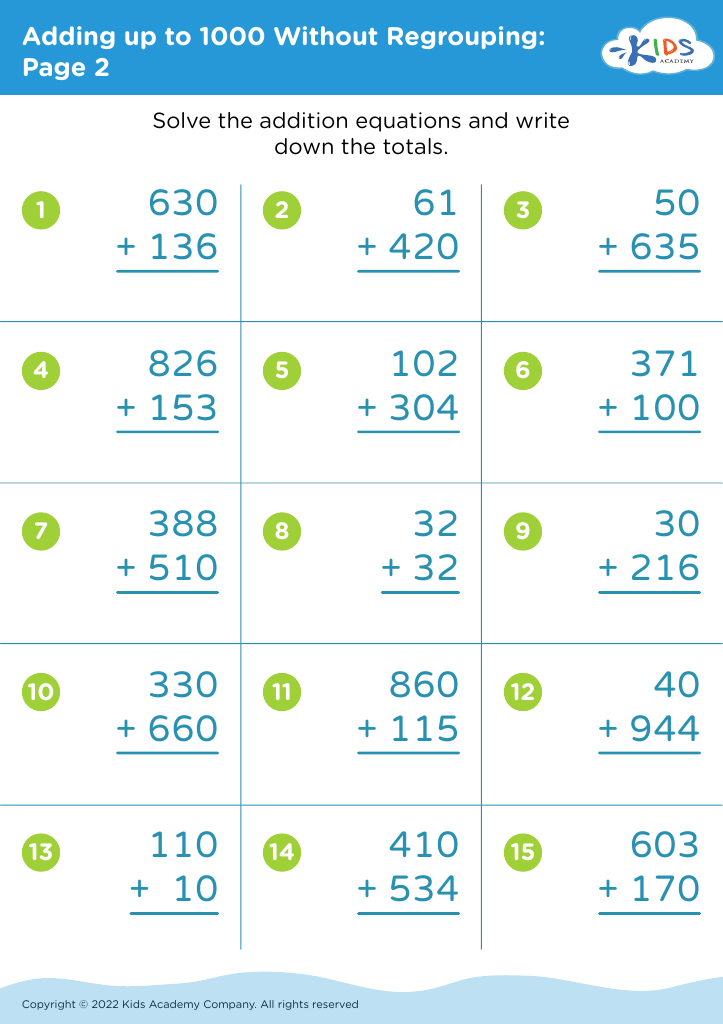
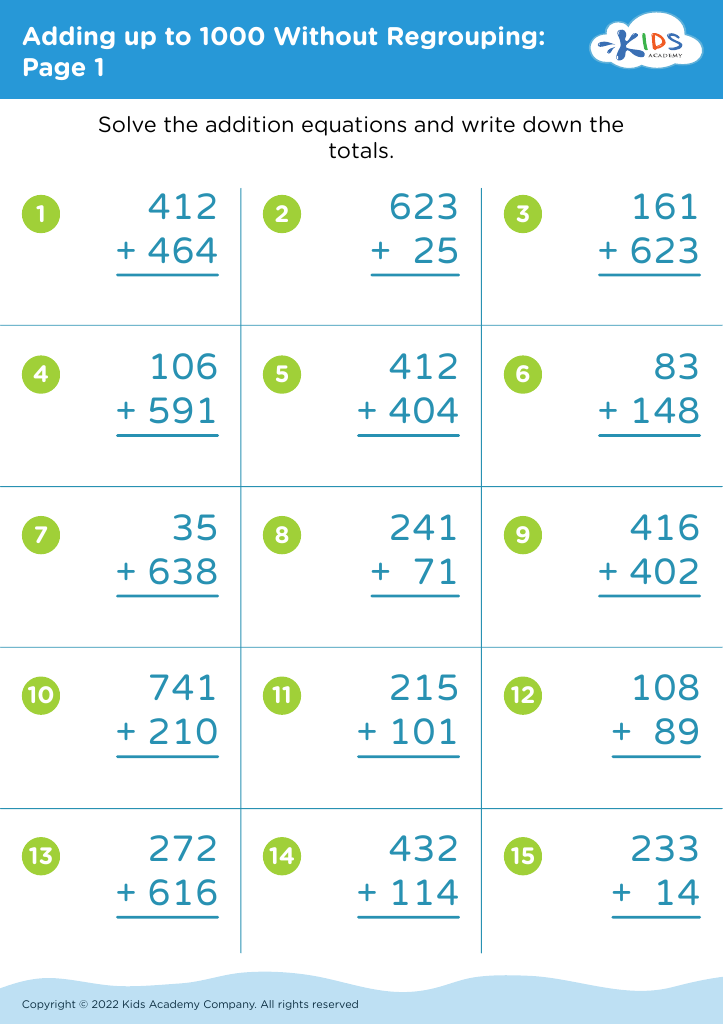
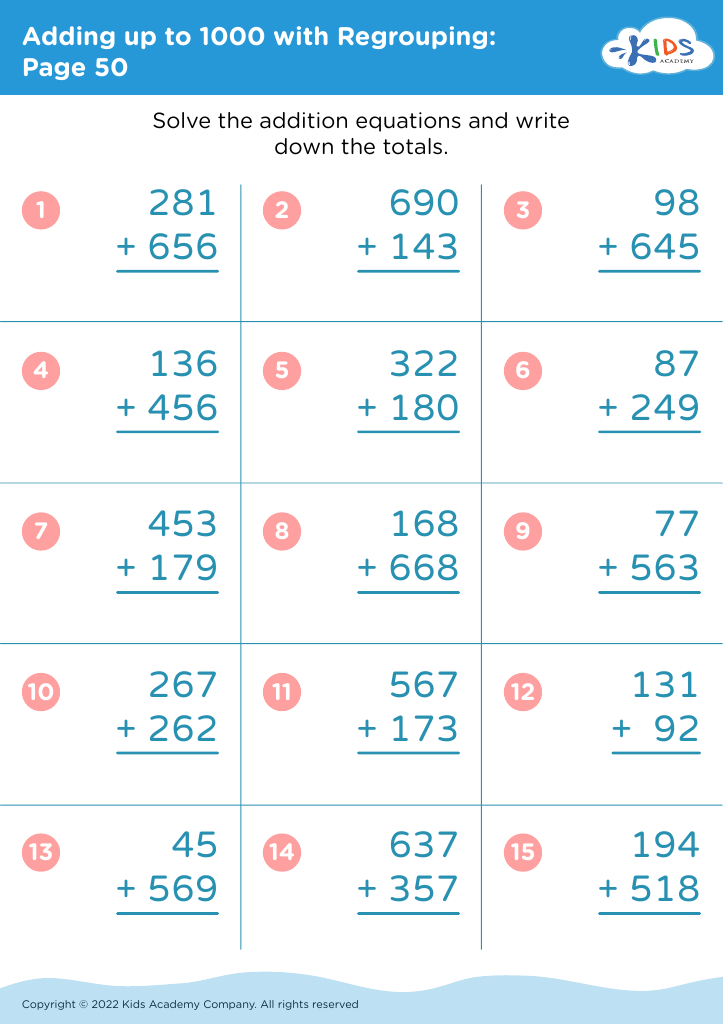
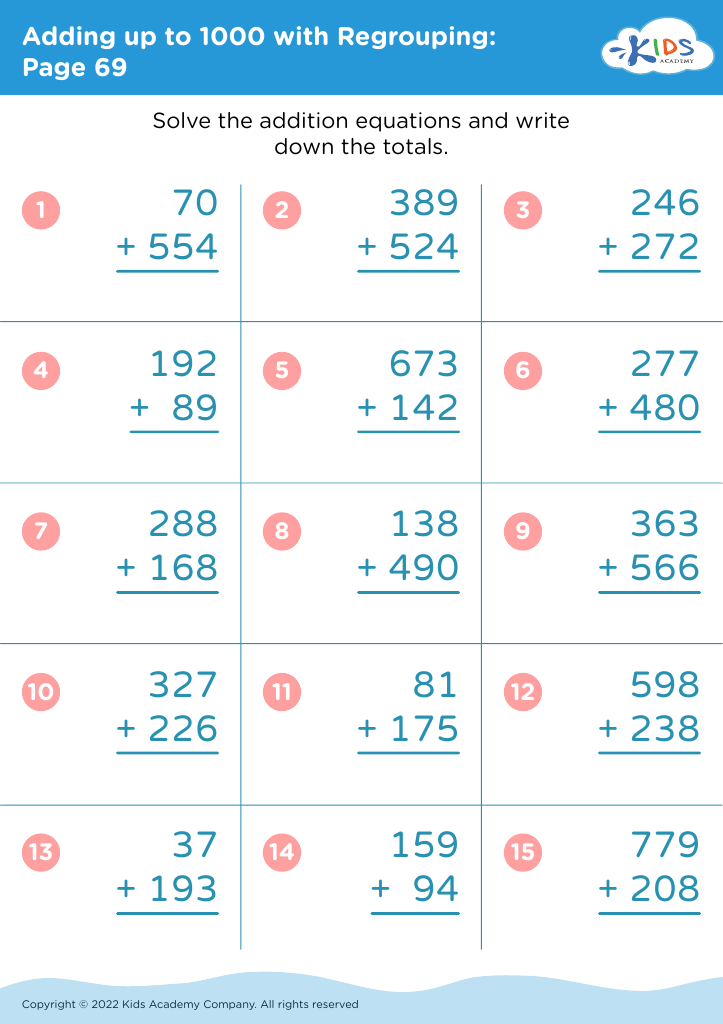
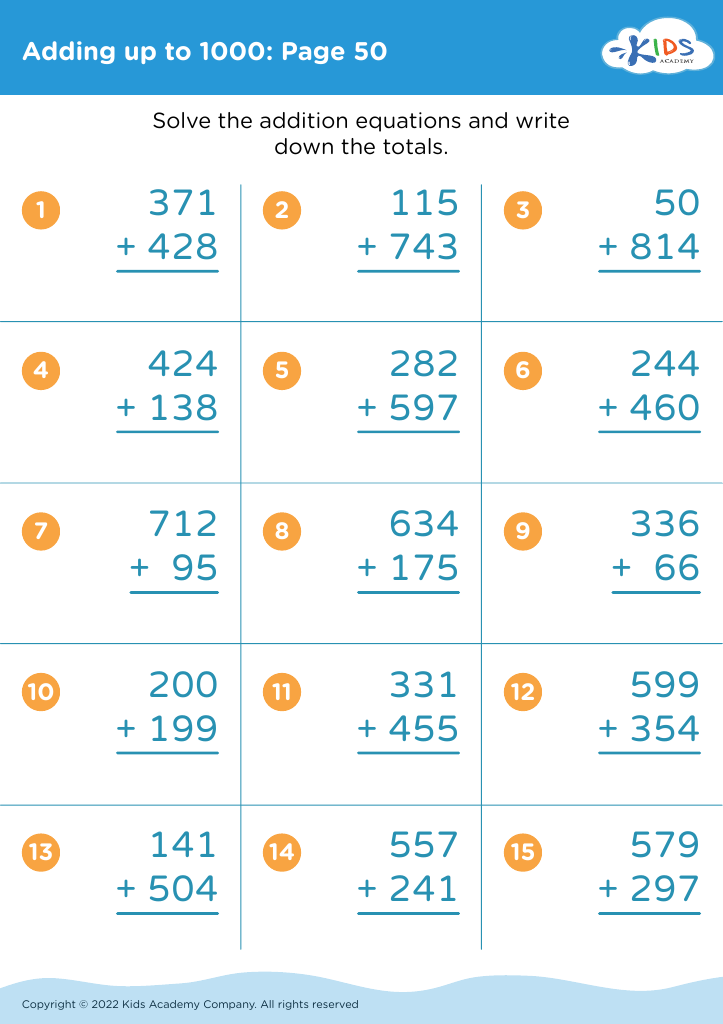
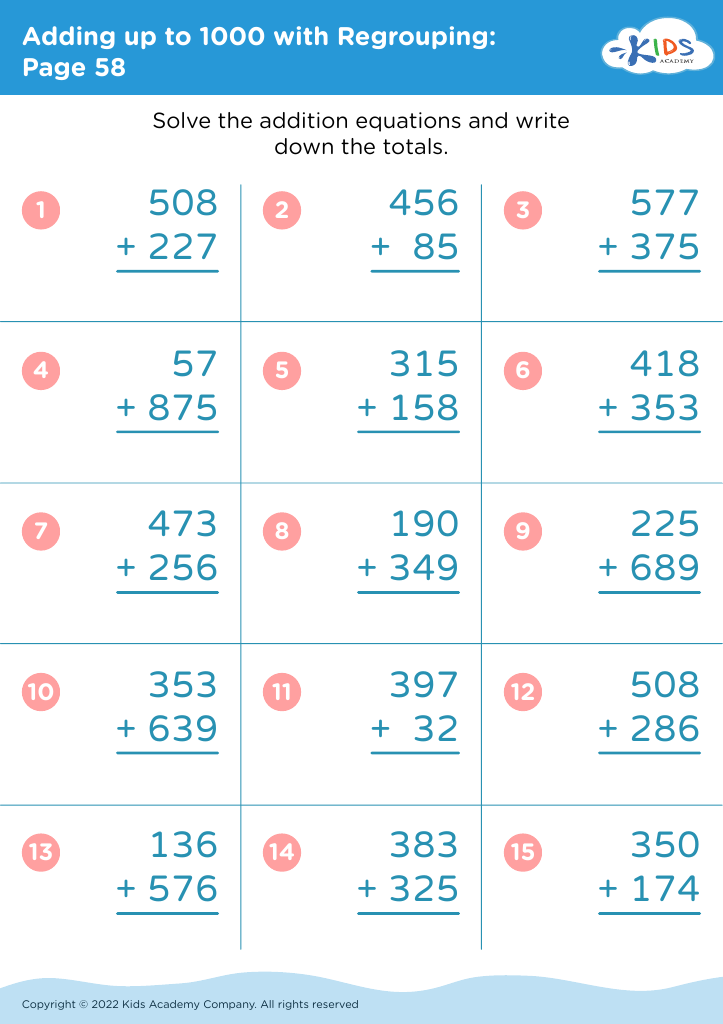
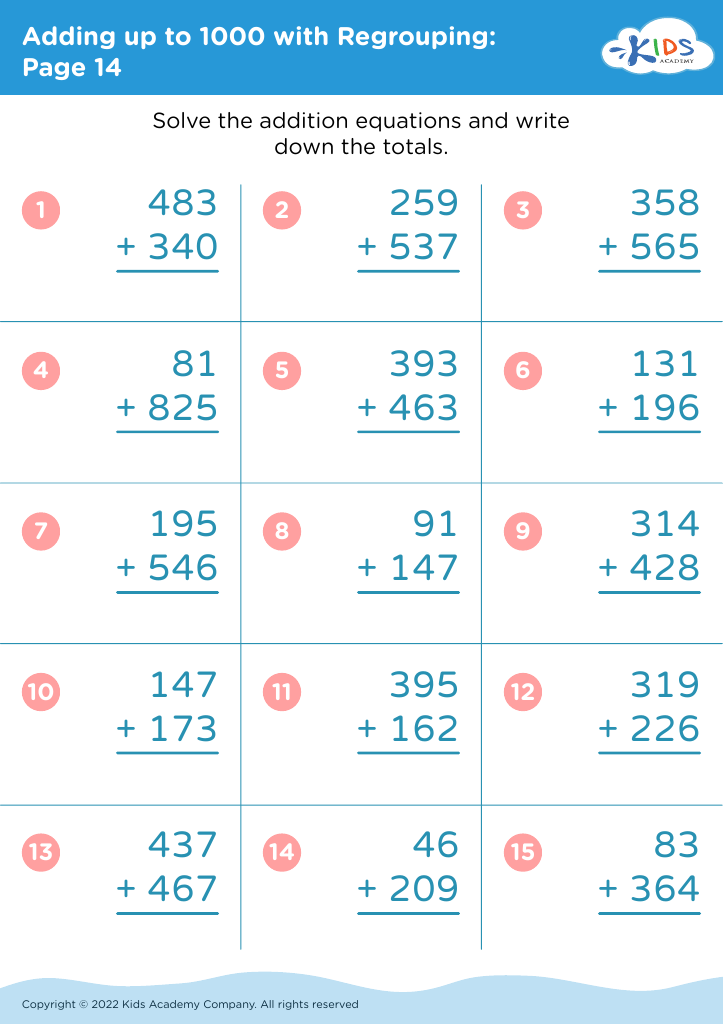
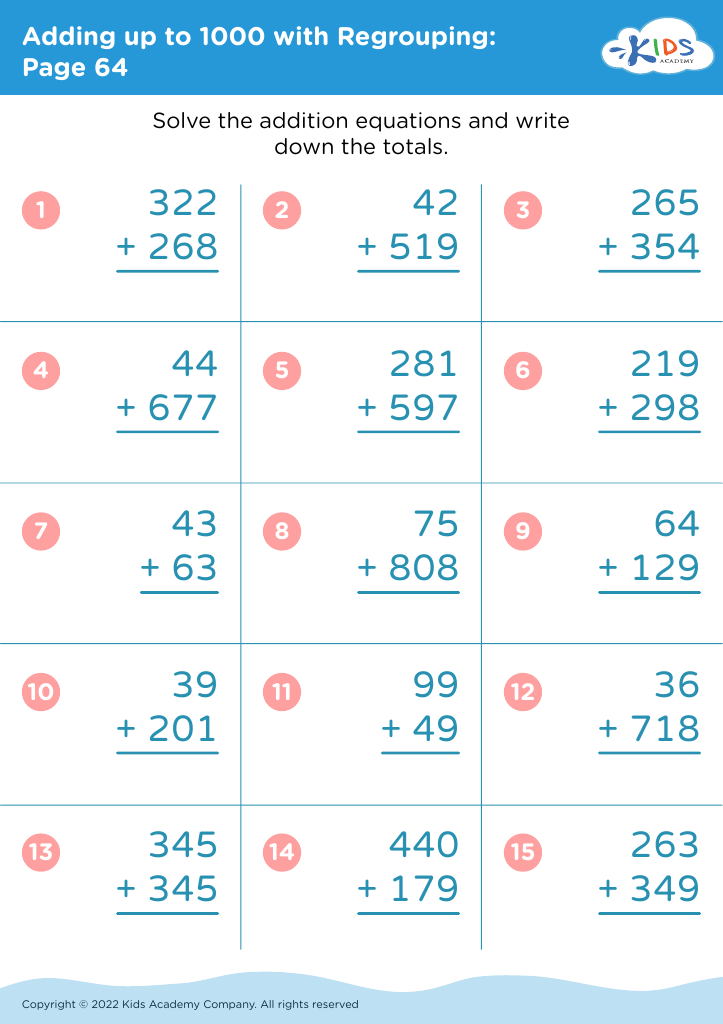
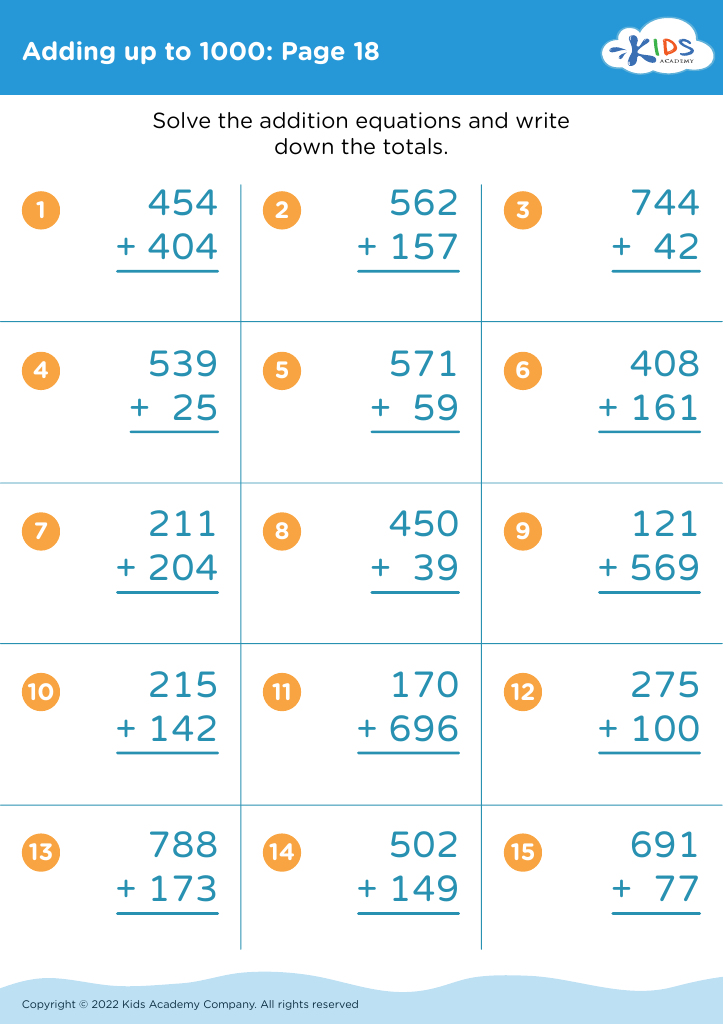
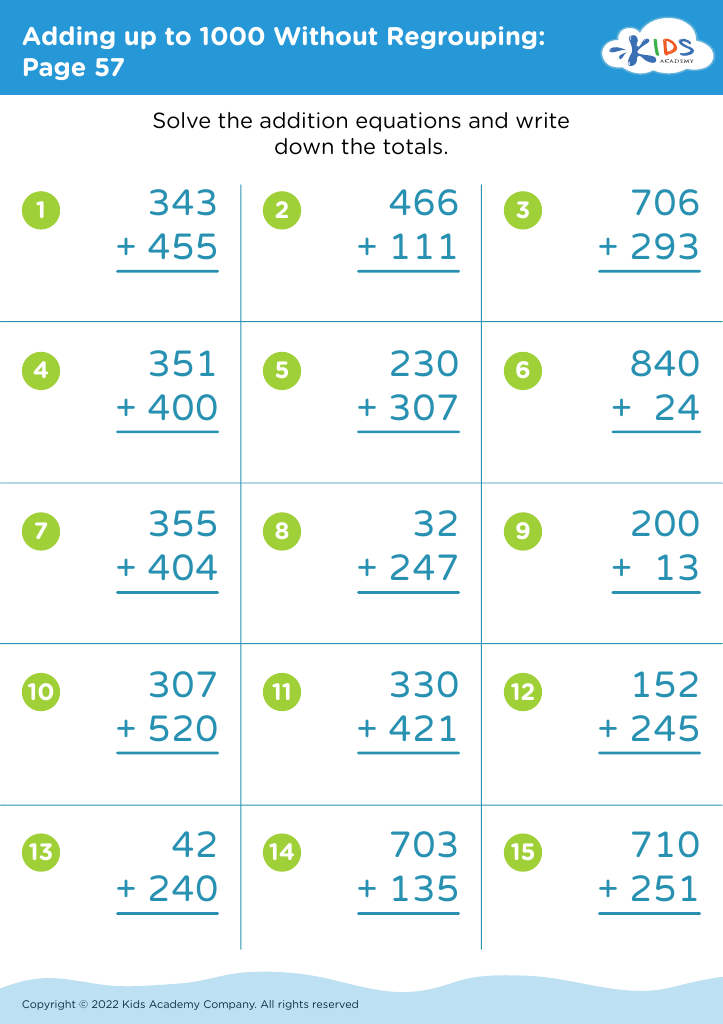
Discover our Shape Recognition Adding up to 1000 Worksheets designed for ages 5-8! These engaging printables combine essential math skills with shape identification, offering a fun and interactive learning experience for young minds. Children will strengthen their understanding of numbers and shapes by solving problems that challenge them to add up to 1000. Perfect for developing critical thinking, enhancing math proficiency, and boosting shape recognition abilities, these worksheets are an excellent resource for parents and teachers alike. Download our Shape Recognition Adding up to 1000 Worksheets today and watch your child's confidence and skills grow!



Parents and teachers should prioritize shape recognition and addition skills for children aged 5-8 because these foundational math skills contribute significantly to cognitive development and future academic success. Shape recognition is integral to spatial awareness, which helps children understand and interpret the world around them. Early interaction with shapes — recognizing circles, squares, and triangles — enhances a child’s ability to solve problems, think critically, and comprehend more complex geometrical concepts later on.
Adding up to 1000 may seem advanced for young minds, but it's a gradual progression from simpler addition and reinforces important mathematical concepts such as place value, numerical relationships, and sequencing. Confidence in adding within this range strengthens a child’s arithmetic competence, preparing them for more advanced math operations.
By combining shape recognition with fundamental arithmetic enhancement, we cater to the holistic development of early learners. Parents and teachers who emphasize these skills unlock children's potential, fostering self-esteem and resilience towards challenging tasks. A strong foundation in these areas supports overall academic achievement and encourages lifelong curiosity and love for learning in mathematics and beyond. Investing in these core skills early benefits not only mathematical abilities but also reading comprehension, scientific understanding, and logical reasoning skills.








