Subtraction skills Adding up to 1000 Worksheets for Ages 5-8
4 filtered results
-
From - To
Unlock your child's math potential with our engaging "Subtraction Skills Adding up to 1000 Worksheets" designed for ages 5-8. These worksheets provide a fun and interactive way for young learners to grasp subtraction concepts as they practice with numbers up to 1000. Carefully crafted to enhance problem-solving skills, our resources incorporate colorful illustrations and relatable examples, making learning enjoyable. Perfect for both classroom and home use, these subtraction worksheets foster independent learning and build confidence. Help your child master essential math skills with our grade-appropriate exercises, paving the way for future success in their mathematical journey. Printable and easy to use!
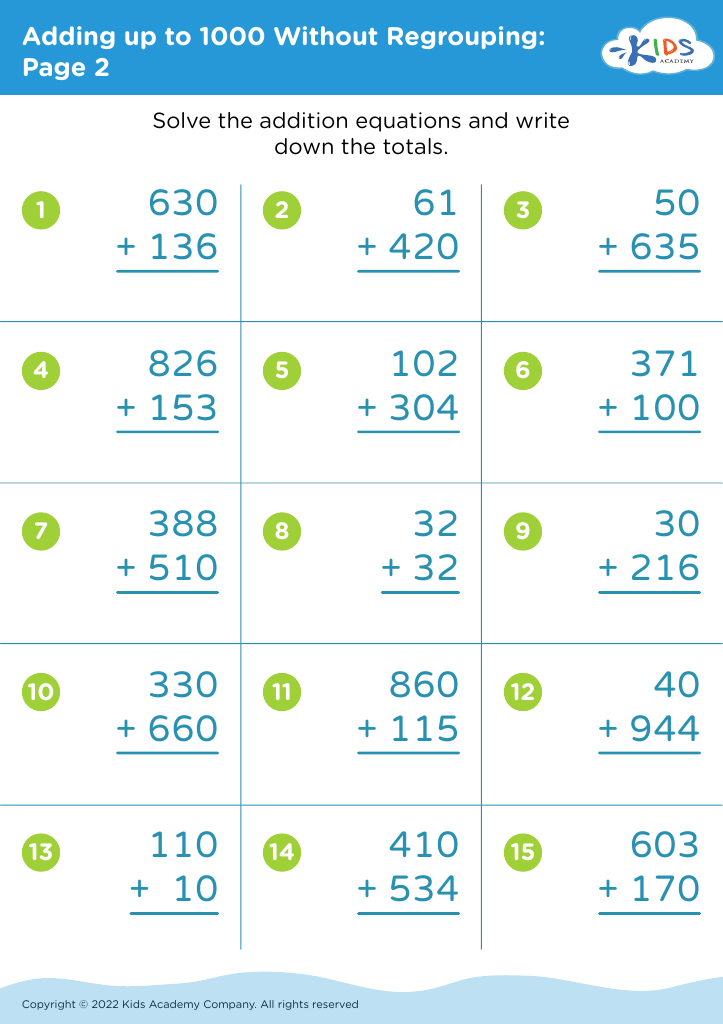
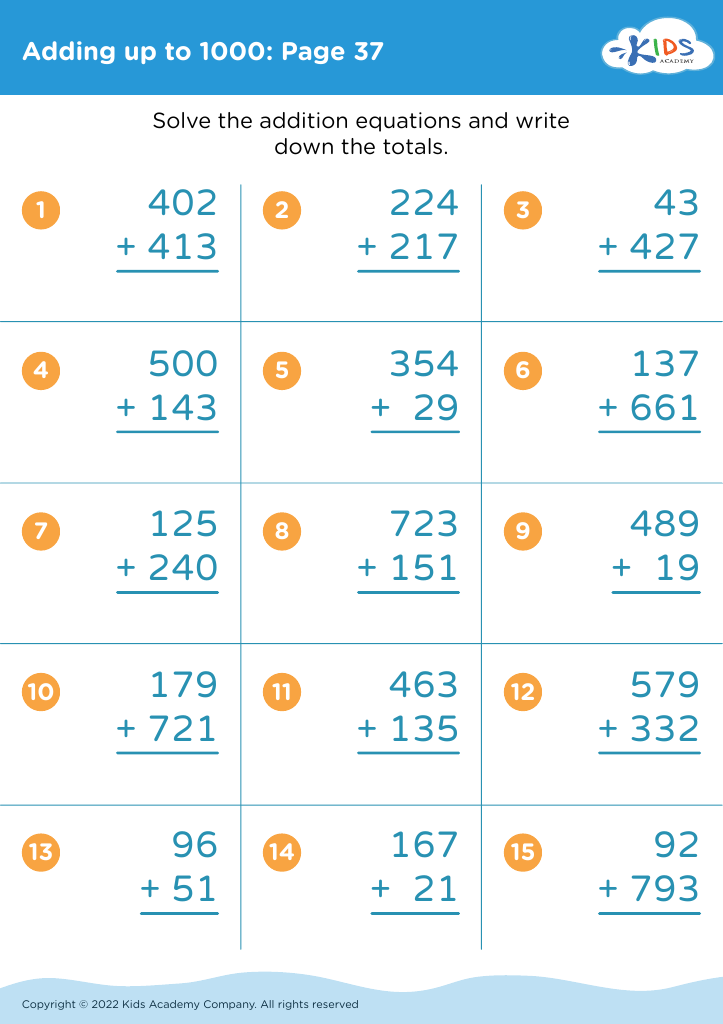
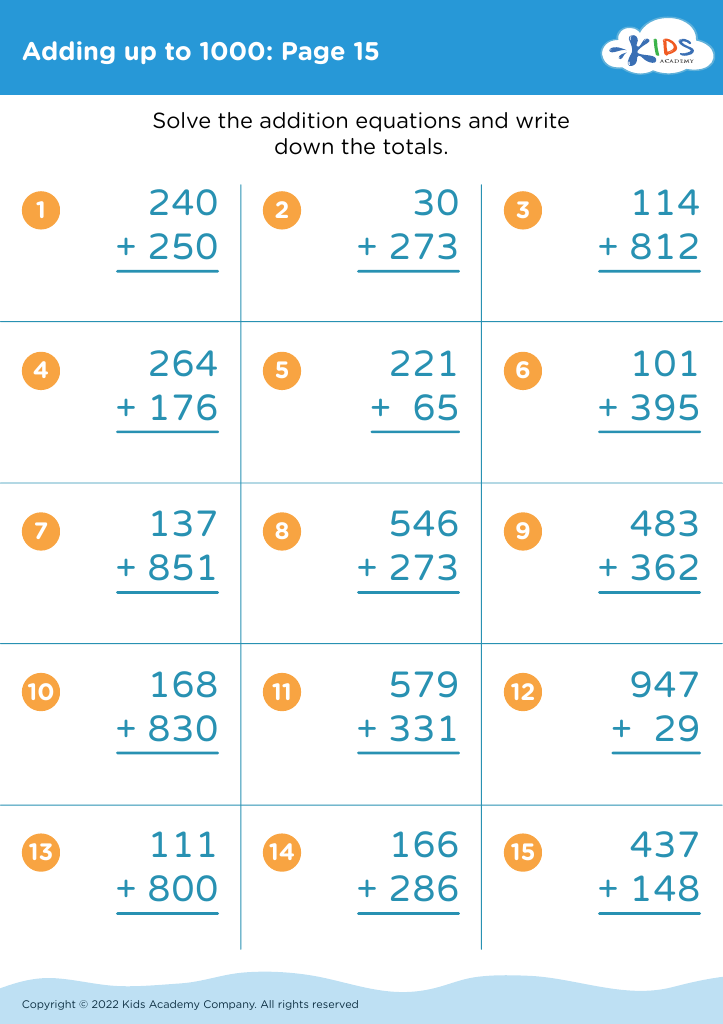
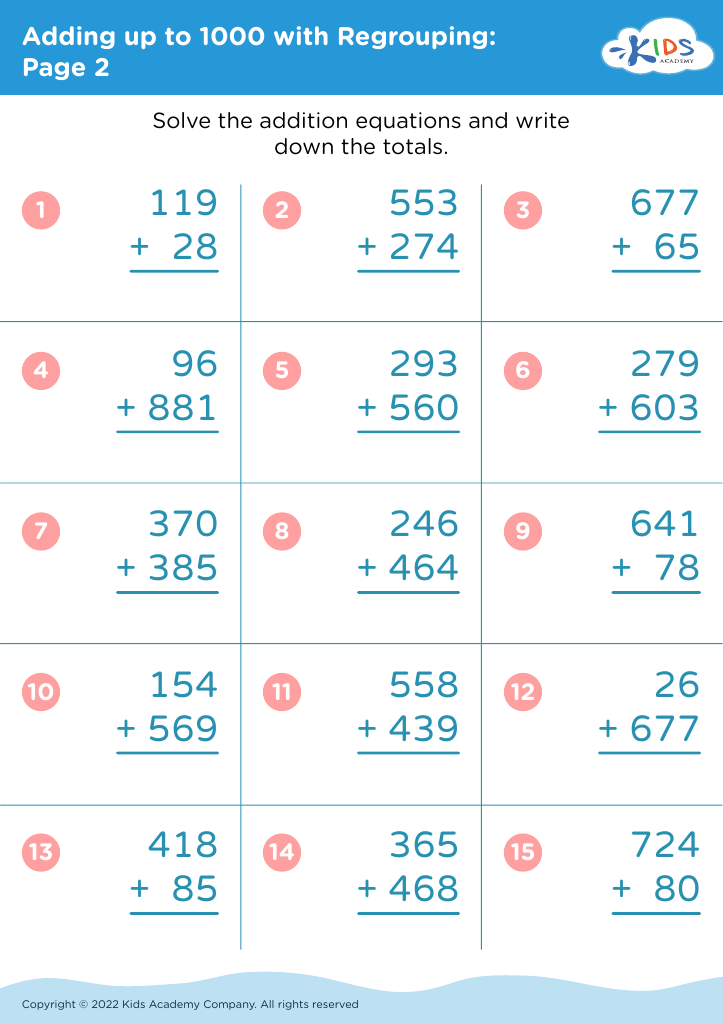



Subtraction skills adding up to 1000 are crucial for children aged 5-8 as they serve as the foundation for their mathematical understanding. Mastering subtraction enhances problem-solving abilities, critical thinking, and cognitive development. As children learn to subtract numbers up to 1000, they grasp the concept of "part-whole" relationships, which is essential for understanding more complex math operations in the future.
Furthermore, proficiency in subtraction builds confidence in students and encourages a positive attitude towards math. When children can effectively perform subtraction, they gain the ability to tackle real-world problems, such as managing money, measuring, and time, preparing them for practical situations throughout their lives.
Parents and teachers should also prioritize these skills since early proficiency often correlates with future academic success. Students strong in math in elementary school are more likely to excel in higher grades and further education. By focusing on subtraction skills now, caregivers can lay the groundwork for a lifelong appreciation of mathematics. Encouraging and supporting these skills can foster resilience, a strong work ethic, and a growth mindset in students, giving them valuable life skills that extend beyond the classroom.








