Understanding division Adding up to 1000 Worksheets for Ages 5-8
3 filtered results
-
From - To
Boost your child's math skills with our “Understanding Division: Adding up to 1000 Worksheets for Ages 5-8”! These worksheets are designed to introduce young learners to the fundamental concept of division, making it engaging and simple. As students navigate problems adding up to 1000, they'll build a strong foundation in mathematical principles, preparing them for more advanced concepts. Our worksheets use fun illustrations and real-world examples to keep kids interested and motivated. Perfect for both classroom use and at-home practice, these resources cater to different learning styles, ensuring every child can succeed in mastering basic division skills. Download now to ignite your child’s journey in math!
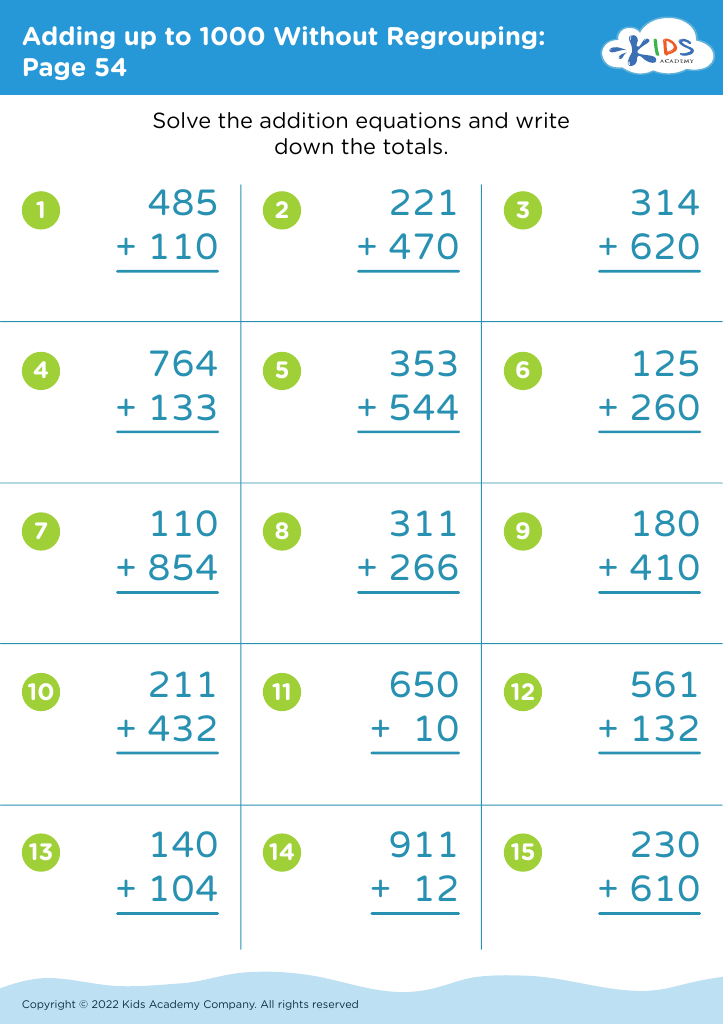
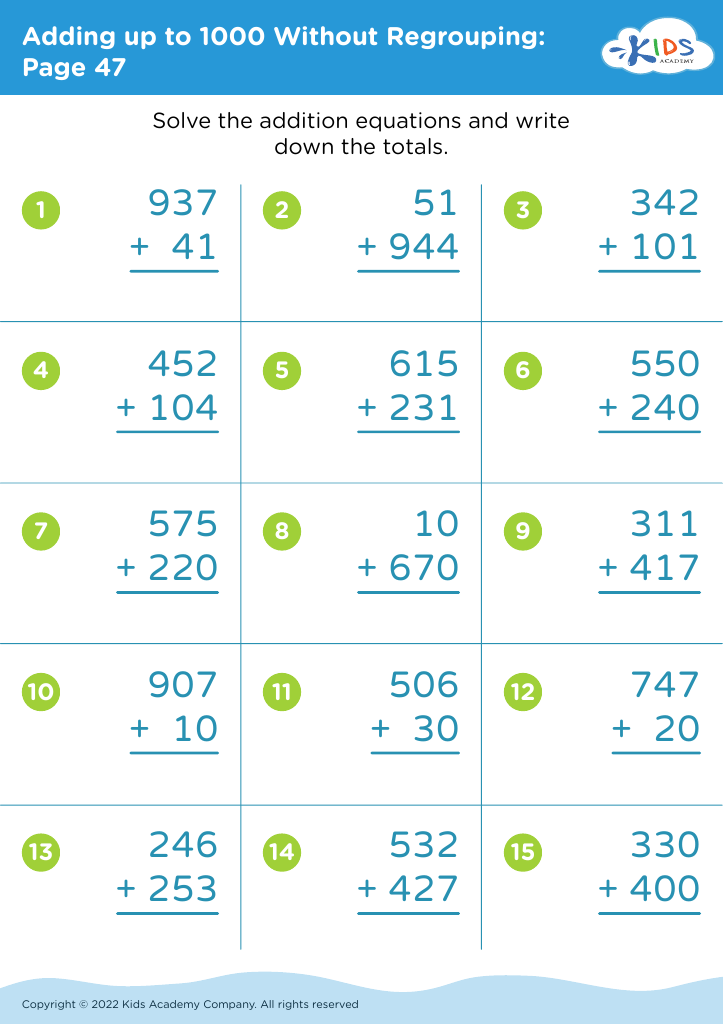
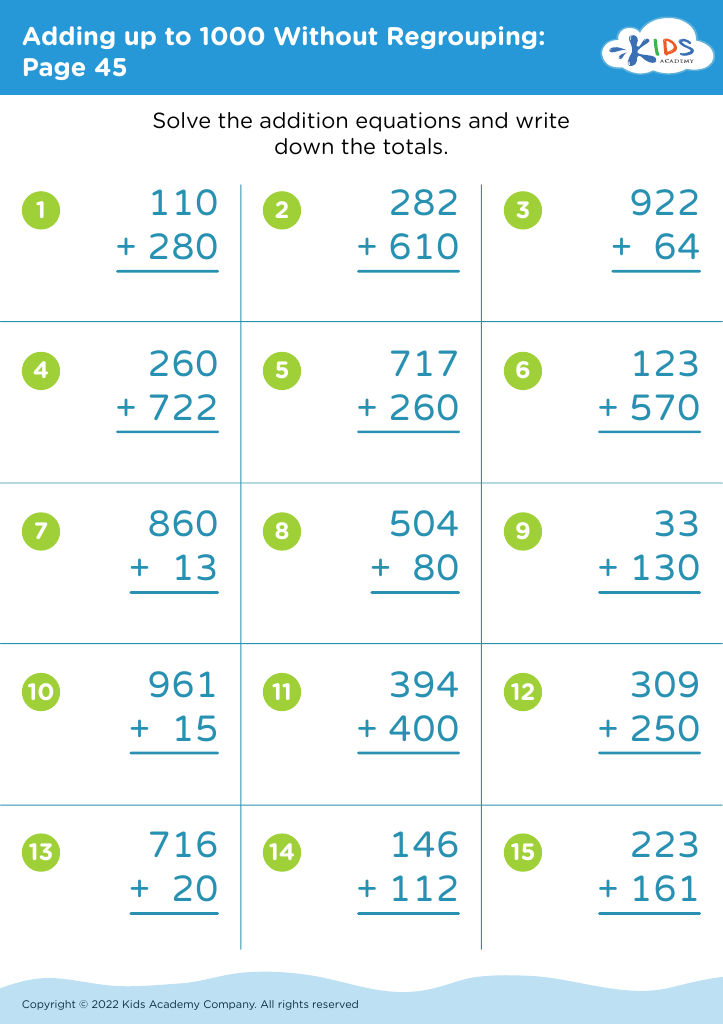



Understanding division and addition up to 1000 is crucial for young children and deserves attention from both parents and teachers. Early exposure to these mathematical concepts lays a foundational block for more complex math skills in the future. Division introduces children to the idea of fair sharing and grouping, which is a fundamental aspect of problem-solving in everyday life. Mastery at a young age cultivates logical thinking and cognitive development.
Similarly, being comfortable with addition up to 1000 enhances numerical fluency and confidence. It allows children to tackle real-world tasks like counting money, reading prices, and understanding larger quantities. At ages 5-8, children's brains are highly adaptable, making this an optimal period for integrating basic arithmetic skills through engaging and practical methods. By introducing these concepts early in development, children build a positive relationship with math, reducing anxiety and fostering a sense of accomplishment.
Moreover, these skills support academic success across subjects. Math is inherently tied to areas like science, engineering, and even literacy. When parents and teachers collaborate to encourage a strong mathematical foundation, children are better equipped to handle the evolving educational demands of the future. Thus, understanding division and addition up to 1000 is an investment in a child’s long-term academic and life success.








