Understanding sequencing Adding up to 1000 Worksheets for Ages 5-8
3 filtered results
-
From - To
Explore our engaging “Understanding Sequencing: Adding up to 1000” worksheets, specifically designed for children aged 5-8! These printable resources cultivate essential math skills through a fun, hands-on approach. Each worksheet focuses on sequencing numbers, fostering children's ability to recognize patterns and progressions in arithmetic. Ideal for classroom settings or home learning, these worksheets not only boost numerical fluency but also enhance critical thinking. Tailored for young learners, they offer a visually appealing layout for easy comprehension. Help your child develop a strong foundation in math that will benefit them in future studies. Download now and make learning enjoyable!
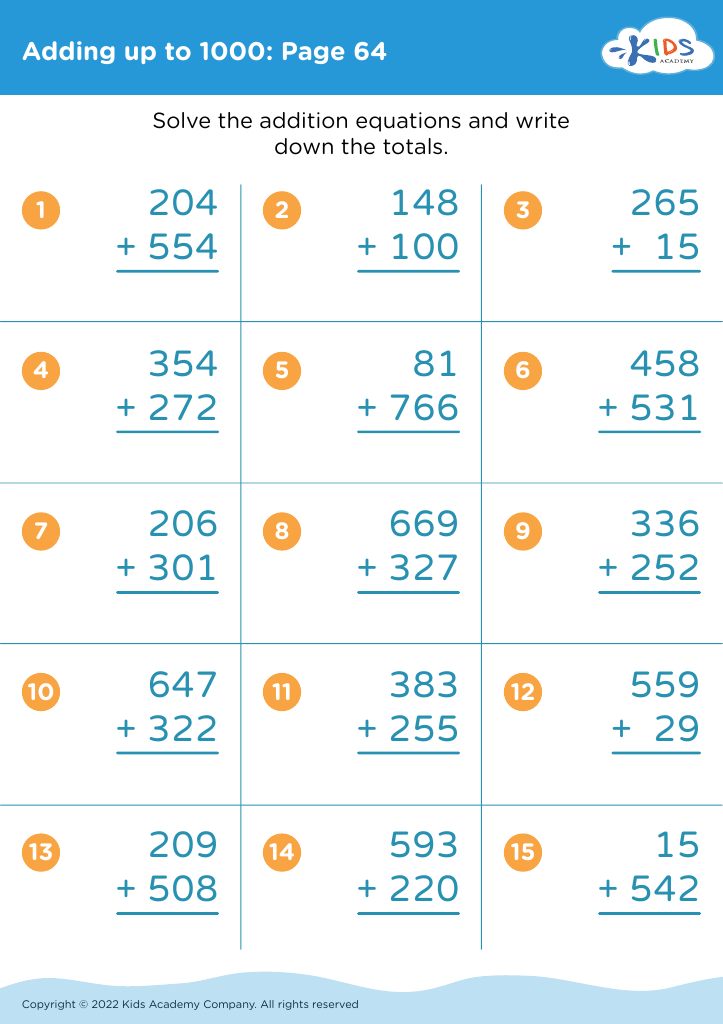
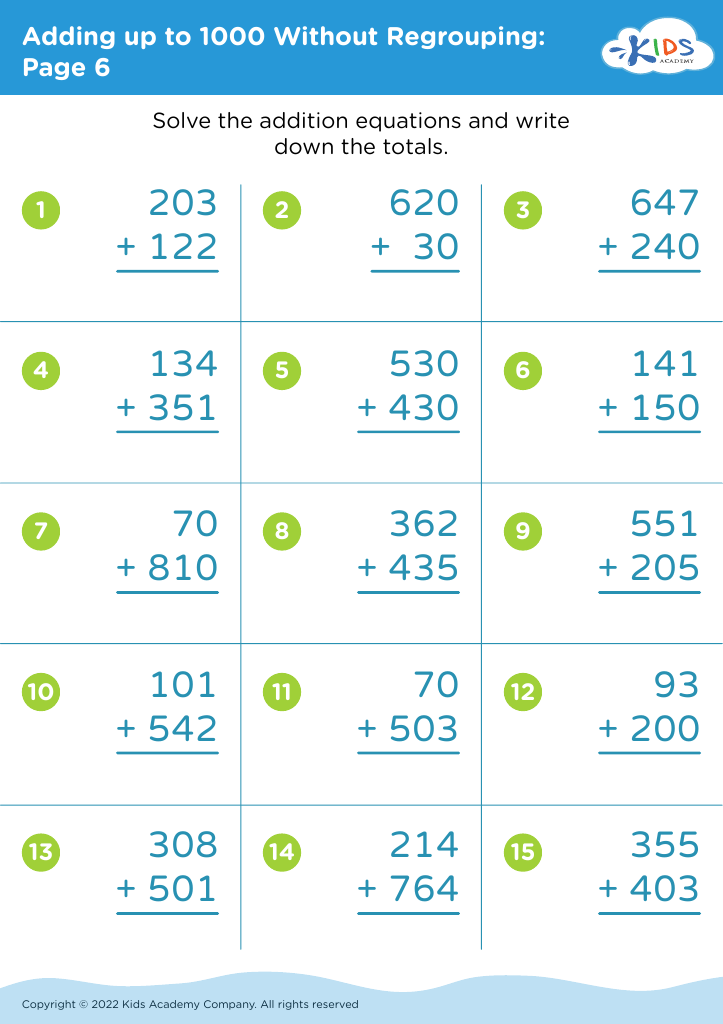
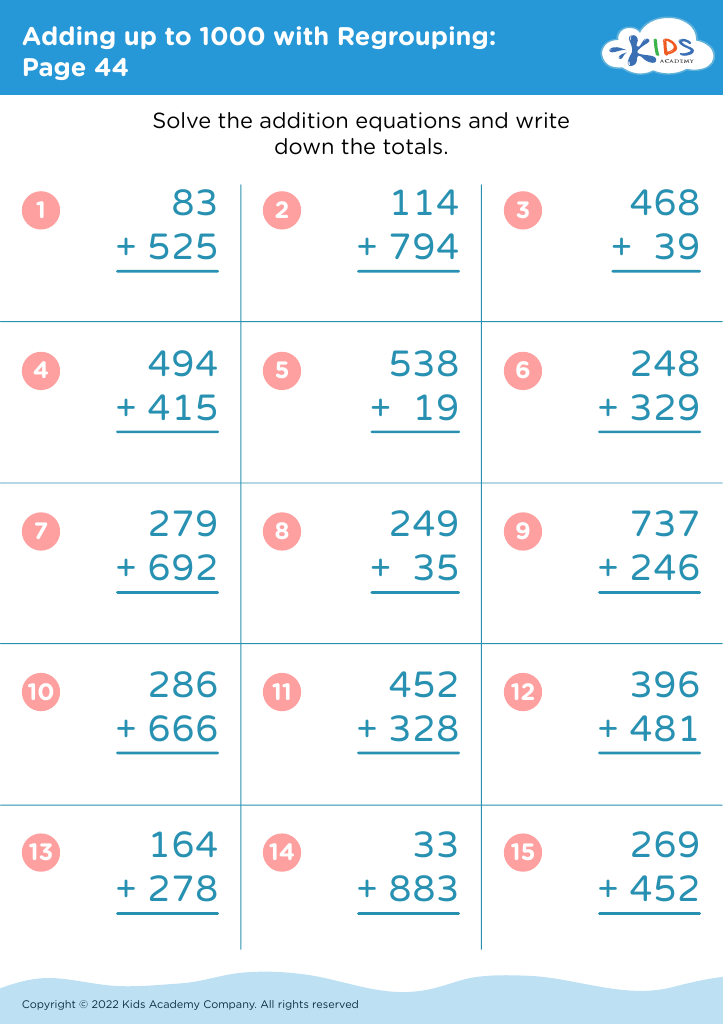



Understanding sequencing and the concept of adding up to 1000 is crucial for children ages 5-8, as it lays the foundation for their mathematical development and critical thinking skills. Sequencing helps children grasp the order of numbers and concepts, which is essential for problem-solving and logical reasoning. For instance, when children learn to sequence numbers, they become more adept at understanding larger numerical relationships and patterns, which are vital for mastering addition and subtraction.
Adding up to 1000, in particular, encourages mental math strategies and helps children become more comfortable with larger numbers. This competency fosters confidence in their abilities, making math feel less intimidating and more accessible. Furthermore, mastering these skills enhances their preparedness for future mathematical concepts, such as place value, multiplication, and division.
For parents and teachers, focusing on these skills provides practical benefits: children who are confident in their mathematical abilities are more engaged in learning, allowing for a smoother educational journey. Encouraging mastery of sequencing and addition up to 1000 ultimately equips students with essential life skills, reinforcing the idea that math is not just an academic exercise, but an integral part of everyday life.








