Understanding symmetry Adding up to 1000 Worksheets for Ages 5-8
4 filtered results
-
From - To
Welcome to our "Understanding Symmetry Adding Up to 1000 Worksheets" designed for ages 5-8! These engaging worksheets help young learners explore the concept of symmetry while practicing addition skills. Children will enjoy colorful illustrations and hands-on activities that promote critical thinking and enhance their mathematical understanding. By identifying symmetrical shapes and solving addition problems that total up to 1000, students develop both their visual and analytical skills. Perfect for home or classroom use, these worksheets cultivate curiosity and encourage children to see the beauty in symmetry while building confidence in math. Download now and embark on this fun educational journey!
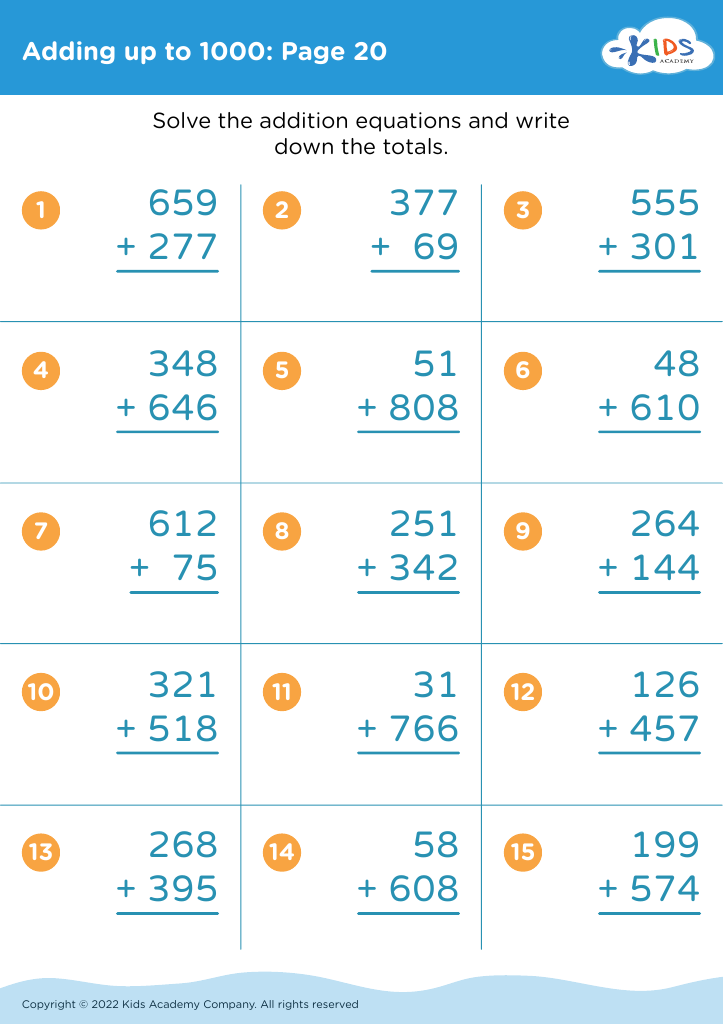
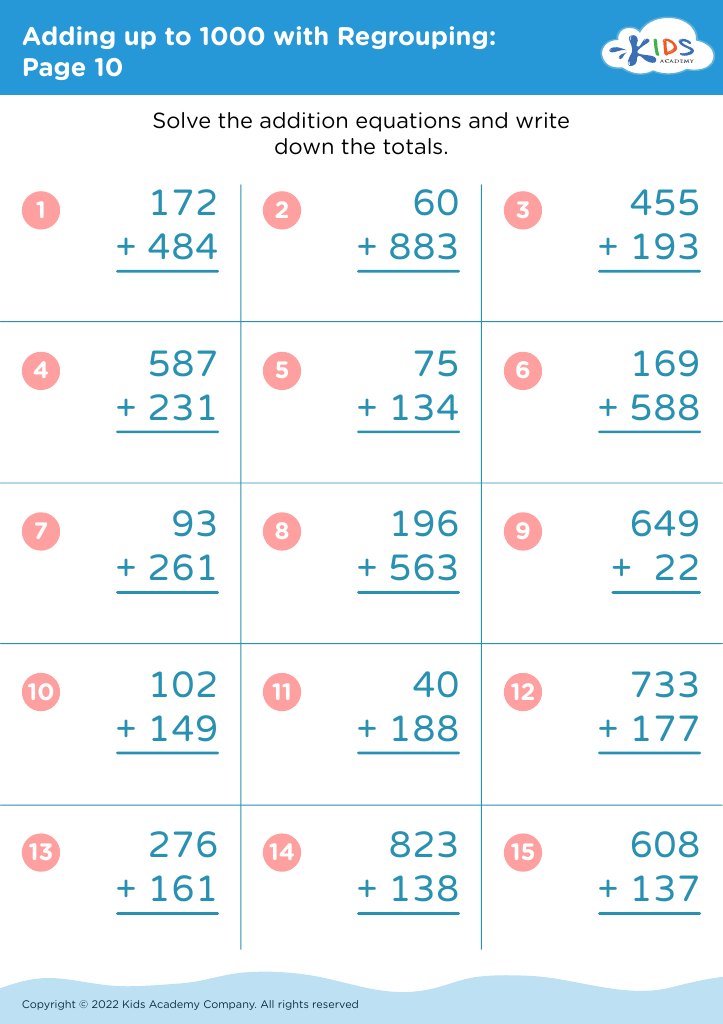
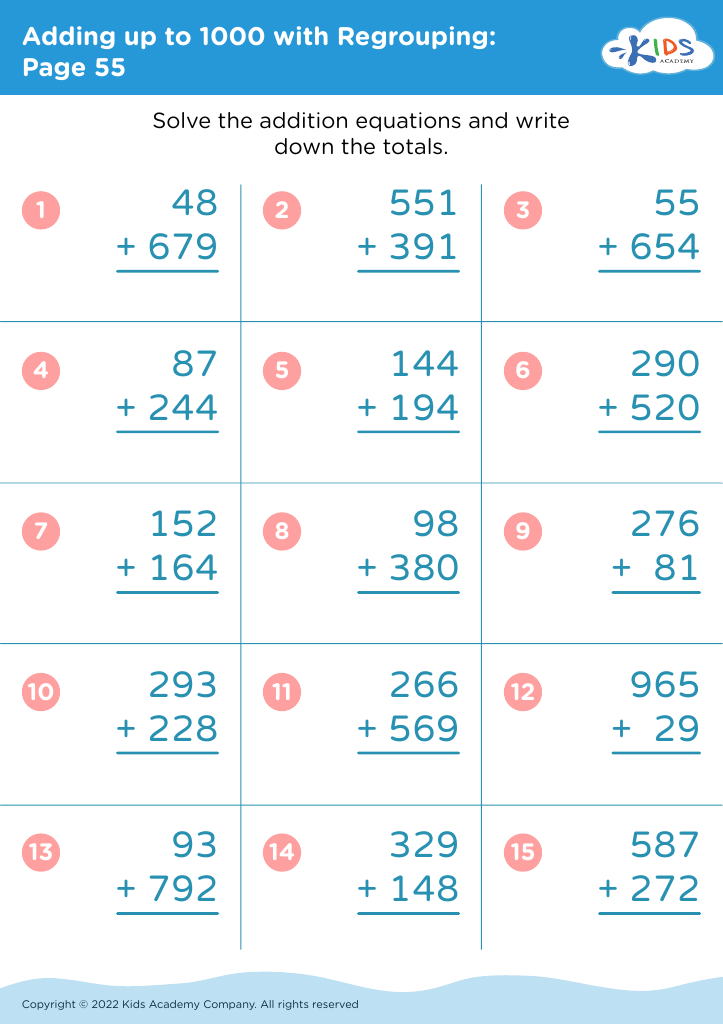
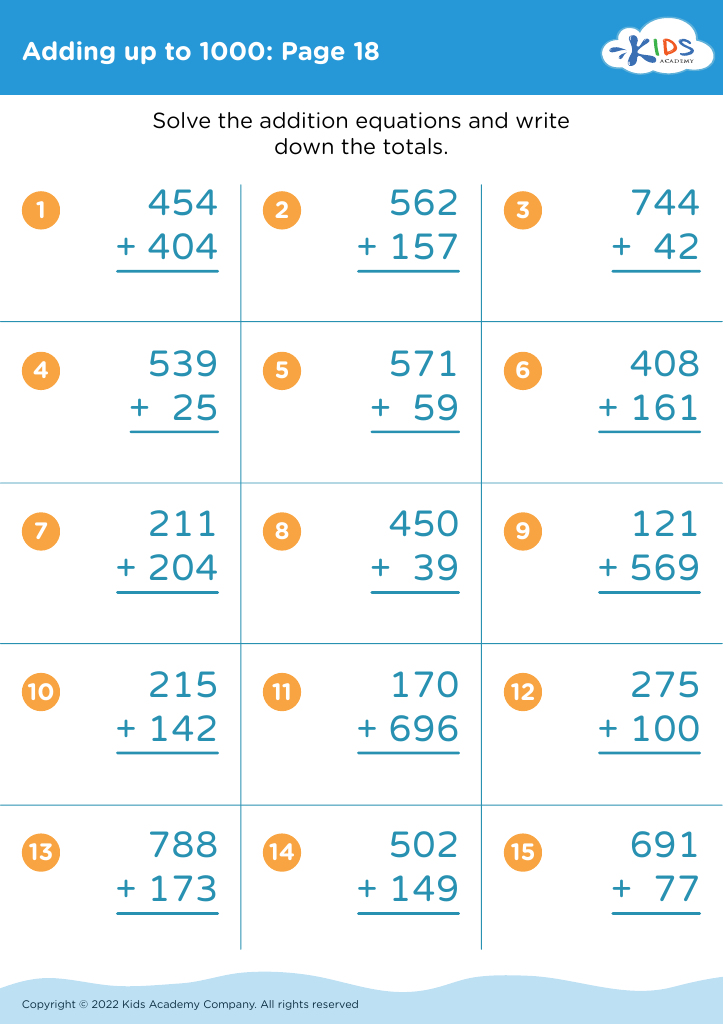



Understanding symmetry and the concept of adding up to 1000 is crucial for children aged 5-8. Symmetry helps children recognize patterns and balance, aiding in foundational geometry skills. By grasping symmetry, kids develop spatial awareness and enhance their problem-solving abilities, as they learn to visualize and manipulate shapes, which is essential in both math and art.
Meanwhile, grasping the concept of adding up to 1000 fosters a strong number sense. This foundational skill enables children to understand larger numbers, perform addition and subtraction with ease, and lays the groundwork for more advanced arithmetic operations. By exposing children to addition up to 1000, teachers and parents promote critical thinking, as students learn to break down large numbers and assess numerical relationships.
Moreover, integrating these concepts helps create engaging, interactive activities that can strengthen both math skills and overall cognitive development. Parents and teachers who emphasize symmetry and addition also encourage children to relate mathematics to real-life situations, ultimately nurturing a positive attitude toward math. All of these skills will serve students not just in elementary school but throughout their academic journeys, fostering a solid confidence in their mathematical ability. Understanding these foundational concepts is crucial for developing a well-rounded education.








