Understanding time Adding up to 1000 Worksheets for Ages 5-8
3 filtered results
-
From - To
Looking to enhance your child's understanding of time while practicing addition skills? Our "Understanding Time Adding up to 1000 Worksheets for Ages 5-8" are the perfect solution! Specially designed for young learners, these worksheets seamlessly blend clock-reading skills with math practice, fostering both temporal awareness and arithmetic proficiency. Brightly illustrated and engaging, each worksheet presents time-related problems to solve, helping kids grasp fundamental concepts in a fun, interactive way. Backed by educational experts, our resources support classroom learning and home practice alike. Elevate your child’s math and time-telling abilities today with our expertly crafted worksheets!
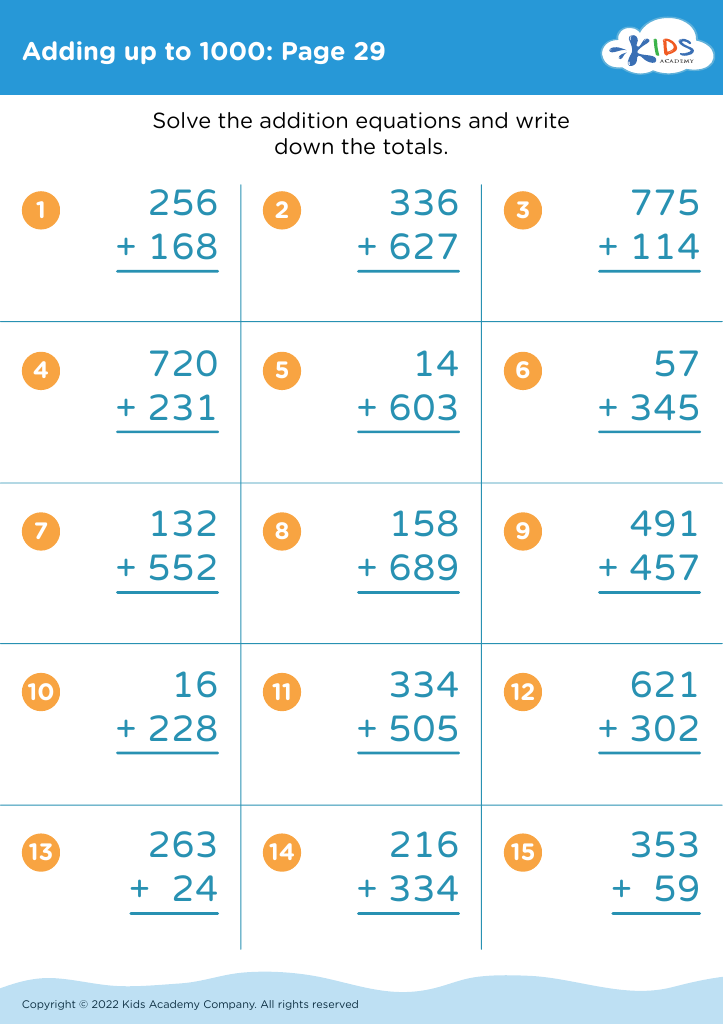
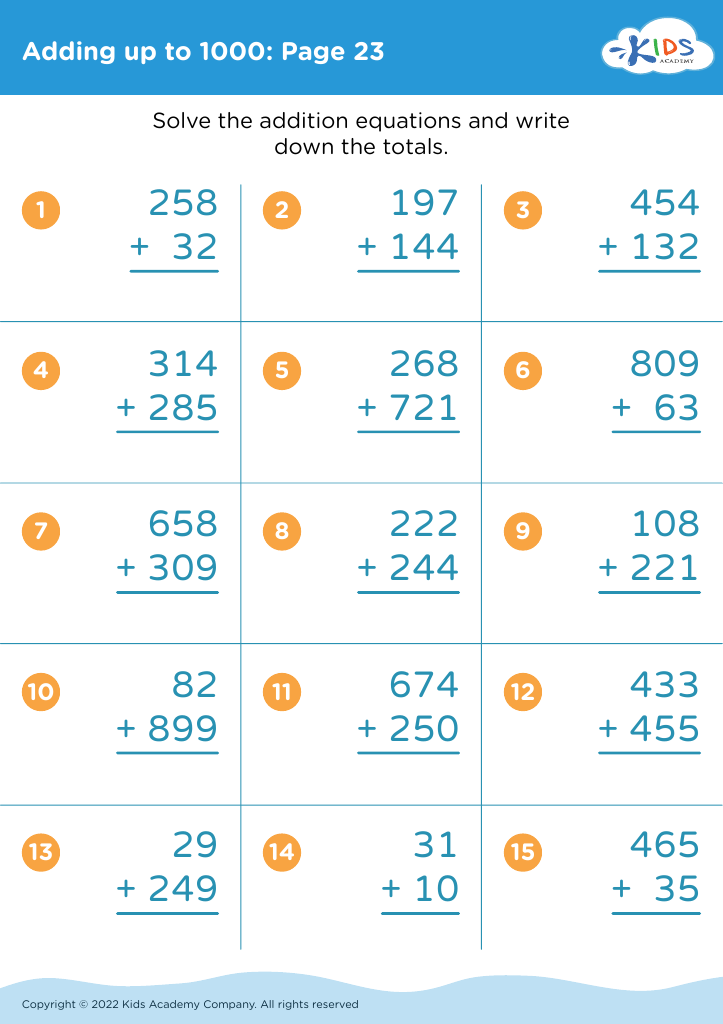
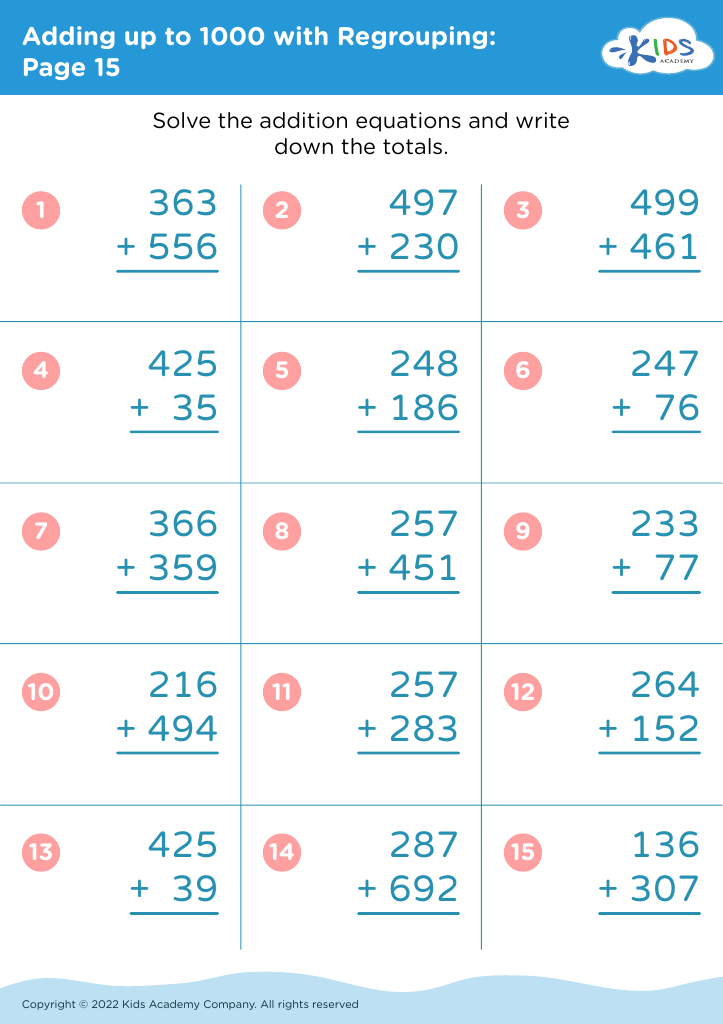



Understanding time and mastering addition up to 1000 are crucial skills for children aged 5-8 because these skills form the foundation for future academic success and daily life competency. Firstly, grasping the concept of time—hours, minutes, and seconds—helps children manage their activities, fostering a sense of responsibility and punctuality. It also aids their understanding of sequences and routines, which are important in both school and everyday life.
Secondly, being able to add numbers up to 1000 enhances a child's numerical literacy and math confidence. This proficiency is fundamental for advanced arithmetic operations like subtraction, multiplication, and division. Early mastery of these math skills improves problem-solving abilities and logical thinking, which are essential across various subjects. Moreover, performing these additions engages students in using mental math strategies, developing their cognitive skills and memory retention.
Both of these skills directly translate to real-world applications. Knowing how to tell time and compute larger sums enables children to better plan their day and understand concepts such as money management and scheduling. For parents and teachers, focusing on these areas ensures that children are well-prepared for more complex challenges in their educational journey and can navigate daily tasks with ease.








