Visual interpretation Adding up to 1000 Worksheets for Ages 5-8
3 filtered results
-
From - To
Explore our "Visual Interpretation Adding up to 1000 Worksheets" tailored for children ages 5-8! These engaging activities seamlessly integrate visual aids, making complex math concepts accessible and fun. Designed to develop critical math skills through vibrant illustrations and clear instructions, our worksheets reinforce addition practice up to 1000. Perfect for young learners, these resources enhance number sense, problem-solving abilities, and confidence in math. Ideal for classroom or home use, our worksheets provide a solid foundation for future math success. Bring math to life with our expertly crafted visual interpretation exercises! Download now for endless learning adventures!
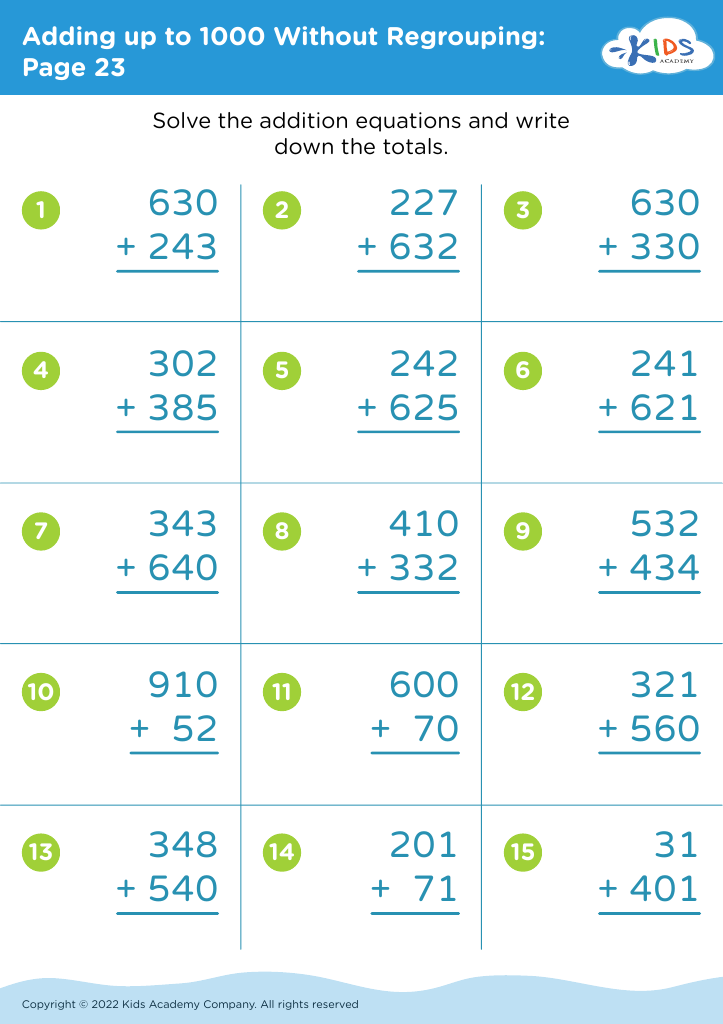
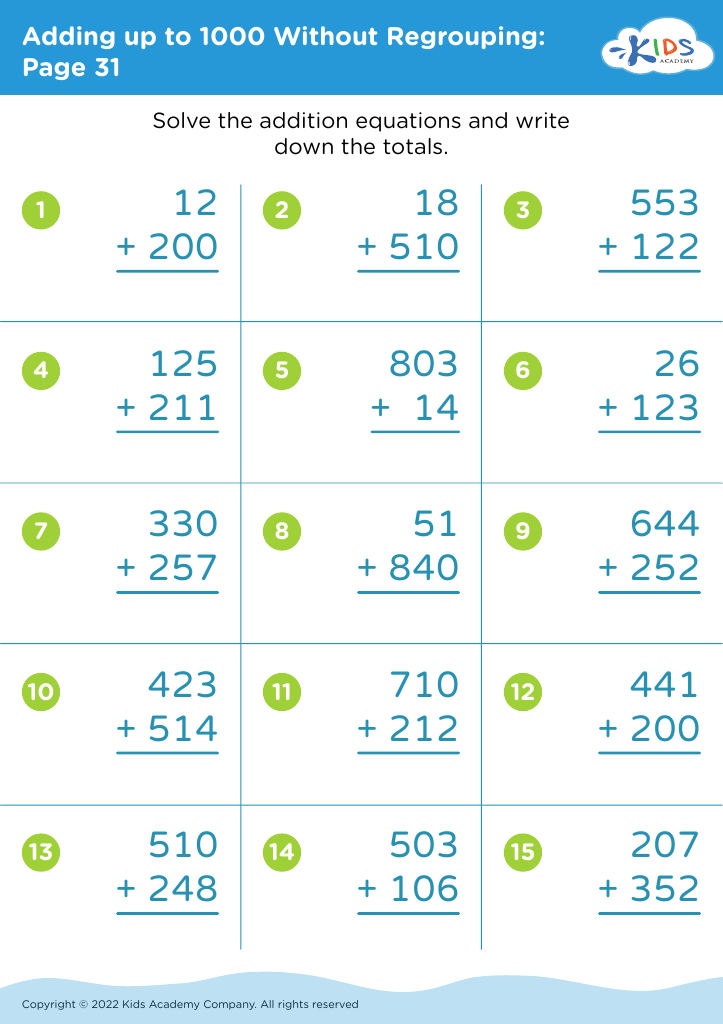
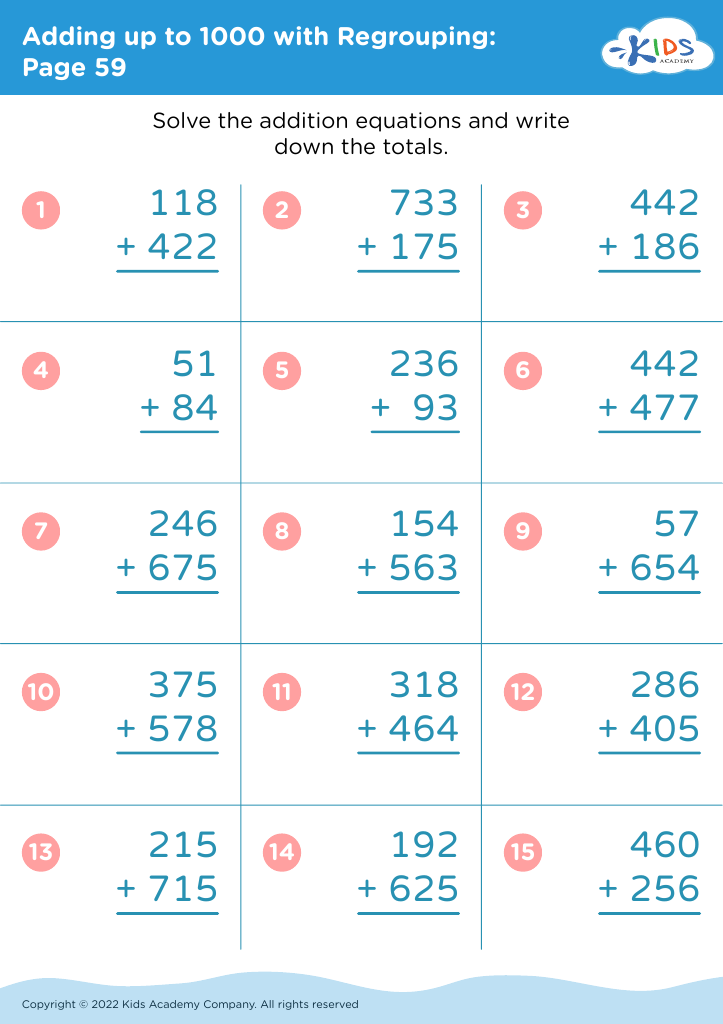



Visual interpretation of mathematical concepts like adding up to 1,000 is crucial for children aged 5-8 because it solidifies their foundational understanding of numbers and arithmetic. At this developmental stage, children are typically concrete learners who benefit from seeing abstract ideas represented in tangible forms. Visual aids such as number lines, charts, and blocks can help them grasp the concept of addition by turning it into a more interactive and engaging experience. These tools not only make it easier for children to comprehend large numbers but also help them understand the relationships between numbers, which is vital for developing higher-level math skills.
For parents and teachers, incorporating visual methods ensures that learning is accessible to all students, including those who might struggle with traditional rote learning approaches. It fosters an inclusive learning environment where concepts are demystified and made relatable. This approach not only enhances a child's mathematical ability but also builds confidence and promotes a positive attitude towards learning.
Furthermore, integrating visual interpretation into math instruction aligns with educational standards and practices that advocate for multi-sensory learning. By prioritizing visual methods for adding up to 1,000, parents and teachers equip children with the necessary tools to excel in math, laying a strong foundation for future academic success.








