Word Recognition Adding up to 1000 Worksheets for Ages 5-8
3 filtered results
-
From - To
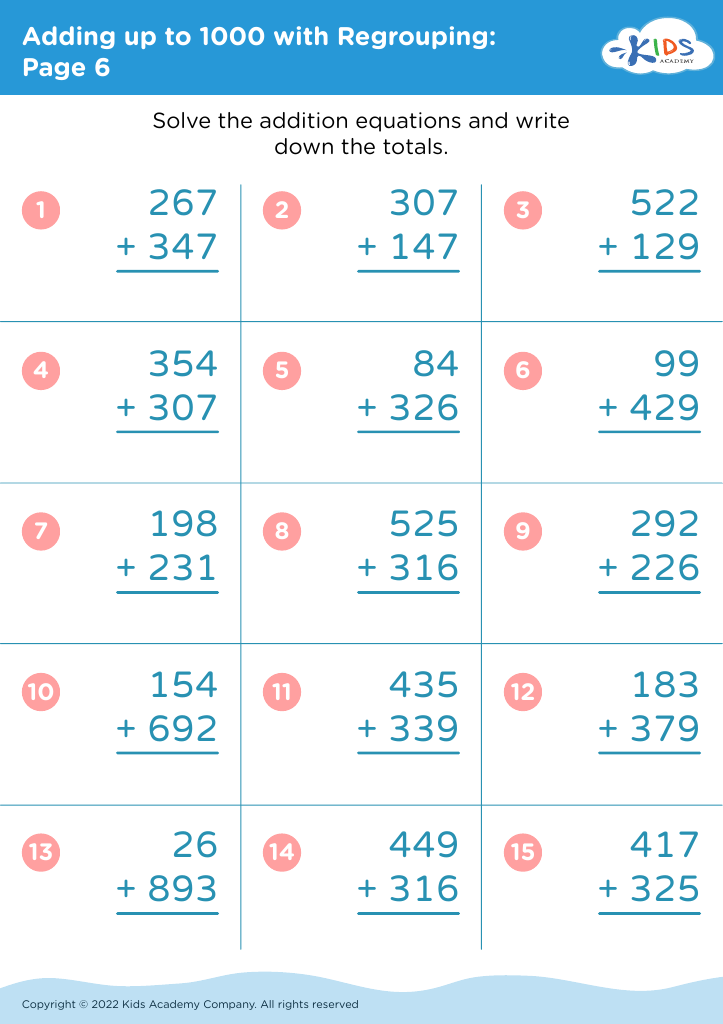
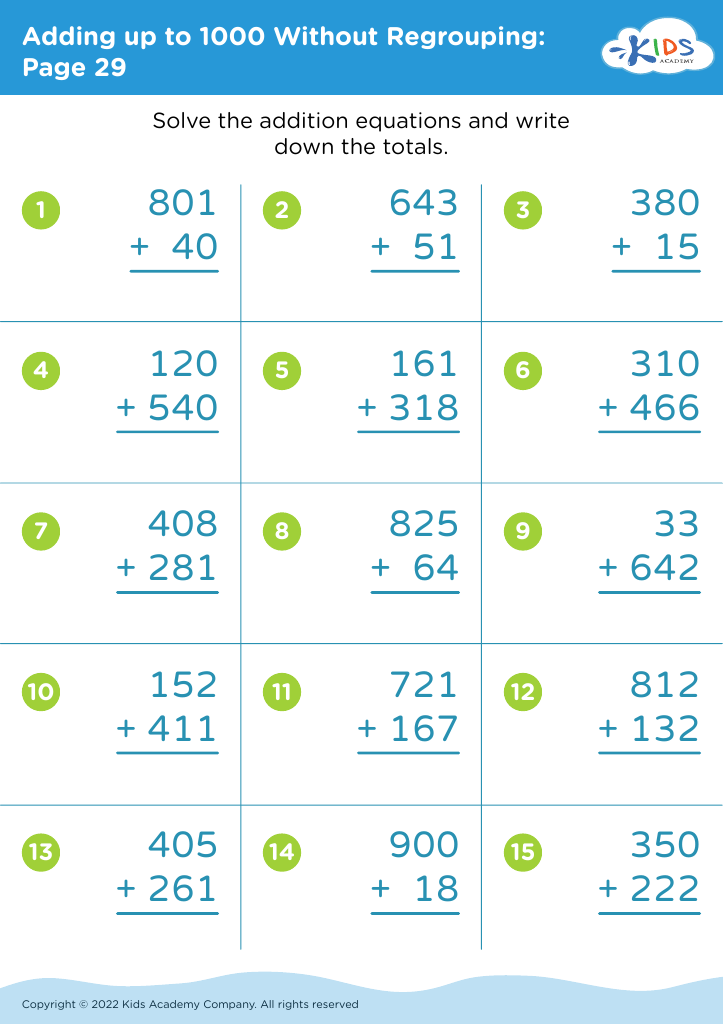
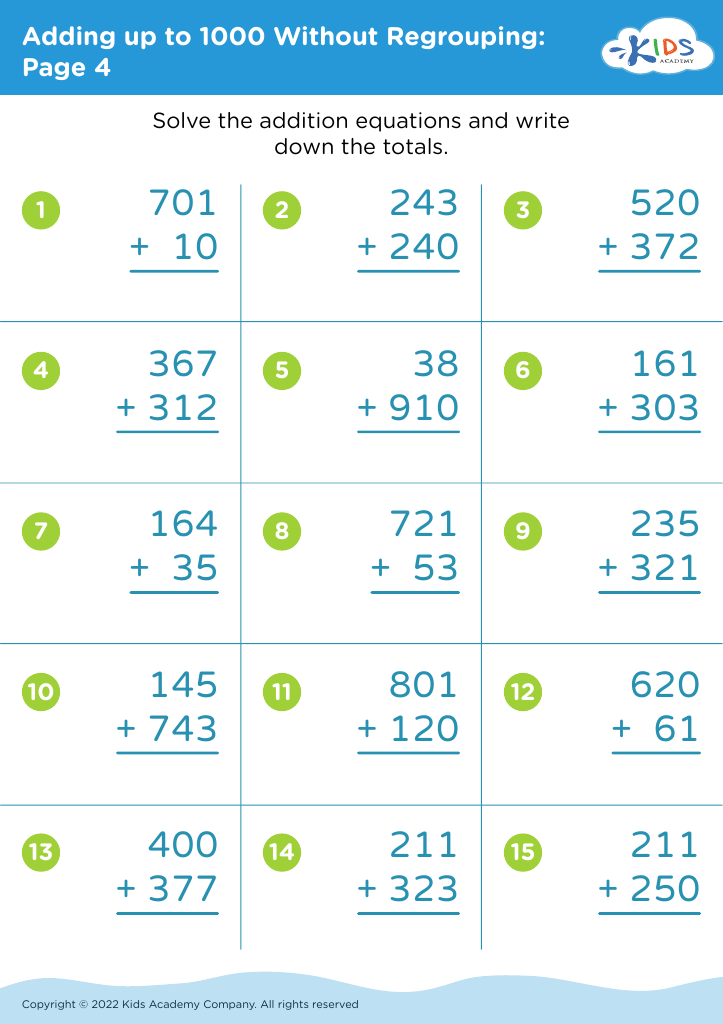
Boost your child's math skills with our engaging "Word Recognition Adding up to 1000 Worksheets for Ages 5-8." These creatively designed worksheets combine fun word recognition exercises with essential arithmetic practice, helping young learners effortlessly enhance their vocabulary and addition skills. Perfect for early elementary students, these worksheets offer a balanced mix of challenging tasks and enjoyable activities. Whether at home or in the classroom, your child will develop confidence in reading and math by working through problems that combine word and number comprehension, setting a strong foundation for their future academic success.



Parents and teachers should prioritize word recognition and adding numbers up to 1000 for children ages 5-8 because these skills form the core of early literacy and numeracy development. At this critical age, children are rapidly expanding their cognitive abilities and laying the groundwork for future academic success.
Word recognition enhances reading fluency, which in turn supports comprehension and a love for reading. When children can quickly identify words, they spend less mental energy decoding each word and more on understanding the text's meaning. Early mastery of word recognition accelerates overall reading proficiency, which is crucial for understanding lessons across all subjects.
Similarly, mastering addition up to 1000 strengthens foundational math skills, boosts confidence, and teaches problem-solving techniques. It helps children understand number relationships and concepts like place value and arithmetic operations. This foundational knowledge is crucial when they encounter more complicated tasks in higher grades. Furthermore, math skills are essential for everyday life, fostering logical thinking and decision-making abilities.
By focusing on these competencies, parents and teachers equip children with essential tools for academic success, support lifelong learning habits, and nurture self-reliance. Early intervention and consistent practice can significantly impact a child's educational journey and overall development.








