Filters

21 filtered results

Clear all filters
Favorites
With answer key
Interactive

21 filtered results

Difficulty Level

Grade


Boost your child's math confidence with our "Basic Math Skills Adding Up to 5 Worksheets for Ages 5-8". These engaging and colorful printables are designed to help young learners grasp foundational addition concepts by working with numbers up to 5. Perfect for kindergarten and early grade students, each worksheet offers hands-on practice through fun and interactive activities. Encourage your child's love for math while building their skills with exercises that promote problem-solving and critical thinking. Ideal for classroom use or extra practice at home, these worksheets are a fantastic resource for any early learner on their math journey!
Check out this FREE Trial Lesson on Adding Up to 5 for age 5-8!

Match Exactly the Same

Favorites
With answer key
Interactive
  • 5-8
  • Basic Math Skills
  • Adding Up to 5
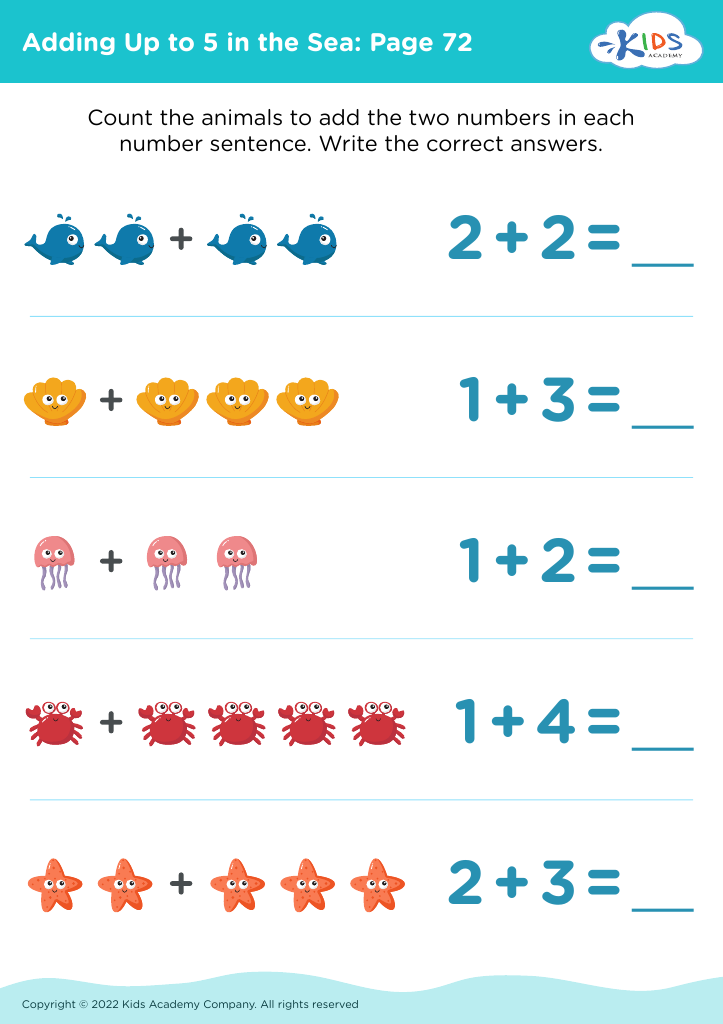
Adding Up to 5 in the Sea: Page 72
Worksheet
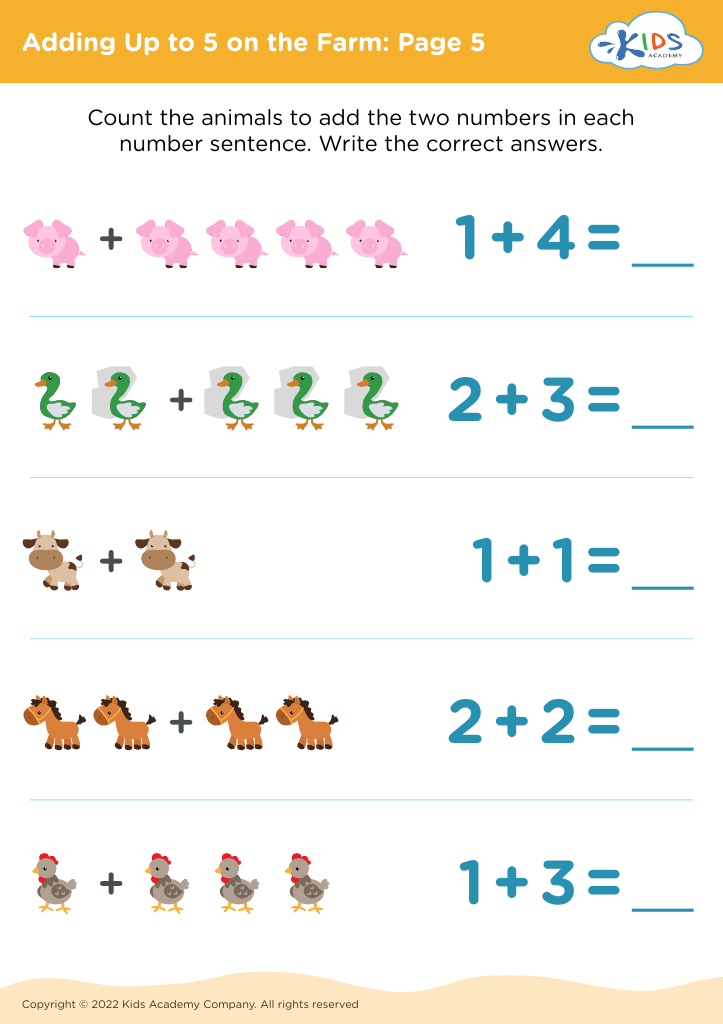
Adding Up to 5 on the Farm: Page 5
Worksheet
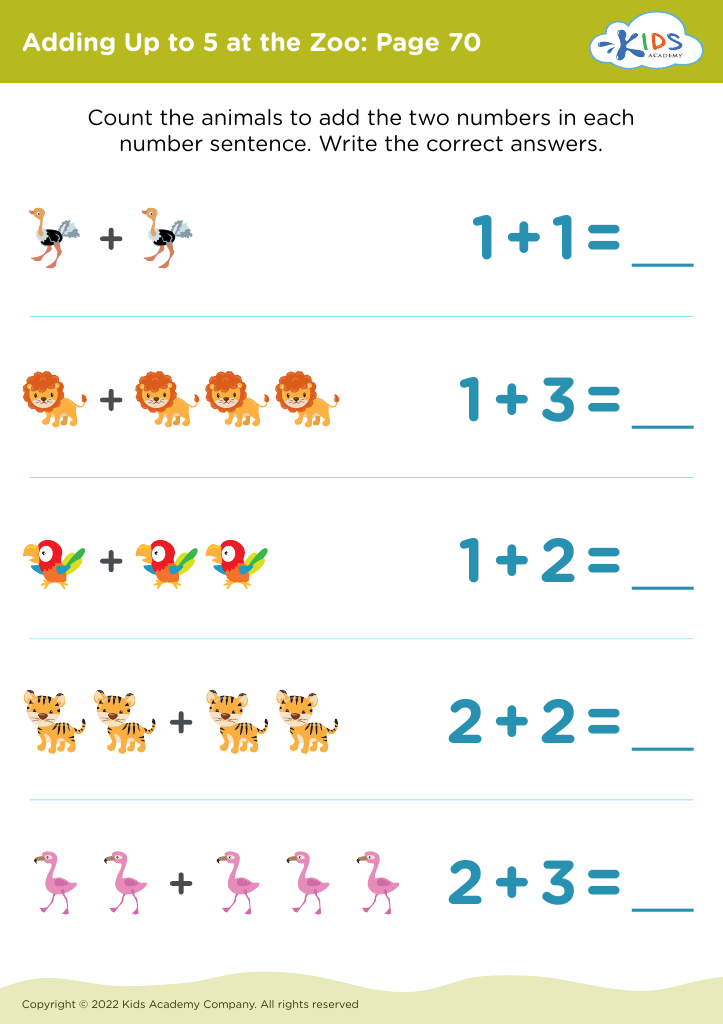
Adding Up to 5 at the Zoo: Page 70
Worksheet
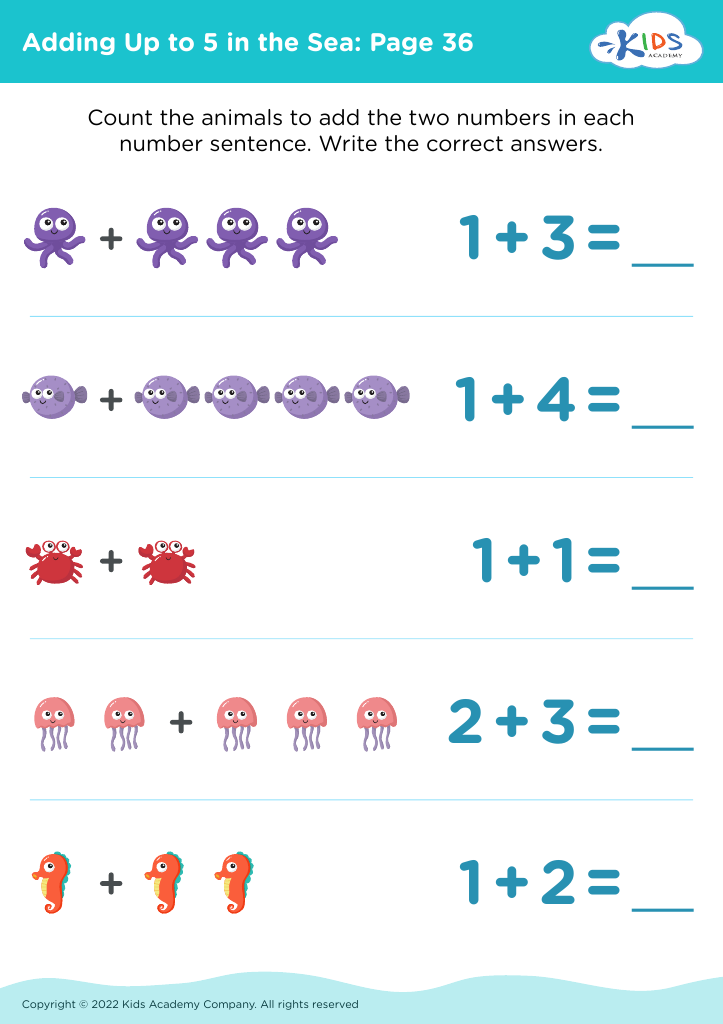
Adding Up to 5 in the Sea: Page 36
Worksheet
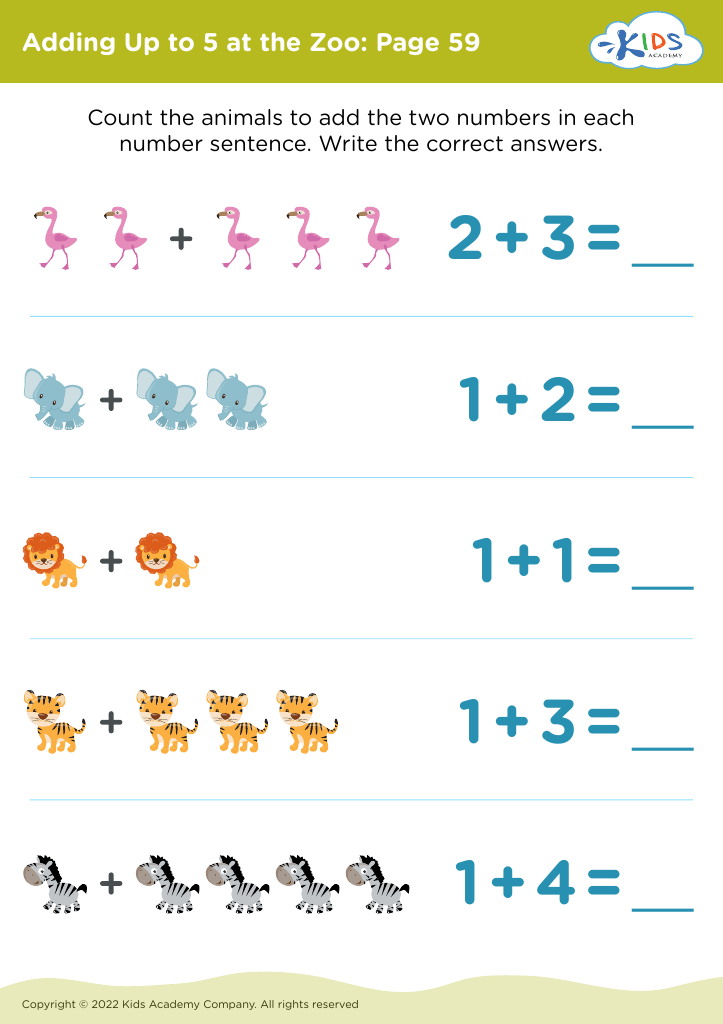
Adding Up to 5 at the Zoo: Page 59
Worksheet
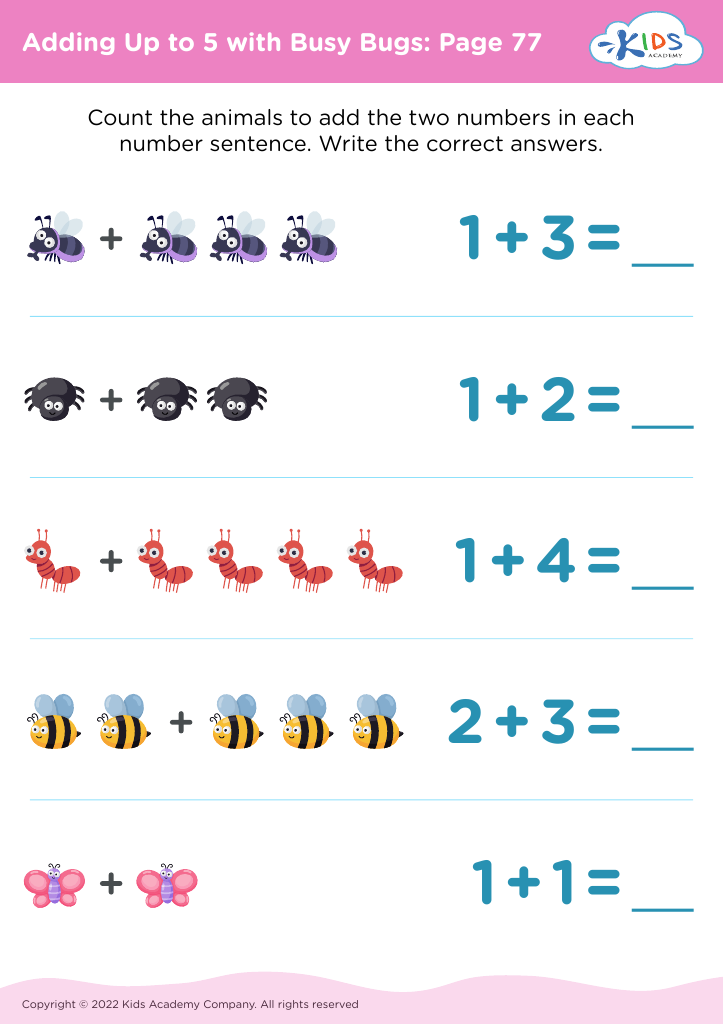
Adding Up to 5 with Busy Bugs: Page 77
Worksheet
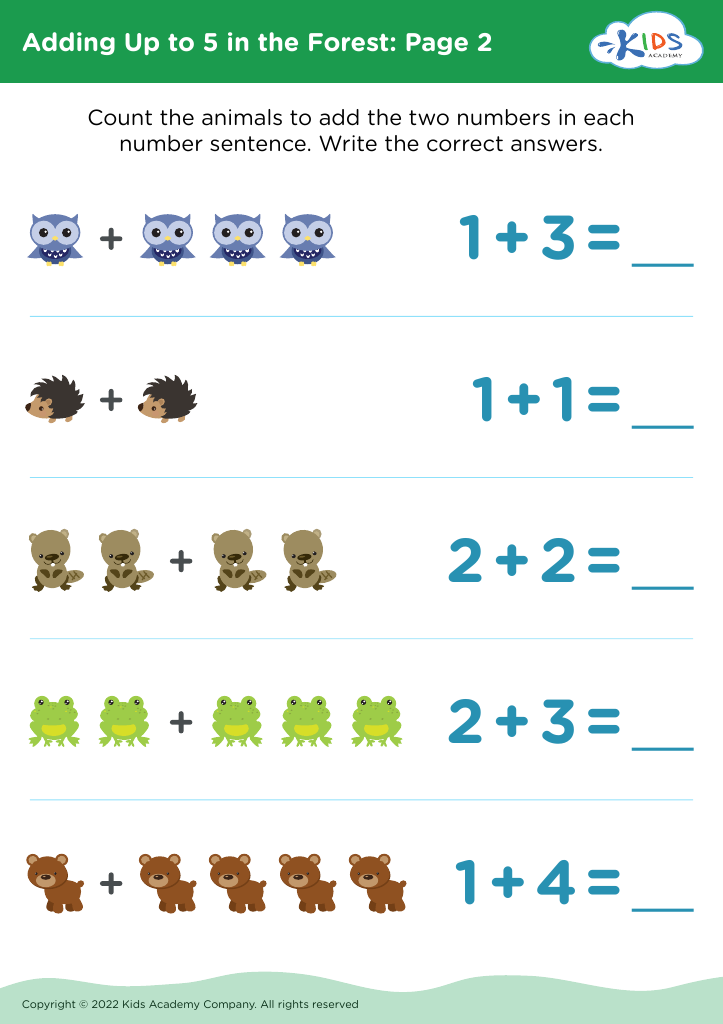
Adding Up to 5 in the Forest: Page 2
Worksheet
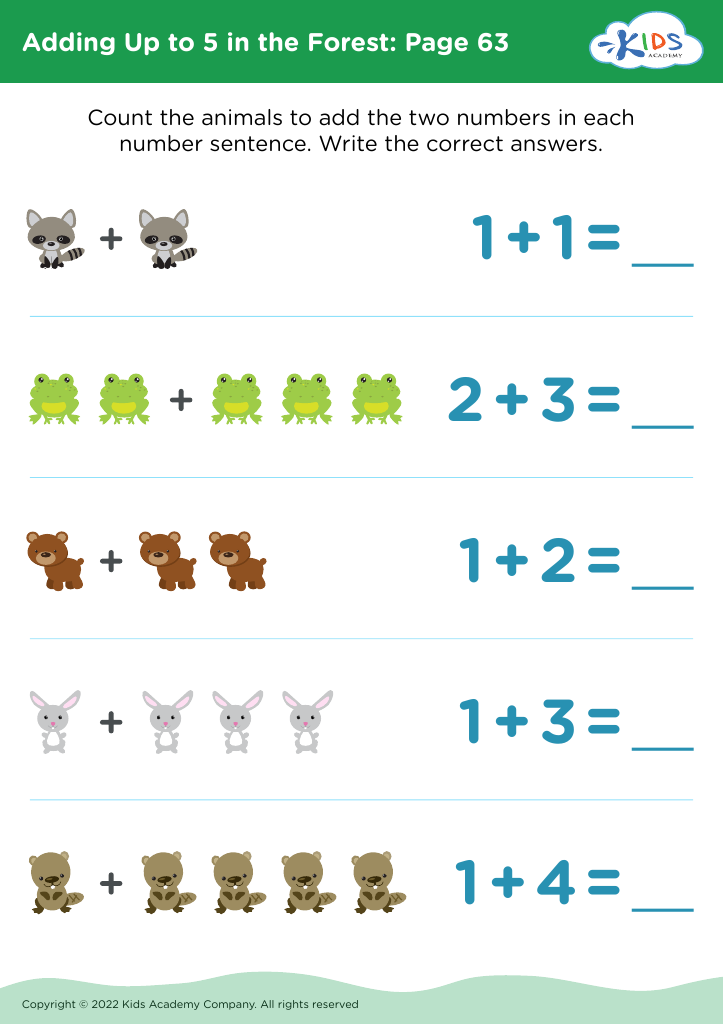
Adding Up to 5 in the Forest: Page 63
Worksheet
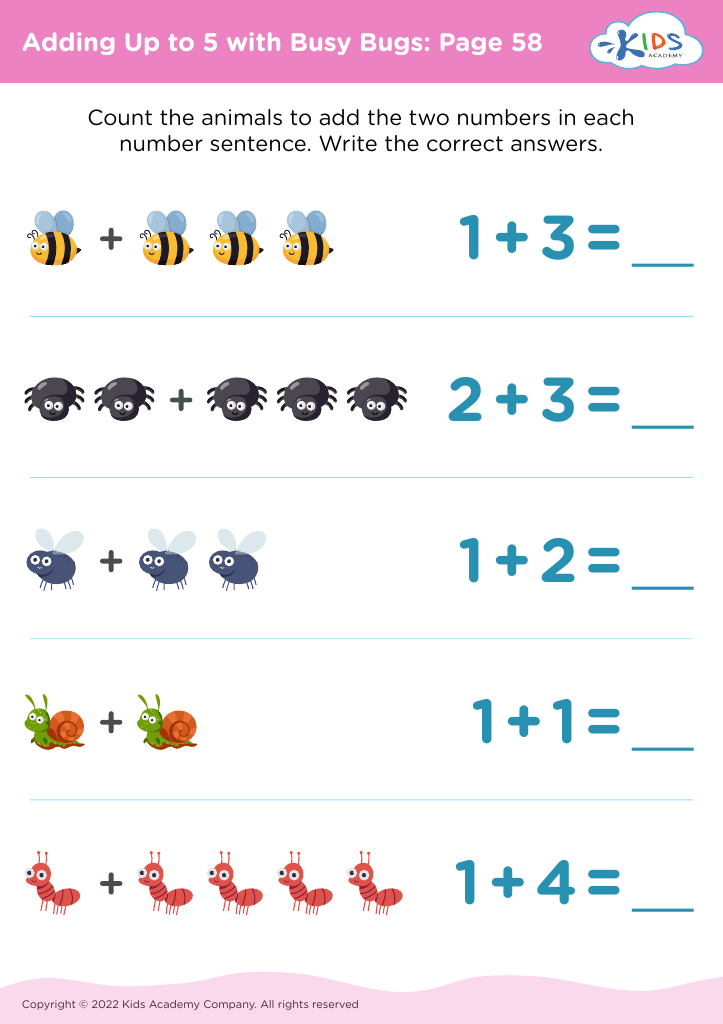
Adding Up to 5 with Busy Bugs: Page 58
Worksheet
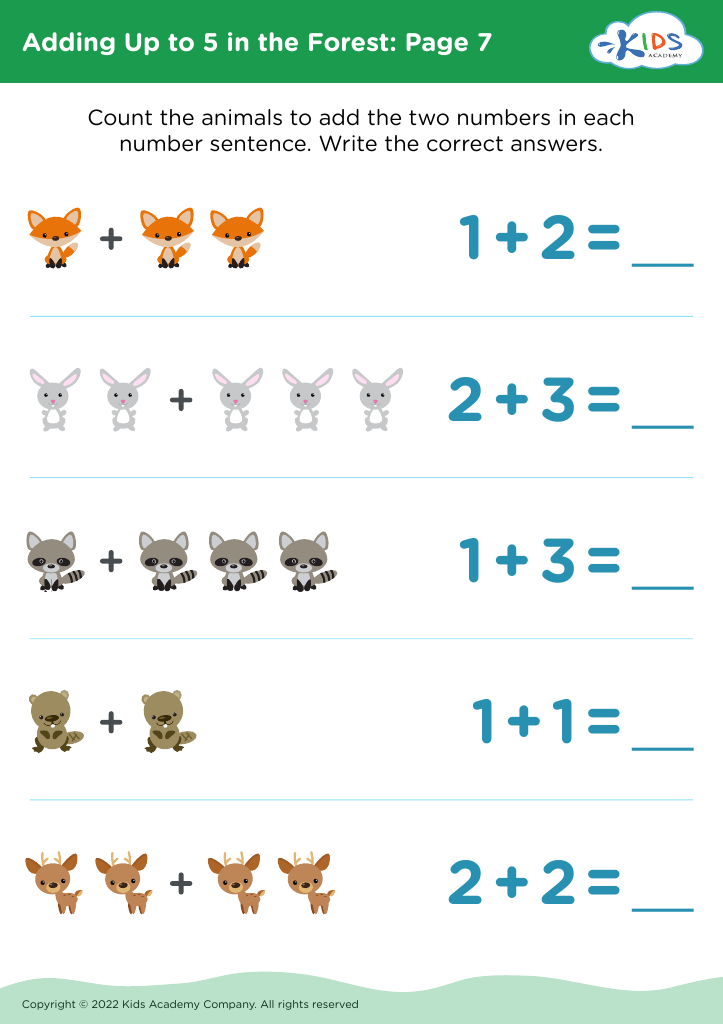
Adding Up to 5 in the Forest: Page 7
Worksheet
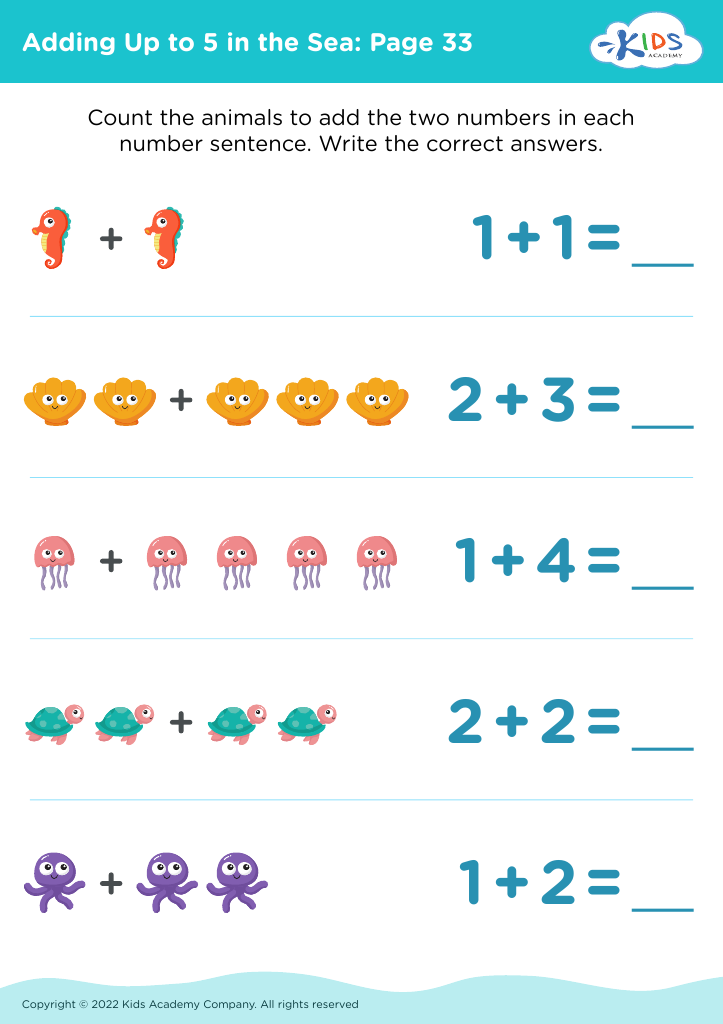
Adding Up to 5 in the Sea: Page 33
Worksheet
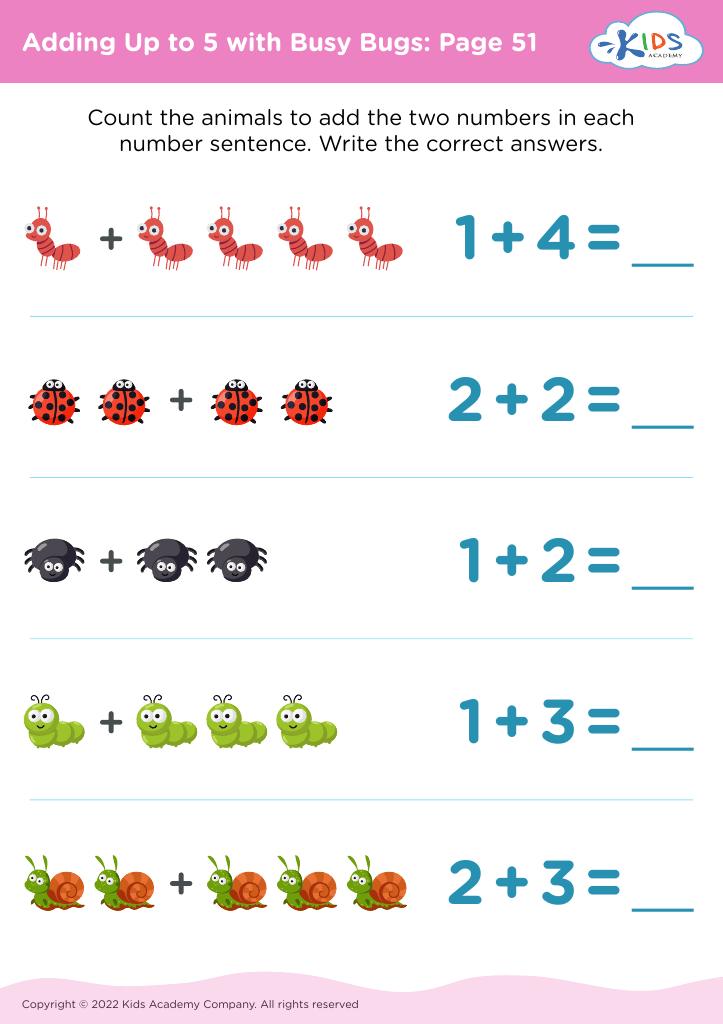
Adding Up to 5 with Busy Bugs: Page 51
Worksheet
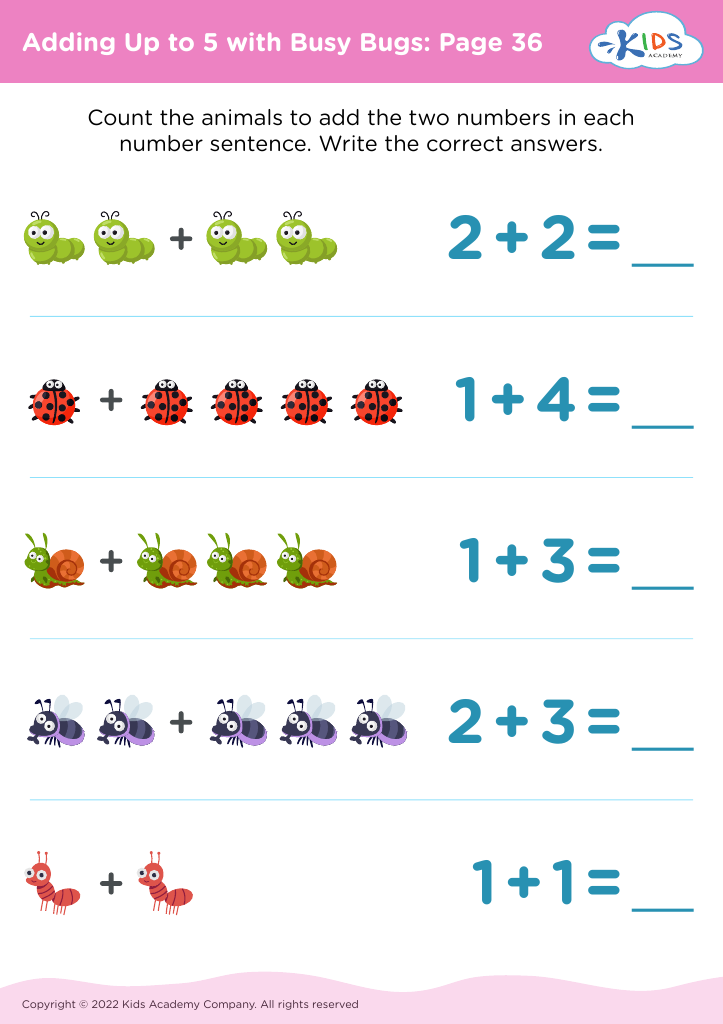
Adding Up to 5 with Busy Bugs: Page 36
Worksheet
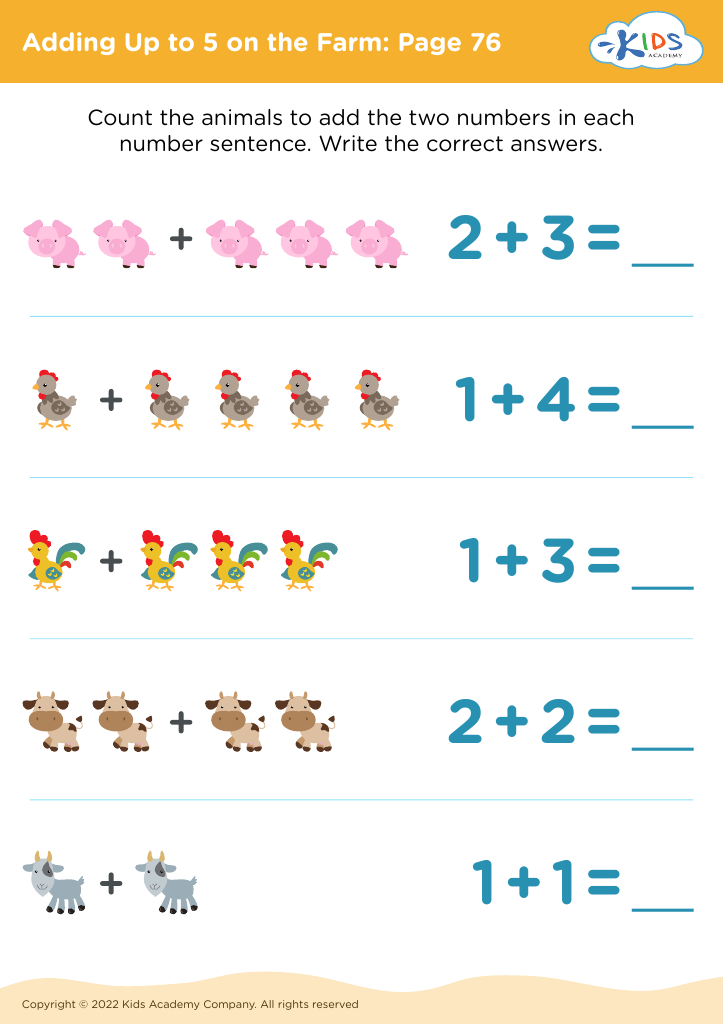
Adding Up to 5 on the Farm: Page 76
Worksheet
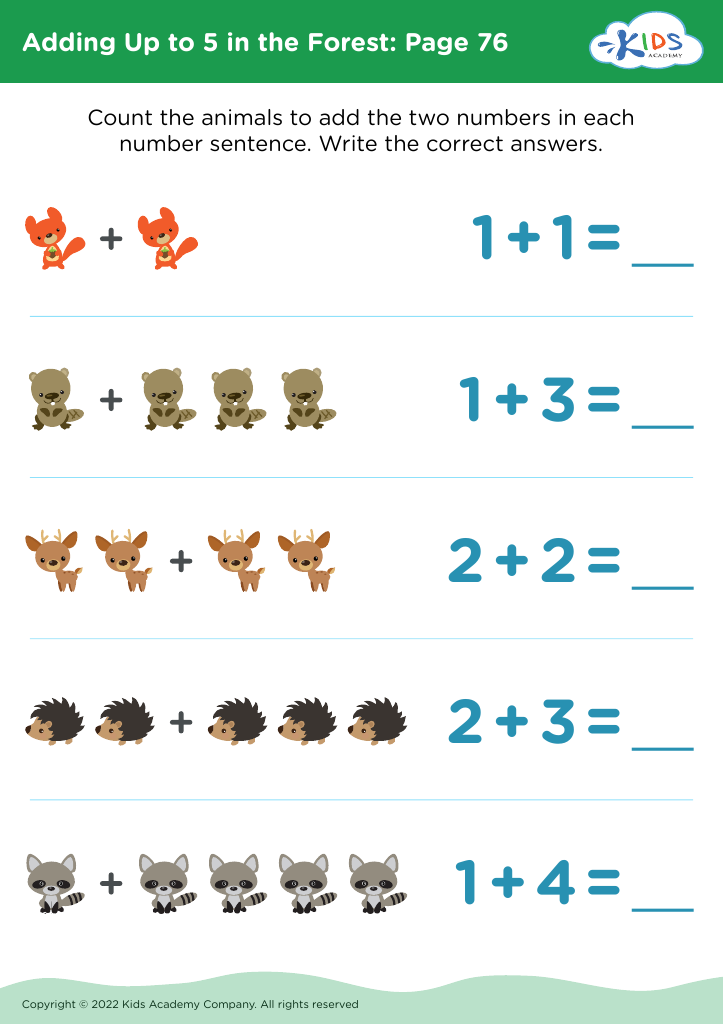
Adding Up to 5 in the Forest: Page 76
Worksheet
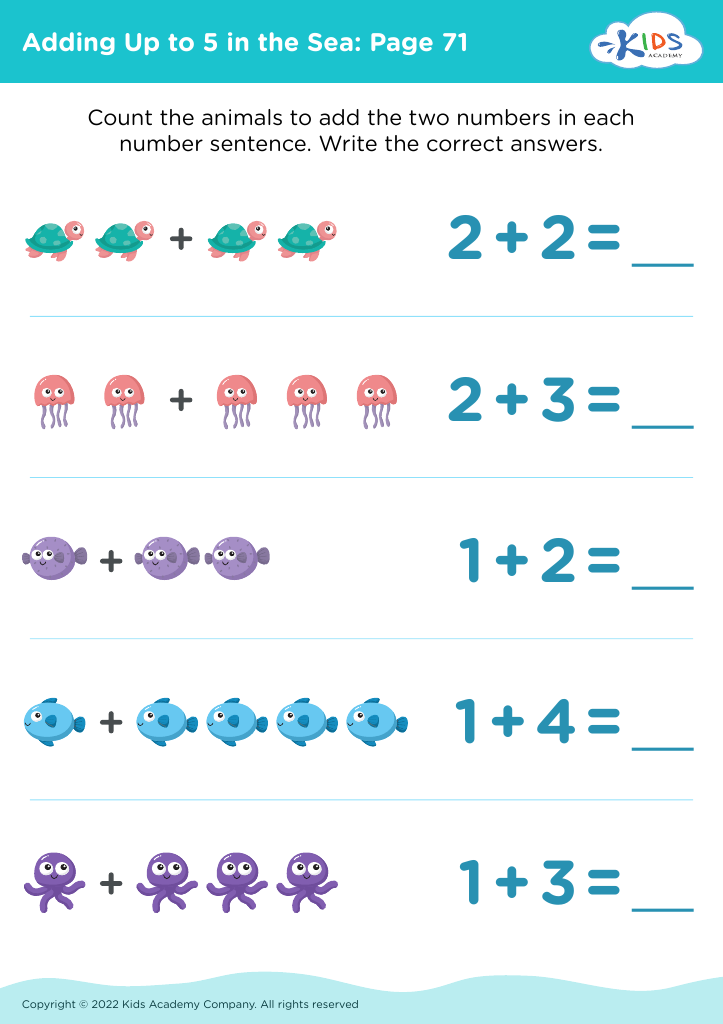
Adding Up to 5 in the Sea: Page 71
Worksheet
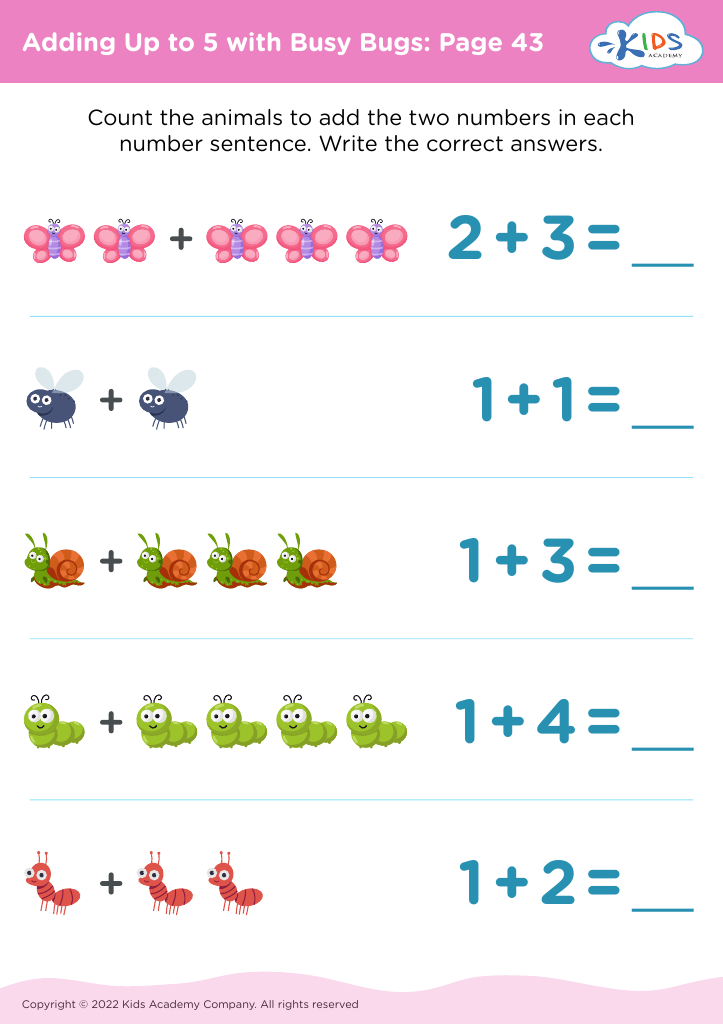
Adding Up to 5 with Busy Bugs: Page 43
Worksheet
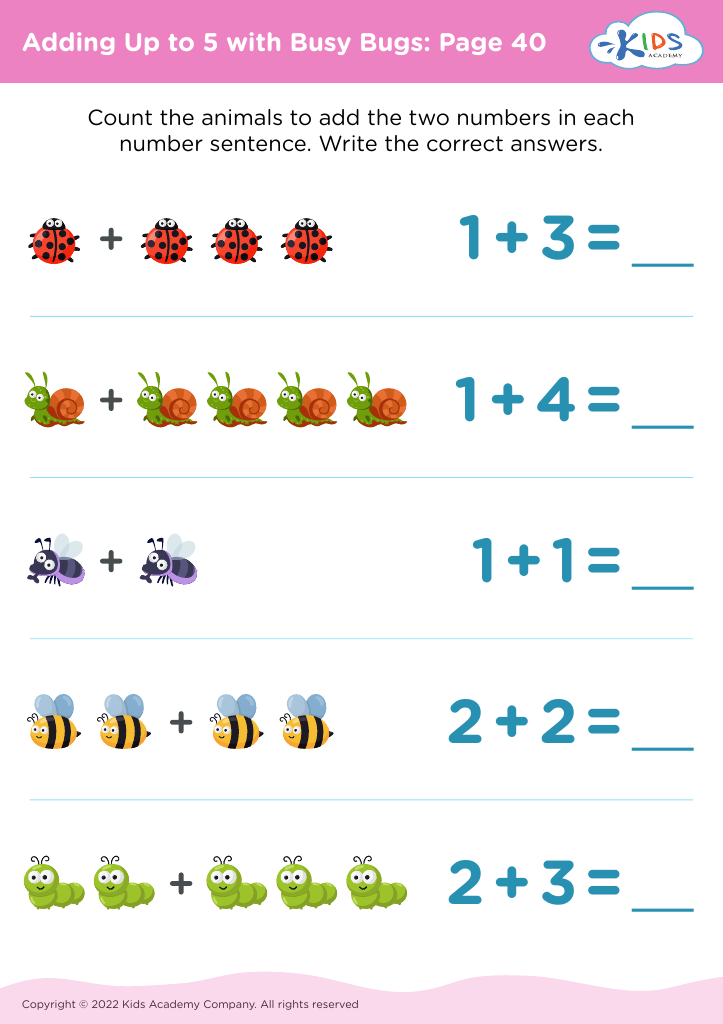
Adding Up to 5 with Busy Bugs: Page 40
Worksheet
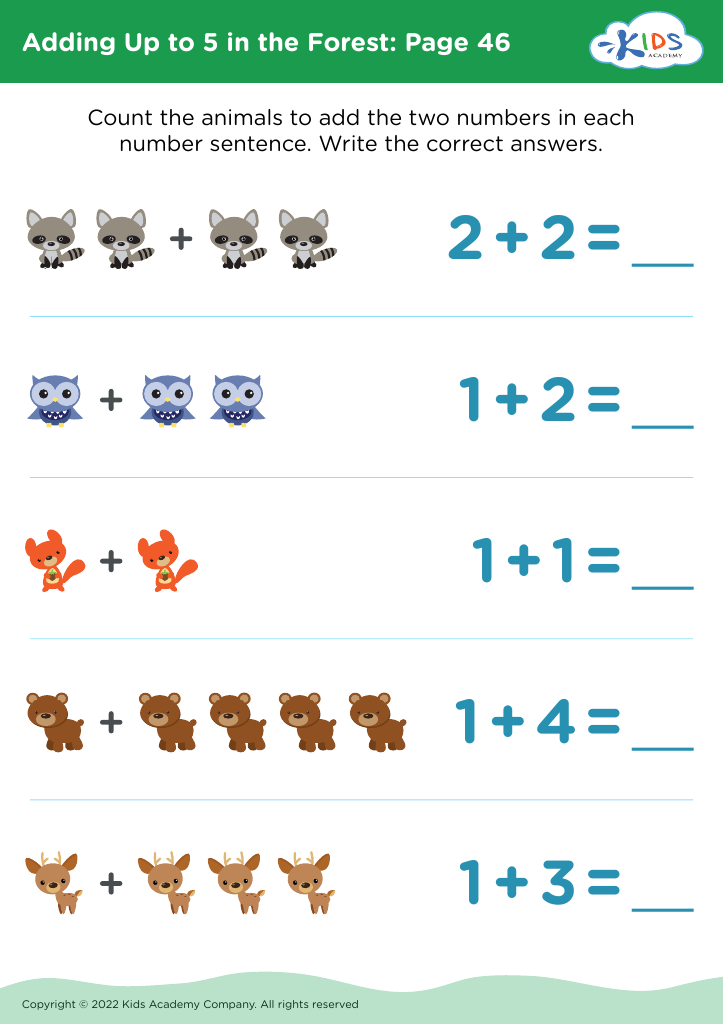
Adding Up to 5 in the Forest: Page 46
Worksheet
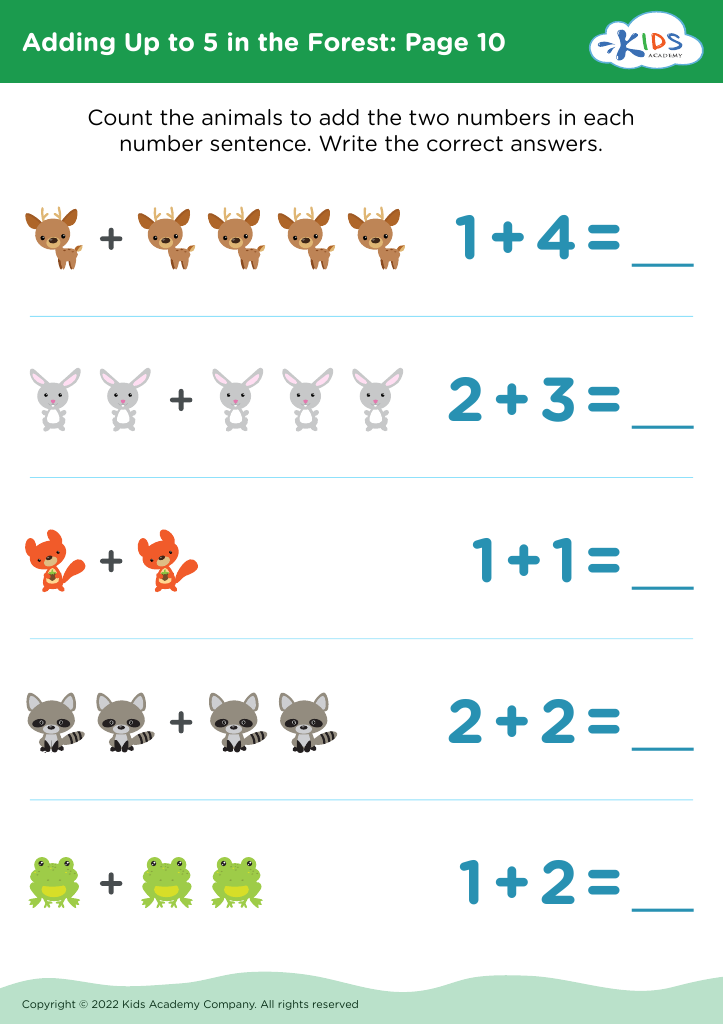
Adding Up to 5 in the Forest: Page 10
Worksheet
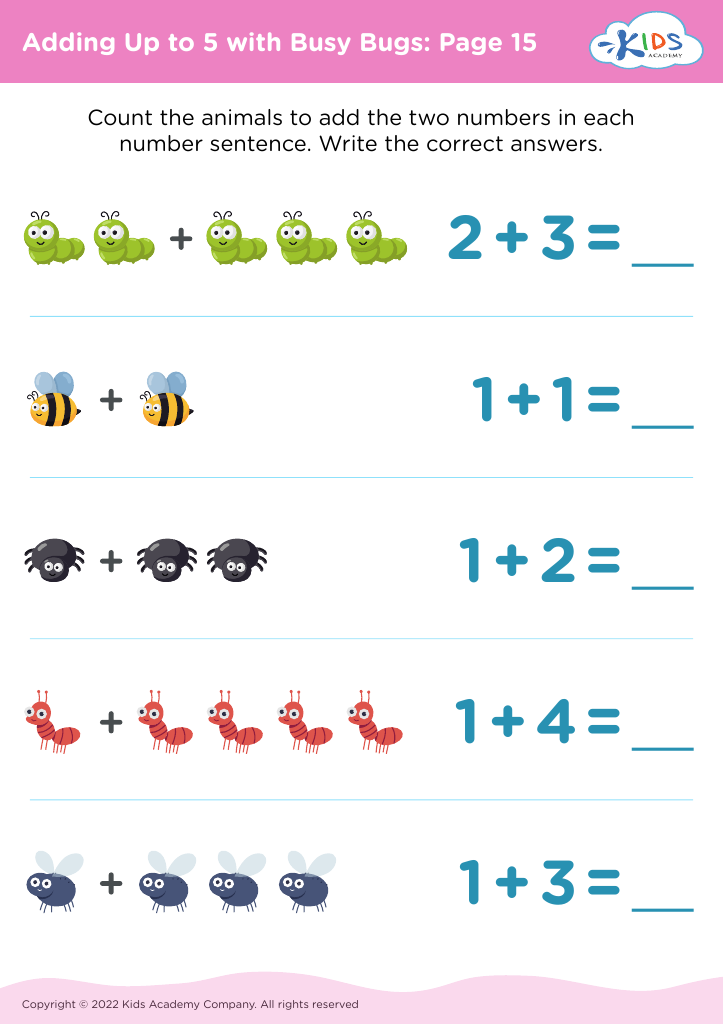
Adding Up to 5 with Busy Bugs: Page 15
Worksheet


Parents and teachers should genuinely care about developing basic math skills, specifically addition up to 5, for children aged 5-8. This foundational skill serves as the building block for all future math learning. Firstly, learning to add numbers up to 5 enhances children's number sense, allowing them to understand and manipulate numbers effectively. This early math confidence is crucial for tackling more complex math topics as they grow.

Secondly, mastering addition within this range helps improve cognitive skills such as problem-solving and logical thinking. These skills are transferable beyond math and are essential for everyday decision-making and critical thinking processes. Early exposure to math concepts also sets a strong academic precedent, positioning children for greater success in later grades.

Furthermore, introducing math skills at a young age fosters a positive attitude towards the subject. Children who find math accessible and enjoyable are more likely to engage with it enthusiastically in the future, reducing math-related anxiety and frustration. Activities that incorporate addition up to 5 can also be engaging and fun, providing opportunities for interactive learning through games and exercises that spark curiosity and stimulate cognitive growth.

In essence, emphasizing basic math skills for young children prepares them for academic achievement, enhances cognitive development, and encourages a lifelong positive relationship with numbers and problem-solving.