Understanding number relationships Adding Up to 5 Worksheets for Ages 5-8
3 filtered results
-
From - To
Discover our "Understanding Number Relationships: Adding Up to 5 Worksheets" designed for children aged 5-8. These engaging worksheets focus on helping young learners grasp essential math concepts by exploring how numbers combine to total 5. Through various interactive activities, children will strengthen their problem-solving skills and enhance their ability to recognize and create number relationships. Each worksheet is crafted to make learning fun and effective, encouraging children to explore addition through visual aids and practical exercises. Ideal for home or classroom use, our resources ensure foundational math skills are solidified while promoting a love for learning. Start building a strong math foundation today!
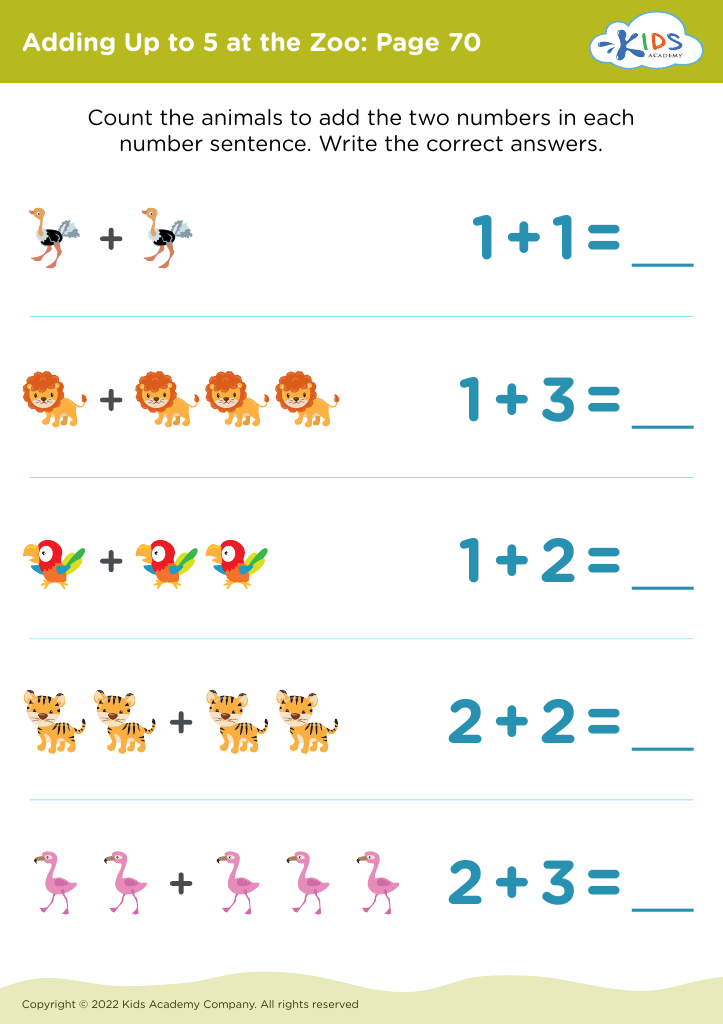
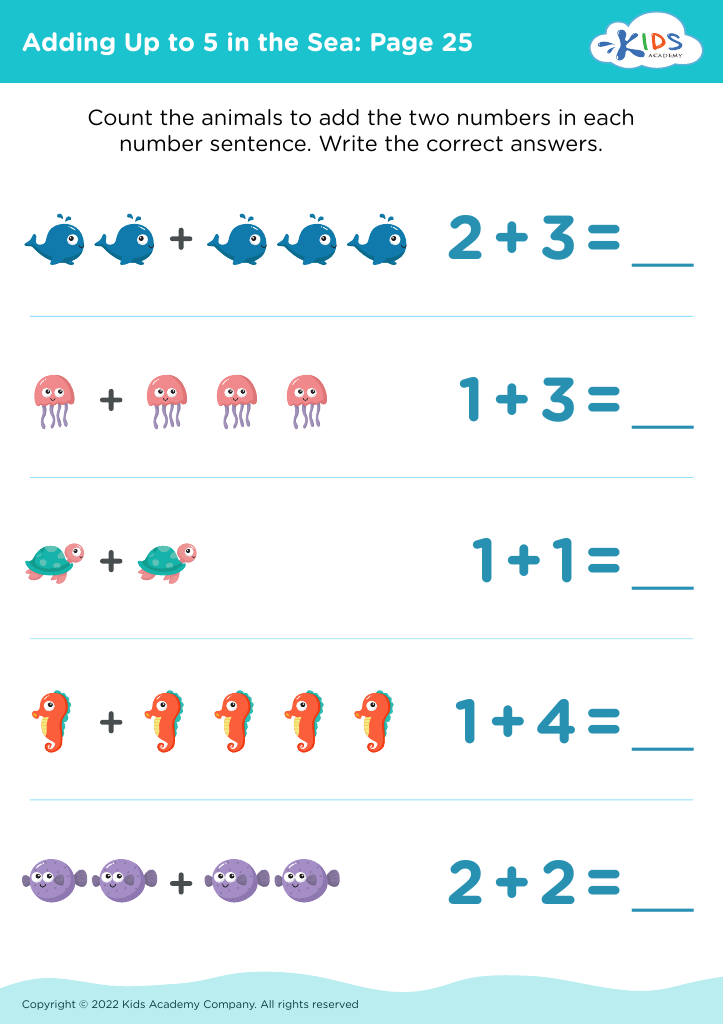
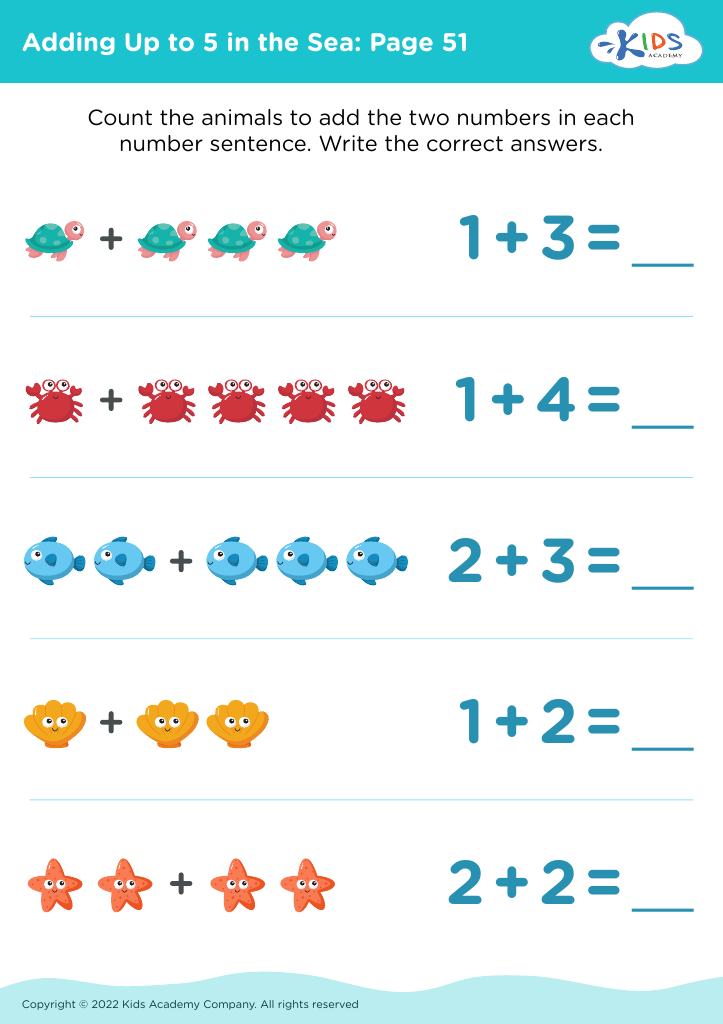






.jpg)

Understanding number relationships, particularly "Adding Up to 5," is crucial for children ages 5-8 as it forms the foundation of their mathematical knowledge. During these formative years, children are not only learning to count but also developing essential skills in addition and numerical reasoning. Grasping the concept of adding up to 5 helps students recognize how numbers interact, fostering a deeper understanding of quantity and its relationships.
For parents and teachers, emphasizing this understanding nurtures confidence in young learners, paving the way for more complex mathematical concepts in the future. When children can easily group combinations that add to five (like 2 + 3 or 1 + 4), they enhance their problem-solving skills and develop mental math abilities. These skills are invaluable, as they support everyday activities, from sharing snacks to budgeting money.
Moreover, a firm grasp of number relationships encourages cognitive development, improves pattern recognition, and boosts critical thinking abilities. Engaging in playful activities, such as games or real-life scenarios involving addition, will not only make learning enjoyable but also reinforce the concept. Ultimately, when parents and teachers prioritize understanding number relationships, they significantly contribute to a child’s mathematical confidence and lifelong learning journey.








