Understanding number values Adding Up to 5 Worksheets for Ages 5-8
3 filtered results
-
From - To
Help your child master essential math skills with our "Understanding Number Values Adding Up to 5" worksheets, tailored specifically for ages 5-8. These engaging and educational printables are designed to build foundational numeracy expertise. Perfect for parents and educators alike, these worksheets combine fun activities with structured learning to make basic math concepts easy to grasp. Your young learner will understand number values and develop confidence in simple addition through interactive practice. Start their educational journey today with resources that cater to their developmental stage and foster a love for learning early math skills.
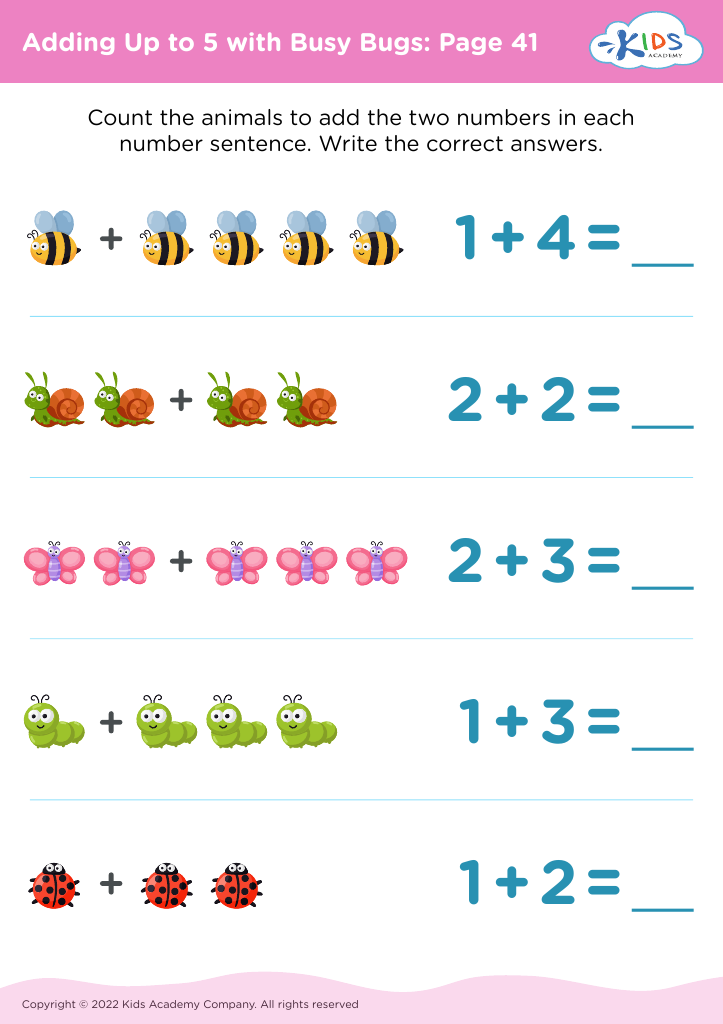
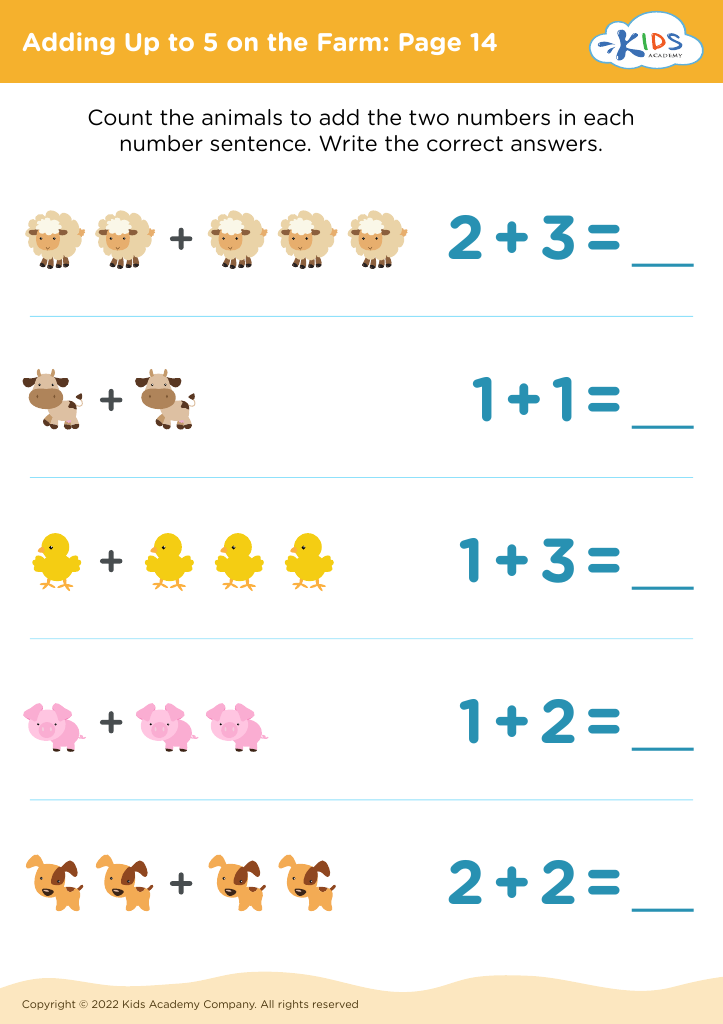
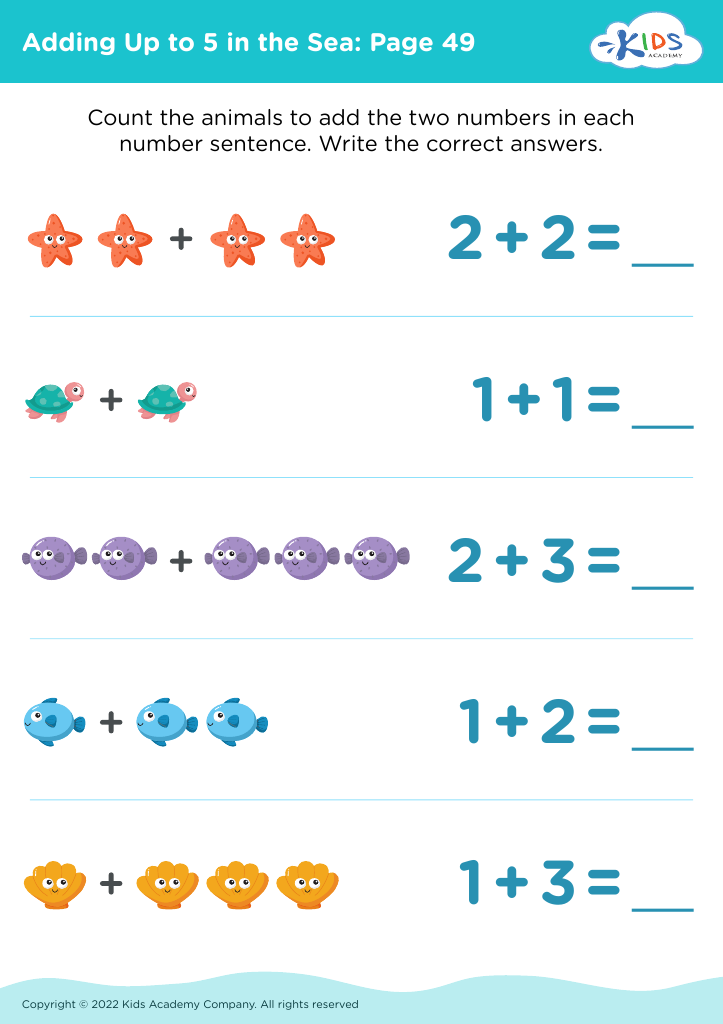








Understanding number values and their addition up to 5 is a fundamental skill for children aged 5-8, offering a critical foundation for future mathematical learning. During these formative years, grasping basic math concepts not only bolsters numeracy but also enhances cognitive development and problem-solving skills.
Early exposure to addition helps children develop a strong sense of numbers and patterns. By mastering sums up to 5, they gain confidence in handling small quantities, which is essential for tackling more complex mathematical problems later on. This understanding also supports learning in various subjects such as science and technology, where numbers are integral.
Parental and teacher involvement is crucial because young children learn best through guided play, repetition, and positive reinforcement. When children see their caregivers and educators value and engage with their learning, it fosters a positive attitude toward math. Activities like counting objects, simple games, and interactive stories make this learning process enjoyable, helping transform abstract concepts into tangible experiences.
Furthermore, early math skills are linked to academic success in later stages of education. Children proficient in basic math often perform better in school overall. Hence, by prioritizing early numeracy, parents and teachers are setting children up for lasting academic and personal success.








