Visual-motor skills Adding Up to 5 Worksheets for Ages 5-8
3 filtered results
-
From - To
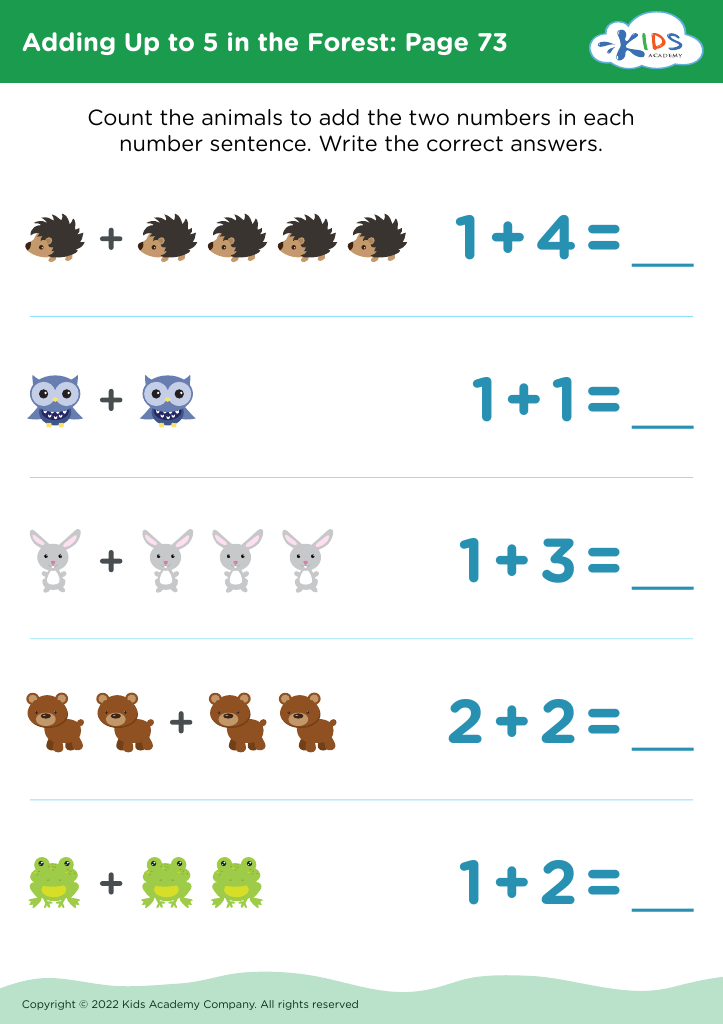
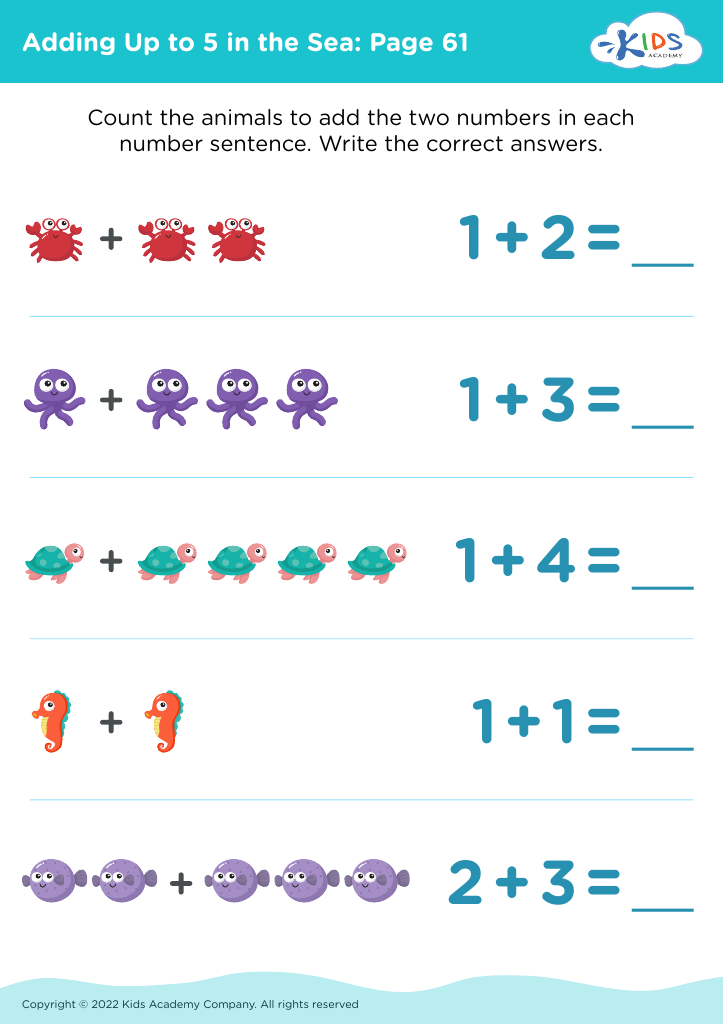
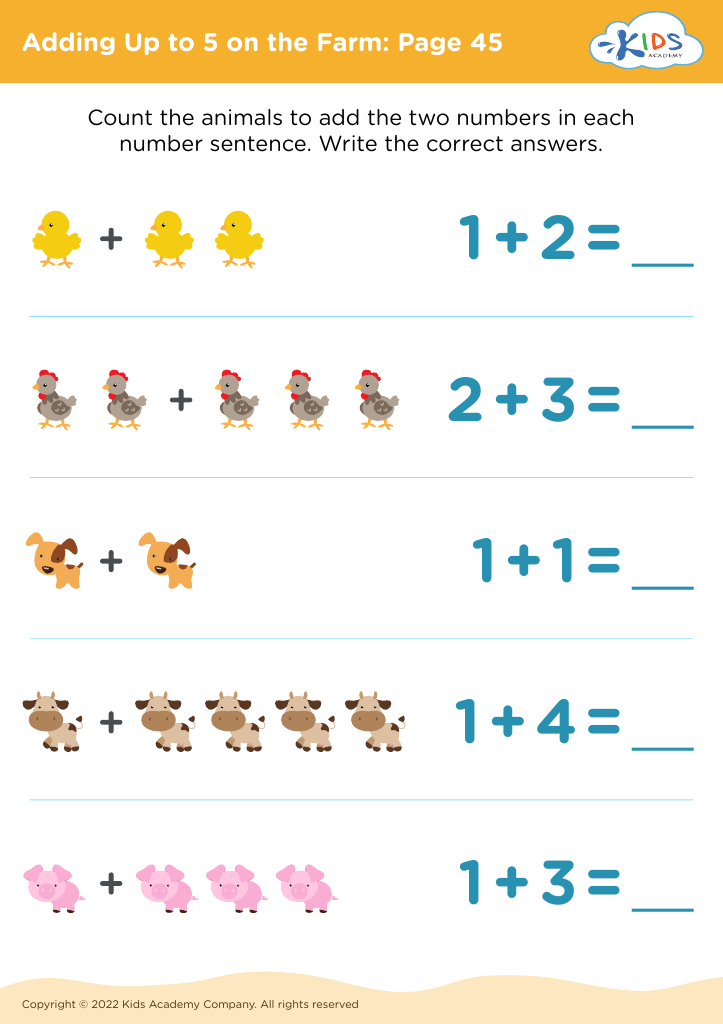
Unlock your child's potential with our engaging "Visual-Motor Skills Adding Up to 5 Worksheets" designed specifically for ages 5-8. These worksheets seamlessly blend essential math skills with visual-motor development, enhancing fine motor coordination and spatial awareness. Your child will enjoy fun activities, from tracing numbers to solving simple addition problems, all while improving their visual-perceptual skills. Perfect for home or in the classroom, our diverse exercises cater to early learners, making math enjoyable and interactive. Give your child the building blocks they need for academic success—download our worksheets today and watch them thrive as they learn to add and develop crucial skills!






%20(1).jpg)

Visual-motor skills, which include the coordination of visual perception and physical movement, are crucial for children aged 5 to 8, especially in the context of adding numbers up to 5. During this developmental stage, children are honing their abilities to process visual information and translate it into physical actions, such as writing numbers or manipulating objects like counters for arithmetic.
By strengthening these skills, children can enhance their mathematical understanding, as visual-motor coordination plays a vital role in tasks such as counting, measuring, and solving basic addition problems. For example, effectively using fingers, counters, or drawings can visually represent mathematical concepts, helping them grasp the idea of addition more intuitively.
Furthermore, visual-motor skills are foundational to numerous educational tasks, from writing to crafting projects, impacting overall academic performance and self-confidence. As they improve these skills, children also strengthen their fine motor skills, leading to better handwriting and classroom participation.
In essence, prioritizing visual-motor development not only supports numeracy skills but also fosters a love for learning and encourages children to explore and interact with their environment, ultimately shaping them into more competent and confident learners. This focus is essential for parental and educator involvement in fostering well-rounded cognitive growth.








